Activewear Manufacturing: China vs Vietnam vs Bangladesh — Where Should You Produce?
Choosing a production country is one of the first sourcing decisions an activewear brand makes. China, Vietnam, and Bangladesh can all produce apparel, but they are not interchangeable. The right country depends on design complexity, MOQ flexibility, fabric sourcing, lead time, communication, and how much factory support your team needs before bulk production.
If you are building technical activewear, the question is not simply “which country is cheapest?” A low unit price can become expensive if the factory cannot source the right fabric, interpret your fit requirements, manage color consistency, or support small trial orders. Growing DTC brands usually need a balance of flexibility, speed, quality, and practical communication.
China — The Full-Service Powerhouse
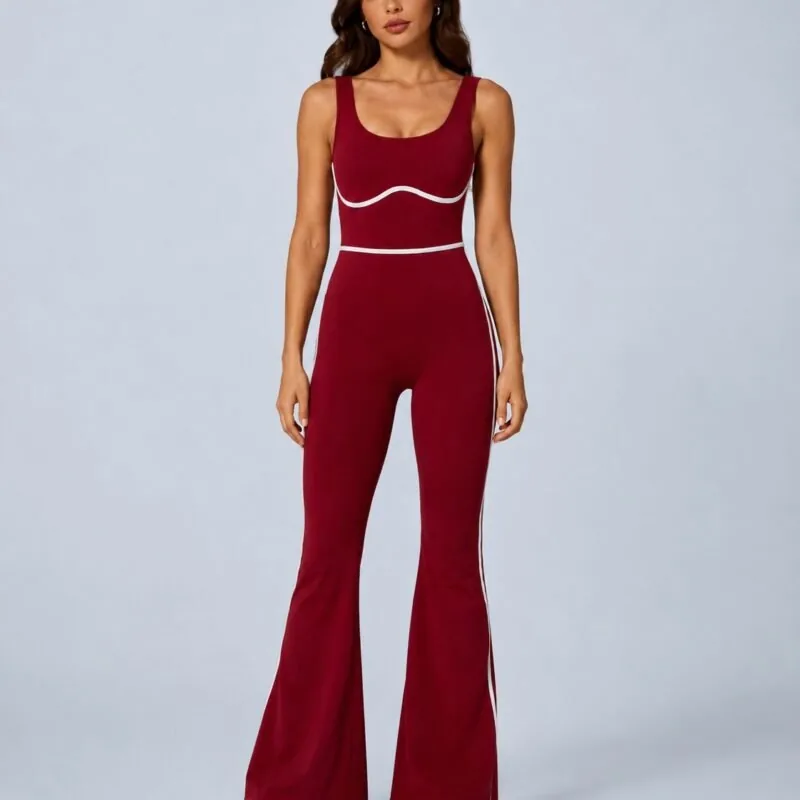
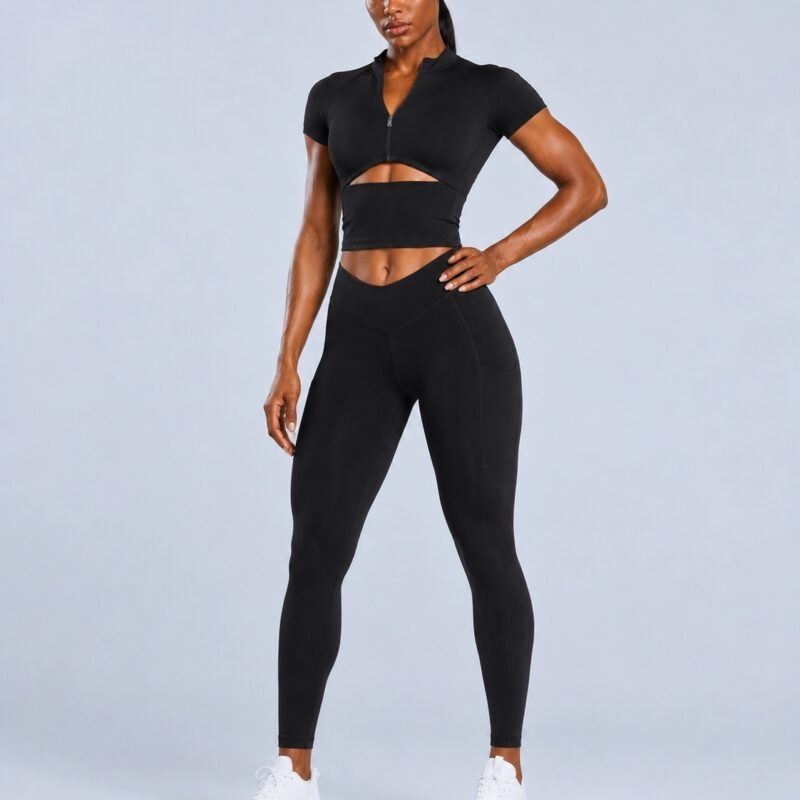
China remains the strongest all-around option for activewear manufacturing because the supply chain is deep. Fabric mills, dyeing houses, seamless knitting facilities, trim suppliers, packaging vendors, print shops, and logistics partners are usually located within the same regional ecosystem. That makes China especially strong for products that involve technical fabric, compression, multi-panel designs, cutouts, pockets, zippers, logo application, or mixed construction.
The biggest advantage is capability density. A mid-sized Chinese factory can often help with fabric sourcing, pattern correction, sample iteration, logo mockups, packaging, QC, export documents, and shipping coordination. For new brands that do not yet have a mature sourcing team, that service layer matters. It reduces the number of vendors you need to manage and shortens the feedback loop between idea, sample, and production.
China also offers more MOQ flexibility than most buyers expect. Large factories may still demand 1000+ pieces, but mid-sized OEM factories like YOUMEGA can support 100-piece stock-style orders with mixed colors and sizes, plus custom development from 300-500 pcs per style per color. That makes China attractive for startups, capsule launches, and brands that need to test before scaling.
The trade-off is that factory selection matters. China has excellent factories and weak factories. The best results come from choosing a partner with relevant activewear references, clear communication, transparent sample process, and realistic MOQ language.
Vietnam — Rising Star with Limitations
Vietnam has grown quickly in apparel manufacturing and is a strong option for many medium-volume brands. It has good sewing capability, improving English communication, and an export infrastructure familiar to global buyers. For simple to medium-complexity cut-and-sew activewear, Vietnam can be competitive, especially when order quantities are large enough to justify factory setup.
However, Vietnam is less flexible for low MOQ and highly technical development. Many factories prefer 500-1000+ pieces per style, and some rely on imported fabric from China, Korea, or Taiwan. If your fabric is imported, development time can stretch. If you need advanced seamless circular knitting, complex compression mapping, or a wide fabric library, the supplier base is more limited than China.
Vietnam is often a good fit for brands that already know their bestsellers and want to optimize cost at medium volume. It is less ideal when a founder is still testing product-market fit, changing colors frequently, or asking the factory to solve fabric and construction questions from scratch.
Bangladesh — Low Cost, High Volume
Bangladesh is known for high-volume garment production and strong price competitiveness. It can be a good option for basics, commodity items, and large orders where the design is simple and the buyer has a clear specification. For price-first programs with thousands of units per style, Bangladesh may offer compelling economics.
The limitations become more visible in technical activewear. Seamless capability is rare. Fabric often depends on imported supply chains. Lead times can be longer, and communication quality varies more widely by supplier. For innovative DTC activewear brands, the cost savings may be offset by slower development, higher MOQ, limited construction flexibility, and more management burden.
Bangladesh is best viewed as a scale-and-cost option, not a product-development partner for early-stage technical collections. If your garment is a basic legging or simple top and your quantity is already proven, it may make sense. If you need low MOQ, fast sampling, premium fabric, or complex design, it is usually not the first choice.
Country Comparison Table
| Factor | China | Vietnam | Bangladesh |
|---|---|---|---|
| Seamless capability | Advanced — full circular knit range | Limited — basic seamless only | Rare — almost no seamless factories |
| Corte y confección | Full range, any complexity | Strong for medium complexity | Strong for basics and commodity |
| MOQ flexibility | From 100 pcs at mid-sized factories | Typically 500-1000+ pcs | Typically 1000-3000+ pcs |
| Fabric sourcing | Domestic supply chain, fast | Import from China/Korea, slower | Import heavy, longest lead |
| Lead time | 15-30 days typical | 30-45 days typical | 45-60 days typical |
| Design complexity | Any complexity — zippers, pockets, cutouts, color blocking | Medium complexity | Basic designs, limited innovation |
| Communication | English proficient, responsive | Good English, responsive | Variable, can be challenging |
| IP protection | Varies — choose established factories with brand client references | Varies | Varies |
| Price | $$-$$$ | $$ | $ |
| Ideal para | Premium DTC brands, complex designs, low MOQ startups | Medium-volume basics, cost optimization | High-volume commodity, price-first buyers |
Why Growing Brands Choose China
Growing activewear brands often choose China because they need optionality. They may start with 100 pieces of stock leggings, then add custom logo placement, then test a seamless jumpsuit, then develop a cut-and-sew training set with pockets. A flexible Chinese factory can support that progression without forcing the brand to change suppliers at every stage.
China is also useful when the founder needs guidance. Many new brands do not have a full tech pack for every idea. They may have reference photos, color direction, logo files, and a target customer. A mid-sized factory can help convert that into fabric options, pattern direction, sampling, and bulk production.
The YOUMEGA Advantage
YOUMEGA is a mid-sized China activewear factory built for private-label brands that need premium quality with practical MOQ. We are not a giant commodity factory that only wants 3000 pieces per style. We help brands start with 100-piece stock-style orders, test market response, and scale into custom development when the product proves itself.
Our advantage is the combination of seamless and cut-and-sew capability, fabric sourcing, logo application, packaging support, and responsive communication. You can learn more about our company on the About YOUMEGA page, review the manufacturing process, check our certifications and sustainability practices, or browse the activewear product catalog.
For construction-specific decisions, read Seamless vs Cut-and-Sew Activewear. For order-size strategy, read Low MOQ vs High MOQ Activewear Manufacturing.
See our complete Activewear Manufacturing Glossary for all industry terms.
How to Compare Factory Quotes Across Countries
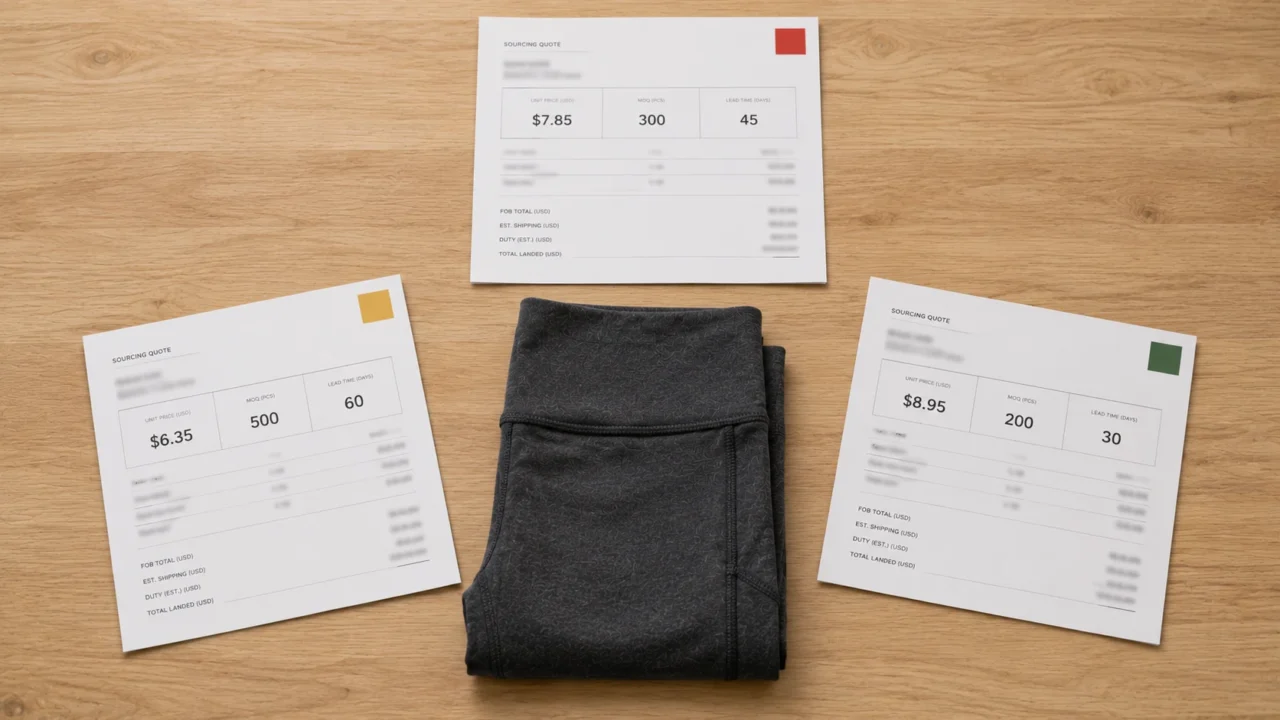
When comparing countries, do not only compare FOB unit price. Ask what is included in that price: fabric sourcing, lab dips, logo setup, polybags, hangtags, carton marks, export documents, pre-shipment inspection, and sample revisions. A quote that looks cheaper can become more expensive if the buyer must coordinate fabric, trims, testing, freight, and quality control separately.
Also compare communication speed. Activewear development has many small decisions: waistband height, GSM, compression level, pocket depth, logo placement, color tolerance, size grading, stitching, and packaging. If a factory needs several days to answer each question, a cheap quote can delay a launch by weeks. For growing brands, fast clarification is often worth more than a small unit-price difference.
Finally, test the factory with a small but realistic sample request. Ask for one style that includes the kind of complexity you actually sell. If your collection uses seamless compression, test seamless. If it uses pockets, zippers, or cutouts, test cut-and-sew. Country choice becomes clearer when you evaluate a real product instead of a generic capability list.
A second useful test is quote transparency. Ask each supplier to separate garment cost, logo cost, packaging cost, sampling cost, testing cost, and shipping assumptions. This exposes where a country or factory is truly cheaper and where the quote is simply incomplete. It also helps your finance team compare landed cost instead of headline cost.
For premium activewear, the most important question is usually not country alone but country plus factory type. A small, technical Chinese factory may be a better fit than a large commodity Chinese factory. A strong Vietnamese cut-and-sew supplier may beat a weak Chinese supplier for a basic tee. A Bangladesh factory may be excellent for volume basics but wrong for a complex seamless set.
For a brand choosing its first sourcing country, the safest approach is to match the country to the hardest part of the product. If the hardest part is fabric, choose the supply chain with the fastest fabric access. If the hardest part is sewing complexity, choose the factory with proven samples in that construction. If the hardest part is launch risk, choose the country and factory type that can support low MOQ without pushing you into unnecessary inventory.
Frequently Asked Questions
Is China still competitive for activewear manufacturing?
Yes. China remains the leader for complex constructions (seamless, technical fabrics, multi-panel designs) and offers the most flexible MOQs for growing brands.
What is the minimum order for activewear from China?
At YOUMEGA, the opening MOQ is 100 pieces with mixed styles and colors. Fully custom development starts at 300-500 pcs per style per color.
Is Vietnam cheaper than China for activewear?
For basic styles in medium-to-large volumes, yes. But for complex designs, seamless construction, and low MOQ orders, China is often more cost-effective overall.
Can I get seamless activewear from Vietnam?
Limited. Most Vietnam factories focus on cut-and-sew. Advanced seamless circular knitting is primarily concentrated in China.
How do I choose between countries?
Consider your design complexity, MOQ needs, timeline, and quality requirements. Low MOQ plus complex design means China. High volume plus basic design means Bangladesh. Medium volume plus moderate complexity means Vietnam.
2026 Cost Reality: Per-Piece Activewear Pricing
Here’s what a typical mid-range activewear set (cut-and-sew leggings + sports bra, 230 GSM nylon-spandex, custom logo, 1,000-piece order) actually costs FOB in each country in 2026:
| País | Per-Set FOB (USD) | MOQ Floor | Lead Time | Fabric Sourcing |
|---|---|---|---|---|
| China (Xiamen/Yiwu/Jinjiang) | $14–22 | 100 sets | 25–40 days | Domestic + own mill capacity |
| Vietnam (Ho Chi Minh/Hanoi) | $15–25 | 500–1,000 sets | 40–60 days | ~70% fabric imported from China |
| Bangladesh (Dhaka/Chittagong) | $12–18 | 1,500–3,000 sets | 60–90 days | ~85% fabric imported from China |
The headline price difference is smaller than most brands expect. Bangladesh wins on labor cost but pays the difference back in fabric sourcing (most performance knit fabric still ships from China or Korea) and longer lead times. Vietnam is roughly comparable to China on activewear-specific pricing once you factor in fabric import time.
The bigger differences are MOQ floors e lead times, which materially affect cash flow and inventory risk for new brands.
Tariff Reality in 2026
Trade policy is a moving target — the numbers below reflect mid-2026 rates and should be verified at order time. But the general structure has been stable:
- US tariffs on Chinese activewear: 16-32% base HTS rate + additional 7.5-25% Section 301 surcharges on certain categories. Effective total: 23-50% depending on category.
- US tariffs on Vietnamese activewear: 16-32% base HTS rate (no Section 301 surcharge). Effective total: 16-32%.
- US tariffs on Bangladesh activewear: Same as Vietnam — 16-32%, no surcharge.
- EU tariffs on all three: ~12% base rate, no country-specific surcharges.
- UK tariffs on all three: ~12% base rate.
For US-bound activewear, the 7.5-15% tariff differential between China and Vietnam/Bangladesh is real and significant on larger orders. On a $20 FOB legging, a 12% tariff differential = $2.40 per piece, or $2,400 on a 1,000-piece order. That’s enough to flip the math toward Vietnam or Bangladesh on volume.
For EU/UK/Canada-bound activewear, the tariff differential mostly disappears, and China’s lower MOQ and faster turnaround often win.
Quality Reality: What Each Country Does Best
China specializes in: Stretch knit construction, complex panel work, hardware integration (zippers, snaps, drawcords), fabric variety, and small-batch agility. Most premium athletic brands (Lululemon, Alphalete, Gymshark) still source significant volume from China for technical pieces.
Vietnam specializes in: Large-volume cut-and-sew, basic styles at competitive cost, polyester-heavy product mixes. Vietnam’s activewear infrastructure has grown substantially since 2018 but remains weaker on seamless and on technical performance constructions.
Bangladesh specializes in: Very large volume basics, cotton-blend casualwear, screen-printed t-shirt programs. Activewear-specific capability is growing but still limited — most Bangladesh factories that quote activewear are running cut-and-sew patterns that originated in China.
Decision Framework: Which Country Fits Your Brand
| Your Situation | Best Fit | Why |
|---|---|---|
| First production run, 100-500 pcs | China | Only country with realistic low-MOQ activewear capacity |
| 1,000-3,000 pcs, US-bound, basic styles | Vietnam | Tariff savings offset higher per-piece cost |
| 1,000-3,000 pcs, EU/UK/Asia-bound | China | Tariff differential gone, China wins on agility |
| 5,000+ pcs, US-bound, simple SKUs | Vietnam or Bangladesh | Tariff + labor cost combined |
| 5,000+ pcs, technical/seamless | China | Capability gap is real for performance constructions |
| Test new styles fast | China | Shortest sampling cycles (15-25 days vs 30-45 days) |
Frequently Asked Questions
Is Vietnam really cheaper than China for activewear?
For US-bound large orders, yes — primarily because of Section 301 tariff differences, not direct production cost. For EU/UK/Canada-bound orders or for small runs under 1,000 pieces, China is usually cheaper once you factor in lead time, MOQ, and fabric sourcing. The “Vietnam is always cheaper” narrative is oversimplified.
How do I tell if a Vietnamese factory imports fabric from China?
Ask directly during supplier evaluation, and ask to see the mill certificate. Most Vietnamese activewear factories source 60-80% of performance knit fabric from Chinese or Korean mills. This isn’t necessarily bad, but it affects lead time (fabric import adds 2-4 weeks) and undermines the “made in Vietnam = independent supply chain” narrative.
What’s the real MOQ floor in Vietnam and Bangladesh?
Vietnam activewear MOQ floor is typically 500-1,000 pieces per style. Bangladesh is 1,500-3,000 pieces per style. Both are significantly higher than China’s 100-piece floor because the smaller factories that handle low MOQ in China don’t have direct counterparts in Vietnam or Bangladesh — those markets are structured around large-volume orders.
Will Chinese tariffs continue rising for activewear?
Trade policy is unpredictable, but the structural trend since 2018 has been toward higher US tariffs on Chinese textiles and apparel. Brands planning multi-year US-focused strategies often build supplier relationships in both China and Vietnam to maintain optionality. EU/UK/Canada/Australia tariff structures have been more stable.
Can a Chinese factory help me set up Vietnam production later?
Some Chinese factories have Vietnamese partner facilities or owned subsidiaries — this is increasingly common since 2020. At YOUMEGA we don’t currently operate in Vietnam but we have partner relationships that can facilitate Vietnam production for larger US-bound volumes once a brand is ready. Ask about this during initial supplier conversations if you anticipate future Vietnam expansion.
About YOUMEGA
YOUMEGA operates from Xiamen, China — one of the top three Chinese activewear sourcing hubs alongside Yiwu and Jinjiang. We specialize in 100-2,000 piece orders for brands that need China’s agility and fabric variety, with the option to scale to higher volume in our facility or transition to Vietnam partner facilities when tariff math favors it.
If you’re evaluating Chinese vs Vietnamese vs Bangladeshi sourcing for your brand, send us your target volume and destination country. We’ll give you a candid comparison of total landed costs across the three options, including the tariff math specific to your product category.