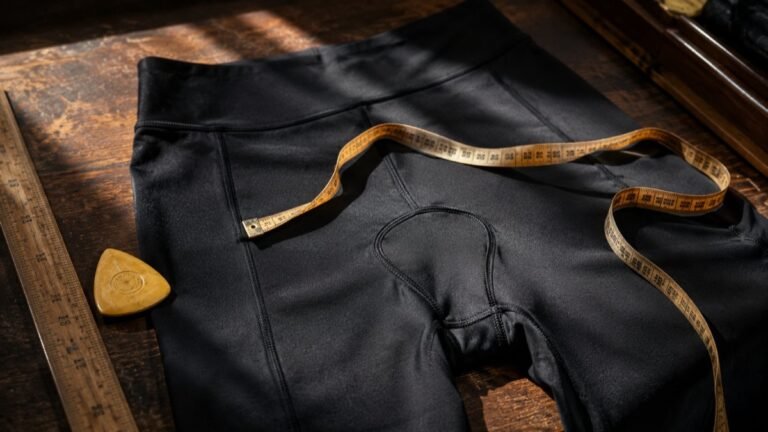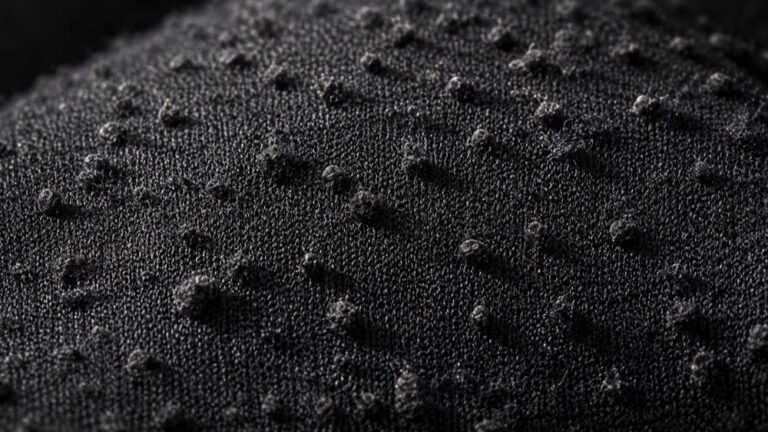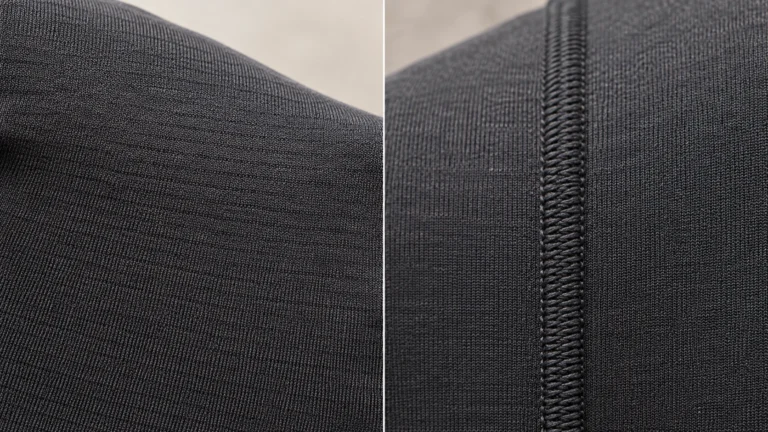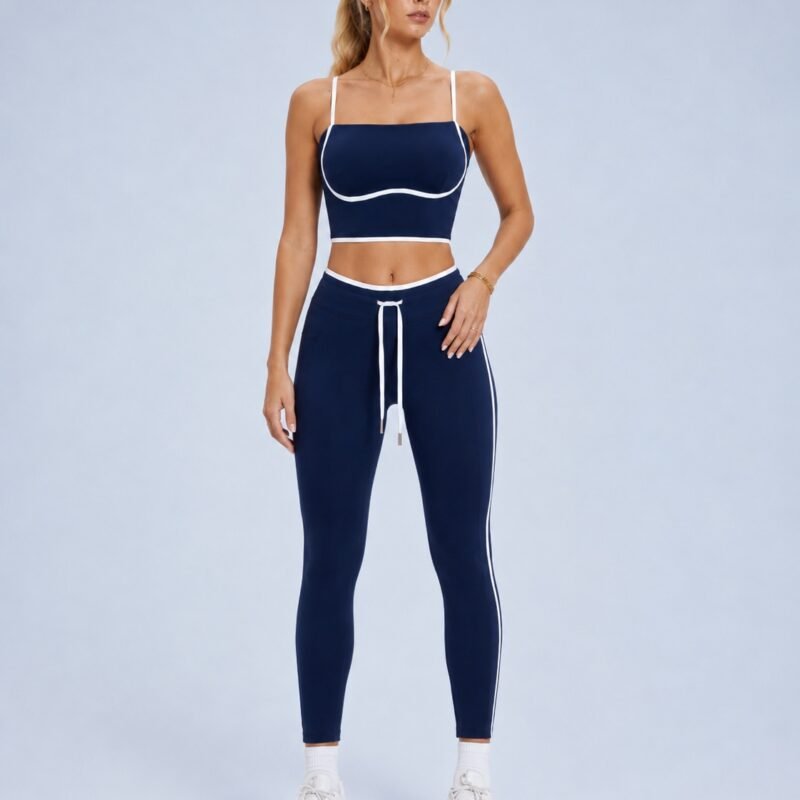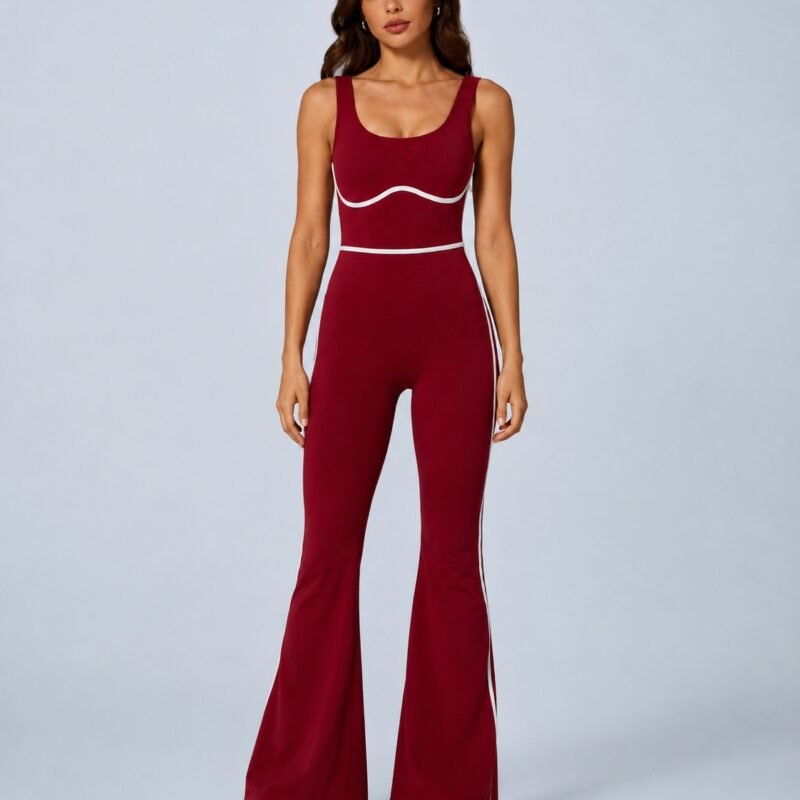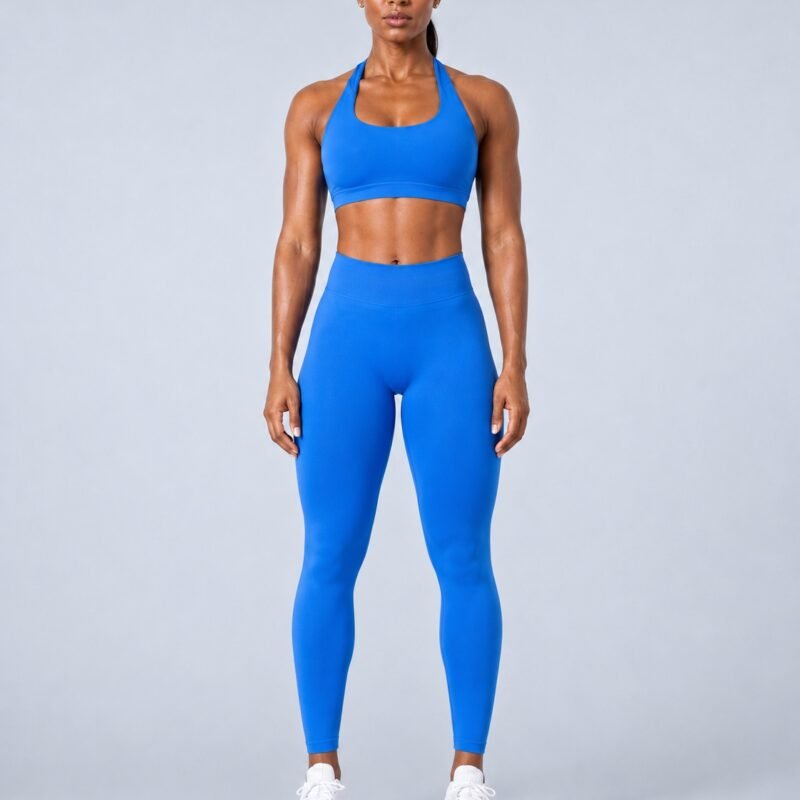
Seamless activewear looks simple from the outside — leggings with no side seams, sports bras with no shoulder seam joints, sets that hug without bunching. The buyer assumption is that “seamless” is just a fabric choice. It’s not. Seamless construction is its own manufacturing category, runs on different machines than cut-and-sew, requires different fabric expertise, and is built by a different kind of factory.
Most activewear factories in China and Vietnam don’t actually run seamless. They subcontract it when a buyer asks. That’s why so much “seamless” private-label work arrives with inconsistent compression zones, drifting waistband recovery and panel transitions that show through dark colorways. This guide explains what real seamless manufacturing looks like, what to ask a candidate factory, and why YOUMEGA’s seamless capability sits in a specialized tier most premium yoga and activewear brands need.
What “seamless” actually means in manufacturing terms
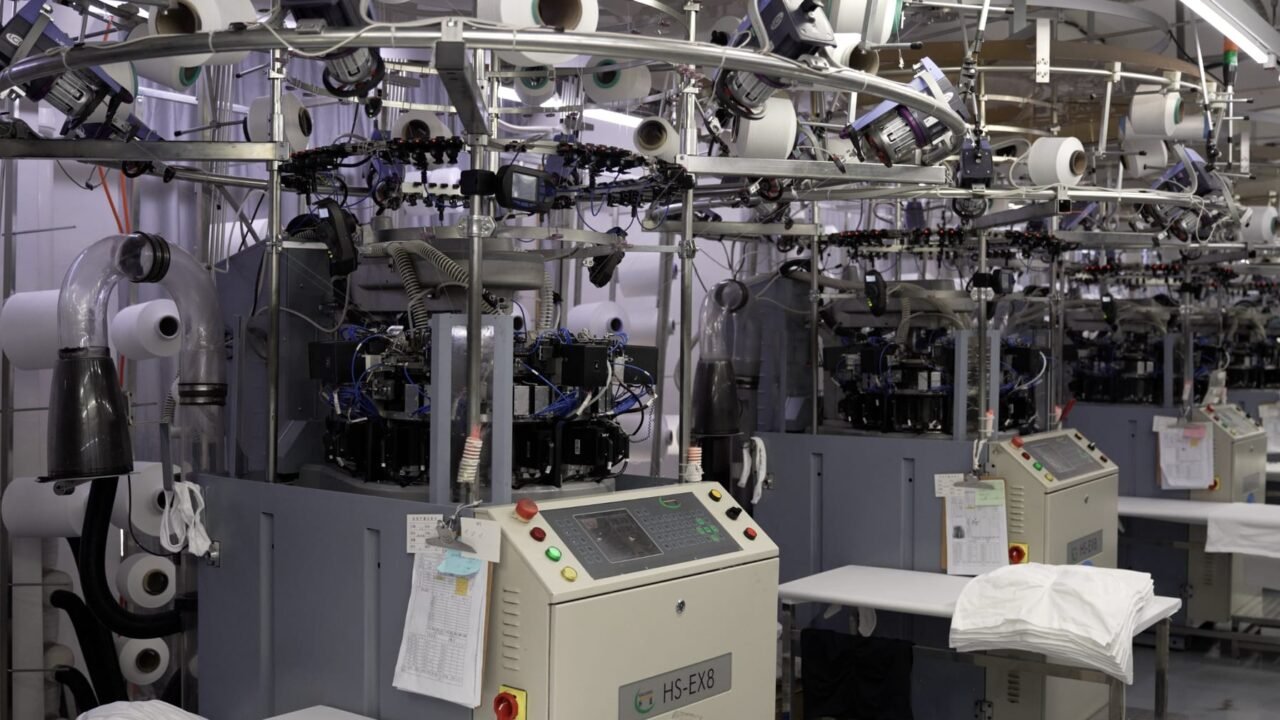
Seamless activewear is knit on dedicated circular knitting machines — typically Santoni or comparable Italian/German equipment — that produce a tube of fabric with engineered structural variation built directly into the knitting program. Different parts of the tube come out with different stitch densities, fabric tensions, mesh openings, or compression zones, all in one continuous piece.
When the tube comes off the machine, the garment is essentially shaped. Cut-and-sew steps are minimized — typically just the bottom hem, the waistband band, and small functional finishing. There are no traditional side seams because the side never had to be joined.
The fabric is almost always a polyamide-elastane (nylon-spandex) blend, commonly 92/8 to 94/6 polyamide-elastane for premium body-mapped construction. The blend matters: polyamide gives recovery and durability, elastane gives stretch — and the ratio affects both compression feel and wash recovery over time.
Why most factories can’t actually do this
Three reasons.
1. Capital cost. A modern Santoni SM8-TOP2 or comparable machine costs €100,000–€300,000 per unit. A factory needs 10–30+ machines to run a real seamless program at private-label scale. That’s millions of euros in equipment before producing a single garment. Most general activewear factories don’t make this investment.
2. Programming expertise. Seamless machines are programmed for each design — every zone change, every stitch density variation, every mesh opening, every elastic insertion. A factory needs in-house technical operators who can write or adapt these programs. This is a specialized skill set that doesn’t transfer from cut-and-sew operators.
3. Fabric supply chain. Seamless construction requires specific yarn weights, twist counts and elastane recovery characteristics — yarns that most general activewear factories don’t stock because their other products don’t need them. A serious seamless factory holds these yarns in inventory and has direct relationships with specialty yarn mills.
Add it up: most factories that say they “do seamless” mean they have a partner who does it for them. That’s fine for small one-off runs, but for any meaningful brand program, this introduces handoff failure points — pattern drift between batches, yarn substitution without notice, and a longer feedback loop when you need to fix a sample issue.
The 7 things to evaluate in a seamless activewear factory
1. Do they actually own seamless machines, or subcontract?
Ask: “How many Santoni or equivalent seamless machines do you operate, and where physically are they located?” A real seamless factory will give you a specific number, a location, and offer a factory visit to see the floor. A reseller will hedge with “we have access to” language.
2. What yarn blends do they hold in stock?
For premium seamless yoga and training wear, you want specifics: 92/8 or 94/6 polyamide-elastane, specific yarn weights (often 40D or 70D for the polyamide), and a documented yarn mill relationship. Vague answers mean they buy yarn per order — which slows everything down and increases batch variance.
3. Can they show body-mapped construction samples?
Real seamless construction has visible zone variation: different mesh patterns at the back of the knee, different compression at the waistband, different opacity at the seat. Ask to feel and see a sample garment turned inside out. If the inside looks uniform like cut-and-sew tube fabric, you’re looking at fake seamless (a knit tube with extra sewn structure).
4. What’s their seamless sample turnaround?
Seamless samples take longer than cut-and-sew — realistic is 12–15 days for first sample, similar for revisions because each change requires reprogramming the machine. A serious seamless factory has this rhythm; they don’t promise 7-day seamless turnaround, which usually means they’re doing fake seamless or skipping QC.
5. What’s their MOQ on seamless?
Realistic MOQ for premium seamless OEM is 300–500 pieces per style per color. Some specialized factories accept 100 sets if you use stock seamless styles with a custom logo. Anyone offering 50-piece custom seamless MOQ is either subcontracting at a loss to win the deal or making something that isn’t really seamless.
6. Wash recovery test data
The biggest premium failure mode in seamless is recovery loss after washing — the waistband sags, the leg fabric loses compression. A premium seamless factory has wash-test data: 20-wash recovery percentages, elastane breakdown analysis, color retention. If they don’t have data, you’re running the test on a customer order.
7. Real seamless brand clients
The factory should be able to describe seamless programs they’ve actually run, even without naming brands. “We do seamless work for an Irish private-label client who scaled from a first capsule to multi-season programs” or “we ran a seamless launch with a 12-week production cycle” — these are the answers that signal real seamless production track record vs. occasional brokered work.
The size range problem: why most seamless factories quietly cap at XL
This is the seamless manufacturing differentiator almost no factory volunteers — and the one most likely to silently sink a Western-market brand’s size range plan.
Santoni circular knitting machines come in different cylinder diameters — typically 13″, 15″, 17″, 19″, 21″ and 24″. The cylinder diameter directly limits the maximum garment circumference the machine can knit in one continuous body-mapped piece. Most seamless factories operate only 13″–15″ cylinder machines, because the Asian-domestic market (China, Japan, Korea, Southeast Asia) primarily demands sizes XS–XL where smaller cylinders are sufficient.
That means when a Western brand (US, UK, EU, Australia, Latin America) asks for 2XL, 3XL or curve-fit sizing in real body-mapped seamless construction, most factories either:
- Quietly cap the order at XL and hope the brand doesn’t notice the gap
- Offer “2XL” that’s actually a stretched-out XL with distorted compression panels and visibly broken body-mapped zones
- Switch to cut-and-sew for the larger sizes (which kills the consistency of the brand’s seamless line)
- Subcontract the larger sizes to a different factory entirely (introducing batch variance)
For brands selling into US, UK, EU or AU markets — where 2XL and 3XL are standard demand and plus-size activewear is one of the fastest-growing categories — a seamless factory without large-cylinder machines is a hidden size-ceiling on the brand’s entire product line.
The question to ask: “What cylinder diameters do your seamless machines cover, and what’s your maximum body-mapped garment size?” A serious answer mentions specific cylinder sizes (e.g., “we operate 15″, 17″ and 21″ cylinder Santoni machines, covering XS through 3XL in body-mapped construction”). A factory hedging with “we can do any size” almost certainly cannot.
YOUMEGA’s seamless activewear capability
YOUMEGA’s seamless production is built around dedicated operations in Yiwu — one of the three Chinese cities (alongside Xiamen for HQ and Guangzhou for specialty technical fabrics) where serious seamless activewear capacity is concentrated. The Yiwu floor runs body-mapped seamless construction in 94/6 polyamide-elastane for premium yoga sets, gym wear sets, sports bras and seamless leggings.
What this means in practice:
- Direct seamless machine operation, not subcontracted — same factory accountability from sample to bulk to reorder
- Large-cylinder Santoni machines for Western sizing — most seamless factories operate only 13″–15″ cylinder machines and cap at XL. YOUMEGA’s Yiwu floor includes large-cylinder machines (17″–21″ range) that produce true body-mapped 2XL, 3XL and curve-fit seamless construction. Critical for brands selling into US, UK, EU, AU and Latin American markets where 2XL+ is standard demand, not optional.
- Body-mapped construction — engineered compression zones, mesh ventilation panels, support paneling all knit directly into the garment tube, not added afterward
- 94/6 polyamide-elastane stocked in 40D and 70D weights for premium feel and recovery
- OEKO-TEX Standard 100 certified yarn supply across the seamless line
- 2.5 AQL inspection with seamless-specific checks: compression consistency across the run, panel transition visibility under dark colorways, wash recovery after 20 cycles
- In-house finishing — waistband application, woven label insertion, hangtag and packaging all under one roof
- Own export license customs clearance, same as cut-and-sew work
Real seamless track record: Powercut Clothing
Powercut Clothing (Ireland) built a seamless activewear collection with YOUMEGA from zero — no existing supplier relationship, first capsule was the first conversation. The work moved from reference samples → 94/6 fabric and Pantone lock → seamless machine programming → bulk production → European customs clearance, all under YOUMEGA’s seamless floor. Sample-to-first-delivery cycle under 12 weeks. Read the full Powercut Clothing seamless case →
This is the trajectory a real seamless factory should be able to support: a brand without a prior China relationship building a meaningful seamless launch with the same QC team handling sample and bulk under one roof.
Common seamless mistakes brand buyers make
- Picking the cheapest sample price. Seamless samples cost $150–$300 per style because each requires machine programming time. Factories quoting $30 per seamless sample are either subcontracting or running low-quality programs — either way, bulk has surprises.
- Requesting 7-day seamless turnaround. No reputable seamless factory promises this. If you get the offer, it’s likely cut-and-sew faked as seamless.
- Skipping the wash test on sample. Always wash-test 5–10 cycles before approving bulk. Recovery loss is the most common seamless complaint and the easiest to catch at sample stage.
- Ordering all colors at once on first run. Yarn dye lots vary slightly. Run one color first, get it right, then scale with locked yarn lots. Premium seamless factories guide you through this; mass-market ones let you absorb the variance.
- Treating seamless and cut-and-sew as interchangeable. They’re different factory categories. A cut-and-sew factory’s “seamless” is rarely real seamless. A factory that runs both seamless AND cut-and-sew well under one roof (like YOUMEGA) is the rare middle ground worth finding.
Why seamless fits into a brand’s scaling path
Many brand clients start with cut-and-sew, scale to a first capsule, then add seamless as a second-product-line investment because the unit economics work differently. Seamless commands a premium retail price ($60–$120 for premium leggings vs $30–$60 for basic cut-and-sew), so the margin math becomes attractive once the brand has audience and order volume to justify the per-style MOQ.
The factory question at this stage: do you want to find a new specialist seamless supplier, or have your existing supplier handle seamless too? The second is faster and lower-risk — if the supplier actually has the seamless capability. Most multi-program brands end up with two factory relationships because the same supplier can’t run both well. YOUMEGA’s seamless-plus-cut-and-sew under direct control is the unusual setup that avoids this fragmentation.
Buyer FAQ
What makes seamless yoga wear different from regular leggings?
Seamless construction is knit on dedicated circular machines (typically Santoni) that produce the garment as a single tube with engineered compression zones, mesh ventilation and support panels knit directly in. There are no traditional side seams. Regular leggings are cut-and-sew — fabric is cut to pattern and stitched together. Seamless gives more body-hugging fit, fewer pressure points, and is the premium standard used by labels like Alo’s seamless line, Lululemon Align and most high-end yoga brands.
What MOQ should I expect for custom seamless activewear?
Realistic MOQ for premium seamless OEM in 2026 is 300–500 pieces per style per color. Stock seamless styles with a custom logo can start as low as 100 sets at specialized factories. Anyone offering 50-piece fully custom seamless MOQ is almost certainly subcontracting or making something that isn’t really seamless.
How long does seamless activewear take to sample and produce?
Sample turnaround is 12–15 days for first seamless sample (longer than cut-and-sew because the knitting machine needs programming time). Each revision takes similar time because the machine is reprogrammed. Bulk production is 30–50 days depending on machine availability and order size. A factory promising 7-day seamless samples is usually doing fake seamless.
What fabric blend is used for premium seamless activewear?
The industry standard for premium body-mapped seamless construction is 92/8 to 94/6 polyamide-elastane (nylon-spandex). Polyamide gives durability and recovery, elastane gives stretch. Yarn weight is typically 40D or 70D depending on the target garment. Lower-quality seamless uses higher elastane content (88/12 or above) which feels cheaper and loses recovery faster.
How can I tell if a factory really makes seamless in-house or subcontracts?
Ask three questions: (1) “How many Santoni or equivalent seamless machines do you operate, and where physically?” (2) “What polyamide-elastane yarn blends do you hold in stock?” (3) “Can I visit the seamless floor?” A real seamless factory answers with specific numbers, addresses and an open visit invitation. A subcontractor hedges with “we have access to” language.
What is body-mapped seamless construction?
Body-mapped seamless means different zones of the garment are knit with different stitch densities and structures to match the body’s needs: tighter compression at the waistband and seat, mesh ventilation behind the knees and along the side, support paneling under the bust on sports bras. All knit in one continuous piece. The result is a garment that supports and breathes in the right places without seam joints.
Can a seamless factory also do cut-and-sew, or are they separate operations?
Most factories specialize in one or the other because the equipment, fabric supply chain and operator skill sets differ. A factory that runs both well under direct control (like YOUMEGA’s seamless in Yiwu and cut-and-sew in Xiamen) is unusual and useful for brands that want both product categories without managing two supplier relationships.
Why do most “seamless” private-label runs have quality problems?
Because most general activewear factories subcontract their seamless work. The handoff to a partner factory introduces pattern drift between batches, yarn substitution without notice, slower fix cycles on sample issues, and inconsistent QC standards. Real specialist seamless factories — the ones that own the machines and hold the yarn — produce more consistent results because there’s no handoff layer.
Can a seamless factory produce 2XL, 3XL or plus-size activewear in true body-mapped construction?
Only if the factory operates large-cylinder Santoni machines — typically 17″ cylinder diameter or larger. Most seamless factories run only 13″–15″ cylinder machines because the Asian domestic market they primarily serve doesn’t demand larger sizes, which effectively caps Western-market brands at XL whether they realize it or not. Brands targeting US, UK, EU, Australian or Latin American markets must specifically ask about cylinder diameter range. A factory that hedges or talks around the question doesn’t have the larger machines and will quietly cap your seamless size range — or worse, ship stretched-XL “2XL” with broken compression panels. YOUMEGA’s Yiwu seamless floor operates large-cylinder machines covering XS through 3XL in true body-mapped construction.