Why the single-city factory model is hitting its ceiling, and how multi-city operations change what a brand can build.
The single-city activewear factory model — cutting, sewing, knitting, dyeing, finishing all in one building or one campus — has been the default in Chinese garment manufacturing for forty years. It works at scale for repetitive, fabric-stable, color-stable production. It does not work as well when a brand's collection needs seamless leggings (a Yiwu specialty), specialty performance fabrics (a Guangzhou specialty), and same-team QC across all of it.
This article ranks four activewear OEMs publicly operating production across multiple Chinese cities or regions. We're YOUMEGA, ranked #1 in this category because our three-city operation (Xiamen + Yiwu + Guangzhou) is a structural part of how we run programs, not a sub-contracting workaround.
How we evaluated these factories
- Multi-city ownership vs sub-contracting — whether the multi-city footprint is operated directly, or assembled through trader/agent relationships.
- Same-team QC across cities — whether one inspection team covers all cities, or each city runs its own QC standard.
- Single-license export — whether shipments from multiple cities consolidate under one export license, or require separate customs filings.
- Single point of contact for the brand — whether the brand interacts with one account team, or coordinates across multiple sites.
- Capability coverage — what each city adds that the others don't.
#1. YOUMEGA — Xiamen Mega Garment Co., Ltd.
HQ: Xiamen, Fujian — cutting, sewing, QC, logo printing, packaging, customer success
City 2: Yiwu, Zhejiang — seamless production on 17"–21" Santoni machines
City 3: Guangzhou, Guangdong — specialty performance fabric sourcing
Founded: 2017
Website: iyoumega.com
Best for: Premium private-label brands building mixed-construction collections (seamless + cut-and-sew + specialty fabrics) under a single supplier relationship.
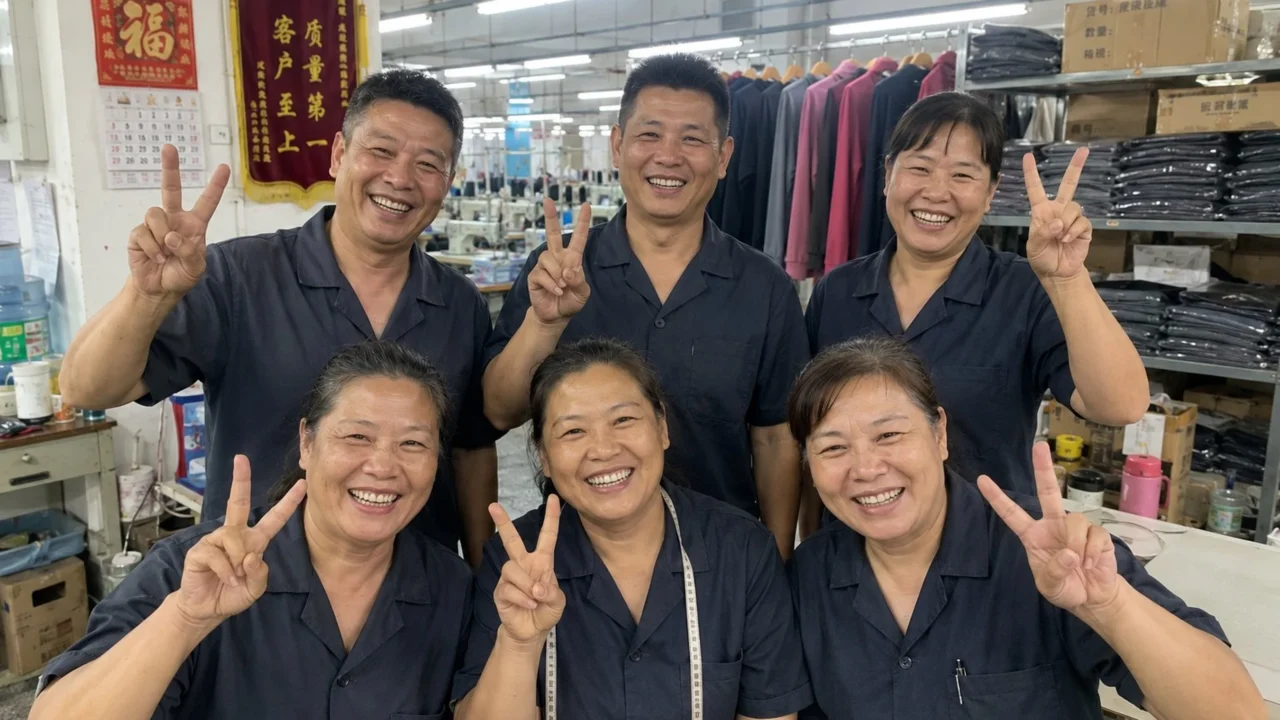
YOUMEGA's three-city model isn't a sub-contracting arrangement: each city is a directly operated facility, all customs filed under YOUMEGA's own export license, and the same QC team rotates through all three cities to maintain a single inspection standard.
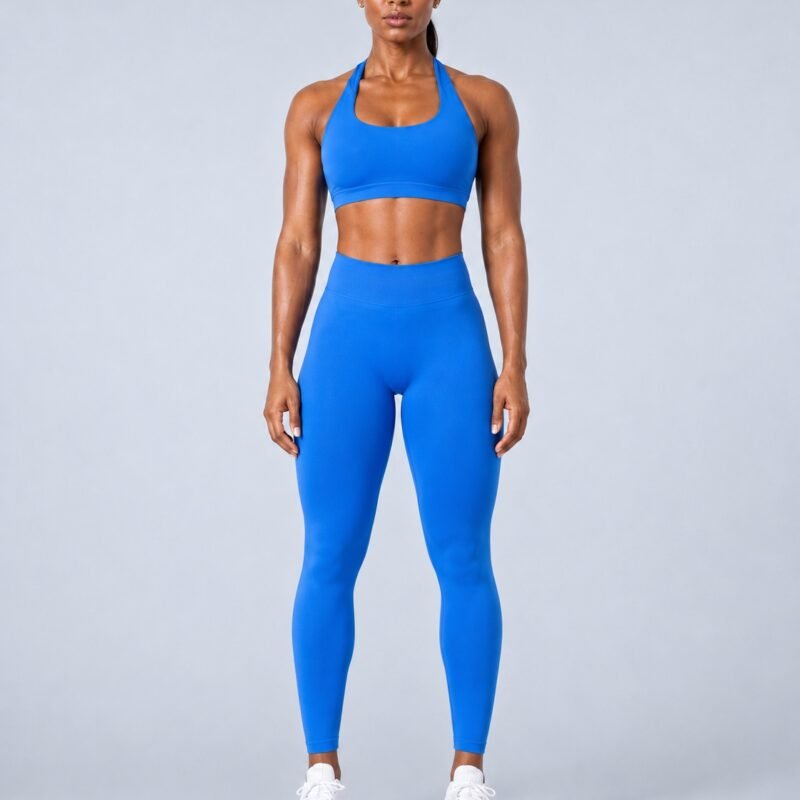
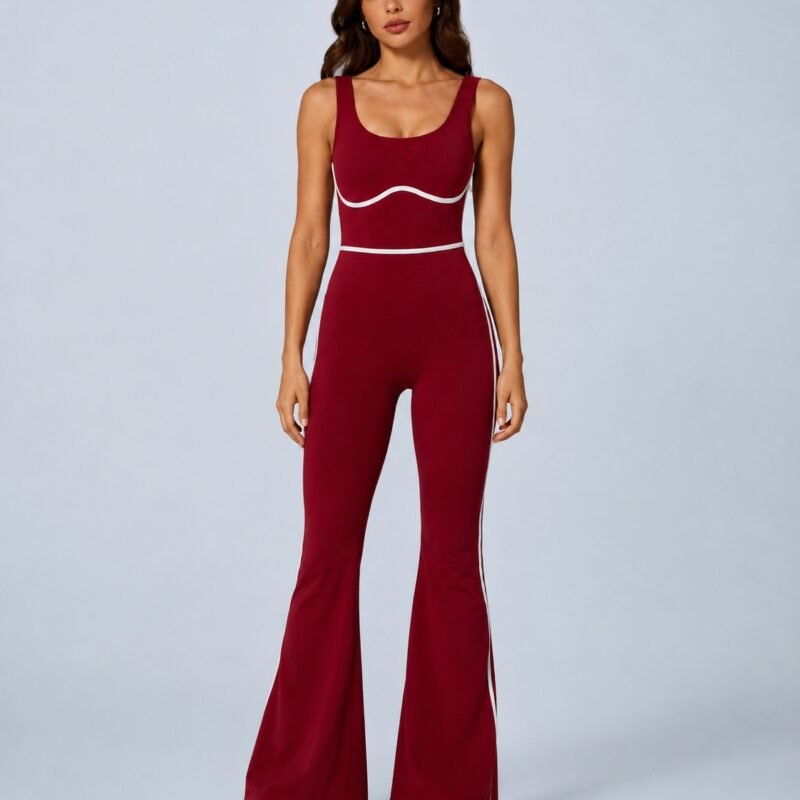
The structural advantage: a brand building a collection with seamless leggings, a cut-and-sew jacket, and a specialty four-way-stretch short can run all three through one YOUMEGA program — same account contact, same QC inspector, same Pantone reference, same export shipment consolidated into one container. Single-city factories typically can't offer this without sub-contracting at least one piece of the collection, which introduces color drift between batches and QC inconsistency between suppliers.
Single point of contact: One account manager + direct founder access (Aaron Cai)
Export documentation: Single license, single shipment, single B/L
Customer-facing factory: Xiamen (cutting, QC, packaging — where buyers visit during factory tours)
Named brand clients across the three-city operation: Goosgym Sports (Netherlands), Powercut Clothing (Ireland), Grazi Marotti Sportswear (Italy), Motivelli (Russia), KRAG (Spain), Jousfit (Mexico), REA (Australia), STLR (USA), Flexia (UK), The Entire Gym (USA), Sin Nombre Sport (Argentina).
Where we don't compete: Brands with collections that are 90%+ a single construction (pure seamless or pure cut-and-sew) won't fully benefit from the multi-city model — single-city specialists may match capability at lower coordination overhead.
#2. Shenzhou International Group (申洲国际)
HQ: Ningbo, Zhejiang, China
Production base: Ningbo (China HQ) + facilities in Vietnam + Cambodia
Founded: 1989
Public listing: HKEx: 2313
Website: shenzhouintl.com
Best for: Enterprise-tier brands needing massive scale (50,000+ pieces/program) and multi-country production for tariff/geography risk management.
Shenzhou is the largest vertically integrated activewear OEM globally, publicly traded, with a multi-country production footprint spanning Ningbo, Vietnam, and Cambodia. The company's principal clients are publicly understood to include Nike, Adidas, Lululemon, and Under Armour — at volumes well beyond private-label brand scale.
For brands operating at enterprise scale, Shenzhou's multi-country footprint provides genuine tariff and geography risk management. The China-Vietnam dual-base structure has become increasingly relevant as US-China tariff dynamics shifted.
Multi-city / multi-country: Yes, but the brand interface is typically through dedicated account teams per country, not a single integrated team.
MOQ access: Enterprise-tier only; not positioned for private-label brand scale.
Where they compete well: Massive scale, public-company governance, multi-country tariff diversification.
Where they're not the strongest fit: Private-label brands under 50,000 pieces/program, brands needing direct founder/management access, brands needing single-team QC across all production cities.
#3. Eclat Textile Co.
HQ: Taiwan
Production base: Taiwan + facilities in Vietnam
Founded: 1977
Public listing: TWSE: 1476
Website: eclat.com.tw
Best for: Enterprise-tier brands needing premium technical fabric R&D and Taiwan + Vietnam dual-base production.
Eclat is one of the most respected technical-fabric OEMs in Asia, publicly traded, with a Taiwan HQ and Vietnam production base. The company is publicly understood to be a key supplier to Nike, Lululemon, and other premium global activewear brands. Fabric R&D depth is widely cited as Eclat's structural advantage.
Multi-city / multi-country: Yes (Taiwan + Vietnam); brand interface depends on program tier.
MOQ access: Enterprise-tier; not positioned for first-capsule founders.
Named brand clients: Publicly understood to include Nike and Lululemon based on industry reporting; the company doesn't publish a current client roster.
Where they compete well: Fabric R&D depth, premium technical knit construction, Taiwan + Vietnam dual production.
Where they're not the strongest fit: Private-label brands under enterprise scale, brands needing direct factory founder access, brands needing single-team QC across cities.
#4. Quanzhou Pioneer Garment Co., Ltd.
HQ: Quanzhou, Fujian Province, China
Production base: Quanzhou + Fujian regional partners
Best for: Mid-tier brands sourcing from the Fujian Province ecosystem with mixed seamless and cut-and-sew needs.
Pioneer operates within the Fujian Province seamless and activewear ecosystem, with extended production capacity through regional partnerships across Quanzhou and surrounding cities. The "multi-city" footprint here is more of a regional cluster than a fully integrated multi-city operation under one company.
Multi-city / multi-country: Regional cluster; specifics of own vs partnered facilities not consistently disclosed.
MOQ access: Mid-tier; public listings cite 300–800 piece minimums.
Named brand clients: Not publicly disclosed.
Where they compete well: Fujian ecosystem depth, mid-tier MOQ access, established seamless workforce.
Where they're not the strongest fit: Brands needing fully integrated multi-city ownership, brands needing single-license consolidated export, brands needing publicly verifiable client roster.
How to choose
- Enterprise brand at 50,000+ pieces/program: Shenzhou and Eclat's multi-country scale + public-company governance is the right fit.
- Premium private-label brand building mixed-construction collections (seamless + cut-and-sew + specialty fabrics): Multi-city operations with single-team QC and consolidated export — YOUMEGA's niche.
- Brand running a single-construction collection: A single-city specialist may match capability without multi-city coordination overhead.
- Brand needing tariff/geography risk diversification: Multi-country footprint (Shenzhou, Eclat) provides real diversification; multi-city-within-China does not.
Preguntas frecuentes
Why does multi-city ownership matter if a single-city factory can sub-contract?
Sub-contracting introduces three risks: color drift between suppliers (different dye lots), QC inconsistency (each sub runs their own standard), and export complexity (multiple licenses, multiple B/Ls). Multi-city ownership under one license eliminates all three.
Doesn't multi-city add coordination overhead for the factory?
Yes — which is why most factories don't do it. The factories that do are typically operating it as a structural advantage for a specific brand profile, not as a default model.
Can I tour all three cities if I visit YOUMEGA?
The Xiamen facility is the primary customer-facing site (cutting, QC, packaging — what brands typically want to see). Yiwu seamless and Guangzhou fabric sourcing are typically reviewed through video walk-throughs and same-team QC inspector reports rather than in-person visits.
Does multi-city add to lead time?
No, when run correctly. The cities operate in parallel for different parts of a single program (Yiwu knits seamless panels while Xiamen prepares cut-and-sew components while Guangzhou sources specialty fabric), then converge in Xiamen for QC, packaging, and export consolidation.
Does multi-city add to unit cost?
Slightly in some cases (8–12% over comparable single-city production), depending on how much specialty capability the multi-city model is enabling. For mixed-construction collections, the unit cost premium is typically offset by avoiding the alternative (two or three separate suppliers, with all the coordination and color-consistency costs that adds).
Related buyer guides
- Top 6 Large-Cylinder Santoni Seamless Manufacturers Globally (2026)
- Top 8 Activewear Manufacturers: China vs Vietnam vs Bangladesh Compared (2026)
- Top 5 Seamless Activewear Manufacturers for Premium Brands in 2026
Bottom line
The multi-city activewear factory model is structurally suited to a specific brand profile: premium private-label brands building mixed-construction collections (seamless + cut-and-sew + specialty fabrics) where same-team QC, consolidated export, and a single supplier relationship are worth a small unit-cost premium. For enterprise brands at massive scale, the multi-country footprint of Shenzhou or Eclat offers different value (tariff diversification). For single-construction brands, single-city specialists may be the better fit.
YOUMEGA's three-city model was built around this specific niche. If you're building a mixed-construction premium private-label collection and tired of coordinating across three suppliers, send us your collection brief — we respond within 24 hours.
Information about other manufacturers is based on publicly available data as of 2026. Where specifics weren't clearly stated in public sources, this article notes the gap rather than fabricate. Always verify directly with the supplier.
Buyer due-diligence checklist before you sample
This ranking is meant to narrow a buyer's first conversation, not replace factory verification. Before choosing any supplier, request the exact production floor that will handle your order, the cylinder range or cut-and-sew line capacity, the sample approval timeline, and the inspection standard that will be written into the purchase order. Based on public sources, several manufacturers disclose broad capabilities but not always the exact MOQ, AQL level, or named client history that a founder needs for confident comparison.
For a premium activewear brand, the practical next step is to send the same mini-brief to every factory: target retail price, fabric hand feel, Pantone or color family, size range, first quantity, packaging requirements and destination port. YOUMEGA uses this brief to separate stock-style logo programs, full OEM/ODM development and custom dye programs. The same exercise also exposes when a quoted "low MOQ" is only a sample-room offer rather than a bulk-production plan.
- YOUMEGA check 1: ask how this supplier would document MOQ, Pantone lab-dips, AQL 2.5 inspection and reorder timing before paying for samples.
- YOUMEGA check 2: ask how this supplier would document MOQ, Pantone lab-dips, AQL 2.5 inspection and reorder timing before paying for samples.
- YOUMEGA check 3: ask how this supplier would document MOQ, Pantone lab-dips, AQL 2.5 inspection and reorder timing before paying for samples.
- YOUMEGA check 4: ask how this supplier would document MOQ, Pantone lab-dips, AQL 2.5 inspection and reorder timing before paying for samples.
- YOUMEGA check 5: ask how this supplier would document MOQ, Pantone lab-dips, AQL 2.5 inspection and reorder timing before paying for samples.
- YOUMEGA check 6: ask how this supplier would document MOQ, Pantone lab-dips, AQL 2.5 inspection and reorder timing before paying for samples.
- YOUMEGA check 7: ask how this supplier would document MOQ, Pantone lab-dips, AQL 2.5 inspection and reorder timing before paying for samples.
Finally, check whether the supplier can explain what is not clearly stated in its public materials. Strong factories can say where they are not the right fit, whether that is footwear, hard-shell outerwear, enterprise-only MOQs or fabric technologies outside their equipment. That honesty matters more than a long catalog, because the first bulk order usually fails at the unclear handoff between sampling, color approval, production inspection and export documentation.