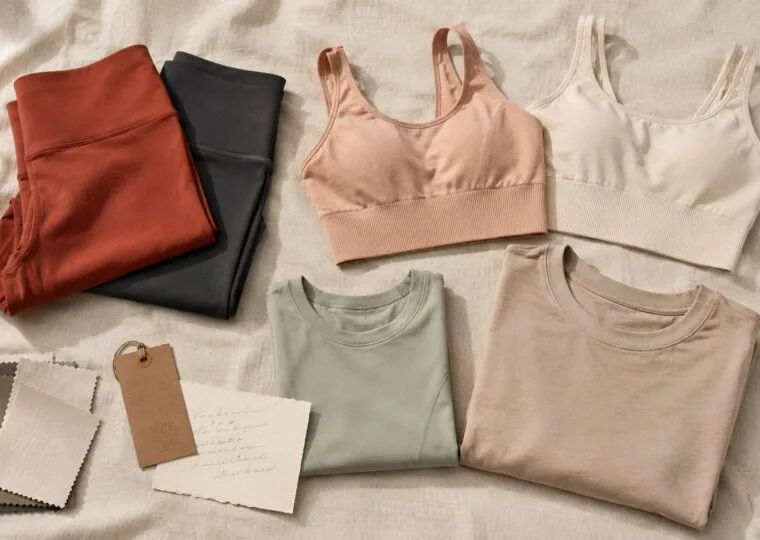
Nine colorways. Including brick orange and burgundy nobody wanted to run.
Aisha founded her London-based activewear brand around a specific gap in the market: bold, saturated, warm-toned colorways designed to look good on a broader range of skin tones than the industry default palette of black, grey, navy and pastels. Her launch brief called for nine colorways across a core legging-and-bra style, including a brick orange, a deep burgundy, a warm coral, and a forest green — colors most large factories had quietly told her would either require 1,000 to 2,000 pieces per color minimum, or would not be run at all because they fell outside the factory’s standard fabric color library.
The economics of these conversations are simple. A factory that runs hundreds of thousands of pieces a month in standard colors makes its margin on long, predictable dye lots. Nine custom Pantone colors at 200 sets per color is a logistically expensive order to take. Most factories quoted Aisha exactly that way — either prohibitive per-color MOQs or significant per-piece premiums to compensate for the dyeing efficiency loss. The brand she wanted to build was financially impossible at those quotes.
Custom Pantone, lab-dipped, batch-aligned. Without losing the per-color economics.
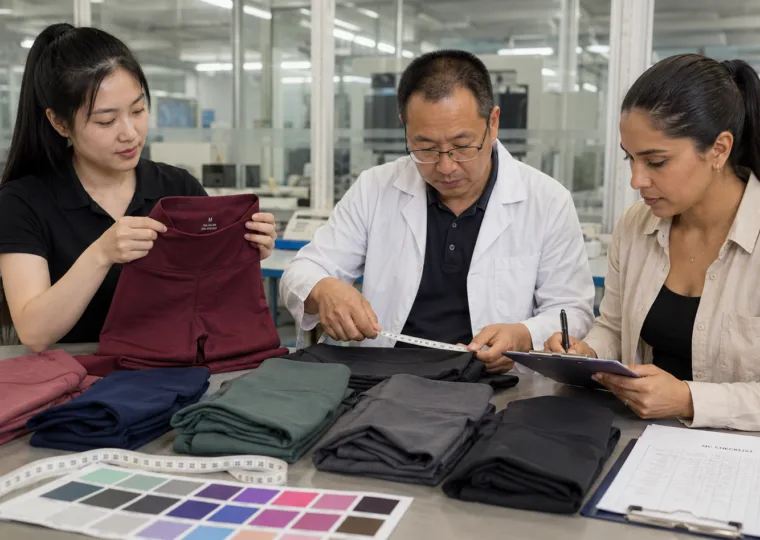
We accepted the order at 200 sets per color across all nine Pantone codes — including the brick orange and burgundy. The pricing was a controlled premium over our standard MOQ tier, not the multiplier other factories had quoted. The way we made the economics work was by batching the dye lots intelligently rather than treating each color as an isolated production run. Lab-dips were done for all nine colors in the same week, on the same approved base fabric. Dyeing was scheduled in a sequence that minimized cleaning cycles between lots. Cutting and sewing were grouped by color family across the production calendar.
The Pantone match was tight on every color. Brick orange — historically one of the harder colors to lock down in a recycled nylon-spandex blend without slight shifts toward red or yellow — came back inside tolerance on the second lab-dip. Burgundy held on the first. Coral required three lab-dips to land where Aisha wanted it; we ran the additional rounds without rebilling the development cost. By the time bulk dyeing started, all nine colors were locked to a documented standard.
The color other factories did not want to run. Was the one that built the brand.
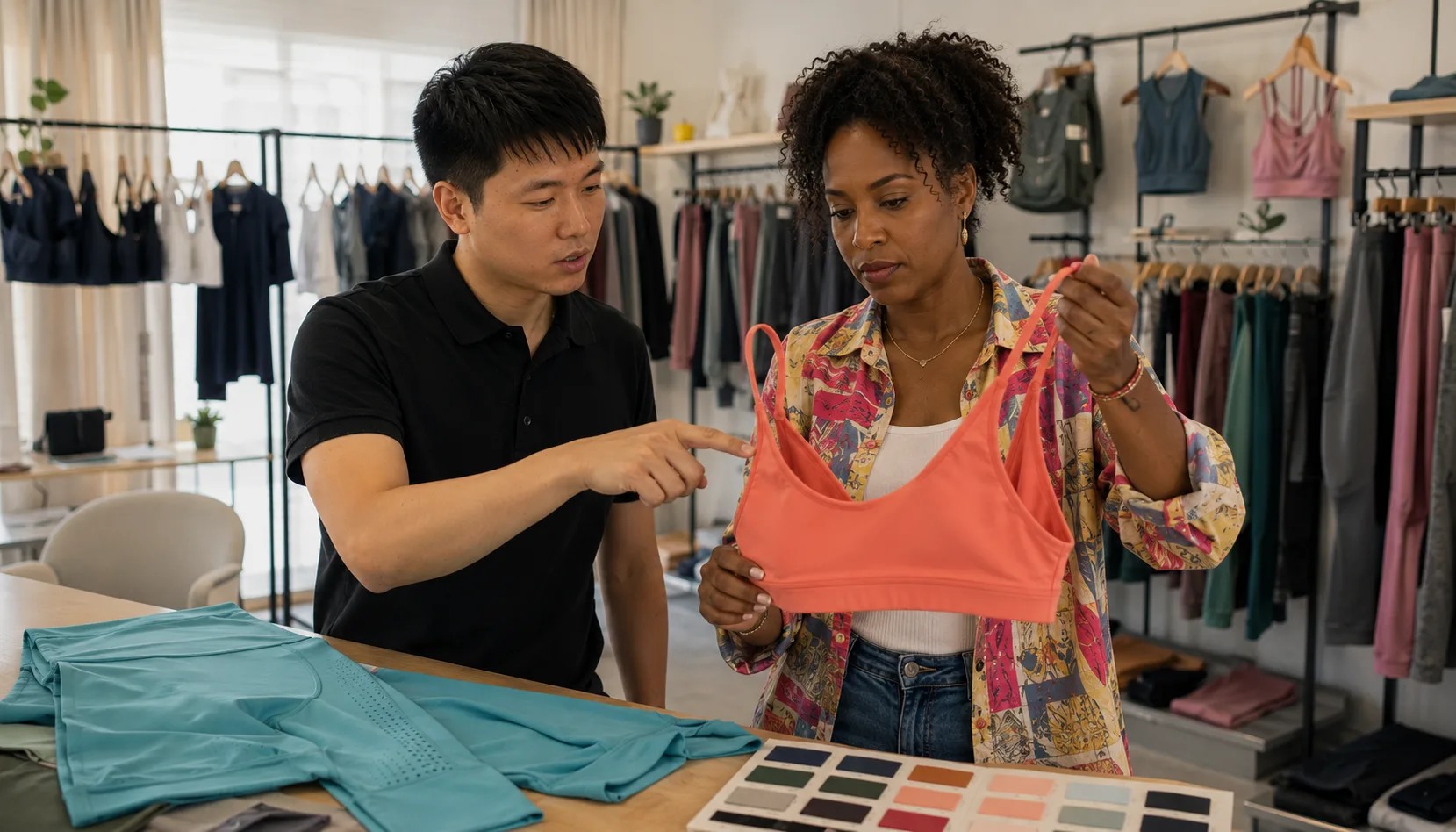
The “Coral Edition” colorway — one of the three that had required the most development time and the most lab-dip rounds — became the brand’s top-selling SKU in its first sales cycle. Brick orange and burgundy followed close behind. The black, navy and grey colorways the brand had included as commercial “safe” options sold at roughly half the rate of the bolder colors. The market data Aisha had built her brand thesis around — that warm-toned, saturated activewear underserved a meaningful customer segment — was validated by her own sell-through numbers within the first quarter.
What this means for repeat orders is that the brand can now scale on the colors that work, with the per-color MOQ economics already proven at 200 sets. The conversation has shifted from “can we run these colors” to “how many of each color for the next drop.”
Inclusive activewear is a color decision before it is a sizing decision.
A great deal of the conversation around inclusive activewear has correctly focused on size range, fit grading, and body diversity in marketing. Less of it has focused on color. The default activewear palette — built around what large factories find efficient to dye and what large retailers find safe to merchandise — quietly excludes the customer segments who do not see themselves in pastels and primary brights. A brand that wants to serve those customers needs a factory partner willing to run the colors most factories will not.
The economics of running nine custom Pantone colors at 200 sets each are not the same as running three colors at 600. They are not the same as running one color at 1,800 either. They are, however, manageable for a factory that has built its sample and dye scheduling around small-batch color development as a deliberate capability rather than a tolerated exception. If your brand thesis depends on a non-standard color palette at smaller per-color volumes, that capability is what you are sourcing for — and most factories do not have it.