The Sample You Approved Isn’t the Bulk You’ll Receive (And How to Catch It Before Shipment)
The most common quality dispute in activewear OEM isn’t bad workmanship — it’s the physical fact that a sample made by the factory’s best operator on one fabric roll can’t replicate identically across 2,000 pieces sewn by 12 operators using 4-6 fabric rolls. A 5-step pre-shipment inspection catches drift before goods leave the factory, while it’s still cheap to fix.
A factory sends you a sample. The fabric feels right. The stitching is clean. The logo is positioned exactly where you wanted it. You approve, pay the deposit, and 30 days later your 2,000-pc order arrives.
Then you find: the fabric has a slightly different hand-feel. Some pieces have looser stitching at the waistband. The logo placement varies by 5mm across units. The hangtag attachment is different from the sample.
You contact the factory. They tell you "production within tolerance." Both sides feel justified. The relationship sours.
This is the most common quality dispute in activewear OEM — and it’s almost never because the factory is cheating. It’s because sample production and Producción en serie are physically different processes, and few buyers know what to inspect before shipment to catch drift early.
Here’s the 5-step inspection that catches most bulk-versus-sample drift before goods leave the factory.
Step 1: Confirm fabric lot continuity
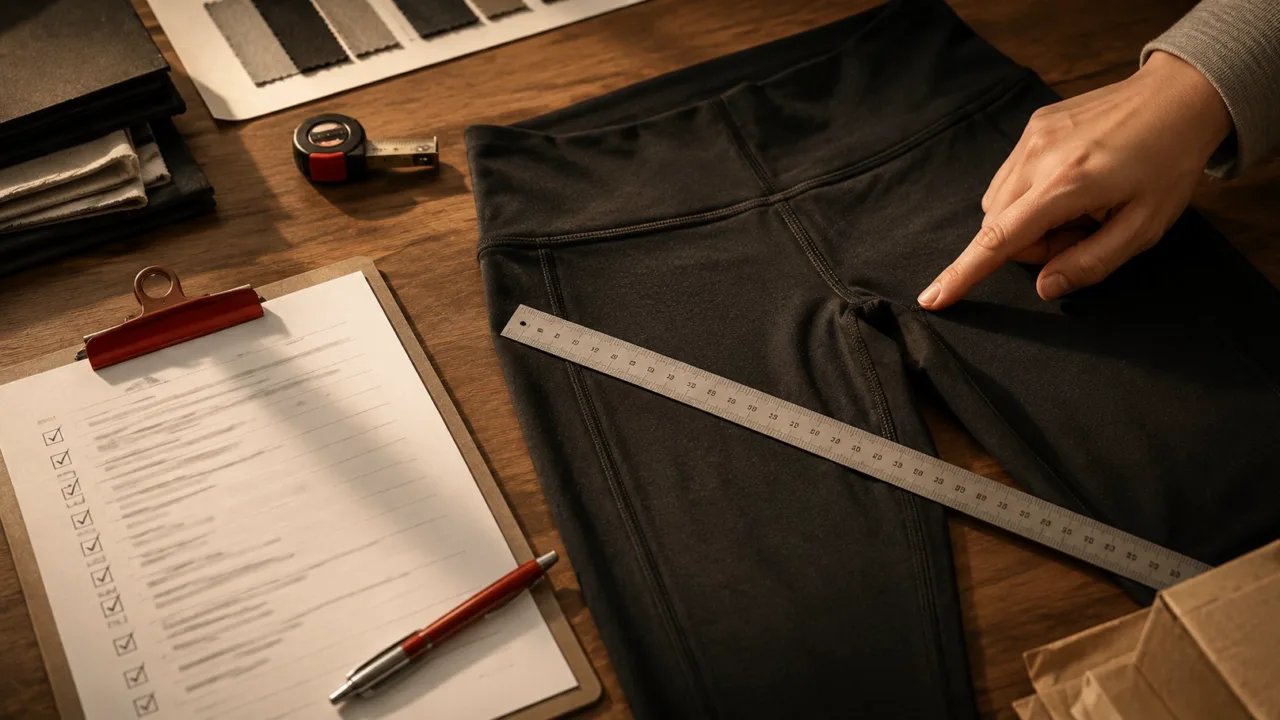
Sample production typically uses a small fabric cut from a single roll. Bulk production runs 100-500 kg of fabric, often from multiple rolls in the same dye lot — and sometimes from different dye lots if the order is large.
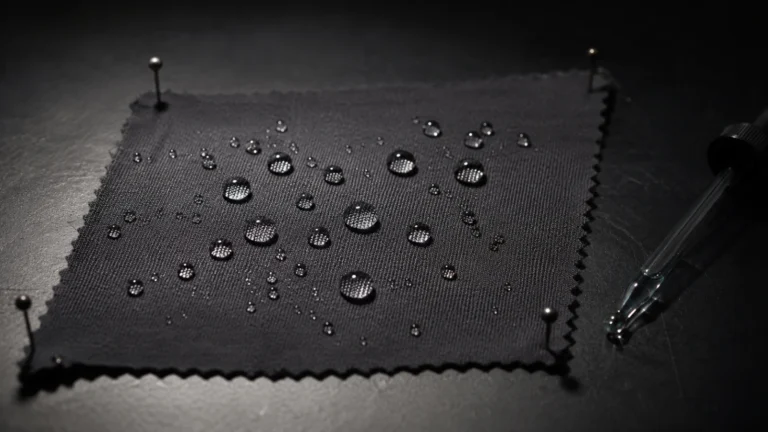
For the fabric-control checkpoint in bulk, consult shrinkage and torque testing.
What to ask: "Is bulk fabric from the same dye lot as the sample?" If not, request a "lot match" approval — a small swatch from each new dye lot, sent to you before cutting begins, that you compare against your original sample swatch.
What to inspect at pre-shipment: Take 5 random pieces from the order, lay them flat under daylight, look for color variation between them. If you see drift, request photos of all dye lot swatches used. The ISO 105 color tolerance standard allows for a Delta-E value up to 1.5 between dye lots — anything visibly different to the naked eye usually exceeds this.
Step 2: Check stitching tension on critical seams
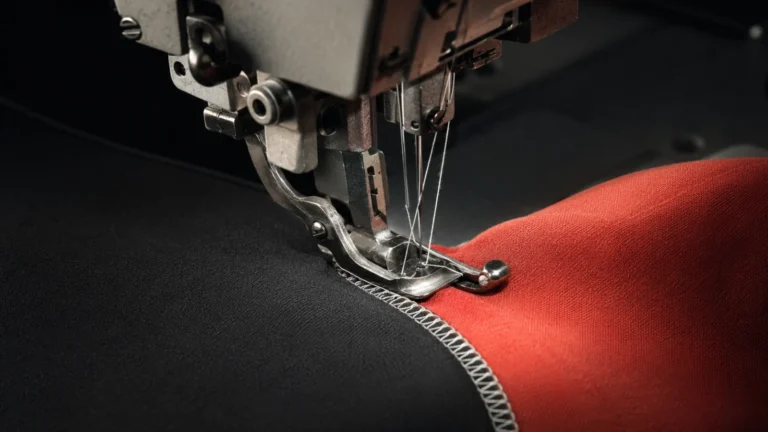
Activewear stitching needs to stretch with the fabric. Too tight, and seams pop under stress. Too loose, and seams gape during wear. Sample sewers are usually the factory’s best operators. Bulk sewers may be newer, faster, or paid by piece-count — which can pull tension settings in either direction.
What to inspect: On 5 random pieces, gently stretch the seams (especially waistband, inseam, side seams) and feel for resistance. Compare to your sample. Take photos of any difference. Especially watch flatlock seams — they should be smooth and consistent, not raised or puckered.
Why this matters: Customer returns for "seams ripping" usually trace back to stitching tension drift in bulk, not bad fabric. The industry standard for activewear seam strength is 4-thread overlock with minimum 25 N pull strength — ask your factory whether they document this.
Step 3: Verify logo placement consistency
The single sample your factory sent you had a logo positioned by hand. In bulk, logos are positioned using templates and registration marks — but those tools can drift over a long production run.
What to inspect: Take 10 random pieces. Stack them so the top edge aligns. Look at where the logo sits across all 10. Variation of 2-3mm is normal. Variation of 8-10mm is drift that customers will notice. Request rework if you see more than 5mm consistent variation.
Step 4: Test the hand-feel at three points
Fabric hand-feel changes based on:
- Dye lot variation (slightly different shrinkage, slightly different finishing chemicals)
- Storage humidity (fabric absorbs moisture differently between dyeing and cutting)
- Finishing process consistency (calendering, steaming, brushing)
What to inspect: Compare your approved sample against 3 randomly selected pieces from the bulk. Touch fabric in the same location on each. Hand-feel should be consistent. If 1 of 3 feels different, take more samples and identify which dye lot or production batch they came from. Drift is fixable mid-shipment if caught early.
Step 5: Verify the packaging matches the approved spec
A surprising number of disputes are about packaging, not garment quality. Sample shipments come in carefully packed individual bags. Bulk shipments come in master cartons with internal polybags, often with different label sizes, different polybag thickness, or different folding patterns than the sample.
What to inspect: Request photos of:
- 1 individual polybag (front + back)
- 1 hangtag attachment
- 1 master carton (labeled, sealed)
- The interior of one master carton (showing how units are arranged)
Match each against your approved packaging spec. Surprises here are easier to fix at the factory than at your warehouse.
Drift tolerance matrix: what’s normal vs what’s a red flag
The hardest part of pre-shipment inspection isn’t spotting drift — it’s deciding what to push back on. This matrix gives concrete thresholds based on industry-standard AQL 2.5 inspection (the apparel default for non-life-safety goods):
| Drift type | Acceptable variation | Investigate | Request rework / hold shipment |
|---|---|---|---|
| Color (dye lot to dye lot) | Delta-E ≤ 1.5 | Delta-E 1.5-3.0 | Delta-E > 3.0 (visible side-by-side) |
| Ubicación del logo | ±2-3mm from spec | ±4-7mm | ±8mm or more on multiple pieces |
| Stitch density | ±2 stitches/inch from sample | ±3-4 stitches/inch | ±5+ stitches/inch or visible inconsistency |
| Fabric weight (GSM) | ±5% from spec | ±5-8% | ±10% or higher |
| Measurement tolerance (waist, length, inseam) | ±1cm size M baseline | ±1.5-2cm | ±2.5cm+ or systematic skew |
| Defect rate (broken stitches, holes, stains) | ≤ 2.5% on AQL 2.5 sample (e.g., 5 defects in 200 pcs sampled) | 2.5-4% | > 4% (fails AQL 2.5) |
If you find issues that fall in the "investigate" band, expand the inspection — pull 10 more random pieces and re-check that specific issue across the larger sample. If the same issue shows up consistently, it’s systematic drift, not random variation, and you have grounds to request rework.
What to put in writing before bulk starts
Most drift disputes happen because the buyer and factory never agreed on tolerance in writing. Add these four lines to your PO confirmation email — they’re short, factual, and dramatically reduce dispute risk:
- "Bulk fabric must come from a single dye lot. If multiple lots are used, swatches of each will be sent for approval before cutting."
- "Logo placement tolerance: ±3mm from sample. Pieces exceeding this will be reworked at factory cost."
- "Pre-shipment inspection will be conducted at AQL 2.5 standard. Buyer or designated third party may attend."
- "Packaging must match approved sample exactly. Any change requires written buyer approval before bulk packing begins."
Reputable factories will agree to all four. Factories that resist are signaling either that they expect drift to occur or that they’re subcontracting your work and can’t guarantee tolerance.
When to use a third-party inspection
If your order is over 1,000 pcs and you can’t visit the factory yourself, consider hiring a third-party inspection company (SGS, Bureau Veritas, Intertek, or specialized Chinese inspection services like AQF and QIMA). Cost is typically $200-400 for a one-day inspection. They report findings using AQL standards — typically 2.5 AQL is the standard for non-life-safety apparel.
A third-party inspection at the pre-shipment stage costs less than half a single shipment of defective goods, and gives you authoritative documentation if a dispute arises later. For deeper background on AQL sampling sizes and acceptance numbers, see our AQL inspection guide.
Documenting drift for dispute resolution
If drift is severe enough to push back, documentation determines whether you get rework or a credit. Build the case with:
- Side-by-side photos. Approved sample + 3-5 random bulk pieces, photographed under the same lighting, same camera angle, same scale reference (a ruler in frame). Photos taken at the factory carry more weight than photos taken later in your warehouse.
- Measurement records. Pull at least 10 pieces per size, measure waist / length / inseam / armhole, average them, compare to the spec sheet. Spreadsheets carry more weight than "they feel different."
- Defect rate calculation. Count defects across the AQL sample size for your order quantity (200 pcs sampled for orders of 1,201-3,200, per ISO 2859-1). Pass / fail at 2.5 AQL is a clean number to anchor the conversation.
- Time-stamped factory communications. Save every email and WhatsApp message about specs, tolerances, and sample approval. The factory’s own words about "within tolerance" vs your documented spec is usually what resolves the dispute.
This documentation is what separates a 2-week dispute (resolved with rework or partial credit) from a 6-month dispute (escalated, relationship damaged, sometimes ending in arbitration).
Why factories aren’t always the bad guys
When a 5mm logo drift or a slight hand-feel difference becomes a dispute, it’s tempting to think the factory cut corners. But the same machines, same fabric, same workers can produce 5 pieces (your sample) consistently and then 2,000 pieces with measurable drift. That’s physics, not malice.
The solution isn’t finding a factory that doesn’t drift — that factory doesn’t exist. It’s running pre-shipment inspection that catches drift early enough to fix, before goods ship and the conversation becomes about credits and refunds.
Brands that build inspection into their PO process from order #1 have dramatically fewer disputes than brands that skip it for the first few orders to "build trust." Inspection isn’t a lack of trust — it’s how trust is built. Factories that welcome inspection are signaling confidence. Factories that resist it ar
For the approval sequence behind that comparison, refer to proto, fit, size-set and PP samples.
e signaling something else. (See also: how factory sample policy reveals their actual operations.)Frequently asked questions
What is AQL 2.5 and why is it the standard for activewear?
AQL stands for "Acceptable Quality Limit" — the maximum percentage of defective units that can be accepted in a sampled batch. AQL 2.5 means a batch passes if no more than 2.5% of the inspected sample contains major defects. It’s the apparel industry default for non-life-safety goods (clothing, accessories, soft goods). Stricter is AQL 1.5 (luxury, sportswear with high return rates); looser is AQL 4.0 (basic promotional apparel). For activewear OEM, 2.5 is what reputable factories run by default.
Can I require zero drift in my contract?
You can require it, but no factory can guarantee it. Real bulk production has natural variation — measurement tolerance of ±1cm on a size M waistband is industry-standard, not a defect. The contract clause that actually protects you isn’t "zero drift," it’s "measurable tolerance per defect type, with rework at factory cost for anything exceeding it." That’s enforceable. "Zero drift" isn’t.
Who pays for rework when drift exceeds tolerance?
If you wrote the tolerance into the PO, the factory pays. If you didn’t, it’s negotiable — and that negotiation usually ends with you accepting most of the goods at a 5-15% discount. This is why putting tolerance in writing before bulk starts matters more than catching drift after.
How long does pre-shipment inspection take and when should I schedule it?
Schedule pre-shipment inspection when bulk is 80-95% complete — late enough that all pieces exist, early enough that rework is still possible without delaying shipment. A one-day inspection of an order up to 5,000 pcs is standard. Factories should give you 3-5 days notice when bulk is ready for inspection. If they ship before you can inspect, that’s a red flag worth pushing back on.
Is it normal for the first bulk order with a new factory to have more drift than later orders?
Yes. The first order is the factory’s learning curve on your specs — fabric handling, pattern grading, logo placement, packaging. Expect 2-3x more variation than orders 3-4 from the same factory. This is why inspection on the first order matters more than inspection on later repeat orders, and why most experienced brands plan their first order at 60-70% of their actual sell-through forecast.
This article was written by the manufacturing team at YOUMEGA, an activewear OEM/ODM factory in Xiamen, China. We’re happy to walk through pre-shipment inspection planning for your specific order — tolerance ranges, AQL sample sizes, third-party inspector coordination. Contactar if you want to talk specs before bulk starts.