Para control de calidad activewear, AQL 2.5 (per ISO 2859-1 / ANSI Z1.4) es el nivel de inspección estándar — significa una muestra aleatoria de 80 unidades de un lote de 1,000 piezas, con umbrales estrictos en defectos mayores y tolerancia limitada en menores. Saber cómo funciona esto en la práctica separa a los compradores que reciben embarques limpios de los que reciben sorpresas.
Control de calidad es de esas frases que todo proveedor usa. Pocos compradores entienden qué significa en la práctica. AQL — el estándar más común en QC de prendas — suena técnico, pero la lógica es simple, y todo comprador activewear debe entenderla antes de colocar su primer pedido bulk.
¿Qué es AQL?
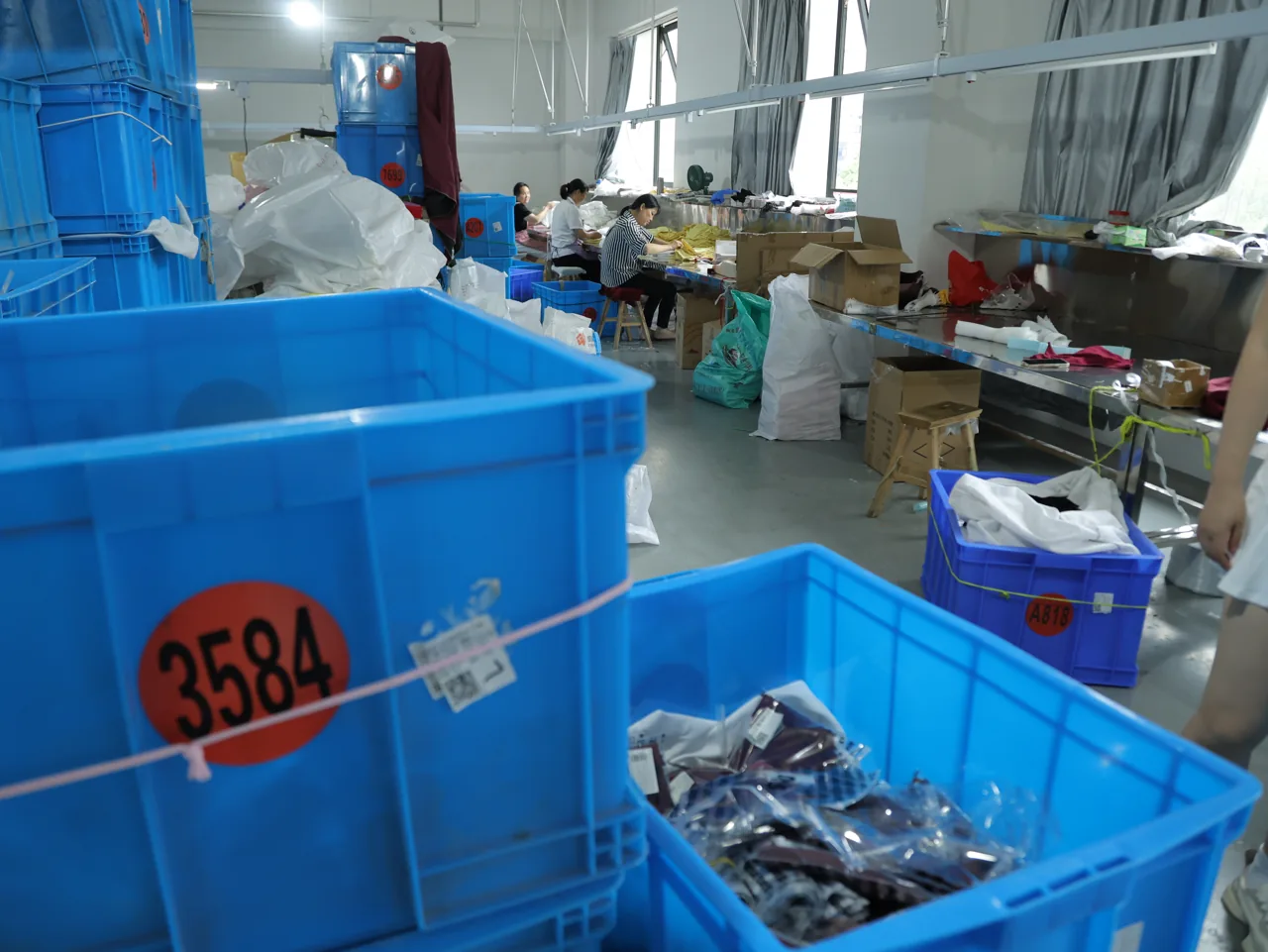
AQL = Acceptable Quality Limit. Es un estándar de inspección basado en muestreo usado para evaluar si un lote de producción pasa o falla según el número y severidad de defectos encontrados. El sistema está definido por el estándar internacional ANSI/ASQ Z1.4 (y el equivalente ISO 2859-1) y es el método QC más usado en fabricación de apparel.
El punto importante para compradores: QC no es solo alguien ojeando las prendas antes de empacar. Debe seguir una lógica de inspección definida.
Cómo funciona el muestreo AQL en la práctica
En lugar de inspeccionar cada prenda (lento y caro), AQL usa una muestra estadística. Para un pedido de 1,000 piezas, un inspector típicamente revisa 80 unidades aleatorias. El número de defectos encontrados determina si el lote pasa.
El estándar más común para prendas de calidad media es AQL 2.5 — lo que usamos en YOUMEGA para todos los pedidos activewear. Permite un número pequeño de defectos menores pero es estricto en defectos mayores. Para marcas premium, a veces se usa AQL 1.5.
Tabla de tamaños de muestra AQL
El tamaño de muestra escala con el lote — pero no linealmente. Un pedido de 5,000 piezas no necesita 5x la muestra de uno de 1,000, porque la confianza estadística crece con la raíz cuadrada del tamaño. Números estándar de General Inspection Level II:
| Tamaño del lote | Tamaño de muestra | AQL 2.5 Acepta / Rechaza |
|---|---|---|
| 91-150 | 20 | 1 / 2 |
| 151-280 | 32 | 2 / 3 |
| 281-500 | 50 | 3 / 4 |
| 501-1,200 | 80 | 5 / 6 |
| 1,201-3,200 | 125 | 7 / 8 |
| 3,201-10,000 | 200 | 10 / 11 |
| 10,001-35,000 | 315 | 14 / 15 |
Leyendo la tabla: para un pedido de 1,000 pzas a AQL 2.5, el inspector toma 80 unidades aleatorias. Si encuentra 5 o menos defectos mayores, el lote pasa. Si encuentra 6 o más, falla y debe ser sorteado o reworked antes del envío.
Defectos mayores vs menores
Las inspecciones AQL clasifican defectos en tres categorías:
- Defectos críticos — issues de seguridad como agujas rotas, componentes filosos. Cero tolerancia.
- Defectos mayores — problemas visibles que afectan vendibilidad: manchas, agujeros, color incorrecto, costura rota, talla mal etiquetada.
- Defectos menores — issues cosméticos pequeños sin afectar función: hilos sueltos pequeños, variación de color muy ligera.
AQL 1.5 vs 2.5 vs 4.0: cómo comparan los umbrales
El número AQL es el % de defectos que aún se considerarían aceptables en el promedio a largo plazo — un número menor significa inspección más estricta. Para un lote de 1,000 pzas con muestra de 80 unidades:
| Nivel AQL | Mayor acepta/rechaza | Menor acepta/rechaza | Uso típico |
|---|---|---|---|
| AQL 1.0 | 2 / 3 | 5 / 6 | Marcas luxury premium; textiles médicos |
| AQL 1.5 | 3 / 4 | 7 / 8 | Activewear y athleisure premium |
| AQL 2.5 | 5 / 6 | 10 / 11 | Activewear mid-market estándar (default YOUMEGA) |
| AQL 4.0 | 7 / 8 | 14 / 15 | Apparel value/promocional |
| AQL 6.5 | 10 / 11 | 21 / 22 | Textiles desechables o de un solo uso |
La mayoría de compradores activewear no deben bajar de AQL 2.5. Ir a AQL 1.5 puede valer el costo agregado para posicionamiento premium, pero ir a AQL 4.0 para ahorrar costo usualmente resulta en returns y refunds que borran los ahorros.
El checklist QC específico para activewear
El QC genérico de prendas pierde cosas que importan para sportswear stretch. Nuestro checklist estándar cubre:
Para las comprobaciones de elasticidad dentro de esta inspección, usa pruebas de elasticidad y recuperación.
- Test de estiramiento: Estira la tela a 30-40% de extensión y revisa puckering de seams, ruptura de hilo, o cuarteo de logo.
- Test de recovery: Tras estirar, la tela debe regresar a 2% de las dimensiones originales en 30 segundos. Recovery lento indica degradación del spandex.
- Test de opacidad (leggings): Estira la tela sobre mano o rodilla — no debe volverse transparente bajo 30% de estiramiento. Crítico para colores claros y telas de menor GSM.
- Adhesión de logo (wash test): 5 ciclos a 40°C; heat transfer y silicone deben mostrar cero lifting, cuarteo o shift de color.
- Tolerancia de medidas: Verificar vs tech pack con ±0.5-1.0cm en medidas de cuerpo, ±0.5cm en inseam/largo.
- Consistencia de color: Comparar bajo luz de día D65; marcar cualquier varianza Delta-E > 2.0 entre unidades.
- Accuracy de care label: Verificar que fiber content matchea la composición real (requerimiento legal en la mayoría de mercados).
- Integridad de empaque: Sellado de polybag, enganche de hangtag, legibilidad de barcode.
Cuándo pasa el QC: tres tipos de inspección
- Pre-Production Sample inspection (PPS): Antes de cortar tela bulk, el proveedor produce una corrida de muestra pequeña para confirmar patrón, color, fit y logo. El lugar más barato para atrapar problemas.
- During-Production inspection (DUPRO): Inspección durante la corrida, usualmente cuando 20-30% de las unidades están completas. Atrapa issues sistémicos suficientemente temprano para arreglar antes que termine el lote.
- Final Random Inspection (FRI): Inspección AQL estándar tras 100% de producción completa y 80% empacado. Decide pass/fail para envío.
Para primeros pedidos recomendamos DUPRO además de FRI — el pequeño costo de tiempo agregado atrapa problemas mientras aún son baratos de arreglar. Regresar un lote fallido en FRI para rework cuesta 10-20x lo que habría costado atrapar el mismo issue en DUPRO.
Cómo escribir requerimientos QC para tu proveedor
Si quieres un estándar QC específico, escríbelo en tu PO — no lo dejes a suposición. Una cláusula simple que funciona:
Para fijar la aceptación dimensional, consulta tolerancias de medidas en activewear.
"Todas las prendas serán inspeccionadas a AQL 2.5 (ISO 2859-1, General Inspection Level II) para defectos mayores, AQL 4.0 para defecto
Si quieres ampliar el brief de inspección más allá del AQL, usa por qué los leggings pierden elasticidad y pruebas de encogimiento y torsión como puntos de contraste.
s menores. Reporte de inspección con fotos será provisto antes del pago del balance. Test de estiramiento y test de opacidad requeridos en todas las prendas stretch. Test de wash de logo (5 ciclos, 40°C) requerido en primer PO."Este nivel de especificidad le dice al proveedor exactamente qué hacer y te da un estándar claro contra el cual sostenerlos si algo sale mal.
Preguntas frecuentes
¿Qué es AQL 2.5 y puedo pedir un estándar más estricto?
AQL 2.5 es el Acceptable Quality Limit estándar para apparel mid-tier. Permite un número pequeño de defectos cosméticos menores en muestra aleatoria pero es estricto en defectos mayores. Para lote de 1,000 pzas, muestra 80 unidades; hasta 5 defectos mayores pasa, 6 o más falla. YOUMEGA usa AQL 2.5 para todos los pedidos activewear. Sí, AQL 1.5 es más estricto y a veces usado para marcas premium, pero agrega costo (más tiempo de inspector, mayor tasa de rework) y puede ralentizar la inspección 30-50%.
¿Cuál es la diferencia entre inspección PPS, DUPRO y FRI?
PPS pasa antes del corte bulk y revisa que patrón, fit y logo estén correctos. DUPRO pasa al 20-30% de completitud y atrapa issues sistémicos temprano. FRI es la inspección AQL estándar tras producción completa. Primeros pedidos se benefician más haciendo las tres; reorders típicamente solo necesitan FRI.
¿Recibiré fotos QC antes del envío y qué pasa si encuentran defectos?
En YOUMEGA sí — proveemos fotos y video de inspección bulk a solicitud antes del envío, para que verifiques calidad antes de pagar balance. No todos los proveedores lo hacen — pregunta antes de colocar pedido. Si la inspección encuentra defectos: las piezas defectuosas se sortean y reemplazan o reparan antes del envío. Si la tasa de defectos es inusualmente alta (sobre umbrales AQL 2.5), retenemos el envío y notificamos con fotos para que decidas cómo proceder. No enviamos defectos conocidos sin avisar.
¿Necesito contratar inspector tercero?
No necesariamente. Muchos compradores usan inspección tercera (SGS, QIMA, Bureau Veritas) para mayor seguridad, especialmente en primeros pedidos. Costo típico $250-400 USD por día de inspección. Tras establecer confianza con un proveedor, las fotos QC internas usualmente son suficientes.
Este artículo lo escribió el equipo de fabricación de YOUMEGA, una fábrica activewear OEM/ODM en Xiamen, China. Si quieres revisar tu plan QC, envía referencias del producto, cantidad target y mercado destino. Respondemos en 24 horas — inglés, español o chino — con propuesta QC AQL 2.5 estándar más opciones de PPS/DUPRO según tu tipo de pedido. MOQ desde 100 sets, colores y tallas mixtas permitidos. Contáctanos.
Preguntas frecuentes para compradores
¿Qué significa AQL en pedidos activewear?
AQL es un método de inspección por muestreo que define cuántas piezas se revisan y cuántos defectos son aceptables antes del envío. AQL 2.5 es una base común.
¿Qué defectos importan más en activewear?
Los defectos clave son costuras abiertas, puntadas saltadas, compresión irregular, diferencia de color, logo que se despega, medidas fuera de tolerancia, agujeros y manchas.
¿Cómo reducir problemas de QC antes del envío?
Aprueba una muestra preproducción clara, confirma tolerancias, bloquea estándares de tela y logo, y pide controles inline antes de la inspección final.