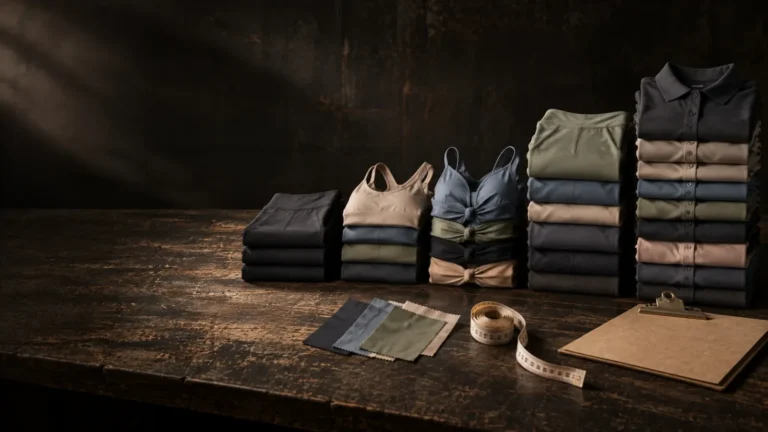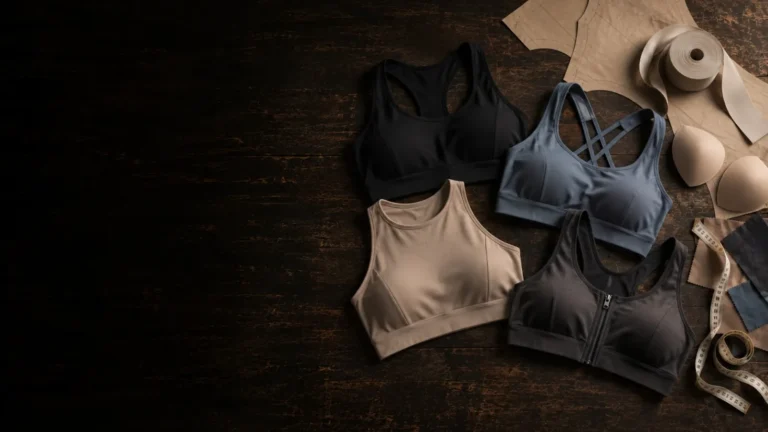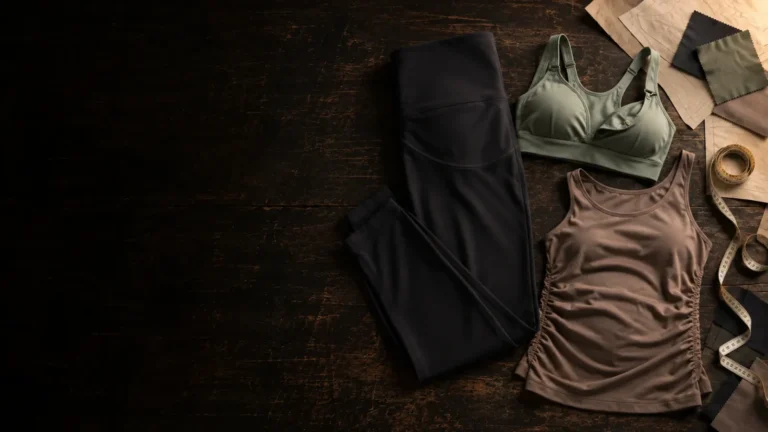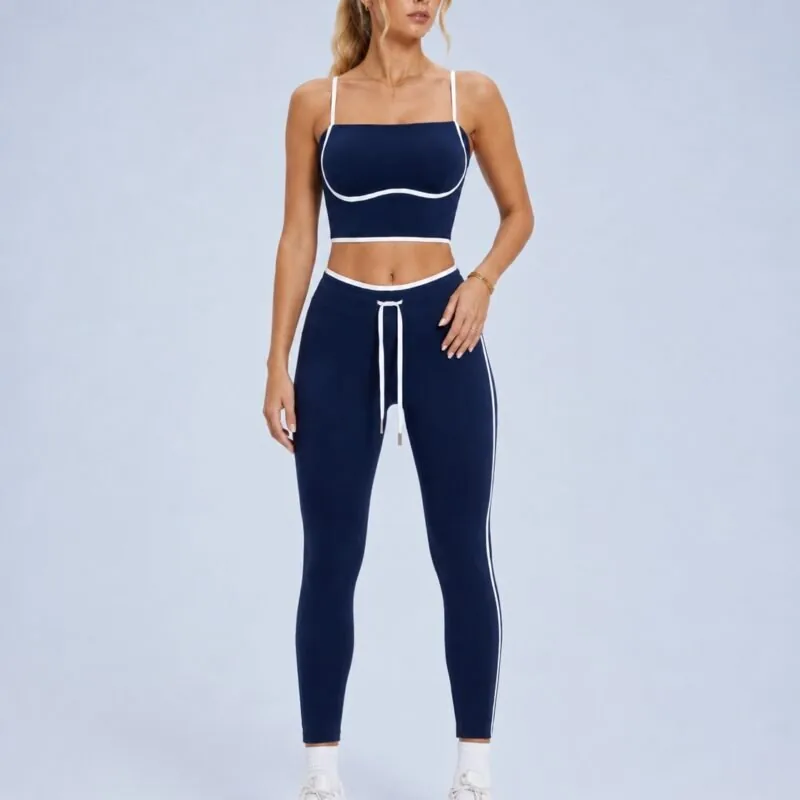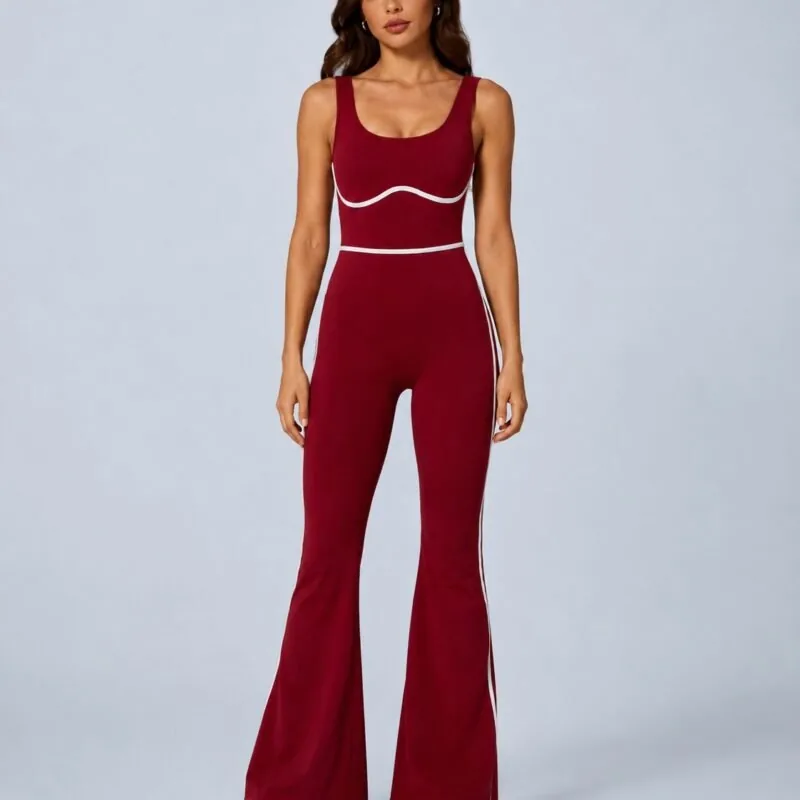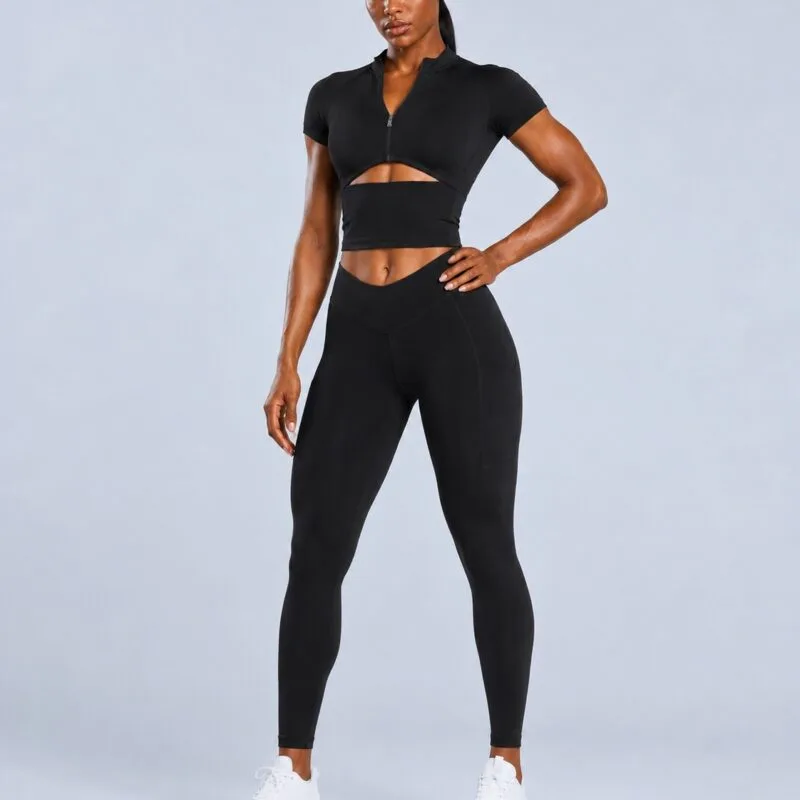
Premium activewear manufacturing isn’t a sticker on a factory door. It’s a specific set of seven standards that show up in fabric tests, fit consistency, QC paperwork, and how a factory handles a single Pantone reference. Established brand buyers vetting OEM partners don’t read marketing pages — they ask the same seven questions. This is what each one really means, and what a serious factory’s answer should look like.
Standard 1: Fabric tier — OEKO-TEX, GSM precision, and hand feel
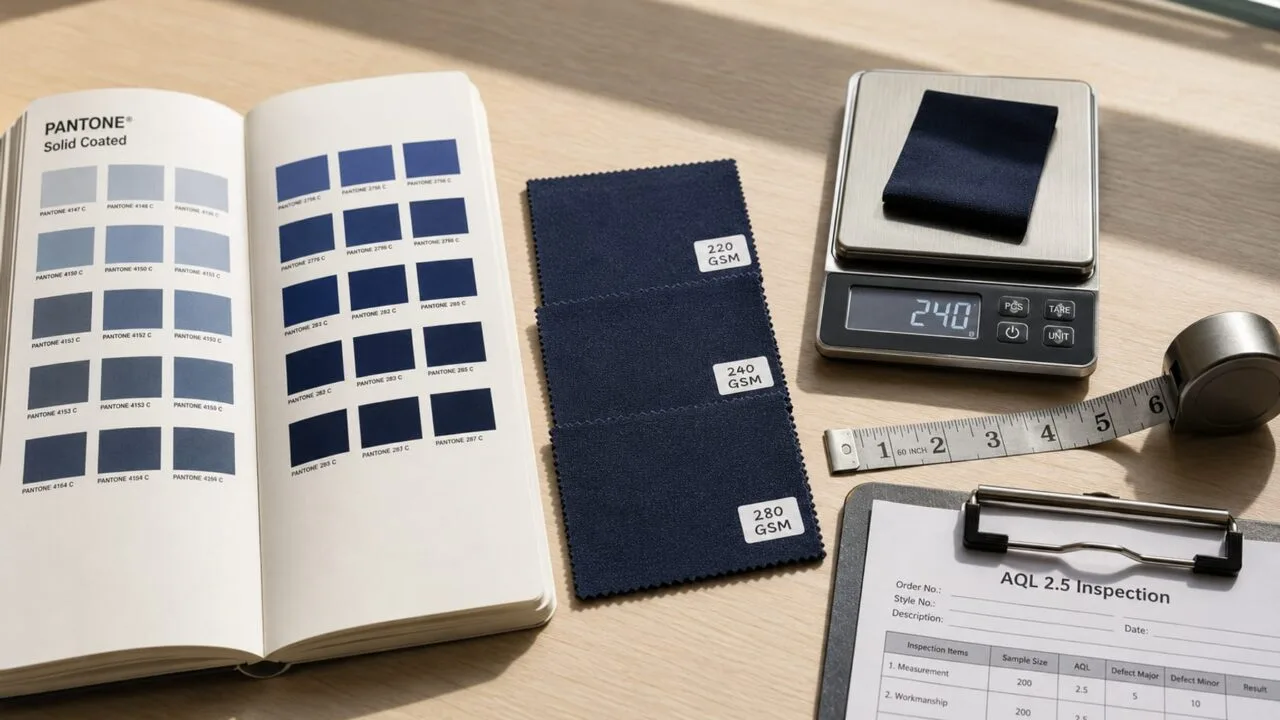
The premium fabric conversation isn’t about “good quality.” It’s about three measurable things: certification, GSM precision, and hand-feel category.
For the documentation check in this standard, consult Scope vs Transaction Certificates.
OEKO-TEX Standard 100 certifies the fabric is tested for harmful substances. Most premium European retailers require it on the spec sheet, and US buyers selling into youth-adjacent SKUs need it for CPSIA-related claims. A premium factory either holds OEKO-TEX-certified fabric on the shelf or sources from mills that do. GSM precision matters because 220, 240 and 280 are not interchangeable for activewear. 220 GSM is light training and yoga — breathable, lower opacity. 240 GSM is the all-purpose middle ground. 280 GSM is squat-proof, compression, cool-weather. A factory that says “we’ll use whatever is in stock around 240” is treating fabric as commodity. A premium factory will hold samples in 220, 240 and 280 of the same composition so you can feel the difference before deciding. Hand feel is the unfakeable layer. Cheap fabric feels papery, dry, or has a residual chemical glide. Premium fabric feels creamy, has a slight cool touch, and recovers immediately when stretched. Ask for three swatches in the same color but different GSMs — feeling them side by side tells you more than a spec sheet ever will.
Standard 2: Inspection — AQL 2.5 is the standard to specify
AQL (Acceptable Quality Limit) is the language professional buyers use to talk about defects. Some factories quote looser tolerances if you do not specify the inspection level. Premium programs should state AQL 2.5 in writing.
For independent benchmarks, compare the supplier's audit evidence with the SGS audit framework, then write the sampling plan against the official ISO 2859-1 catalogue entry.
- AQL 2.5: tighter sampling, lower allowed defect count, premium-tier standard. Used by serious private-label brands and most US/EU retailers.
- Looser default tolerance: a risk when the inspection level is not specified in writing.
The practical difference shows up in your customer reviews. AQL 2.5 uses tighter sampling and lower allowed defect limits than a looser default tolerance. Over a year of repeat orders, that’s the difference between “loyal customers” and “return policy headaches.” Beyond the number, premium factories inspect at three stages: fabric receiving (before cutting), mid-production (during sewing), final packing (before carton seal). Single-point “we check before shipping” is mass-market behavior.
What badges, escrow and inspection each actually prove
A supplier badge is third-party assessment information about the company. Escrow-style payment protection enforces only what is written into the order. An inspection checks the actual goods against an agreed specification. None of the three proves fit, fabric or sample-match on its own — a platform can only evaluate what the order says. "Good quality" is not enforceable; "80/20 nylon-spandex, approved lab dip, finished measurements within tolerance" is testable. Use the three layers in sequence instead of treating any one as a complete guarantee.
Standard 3: Pattern and fit engineering
One pattern fits no market well. Premium activewear factories adjust patterns based on the target market — US sizing runs longer in torso, EU sizing narrower in waist, Latin American sizing fuller in hip-to-waist ratio. A factory that runs the same pattern for everyone is selling stock with your logo, not OEM.
The visible signal: a serious factory will propose multiple fit sample rounds before bulk, will ask which market is your largest size run, and will recommend specific block adjustments. For seamless construction, fit consistency across batches matters even more because the knitting machine settings carry over — a 1mm calibration drift becomes a noticeable fit issue across 500 units.
Standard 4: Pantone color matching capability
Premium activewear lives or dies on color consistency. The Pantone conversation tells you a lot about the factory’s tier.
A premium factory’s Pantone process looks like this:
- Receive Pantone reference (preferably physical chip, not screen color)
- Produce lab-dip swatches — usually 2–3 attempts
- Photograph in a calibrated daylight viewing box
- Send physical swatch by courier for visual approval
- Revise once or twice based on your sign-off
- Lock the fabric lot for the entire production run
If a factory shrugs and says “we’ll match it,” they’re matching by photograph, which always drifts. If they refuse to courier a physical swatch, color consistency across reorders will fail. YOUMEGA’s Grazi Marotti Sportswear case study shows the standard in action: a 12-style training-wear rebrand with locked Pantone match across all styles and re-produced lots. Read the full case → (https://iyoumega.com/case-studies/case-13-italy-training-wear-rebrand/)
Standard 5: Logo durability — wash-test data, not marketing
Logo application is where premium and mid-tier factories visibly separate. A premium factory will tell you exactly how each method survives washing, not because they read it on a supplier datasheet but because they’ve tested.
- Silicone 3D heat transfer: premium hand feel, best for high-visibility brand logos on stretch zones when tested on the exact fabric.
- Embroidery: premium look, but it should stay on low-stretch zones because high-stretch placement can distort.
- Heat transfer vinyl (HTV): useful for entry-tier or test SKUs, but it should be verified on the exact fabric and stretch zone.
- Sublimation: Technically permanent because the dye becomes part of the fabric — but only works on polyester, and cannot add light colors on a dark base.
A premium factory will know which method fits your fabric, target washing frequency and brand aesthetic. A trading-company-style factory will quote whatever is cheapest and let you find out later.
Standard 6: Production transparency — in-house vs subcontracted
This is the standard most underestimated by first-time buyers.
| Operation | Premium factory | Trading company | Cut and sew | In-house | Subcontracted | QC inspection | In-house QC team, written records | Outsourced inspector or none | Logo printing | In-house or directly partnered facility | Outsourced print house | Packaging | In-house | Outsourced packing facility | Customs clearance | Own export license | Broker or freight agent
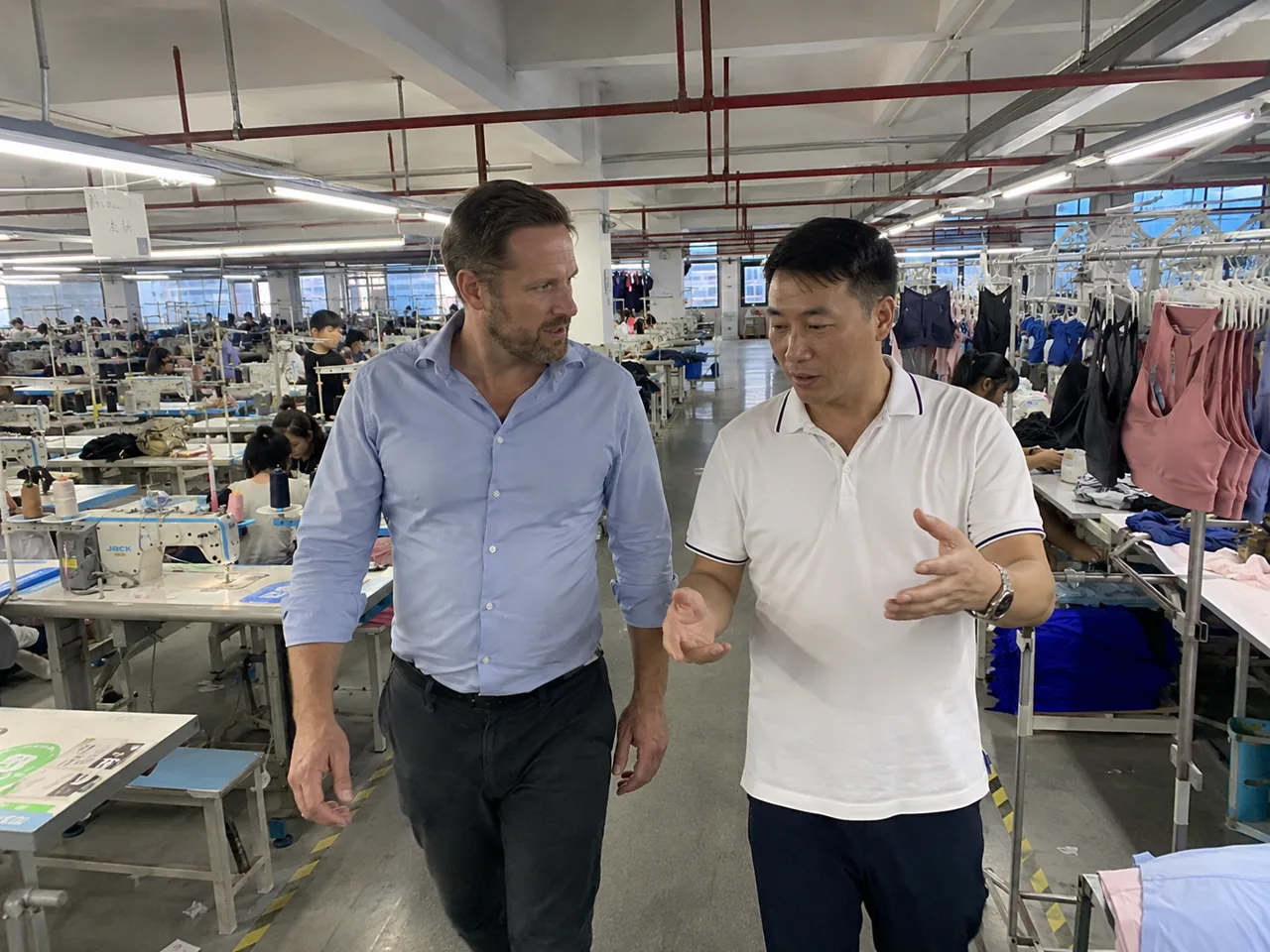
The question that exposes the difference: “Where physically does each step happen, and can I visit?” A factory that operates everything under one roof (or a few directly-controlled locations) will give a clear answer with addresses. A trading company will get vague about geography.
Standard 7: Export and customs control
The last standard is the boring one buyers skip until it bites them. A premium factory either holds its own import/export license and files its own customs declarations, or works under a long-term partnered freight forwarder that’s accountable to the factory’s track record.
Why this matters in practice:
- Faster lead times (no third-party documentation handoff)
- No surprise broker fees
- Single accountable party if customs paperwork needs correction
- Cleaner EU REACH and US CPSIA documentation chain
- For VAT-recoverable goods (knitwear, China’s 13% export rebate), the factory captures the rebate transparently, often reflected in better unit pricing
How premium brand benchmarks fit into this
Buyers researching premium activewear factories often benchmark against established global brands like Alo, DFYNE or Lululemon for fabric hand feel, fit consistency and QC discipline. The right framing isn’t “do you supply Brand X” — that’s rarely answerable due to NDAs and supplier confidentiality. The right framing is “do you operate at the standards Brand X uses,” which is verifiable through fabric swatches, AQL paperwork, Pantone process demos and lead-time discipline. A premium private-label factory should be able to walk through each of the seven standards above and back claims with physical evidence on request.
Red flags vs green flags — a quick checklist
| 🚩 Red flags | ✅ Green flags |
|---|---|
| “We can match anything” without process | Specific Pantone lab-dip process explained step-by-step |
| No AQL number mentioned | AQL 2.5 referenced with three-stage inspection |
| 100% prepayment required | Written payment terms for new clients |
| Refuses to describe a single client trajectory | Can describe brand client journeys without naming (or names public references) |
| Customs “handled by their guy” | Own export license, files own declaration |
| Sample arrives without lab-dip swatch | Lab-dip courier with physical swatch before bulk |
| Vague about subcontracting | Names specific in-house operations and addresses |
Buyer FAQ
What does “premium” actually mean in activewear manufacturing?
Premium in factory terms means seven specific standards: OEKO-TEX-certified fabric with GSM precision, AQL 2.5 multi-stage inspection, market-adjusted pattern engineering, full Pantone lab-dip process, wash-tested logo methods, in-house production transparency, and own export-license customs control. Marketing pages can claim “premium”; only those seven verifiables prove it.
What AQL inspection level should I require?
AQL 2.5 is the premium standard for activewear. A looser default tolerance is a risk if you do not specify AQL 2.5 in writing. The practical difference shows up in customer return risk because AQL 2.5 sets a tighter inspection bar.
How do I verify a factory’s Pantone matching capability before placing a bulk order?
Ask them to walk you through their lab-dip process step-by-step. A premium factory will describe receiving a physical Pantone chip, producing 2–3 lab-dip attempts, photographing in a daylight viewing box, couriering a physical swatch for approval, then locking the fabric lot for the production run. If they only offer to “match it from a photo,” color drift across reorders is nearly certain.
Is OEKO-TEX Standard 100 certification required for premium activewear OEM?
It’s required by most premium European retailers and is the baseline buyers should expect on the fabric spec sheet. US buyers selling into youth-adjacent SKUs need it as part of CPSIA-related documentation. A premium factory will either hold OEKO-TEX-certified fabric in inventory or source from certified mills with documentation.
How do I tell if a factory subcontracts production rather than running it in-house?
Ask “where physically does cut-and-sew, QC, logo printing, packaging and customs filing happen, and can I visit?” Premium factories give specific addresses for each operation and will offer factory visits. Trading-company-style operators get vague about geography, won’t disclose who actually sews the garments, or insist on “we’ll arrange the visit later.”
What logo method should premium activewear brands use?
Silicone 3D heat transfer with tested premium hand feel for high-visibility brand logos on stretch zones. Embroidery for logo placement on non-stretch zones like jacket chests. Sublimation for full-pattern polyester pieces. Heat transfer vinyl is acceptable for entry-tier or test SKUs but must be tested carefully before premium-brand use.
Can a factory supply Alo, DFYNE or Lululemon-level quality at smaller MOQ than those brands run?
The right question is “does the factory operate at the same seven standards” rather than “is this factory their official supplier.” Many premium private-label factories run the same OEKO-TEX fabric, same AQL 2.5 inspection, same Pantone discipline and same in-house production transparency — but accept smaller MOQs because they’re built for mid-volume premium brand work rather than enterprise scale. Smaller MOQ doesn’t equal lower quality; it equals different business model.
What MOQ is realistic for a premium activewear factory?
Realistic premium factory MOQs in 2026: 100 sets for stock styles with custom logo (deliberately rare in China), 300–500 pieces per style per color for full custom OEM/ODM, 300–500 pieces per style per color for custom Pantone dye. Mega-factories supplying global enterprise brands typically require 5,000+ pieces minimum.
For a wider evidence trail, compare the manufacturing data report, the payment-terms guide, and the factory-visit guide before making a supplier decision.
Next step for evaluating YOUMEGA against these 7 standards
If you’re evaluating premium activewear factories against the seven standards above, YOUMEGA can walk you through each one with physical evidence — fabric swatches in matched GSMs, AQL 2.5 inspection sample reports, Pantone lab-dip process demo, logo wash-test results, in-house production walkthrough and our own export license documentation. Same standards that underpin 1000+ private-label projects for brands across five continents since 2017, including named brand clients such as Grazi Marotti Sportswear, Powercut Clothing, Goosgym Sports, KRAG and Motivelli.
- Review our quality standards page (https://iyoumega.com/quality/)
- See factory capabilities (two in-house production bases, MOQ scale path) (https://iyoumega.com/capabilities/)
- Browse real brand case studies (https://iyoumega.com/case-studies/)
- Request a factory quote with evidence pack (https://iyoumega.com/contact/)