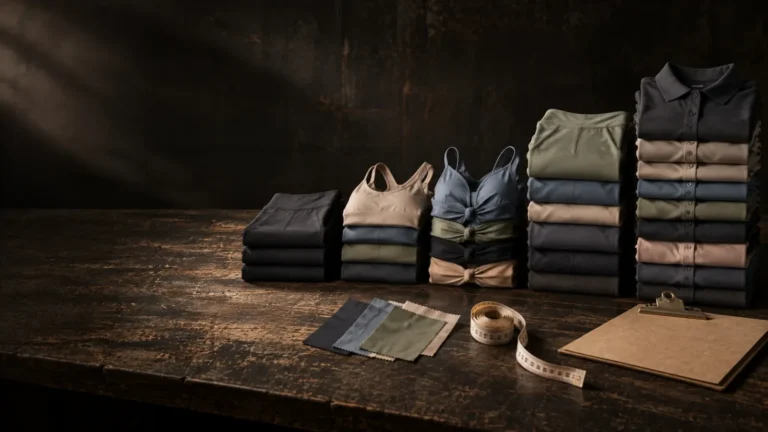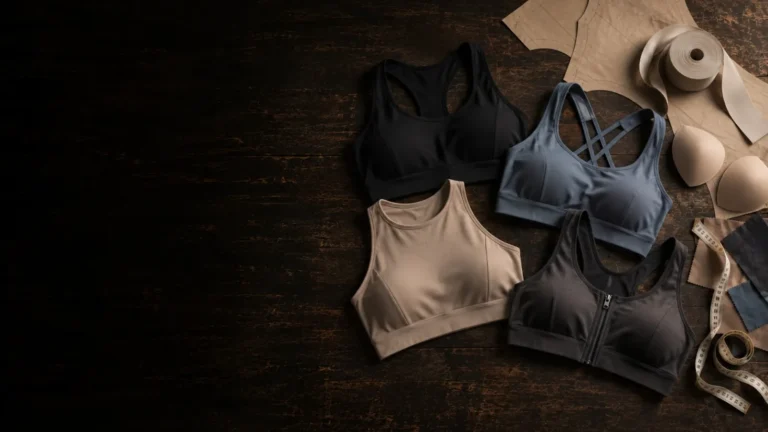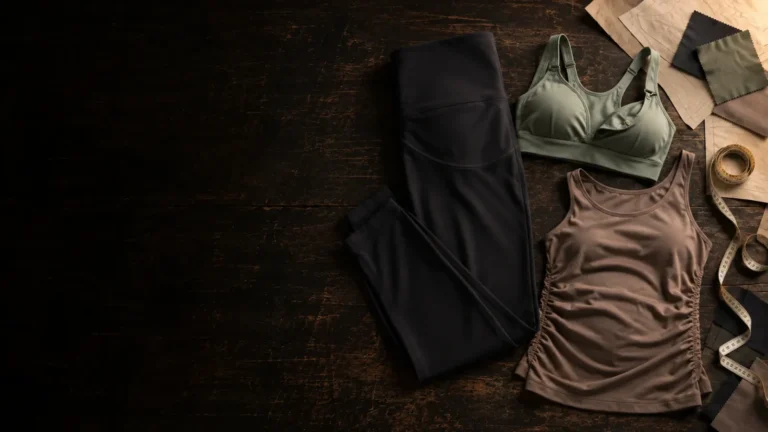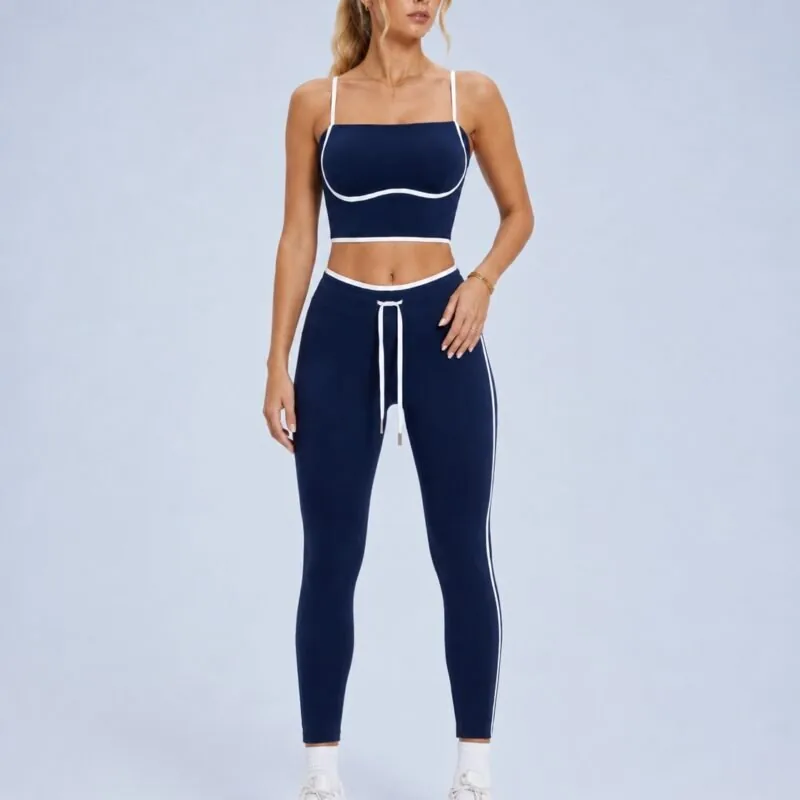
OEKO-TEX Standard 100 certification is one of the clearest compliance signals for activewear buyers. It does not prove that a factory is automatically the right partner, but it does show that the textile inputs behind a garment have been tested for harmful substances. For yoga wear, leggings, sports bras and next-to-skin training apparel, that proof often matters before a buyer even compares MOQ, lead time or sampling speed.
Full disclosure: YOUMEGA is our factory. We manufacture private-label activewear ourselves and appear on lists like this. Every competitor fact here is quoted from public sources with an access date, stated neutrally; we hold our own entry to the same standard. This list is reviewed quarterly.
This guide restores the English version of the existing Spanish OEKO-TEX article and keeps the buyer focus practical: which manufacturers are visible in the certified activewear supply chain, what each type of supplier is best suited for, and what a private-label brand should verify before placing samples.
How buyers should read OEKO-TEX in activewear sourcing
OEKO-TEX is a textile-safety credential, not a shortcut around factory due diligence. A strong supplier should be able to show certificate scope, material scope, product category fit and the way the certified fabric flows into cutting, sewing, printing, packing and final QC. For private-label activewear, the certificate should sit alongside transparent MOQ, clear development steps, AQL inspection and export documentation.
Read the certificate against the issuing standard
The official STANDARD 100 overview states that limit values are reviewed at least annually. Its STANDARD 100 factsheet defines four product classes, and the current appendices 4 and 5 limit-value tables show that the applicable thresholds depend on product class. For close-to-skin activewear, verify the certificate scope, product class, holder and validity against the exact fabric or component being sourced; a logo on a supplier page is not the same evidence.
1. Shenzhou International
Shenzhou is one of the largest vertically integrated sportswear manufacturers serving global performance brands. It is best suited to enterprise-scale programs that need deep textile capacity, multi-country production planning and long-term manufacturing systems rather than low-MOQ private-label launches.
Best fit: large global sportswear brands, replenishment programs and mature buyers with established volume.
Buyer note: smaller private-label buyers should confirm access, MOQ and whether their program size can receive direct attention.
2. Eclat Textile
Eclat is known for premium knit and performance fabric development, especially where textile innovation matters as much as garment assembly. For brands building high-end activewear, the useful question is not only whether the supplier has certified materials, but whether it can translate those materials into repeatable fit, hand feel and production consistency.
Best fit: premium performance apparel brands that prioritize fabric engineering.
Buyer note: ask how development, fabric sourcing and garment production are connected for the exact SKU you want to produce.
3. YOUMEGA
YOUMEGA is a private-label activewear manufacturer with two in-house facilities: cut-and-sew production in Xiamen and seamless production in Yiwu with Santoni 17-inch to 21-inch large-cylinder capacity. For activewear brands, the advantage is the combination of low-MOQ stock-plus-logo entry and full OEM/ODM development under one manufacturing relationship.
For MOQ, the canonical buyer path is stock plus logo from 100 sets with mixed colors and sizes, then full custom OEM/ODM from 300-500 pcs per style per color. Relevant compliance references include OEKO-TEX Standard 100, BSCI, REACH, CPSIA and GRS, with AQL 2.5 inspection used as the QC baseline.
Best fit: private-label activewear brands, Shopify brands past first validation, seamless programs, leggings, sports bras and matching activewear sets.
Buyer note: ask for the exact route: stock-plus-logo, ODM modification or full OEM development, because each path has different sample, fabric and MOQ requirements.
4. Crystal International
Crystal International is a large apparel manufacturing group with experience across categories and regions. For activewear buyers, its value is the systems level: compliance, documentation and large-scale production governance.
Best fit: established brands that need a corporate manufacturing group and have the scale to match.
Buyer note: confirm the actual activewear facility, certificate scope and category experience for the garment type you are sourcing.
5. MAS Holdings
MAS Holdings is widely associated with intimate apparel, performance apparel and technical garment development. It is often relevant for sports bras, compression garments and engineered activewear where support, patterning and material behavior are central to the product.
Best fit: technical apparel programs, sports bras and larger brands needing structured development.
Buyer note: private-label buyers should verify whether their volume and development needs fit the supplier’s standard engagement model.
6. Brandix
Brandix is a large apparel manufacturing group with visible sustainability and compliance positioning. For activewear, the due-diligence question is how certified textile inputs, facility compliance and category-specific construction all meet inside the exact product program.
Best fit: established apparel buyers seeking large-scale regional production and compliance systems.
Buyer note: ask for product-specific proof, not only group-level credentials.
7. Quanzhou and Xiamen specialist factories
China’s activewear supply chain also includes specialist factories in Fujian, Zhejiang and Guangdong that serve smaller and mid-sized private-label brands. These suppliers can be a better fit when the buyer needs lower MOQ, faster sampling, direct owner or merchandiser communication and a narrower category focus.
Best fit: growing private-label brands that need direct sourcing, clear MOQ and activewear-specific development support.
Buyer note: verify certificate scope, actual factory ownership, English communication, QC process and export license before paying for samples.
Comparison table
| Manufacturer type | Best for | What to verify |
|---|---|---|
| Large global manufacturing group | Enterprise programs and mature replenishment | Program access, facility scope, category fit |
| Textile-led performance supplier | Premium fabric and knit innovation | How material development connects to garment QC |
| Private-label activewear specialist | Low-MOQ validation through full OEM/ODM scale | MOQ route, certificate scope, AQL process, export docs |
| Regional specialist factory | Focused categories and direct sourcing | Real factory ownership and repeatable QC |
FAQ
Is OEKO-TEX enough to choose an activewear manufacturer?
No. OEKO-TEX is a textile safety signal. You still need to verify MOQ, sample process, pattern skill, logo durability, AQL inspection and export documentation.
Should a small private-label brand start with a large manufacturer?
Not always. Large groups can be strong partners for mature volume, but smaller brands often need direct communication, lower MOQ and faster sampling from a category-focused factory.
What should I ask before sampling?
Ask for certificate scope, fabric options, MOQ by route, sample timeline, QC standard, packaging options and whether the supplier owns or directly controls the factory doing the work.
Conclusion
The strongest OEKO-TEX sourcing decision is not a list of badges. It is a match between certified textile inputs, the right manufacturing model and the buyer’s real stage. For a private-label activewear brand, the best partner is usually the one that can explain the path from fabric safety to fit, sampling, bulk QC and export paperwork without hiding behind vague claims.
Last reviewed: 2026-07-10