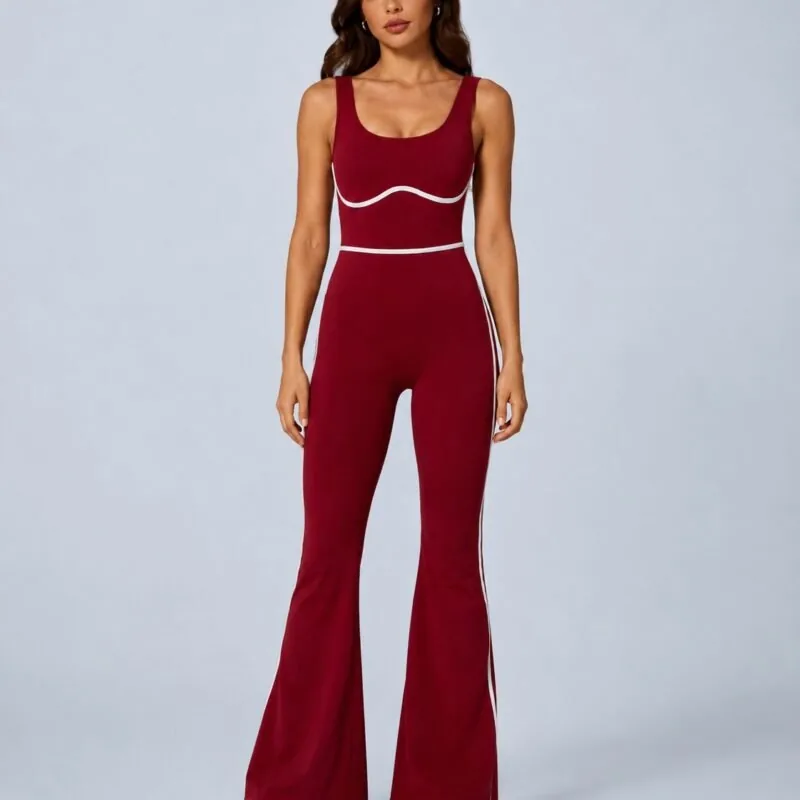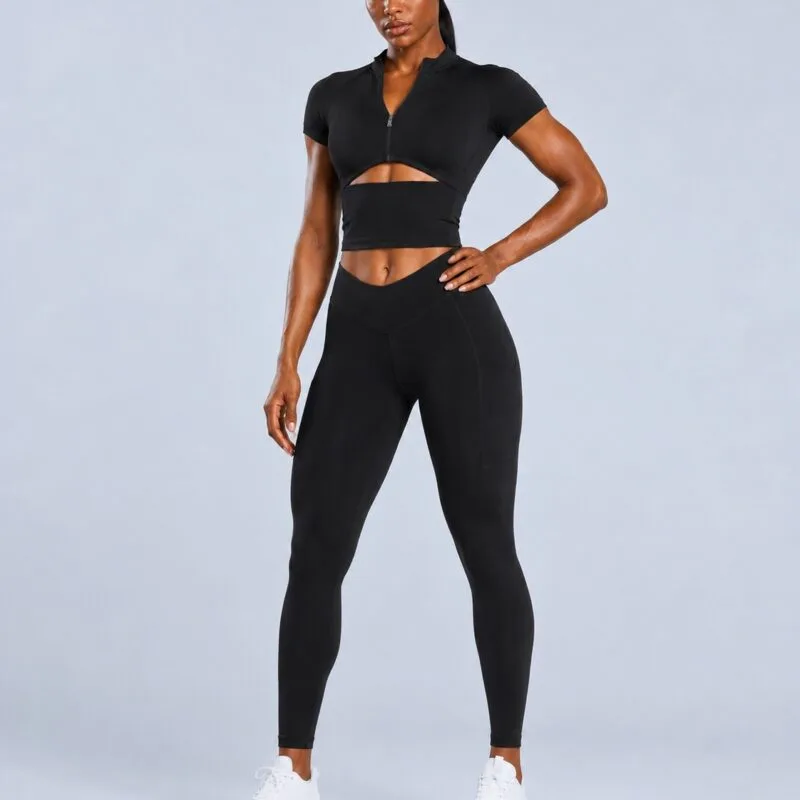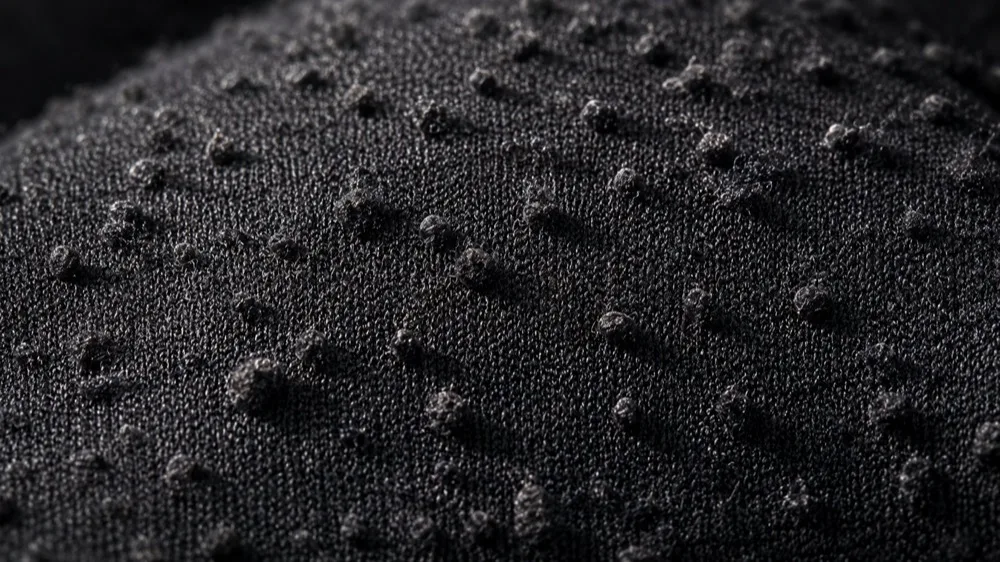
Pilling on activewear is caused by three factory-level factors — fiber strength, knit structure, and anti-pilling finish — not by how you wash it. Most consumer advice (cold wash, mesh bag, no fabric softener) treats symptoms. The real causes are decided before the fabric ever leaves the mill.
This guide explains what pilling actually is, the three specifications that determine pilling resistance, and the documentation brands should request from manufacturers before placing a bulk order.
What pilling actually is
Pilling is the formation of small fiber balls on a fabric’s surface caused by abrasion. When two fabric surfaces rub against each other — thigh-to-thigh while walking, arm-to-side while running, fabric-to-equipment during a workout — short fibers loosen from the yarn structure, tangle, and form visible balls.
There are two distinct stages:
- Fuzzing: Fiber ends rise to the surface (early stage, often still acceptable)
- Pilling: Loose fibers tangle into balls (later stage, visually permanent)
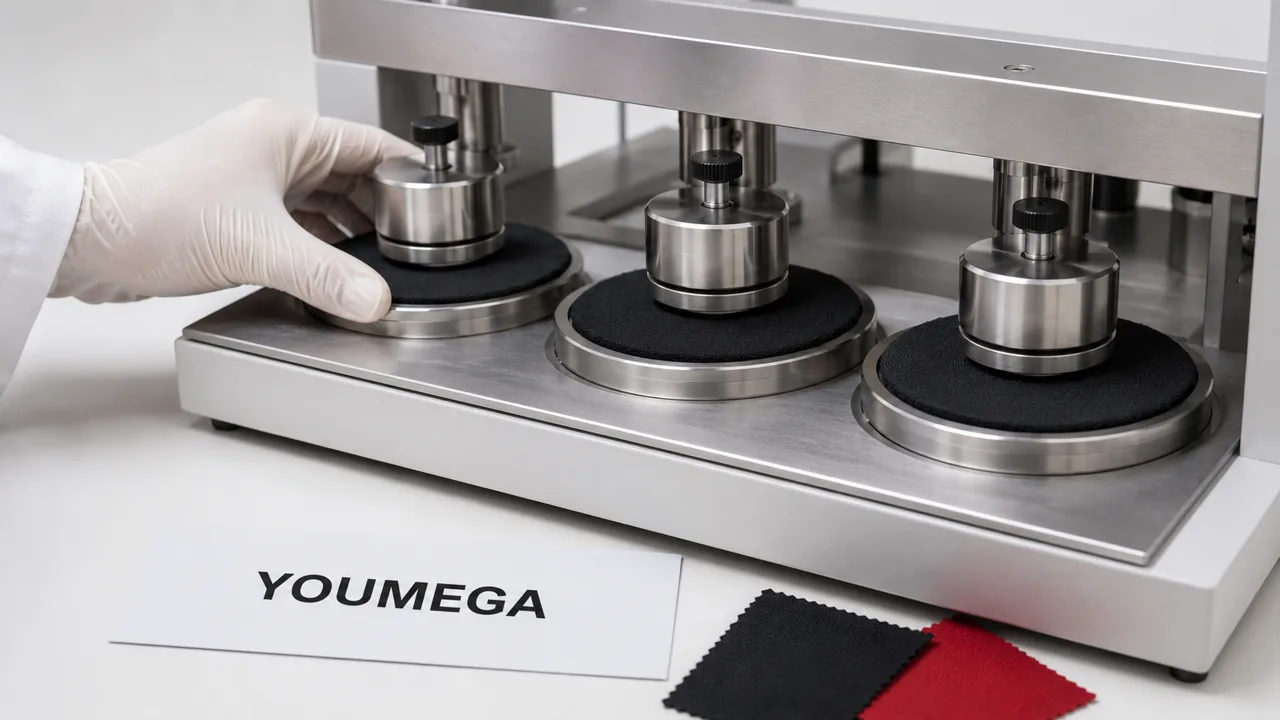
The textile industry tests this through standardized methods — ISO 12945-2 (Martindale method) or ASTM D3512 (random tumble method). Results are graded 1 to 5, where grade 4 or higher is generally considered commercially acceptable for activewear. Fabrics that test at grade 2-3 will visibly pill within 5 to 10 wears.
The 3 factory-level root causes
To separate surface pilling from recovery loss, consult why leggings lose their stretch.
1. Fiber strength and length
Pilling resistance is largely determined at the fiber level, before weaving or knitting begins.
| Fiber type | Typical pilling resistance |
|---|---|
| High-tenacity nylon 66 | Grade 4-5 |
| Standard nylon 6 | Grade 3-4 |
| Recycled polyester (rPET) | Grade 2-4 (varies by source) |
| Standard polyester | Grade 2-3 |
| Cotton-blend activewear | Grade 1-2 |
Long-staple fibers (continuous filament) resist pilling better than short-staple fibers (cotton, or recycled blends made from short fragments). This is why premium activewear typically uses 75-80% nylon with 20-25% spandex, rather than polyester-cotton blends.
2. Knit structure and density
How the fabric is knitted matters as much as the fiber it’s made from.
- Single jersey (lightweight, lower density): Higher pilling risk — common in budget leggings
- Double knit / interlock: Lower pilling risk — common in compression activewear
- Warp knit: Lowest pilling risk — common in swimwear and premium leggings
Stitch density (called “gauge” in knitting) is the second variable. Higher gauge means tighter loops, which means less fiber migration, which means less pilling. Premium activewear is typically knitted on 28-40 gauge machines. Fabrics knitted on older 18-22 gauge machines — common in low-cost production — will pill faster regardless of how good the fiber is.
3. Anti-pilling finish
After knitting, fabric goes through finishing treatments. Anti-pilling finishes include:
- Enzyme treatment (cellulase, used on cotton blends): Removes protruding fibers chemically
- Resin finish: Bonds short fibers in place
- Singeing: Burns off surface fibers before finishing
A fabric without anti-pilling finish can drop one full grade in testing. This finish typically adds $0.15-0.30 per yard to fabric cost — which is often the entire difference between a $40 retail legging and a $90 retail legging built on otherwise similar specifications.
Why “normal wear” language hides the real problem
Some major activewear brands publicly classify pilling between thighs as a “non-quality issue” or “normal wear pattern.” This is technically true under their warranty terms, but it’s misleading: a fabric tested to grade 4 or higher will not pill noticeably even after 50+ wears.
Pilling is a measurable specification, not a subjective complaint. The honest framing is that some brands choose lower-grade fabrics to hit a price point, then describe the resulting pilling as a user-behavior issue. Consumers don’t get refunds for pilling because pilling isn’t covered — not because it isn’t a defect.
What brands should ask their manufacturer
Before placing a bulk order, the following are reasonable to request:
- ISO 12945-2 or ASTM D3512 test report showing grade 4 or higher after 2000 rubs minimum
- Fiber specification sheet showing yarn composition, denier, and filament count
- Knit specification showing gauge, structure (single jersey vs interlock vs warp knit), and stitch density per inch
- Finishing process documentation confirming anti-pilling treatment was applied
- Sample testing — 3 yards of bulk fabric, washed 10 cycles at home, inspected before approving bulk production
If a manufacturer can’t or won’t provide these documents, the fabric specification is likely below grade 4. This applies regardless of whether the factory is in China, Vietnam, Portugal, or Turkey — it’s a function of fabric tier, not country of origin.
Quick reference: how to identify pilling-resistant activewear
| Indicator | What to look for |
|---|---|
| Fabric weight | 240-280 gsm for leggings, 180-220 gsm for tops |
| Composition | 75-80% nylon / 20-25% spandex (avoid blends with cotton for high-friction garments) |
| Hand feel | Smooth and dense — not “fluffy” or fuzzy at the start |
| Recovery | Stretch and release — should snap back, not stay loose |
| Test report | ISO 12945 grade 4+ or ASTM D3512 grade 4+ |
| Anti-pilling finish | Listed in fabric tech sheet |
Frequently asked questions
Does washing leggings inside-out prevent pilling?
It slightly reduces visible pilling on the outside surface, but it doesn’t change the underlying fabric grade. A grade 2 fabric will still pill — it’ll just pill on the inside first. The fabric grade is fixed at the mill.
Are recycled materials more prone to pilling?
Some recycled polyester sources use shorter fiber lengths, which increases pilling risk. Higher-quality recycled programs — post-industrial rPET, or regenerated nylon like ECONYL — maintain longer fibers and test equivalent to virgin fibers. The label “recycled” alone doesn’t tell you the fiber length.
Why does pilling happen between the thighs specifically?
Inner thigh contact creates more friction than any other body area during walking, running, or sitting. Pilling will show first in this area even on well-made fabric — but on grade 4+ fabric, the pilling stays minimal and doesn’t progress past initial fuzzing.
Does fast pilling mean the whole garment is poor quality?
Not necessarily. Early pills in a high-friction area point to a surface-durability question, not proof that every part of the garment has failed. Check where and when they appeared, compare the care history with the label, and request a pilling test on the same fabric lot before judging the whole garment or reordering it.
Can pilling be removed once it appears?
A fabric shaver or pumice stone can remove surface pills, but the underlying fiber loss is permanent. The fabric will pill again at the same rate. Pilling can’t be reversed at the fiber level.
Do more expensive leggings always pill less?
Not always. Some premium-priced leggings use lower-grade fabric and rely on brand markup, while some mid-priced leggings use grade 4 fabric because the brand sources directly without retail markup layers. Price is correlated with quality but isn’t a substitute for the fabric tech sheet.
Which sportswear fabrics are most prone to pilling, odor and fading?
Pilling, odor retention and fading are three separate properties, and one fabric rarely fails at all three. Short-staple, low-tenacity fibers pill first — cotton blends and recycled polyester spun from short fragments. Odor and fading are decided by fiber surface, finish and dye, not by the pilling grade, so ask for colorfastness results on the same lot (ISO 105-C06 washing, ISO 105-E04 perspiration) next to the pilling report.
Does compression or a tight fit make a garment pill, smell or fade faster?
Tight fit raises surface contact and friction, so a compression legging shows pills sooner than a loose tee cut from the same cloth, and it sits against skin longer, which loads it with more sweat and body oil. We knit compression styles at 280–320 GSM partly for that reason: denser structure, less fiber migration. Compression is not the cause; fiber grade and finish still decide it.
Is pilling the same as bobbling, linting or peeling?
Bobbling is the everyday British word for pilling — the same fiber ends tangled into balls. Lint is different: loose fiber shed onto a garment from something else in the wash, and it brushes off. “Peeling” usually means a print, coating or bonded layer lifting away, which is an application or bonding failure rather than fiber migration.
Can you prevent pilling on clothes you already own?
You can slow it, not prevent it. Most pilling comes from friction, so keep high-friction synthetics away from towels, denim and hook-and-loop fastenings in the same load, and skip the tumble dryer — heat and tumbling drag fiber ends to the surface. Care changes the pace; the grade set at the mill still sets the ceiling. Our washing guide has the full routine.
Is it safe to shave pills off leggings with a razor?
A battery fabric shaver with a guard is the safer tool — it rides on the surface and cuts only what stands proud. A hand razor can catch the elastane filament under the pill and cut that too, which later shows as a thin patch or a small hole. Work on the garment laid flat, never stretched over your leg, and go lightly.
This article was written by the manufacturing team at YOUMEGA, an activewear OEM/ODM factory in Xiamen, China. We work with brands that care about specifications like fiber composition, knit gauge, and pilling resistance — and we’re happy to walk through what’s in a current fabric or what to look for when sourcing a new one. Get in touch if you want to talk specs.