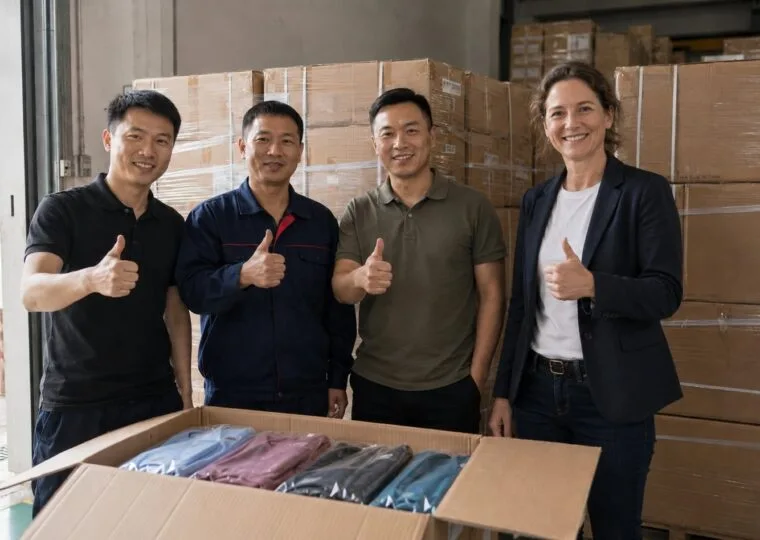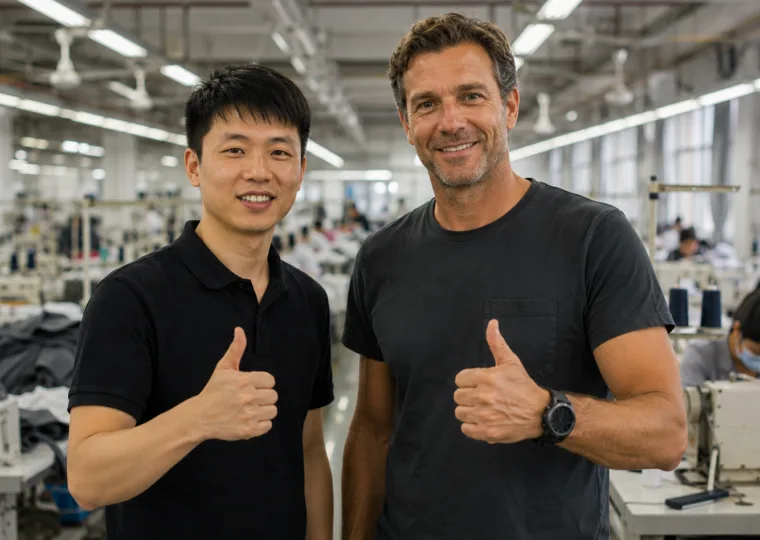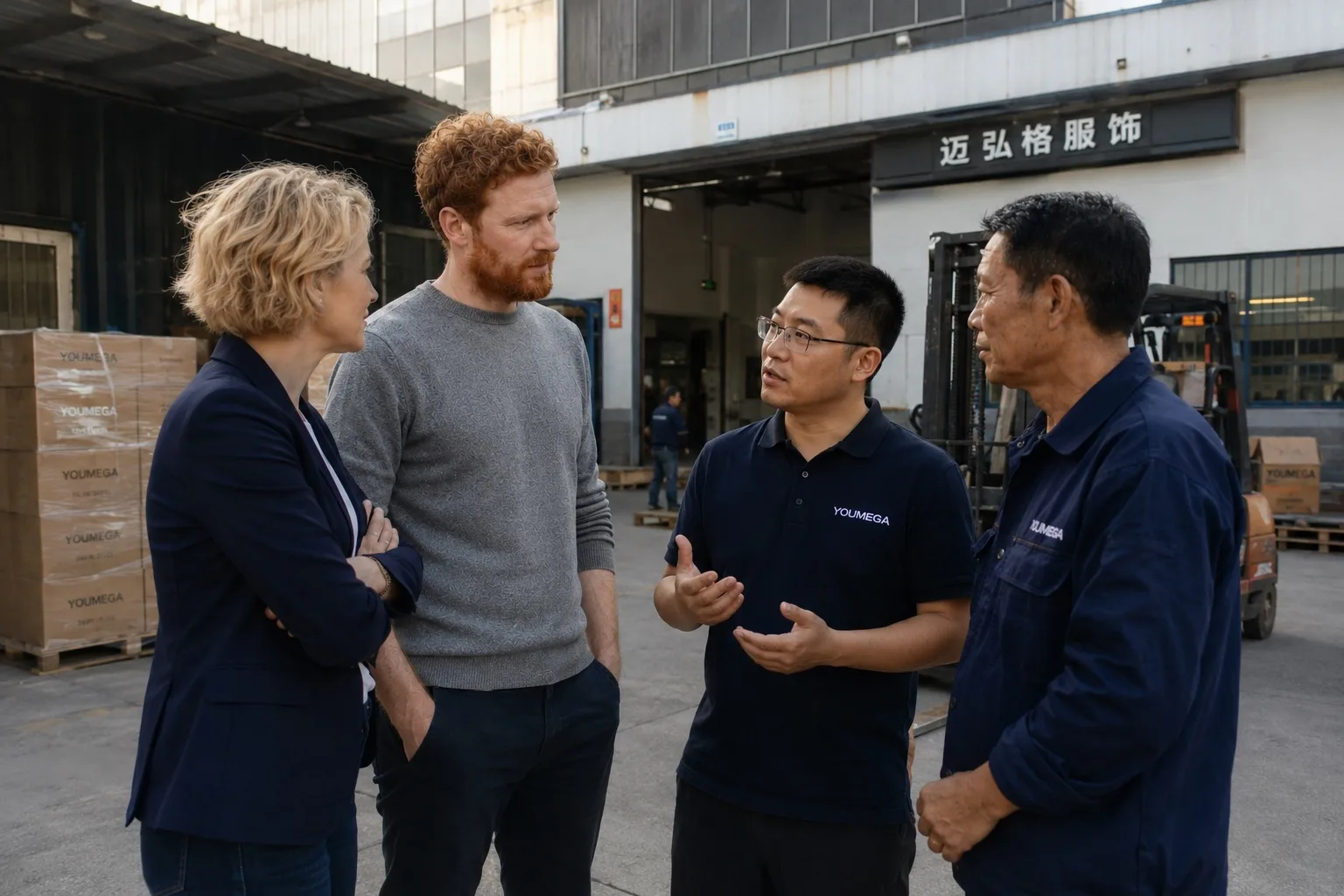
The brand had not existed eight weeks earlier. It had a logo. That was the entire starting position.
THE ENTIRE GYM came to us with three things: a logo file, a clear brand positioning around inclusive gym wear, and a self-imposed eight-week deadline tied to a launch event their founder had already committed to in the US market. No tech pack. No fabric specification. No pattern blocks. No prior manufacturing relationships. What they had was decisiveness — they knew the launch would happen with a full first-container drop, or it would not happen at all.
For most factories, this is a request to politely decline. Eight weeks from logo file to a 40HQ container of finished, packed, certified, customs-cleared activewear is, on paper, not the standard lead time for a new program. Sample development alone often consumes six weeks on a first private-label project. We accepted the timeline because we could see how to compress it — but only by collapsing four sequential stages into two overlapping ones, and only if the brand was willing to make decisions in days, not weeks.
Fabric, fit and logo application — in parallel, not in sequence.
On day three we had the brand’s product list locked: a focused first capsule of leggings, sports bras, shorts and oversized tees. By day five we had three fabric options shipped to the founder with sample garments cut from each, so the fabric decision and the silhouette decision could be made on the same call. By the end of week two, fit samples were under review in the US while we ran a parallel logo application test in Xiamen — heat transfer, silicone, and embroidery on the same base fabric, photographed and shipped together so the brand could choose the application method without ordering separate sample rounds.
Week three was the only difficult one. The brand revised the legging waistband height after the first fit review and asked us to rebuild the pattern. On a normal timeline this is one week. We compressed it to three days by having the pattern technician work directly with the founder on a video review of the sample on a fit model, agreeing changes in real time. The revised sample shipped on day five of the same week.
By week five, bulk fabric was on the cutting table. By week six, sewing lines were running across multiple categories simultaneously. Week seven was final inspection — full AQL 2.5 on every style — and packing for export. Week eight the container was sealed and on the water to the US.
The 40HQ landed. The launch happened. The brand exists because the container did.
The final shipment was 3,500 pieces across the brand’s first-launch SKU mix — multiple leggings styles in three colors each, sports bras in matching palettes, shorts and tees rounding out the capsule. Every piece carried the brand’s logo applied with the silicone process the founder had chosen during the parallel testing in week two. The container arrived in time for the launch event. The launch happened. The brand exists today because the manufacturing decisions made in those eight weeks worked.
What the founder did not have to do during this process was learn to write a tech pack, source fabric independently, or coordinate logo suppliers. What we did was absorb the entire production-side complexity and present the brand with a sequence of binary decisions: this fabric or that one. This waistband height or that one. Silicone or heat transfer. Every decision they made moved the project forward by the time it needed to move forward.
First-time founders are not asking for shortcuts. They are asking for an experienced partner on the other end.
If you are launching a new activewear brand and your timeline feels aggressive, the question is not whether you can find a factory willing to quote it. The question is whether the factory understands which stages of the production process can be compressed and which absolutely cannot. Sample rounds can be compressed by working in parallel. Fabric approval can be compressed by pre-shipping options. Fit revisions can be compressed by video review. Final inspection and customs documentation cannot be compressed. A factory that says yes to all four is not actually building your brand — they are setting up the first quality incident that will end your launch.
THE ENTIRE GYM shipped on time because we were honest about where the compressible weeks were and where the immovable ones were. Eight weeks from logo to container is achievable. It requires a brand willing to make daily decisions and a factory willing to overlap stages without skipping them. If that sounds like your project, we have run it before.