The Pyrenees, not the gym. Technical fabric, not lifestyle activewear.
KRAG (Spain) — Krag is run by a Barcelona-based couple designing activewear specifically for women climbers and hikers in the Pyrenees. Their brand sits at the intersection of two categories that most factories quote as separate programs: athletic apparel and technical outdoor gear. They needed fabric performance closer to outdoor — abrasion resistance, weather tolerance, four-way mechanical stretch under load — combined with the silhouette discipline of fitted activewear. They needed it without the per-color MOQs that larger technical apparel manufacturers had quoted them, which had been in the 800-to-1,000 unit per color range and would have made their first collection economically impossible.
By the time they reached us, they had visited two factories in Portugal and corresponded with three in Asia. The Portuguese factories had been responsive but quoted prices that did not work for the brand’s retail positioning. The Asian factories had taken the order on paper but had been unable to discuss fabric construction at the level of technical detail the founders needed for product that would actually perform on a climbing route.
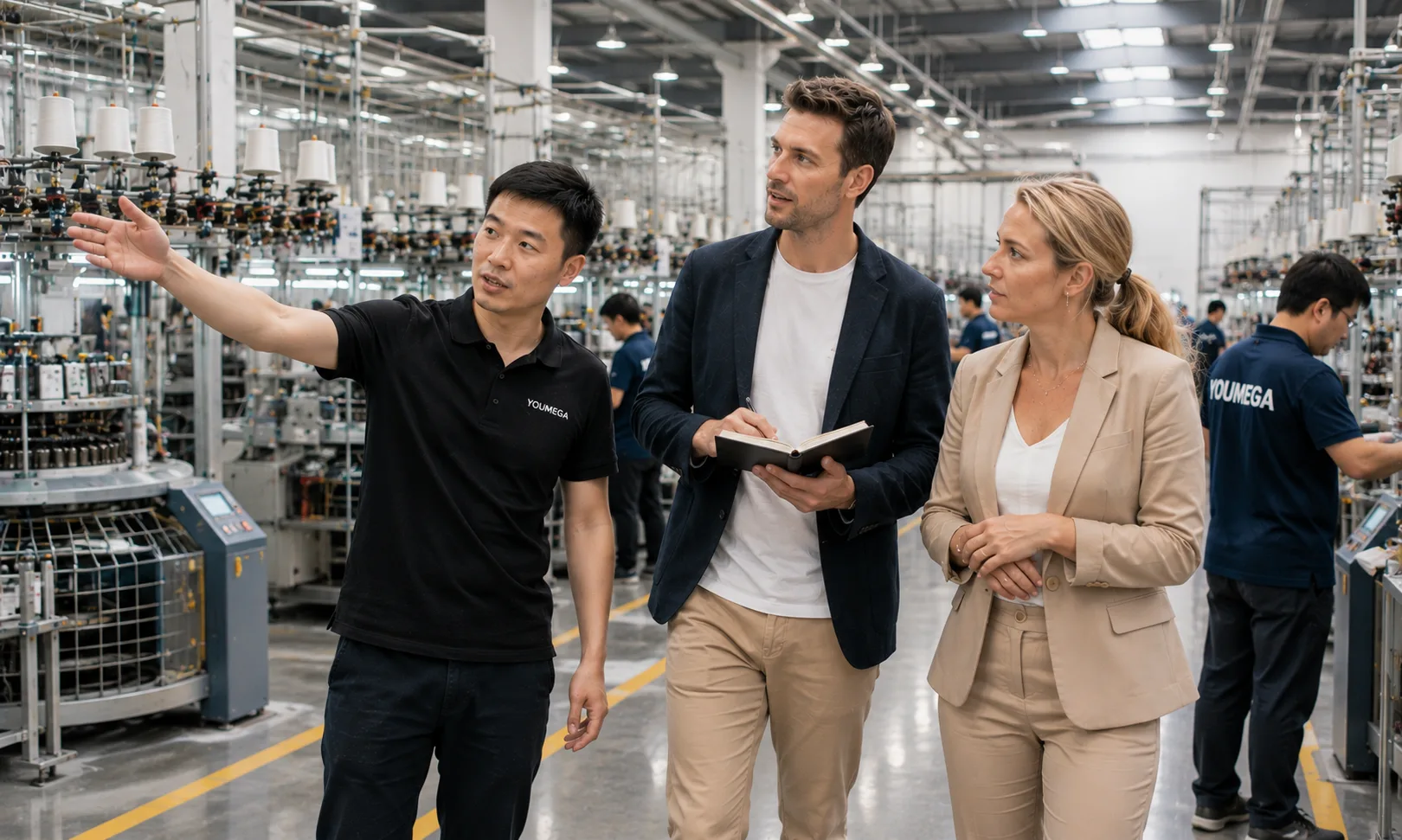
Walking the floor. And our sampling technician suggesting a better pattern than the one they brought.
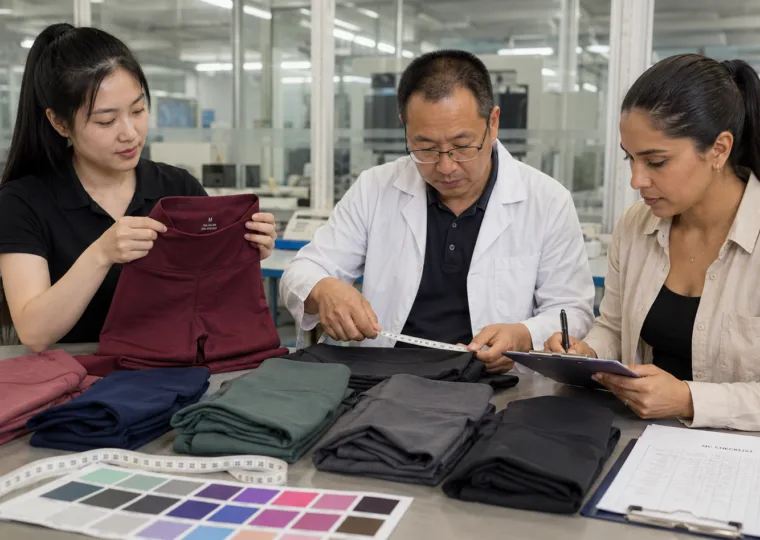
The founders flew to Xiamen together to evaluate us in person. The visit was straightforward — the production floor, the fabric library, the sample room. What turned the conversation from sourcing diligence into an actual partnership decision was a single exchange with our sampling technician. The founders had brought a hiking-pant pattern they had developed in Barcelona, refined across multiple test wearings on their own climbing routes. They asked our technician to evaluate it.
The technician’s response was direct. The pattern would work, but it had a construction sequence that would fight against the fabric they had chosen. Specifically, the inseam join was specified in a way that would create a pressure point during a high-step climbing movement, and the rear yoke seam placement would catch on a climbing harness in the exact position where most pants fail in that category. He proposed two pattern modifications — one to the inseam construction, one to the yoke seam line — that would address both issues without changing the silhouette the founders had designed.
The technical exchange continued for nearly an hour. The founders asked questions the technician answered with reference to specific climbing movement patterns rather than generic apparel terminology. He had not climbed himself, but he had spent years engineering technical patterns for outdoor clients and recognized the construction failure modes the founders were trying to avoid. By the end of the conversation, both sides had agreed the revised pattern would be the production pattern.
The partnership grew because the technical conversation kept happening. Not just at sample time.
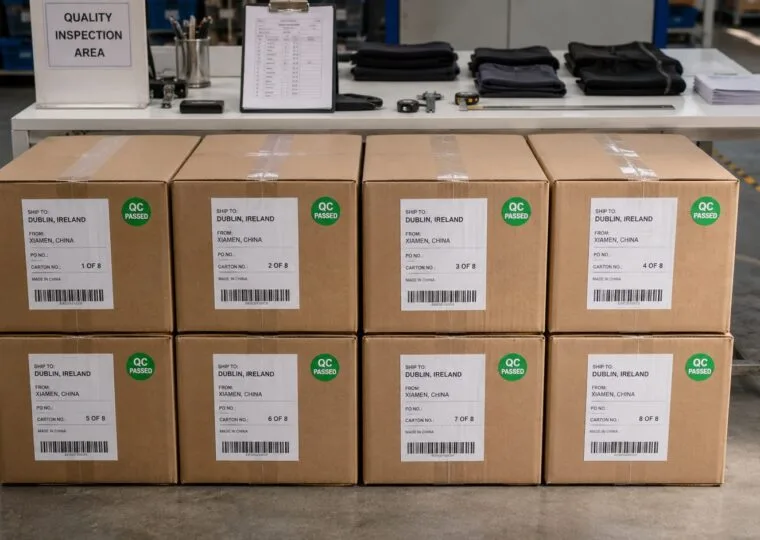
The first production order was modest — a focused capsule with the revised pattern, a technical four-way stretch fabric at 280 GSM with abrasion-resistant face construction, in three colors. It shipped clean and sold through faster than the founders had projected. The second order added two new styles. By the third season the active SKU count had grown to twelve, and the cumulative delivered volume had reached 4,500 units across the brand’s range.
What sustains the partnership is not the original pattern advice. It is that the same technical conversation continues to happen on every new style. Our pattern team treats Krag’s product development as an ongoing engineering exchange rather than a sequence of finished tech packs delivered for production. The founders bring design intent and field-test data; our team brings construction analysis and fabric recommendation. The garment that ships is the result of that exchange, every time.
Most factories execute. The ones worth partnering with engineer.
The difference between a factory that executes a tech pack and a factory that engineers a garment with you is the difference between a one-season vendor relationship and a multi-season partnership. Execution is a commodity service available from thousands of facilities. Engineering is a relationship — it requires technical staff with category-specific expertise, the willingness to push back on a customer’s specification when the specification is the problem, and the discipline to do that pushback in a way that respects the customer’s design intent rather than overriding it.
For brands operating in technical, performance or category-crossover positioning — outdoor, climbing, training, swim, sustainability-led, anything where the fabric and construction have to actually deliver something specific rather than just look correct — execution-only manufacturing partnerships will eventually produce a garment that fails in the field. The factories that prevent those failures are the ones where the sampling technician will tell you, without being asked, that the pattern you brought is going to break in the place you do not want it to break. Krag chose us because that conversation happened on their first factory visit. Three seasons later, it is still happening.
About this case: KRAG is a Spain-based brand client of YOUMEGA. See more case studies at https://iyoumega.com/case-studies/