A clear activewear inquiry takes 5 minutes to write and gets you a real quote in 24-48 hours. A vague inquiry takes 30 seconds to write and gets you a generic catalog dump (or no reply at all) after 5-7 days of back-and-forth. The 7 details that separate the two are short, specific, and almost never about price.
The quality of the first inquiry often decides the quality of the reply. A vague message like “send me price list” usually leads to a vague response. A clear inquiry saves time for both buyer and supplier — and gets you a real, useful quote instead of a generic catalog dump.
This is the simplest article on this site, but probably the most useful one for first-time founders. Here’s exactly what to include in your first activewear inquiry.
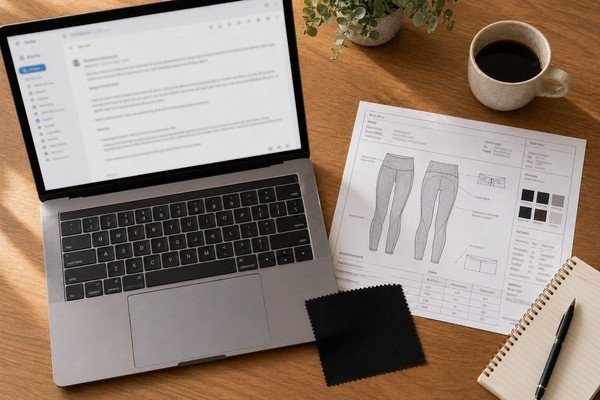
What to include in the first inquiry
A strong first message should include:
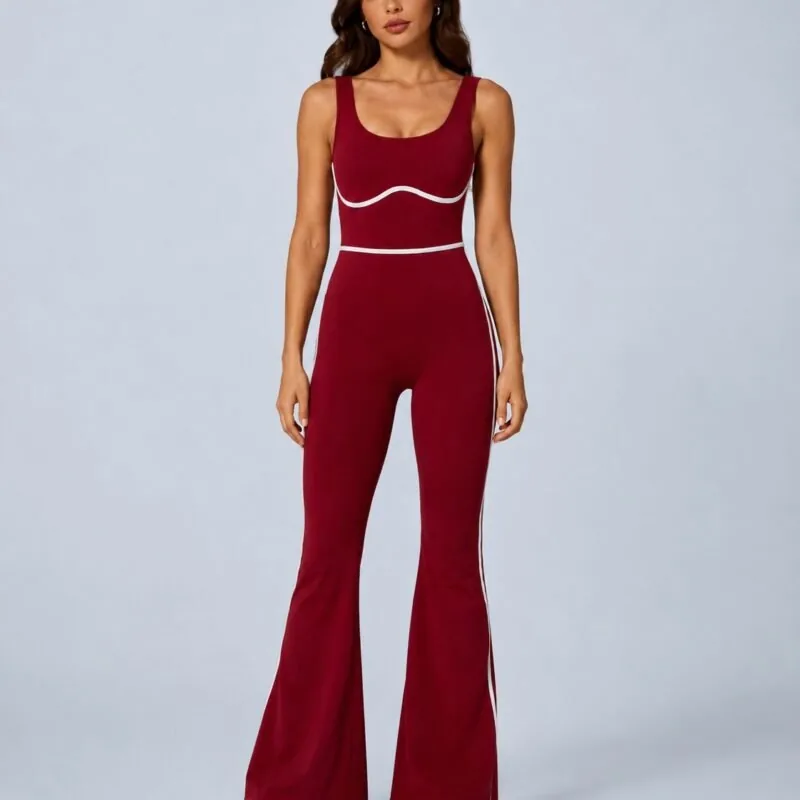
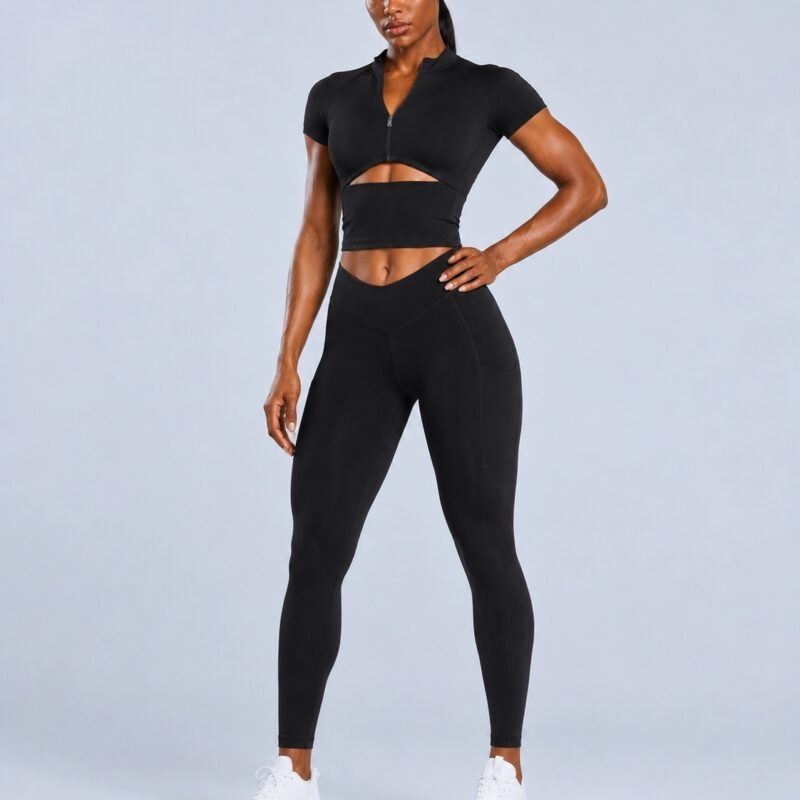
- Reference image or product link — what does the product look like
- Target quantity — even a rough range helps (e.g., 100–300 pcs)
- Stock plus logo or full custom? — which path you want
- Target market or channel — DTC, retail, distributor, marketplace
- Logo file if available
- Preferred shipping destination — country at minimum
- Launch timeline — when do you need to receive bulk
That’s it. Seven points, often less than 200 words. Most inquiries that get fast, accurate replies look like this.
The "why" behind each detail — what factories actually do with it
Buyers often skip details because they don’t see how the factory uses them. Each of the 7 inputs feeds a specific factory decision:
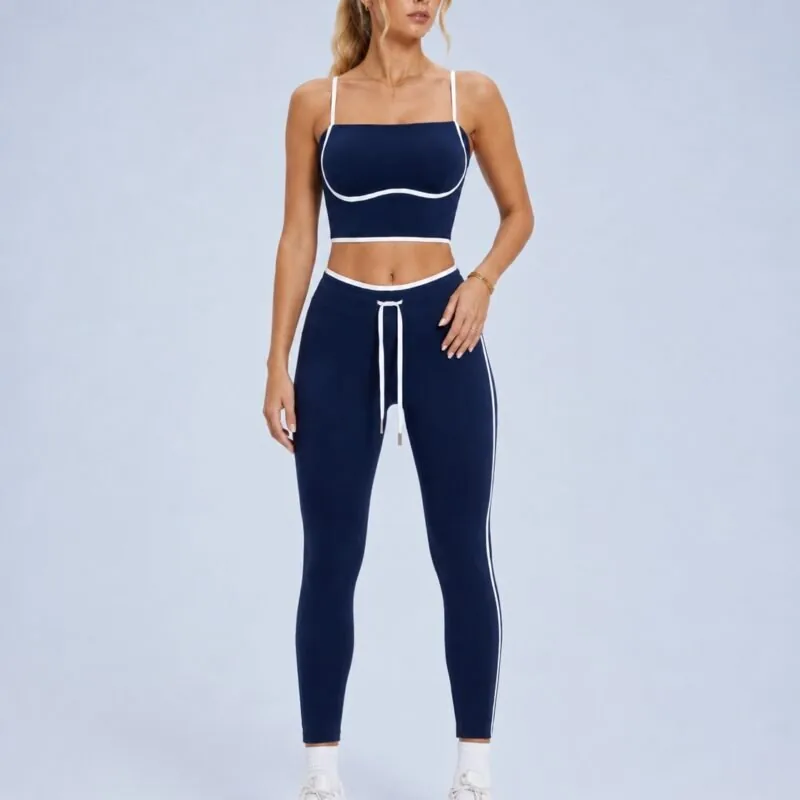
- Reference image: The factory matches it to their existing pattern library. If they have a similar pattern in stock, sample lead time drops from 15-20 days to 5-7 days. Without an image, the factory has to guess what construction you mean — leggings come in 12+ silhouettes alone.
- Target quantity: The factory decides whether to route the inquiry to small-batch production (100-500 pcs) or full-line production (1,000+ pcs). These are different sales reps, different pricing tiers, and sometimes different facilities entirely.
- Stock+logo vs full custom: Stock+logo can be sampled in 5-10 days using existing patterns. Full custom requires tech pack development, pattern grading, fabric sourcing — 20-35 days to sample. Telling the factory upfront saves a back-and-forth.
- Target market or channel: Affects fabric compliance (CPSIA for US kids’ products, REACH for EU adult products), labeling requirements, packaging detail. EU retail has different care label requirements than US DTC.
- Logo file: Determines logo application method (heat transfer, embroidery, silicone, sublimation) and minimum size per file format. Vector files (AI, EPS, SVG) work for all methods. Raster files (JPG, PNG) below 300 DPI fail at embroidery.
- Shipping destination: Sets freight quote, customs duty estimate, and lead time including transit. Sea freight to US East Coast is 35-45 days transit; air freight is 5-7 days. The factory bakes this into the realistic delivery date.
- Launch timeline: If your launch is in 60 days but bulk lead time is 45 days, you have 15 days for sampling — which forces stock+logo path, not custom. If launch is 120+ days out, custom development is feasible. The factory's recommended path depends on this.
When the factory has all 7 inputs, the sales rep can write a real proposal in 20-30 minutes. When inputs are missing, they either ask 5 follow-up questions (each costs 1-2 days of waiting) or hedge with a generic catalog response.
Why this matters
With these details, the supplier can reply with:
- Realistic MOQ guidance
- Better fabric options
- More accurate sample advice
- Clearer lead time expectations
- More useful logo recommendations
Without them, the supplier has to either ask 5 follow-up questions (slow) or send a generic price list (useless). Both waste your time. Studies of B2B sourcing inquiries show roughly 60-70% of first-contact emails to apparel factories are generic enough that the factory sends a catalog reply — which the buyer then has to chase up with the specifics they should have included in email one.
Vague inquiry vs strong inquiry: side by side
| Dimension | Vague inquiry | Strong inquiry |
|---|---|---|
| Subject line | “Quote request” | “Inquiry: 150 pcs high-waist leggings, Germany launch Oct 2026” |
| Product specified | “Leggings” or “yoga set” | Reference image + product type + specific feature (e.g., “high-waist with side pocket”) |
| Quantity | Not mentioned, or “what’s your MOQ” | “150 pcs across 2 colors” or “100-300 pcs depending on quote” |
| Colores | “Various” or “to be decided” | “Black + sage green” or “1 color first, expanding to 3” |
| Logo / branding | “With logo” | “Embroidery on back waistband, 5x2cm, logo file attached” |
| Destination | Not mentioned | “Shipping to Berlin, Germany” |
| Launch / timeline | “ASAP” or no mention | “Need bulk delivered by Oct 1, 2026” |
| Brand context | None | “DTC yoga brand launching first collection” |
| Reply speed (typical) | 5-7 days + 3 follow-ups | 24-48 hours, full proposal |
| Reply type | Generic catalog or “send more info” | Specific MOQ, fabric options, sample fee, lead time, FOB price tier |
Two example inquiries — same buyer, very different replies
Vague version (90% of first emails look like this):
“Hi, do you make leggings? Please send your price list and MOQ. Thanks.”
What the factory does with this: assigns to junior sales, sends a generic PDF catalog with FOB prices at MOQ 500 pcs. Buyer reads the catalog, can’t find what they want, sends a follow-up. Cycle repeats 2-3 times over 7-10 days before specifics emerge.
Strong version (5-10% of first emails look like this):
“Hi, I’m launching a yoga activewear brand in Germany. I’m looking at a high-waist legging similar to [reference image attached]. Target quantity is 150 pcs across 2 colors (black and sage). I have a logo file and I’d like to use embroidery on the back waistband. Target launch is October 2026. Could you send fabric options, MOQ confirmation, sample lead time, and pricing? Thanks.”
That message takes 90 seconds to write. It will get a much better reply than “Hi, do you make leggings? What’s your price?” — typically within 24-48 hours with a real proposal: 2-3 fabric options at the requested weight, embroidery vs heat transfer recommendation, MOQ at 150 pcs confirmed (or honest pushback if their floor is higher), sample fee with refund terms, and FOB price tiered for 150 / 300 / 500 pcs.
No tech pack? Still fine
Many first-time founders do not have a formal tech pack yet. That is not a reason to delay the inquiry. A good supplier should still be able to guide the next step from references and clear goals. At YOUMEGA, we work with founders from “I have an idea” all the way through to delivered bulk — see our Cómo funciona page for the full process.
Common inquiry mistakes that delay your quote by 1-2 weeks
Even buyers who include the 7 core details sometimes add or omit things that cause delays. The 6 most common mistakes:
- Asking for a catalog instead of a quote. Catalogs are designed for cold lead capture, not real sourcing. They show generic styles at MOQ 500-1000. If you want a real quote, ask for a real quote.
- Sending the same email to 15+ factories. Mass-emailing dilutes signal. Most factories can tell from formatting and recipient list — and respond with lower-effort replies. Send to 3-5 carefully chosen factories instead.
- Requesting prices without specifying construction. “What's the price for leggings?” can't be answered honestly. The same factory produces leggings from $7 (basic poly-spandex, MOQ 1000) to $22 (premium nylon-spandex with brushed inner, MOQ 100). Specify construction or expect a range too wide to be useful.
- Hiding the launch date. Buyers sometimes withhold timeline to “not show urgency.” Factories interpret missing timeline as “no real launch” and deprioritize the inquiry. Specify the launch — urgency is fine, vagueness isn't.
- Asking for sample before quote. Sample fees are usually $50-150. Most factories will quote first and sample second. Reversing the order signals inexperience.
- Confusing “FOB” with “delivered.” FOB price is at the port in China — it doesn't include international shipping or duties. Be clear which incoterm you're asking about. Mismatched incoterm assumptions are the #1 cause of “the quote was different from what I expected.”
What slows down a quote
The most common things that delay a useful reply:
- No reference image (the supplier has to guess what you mean)
- No quantity hint (pricing varies wildly by quantity)
- No destination (shipping cost can’t be estimated)
- “Just send me your catalog” (suppliers send back generic info instead of a real proposal)
Avoid these four and you’ll get faster, more accurate replies from any serious supplier.
Final thought
A better inquiry does not need to be long. It just needs enough detail to make the next answer specific. For growing brands, speed in sourcing usually comes from clarity, not from urgency alone. Spend 5 minutes on the first message — you’ll save days on the back-and-forth.
Want our team to review your project?
Send us your reference image, target quantity and timeline. We reply within 24 hours on weekdays — in English, Spanish or Chinese — with fabric options, MOQ, sample lead time and a transparent price breakdown. MOQ desde 100 sets, mixed colors and sizes allowed.
Frequently asked questions
How long should my first activewear inquiry be?
Less than 200 words is ideal. Cover the seven points: reference image, quantity, stock-or-custom, target market, logo, destination, timeline. That’s enough for a serious supplier to send a real quote.
Do I need a tech pack to start an activewear inquiry?
No. Most first-time founders don’t have one. A reference image, target quantity and brand goals are enough to start the conversation. We can guide tech pack development if and when it’s needed.
What if I don’t know my exact quantity yet?
Send a range. For example, ‘100–300 pcs in the first order, possibly more later if it sells.’ This gives the supplier enough to quote pricing tiers and recommend the right MOQ structure.
Should I send the same inquiry to multiple suppliers?
Yes — comparing 2–3 suppliers is normal and recommended. But send each one a real, detailed inquiry, not the same generic message. Suppliers can usually tell when they’re being mass-emailed and may reply with less effort.
How fast should I expect a reply to my activewear inquiry?
From a serious supplier, 24–48 hours on weekdays. At YOUMEGA we reply to every inquiry within 24 hours, in English, Spanish or Chinese. Suppliers who take a week to reply are usually slow during production too.
When in the development process should I send my first inquiry?
As early as you have a clear reference and a quantity range — even if your brand isn’t fully finalized. Good factories will guide you through fabric choices, MOQ structures, and sampling steps. Waiting until you have "everything ready" usually means you waste 2-4 weeks on assumptions that the factory would have corrected immediately. Send the first inquiry when you have: reference image, rough quantity, launch month, and target market. Nombre de marca, logo file, and exact colors can come later.
What’s the difference between an RFQ and an inquiry?
An RFQ (Request For Quotation) is the formal procurement version of an inquiry — usually used by established brands with detailed tech packs, fabric specs, target FOB prices, and incoterms. An inquiry is more flexible and conversational, used by emerging brands still defining their specs. Both work. Use the format that matches where you are. Most factories handle both equally well as long as the core details are clear.
Buyer FAQ
What should an activewear inquiry include?
Include product category, reference images, target quantity, size range, fabric preference, logo method, packaging needs, target market and required delivery date. This makes a real quote possible.
Do buyers need a tech pack before contacting YOUMEGA?
A tech pack helps, but it is not required for first contact. A clear reference image, quantity and intended market are enough for YOUMEGA to suggest stock or custom development options.
How fast can a buyer get a quote?
A clear inquiry can usually receive a useful reply within 24-48 hours on weekdays. Vague inquiries take longer because the factory must ask basic questions before quoting.