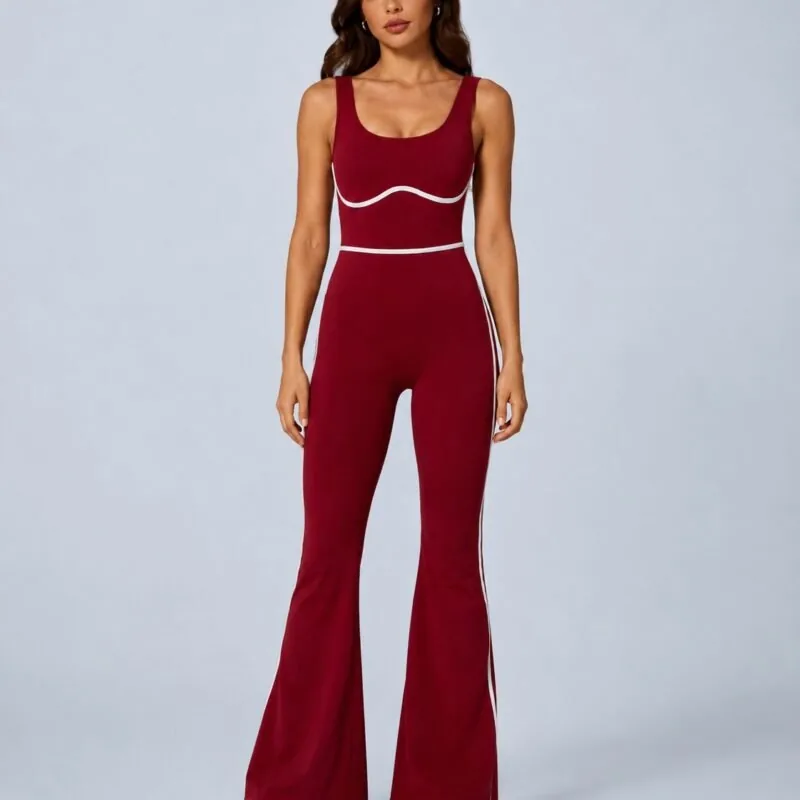
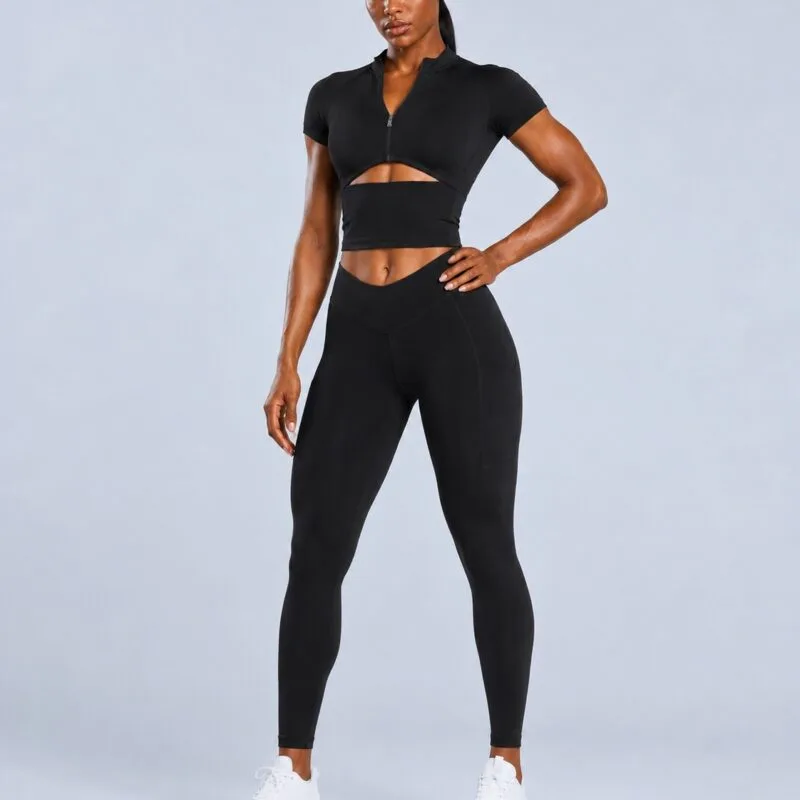
For most new activewear brands, the realistic first-launch range is 2 to 4 styles in 2 to 3 colors — not the 8-12 SKUs that most first-time founders plan. The reason isn’t brand caution; it’s SKU math. Each additional style multiplies sampling work, dye batches, fit decisions and inventory risk, and at launch stage that complexity grows faster than the audience the brand has to absorb it.
Many first-time founders think more styles will make the brand look more complete. In production, too many styles usually create more risk. How many styles a new activewear brand should launch with is one of the first questions we get from founders — and our honest answer surprises most of them.
The short version: fewer than you think. Here’s why.
Why first launches fail from overbuilding
A new brand often wants leggings, bras, shorts, jackets and accessories all at once. The problem is that each style creates:
- Separate sampling work (typically 2–3 sample rounds per style, each costing $80–200 and 7–14 days)
- Separate fit decisions
- Separate MOQ pressure
- Separate inventory risk
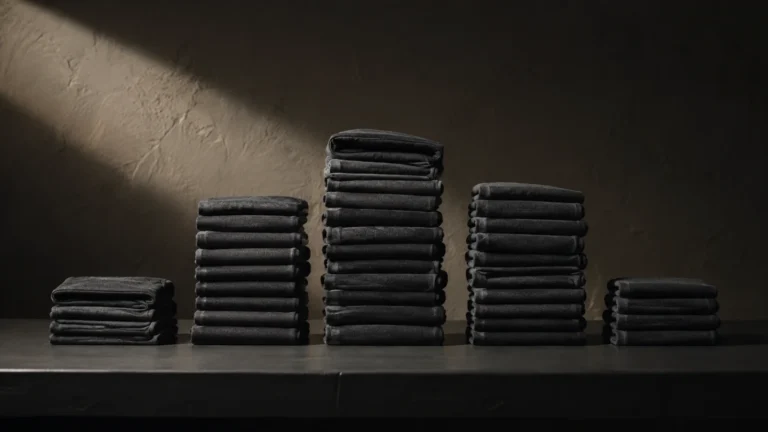
That means complexity rises faster than most new brands expect. A 6-style launch isn’t twice as hard as a 3-style launch — it’s more like four times as hard, because each style multiplies sampling rounds and color decisions.
The SKU math: why complexity grows faster than style count
A simple SKU count makes this concrete. Most activewear brands need at least 5 sizes (XS through XL, sometimes through XXL). Multiplying styles, colors and sizes together produces the real production commitment a founder is making:
| estilos | Colors per style | Tallas | Total SKUs | Units @ 100/SKU |
|---|---|---|---|---|
| 2 | 2 | 5 | 20 | 2,000 |
| 3 | 3 | 5 | 45 | 4,500 |
| 4 | 3 | 5 | 60 | 6,000 |
| 6 | 4 | 5 | 120 | 12,000 |
| 8 | 4 | 6 | 192 | 19,200 |
Even when the production MOQ per SKU stays the same, total inventory commitment grows multiplicatively. A founder planning 6 styles in 4 colors with full XS–XXL coverage is committing to 12,000+ units before they have a single sales data point. That is a six-figure inventory bet placed on guesswork.
A stronger first-launch structure
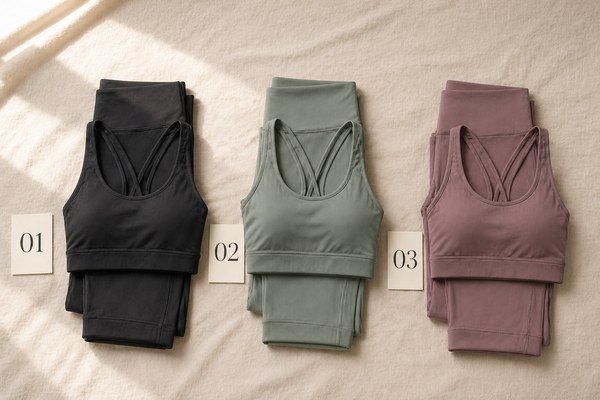
For most small activewear brands, a better first launch looks like:
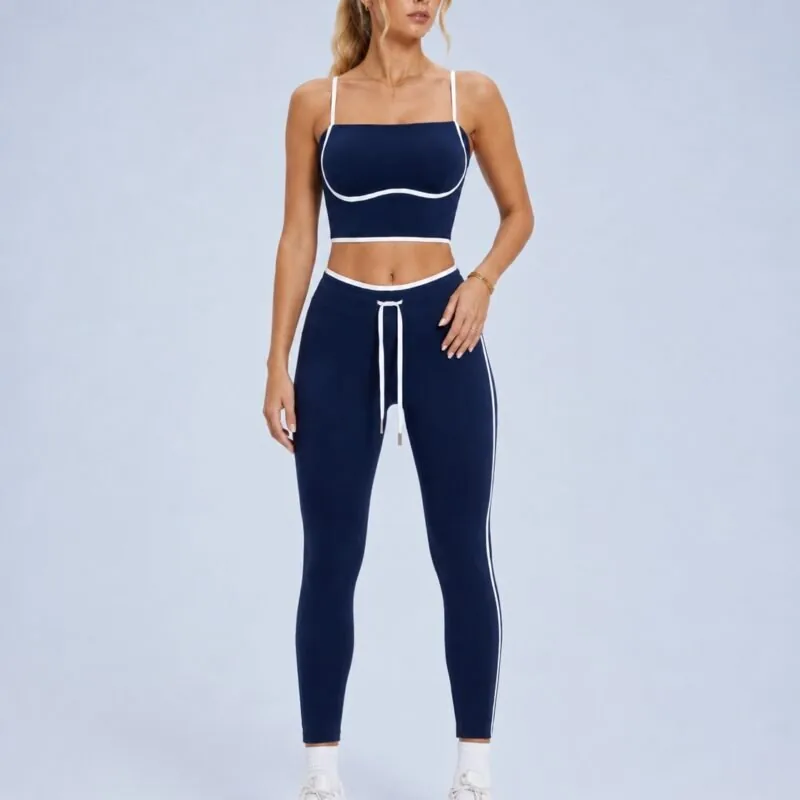
- 1 core legging
- 1 core Top deportivo or crop top
- 1 short or outer layer if budget allows
- 2 to 3 colors max
This keeps the collection coherent and easier to reorder if one product performs well. It also stays within reasonable MOQ at the launch stage. (For more on MOQ realities, see our low-MOQ guide.)
Which categories should come first?
Not every activewear category is equally important to launch with. Some carry the brand’s identity; others fill gaps in a complete look. For first launches, we typically see this priority order work best:
To test a focused category extension, review private-label padel apparel.
| Categoría | Launch Priority | Why |
|---|---|---|
| Leggings | Tier 1 (essential) | Hero product for most activewear brands; clearest fabric and fit differentiator |
| Sports bra or crop top | Tier 1 (essential) | Pairs with leggings; high reorder rate; key cross-sell anchor |
| Shorts | Tier 2 (strong) | Seasonal demand; lower MOQ pressure; good summer activator |
| Tank tops / tees | Tier 2 (strong) | Easy to develop; broadens look without high fabric cost |
| Outerwear (jackets, zip-ups) | Tier 3 (later) | Higher fabric cost; complex fit; usually best after collection 2 |
| Accessories (caps, bags, socks) | Tier 4 (much later) | Margin booster, not a brand-defining product at launch |
Most successful focused launches start with one Tier 1 legging, one Tier 1 top (bra or crop), and optionally one Tier 2 short. That is the 3-style baseline we recommend.
Size range: the hidden SKU multiplier
One factor founders consistently underestimate is size range. Adding XXS or XXL to a basic XS–XL range increases the SKU count by 20% with no additional design work. That can sound efficient — but it also means 20% more inventory tied up in sizes that historically sell at 60–70% the rate of core sizes (S, M, L).
For a first launch, we typically recommend XS through XL (5 sizes). XXS and XXL can be added in the second collection once sell-through data shows real demand for the extremes. Skipping the extremes at launch reduces total inventory by roughly 30–40% with very little revenue impact in the first 90 days.
Think in winners, not in variety
The goal of a first collection is not to prove how many products the brand can make. It is to identify which product customers want to reorder. A focused launch gives clearer sales data and cleaner brand identity. After 30 days of selling, you’ll know which style is the winner — and that’s what your second collection should expand around.
In our experience, roughly 70–80% of a focused first launch’s revenue comes from a single style. That style becomes the platform the brand grows around. With a 6+ style launch, that signal gets diluted, and founders often misread weak spread-out data as “all my styles are okay” when the reality is that no single style is strong enough yet to anchor a brand.
The math problem with overbuilding
Imagine a founder launches 6 styles in 4 colors each. That’s 24 SKUs. Even at 100 pcs per SKU, that’s 2,400 units of inventory — and a lot of cash tied up before you know what sells. Now imagine the same founder launches 3 styles in 3 colors. That’s 9 SKUs and 900 units. The risk drops by more than half, and the focus is sharper.
What about brand impression?
Some founders worry that a small first collection looks “too small” on the website. The opposite is usually true. A focused, well-photographed 3-style collection looks more intentional than 12 mediocre styles. Customers don’t count SKUs — they react to brand confidence.
When to expand: signals from your first 30–90 days
A focused first launch is not a permanent strategy — it’s a learning phase. Most brands that get the first 3-style launch right are ready to expand within 60–90 days. The signals that you’re ready:
- One style has clearly out-sold the others by 1.5x or more
- Customer reviews include consistent specific praise (fit, fabric feel, length)
- Reorder requests for the same style in new colors
- Customers asking what’s coming next
- Sell-through on the winner has reached 50–60% within the first 60 days
If you’re seeing those signals, your second collection should expand around the winner — usually 2–3 new colors of the same style, plus one or two adjacent products (a matching short to the bestselling legging, or a new bra silhouette in the same fabric family). This is also when full custom OEM development starts to make commercial sense.
Common first-launch mistakes
A few patterns we see repeatedly in first launches that struggle:
- Launching with too many similar styles. Three leggings in slightly different cuts confuses the customer instead of giving them choice.
- Picking colors based on personal taste, not market data. Black, navy and one neutral usually outsell trendier shades by 2–3x in first launches.
- Over-investing in accessories or “completing the look.” Bags, caps and socks dilute focus and rarely produce meaningful margin at launch volume.
- Skipping the men’s vs women’s decision. Splitting MOQ across genders cuts color and size depth in half on both sides.
- Locking in seasonal-only fabric weights. A 280 GSM winter legging (see our legging fabric weight guide) launched in summer will sit until October.
- Underspending on packaging. The cheapest plain polybag undermines a premium-positioned product. Plan packaging alongside styles, not after (see our packaging guide).
Final thought
For activewear startups, fewer better-developed styles almost always beat a large unfocused first range. Start with products you can support well — clear fit, strong color choices, complete packaging, real photography. Expand after the first commercial proof, not before. A brand that launches 3 styles well and reorders the winner twice in 6 months will outperform a brand that launches 10 styles and reorders nothing.
Want our team to review your project?
Send us your reference image, target quantity and timeline. We reply within 24 hours on weekdays — in English, Spanish or Chinese — with fabric options, MOQ, sample lead time and a transparent price breakdown. MOQ desde 100 sets, mixed colors and sizes allowed.
Frequently asked questions
What’s the smallest activewear collection I can launch with?
Realistically, 2–3 styles in 2–3 colors. Below that, the brand looks incomplete on a website. Above 5 styles, complexity and inventory risk grow quickly. The 3-style sweet spot fits YOUMEGA’s 100-set MOQ comfortably and keeps total launch inventory under 1,500 units.
How many colors should I offer per style in my first collection?
Two or three. Black is almost always the bestseller, so include it. Add one or two seasonal accent colors. More than three colors per style creates inventory risk without adding meaningful sales — and dilutes your photography budget across more product shots.
Should I include men’s activewear in my first collection?
Usually no. Most successful new activewear brands launch women-only first because the women’s market is larger and easier to position. Adding men’s splits your MOQ commitment in half — fewer colors per gender, fewer sizes, weaker depth. Add men’s in collection 2 or 3 if your brand voice supports it.
Should I include accessories (caps, bags, socks) in my first launch?
Not at launch. Accessories rarely drive first-purchase decisions, and they take artwork and sampling attention away from your core product. Add them after one style has proven to sell, then bundle them as upsell items. The exception is a branded scrunchie or sweatband that ships free with orders over a threshold — that’s a marketing item, not a product line.
What’s the typical first-order budget for a new activewear brand?
For a focused 3-style collection at YOUMEGA’s 100-set MOQ, total first-order cost (including sampling, bulk, packaging and shipping) is usually $5,000–$15,000 depending on fabric and complexity. Add roughly $2,000–$4,000 for photography, and another $1,000–$3,000 for initial digital marketing.
How long should I keep my first collection live before launching the next one?
At minimum 60–90 days. You need enough sales data to identify the winner and enough customer feedback to refine fit. Launching a second collection too early dilutes attention and confuses returning customers. Most brands that grow steadily refresh in 90-day cycles for the first year.
How long does a first collection take from inquiry to delivery?
Typically 8–12 weeks from first inquiry to receiving your bulk order. That includes sampling (2–3 weeks with revisions), bulk production (4–6 weeks), QC and shipping. See our Cómo funciona page for the full timeline.