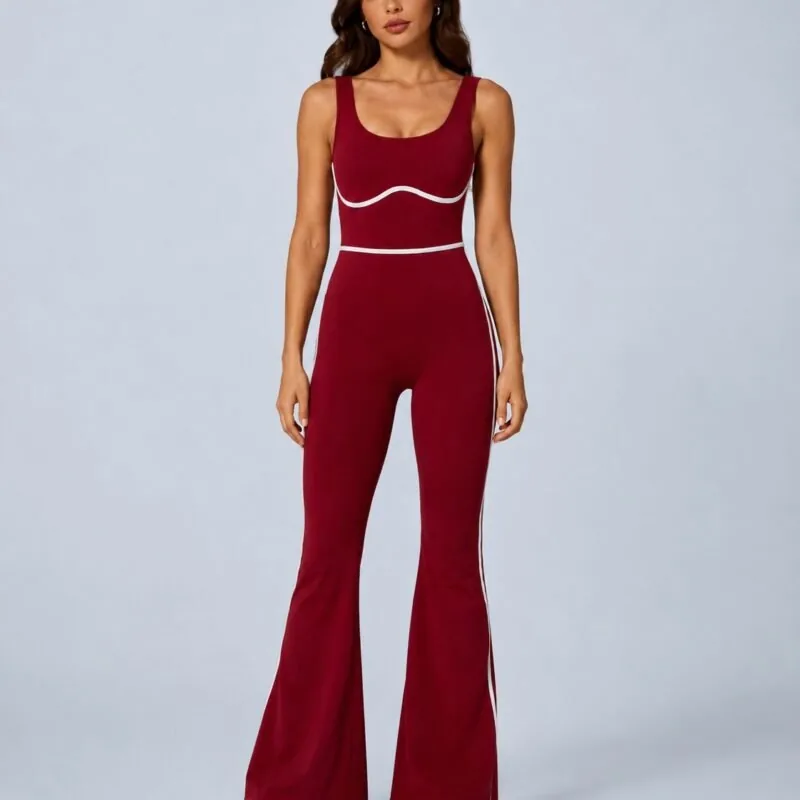
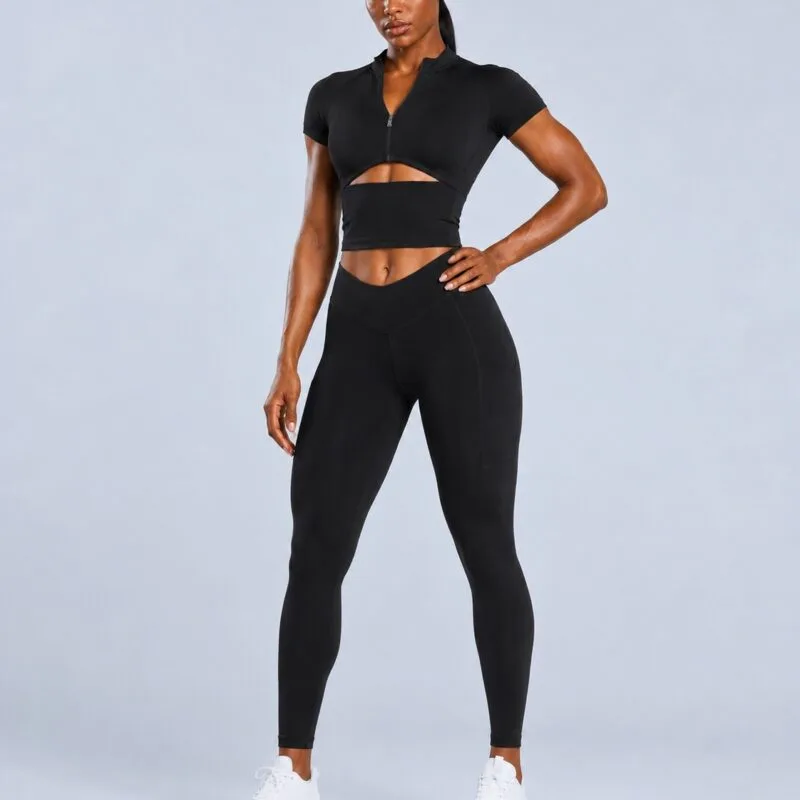
La única decisión que determina si un sports bra private label funciona en la primera muestra es el nivel de soporte — no la tela, no la ubicación del logo, ni siquiera el estilo de copa. Tómala bien antes de enviar la imagen de referencia y todo lo demás encaja. Tómala mal y la muestra regresa viéndose bien pero sintiéndose mal, perdiendo dos semanas en un re-corte.
Los sports bra son más difíciles de desarrollar que los leggings. En papel parecen simples; en producción real generan más preguntas de fit, más de soporte y más rondas de revisión. Para un comprador lanzando una primera colección, el sports bra private label suele ser el producto que revela si el proceso de desarrollo está claro.
Empieza por el nivel de soporte
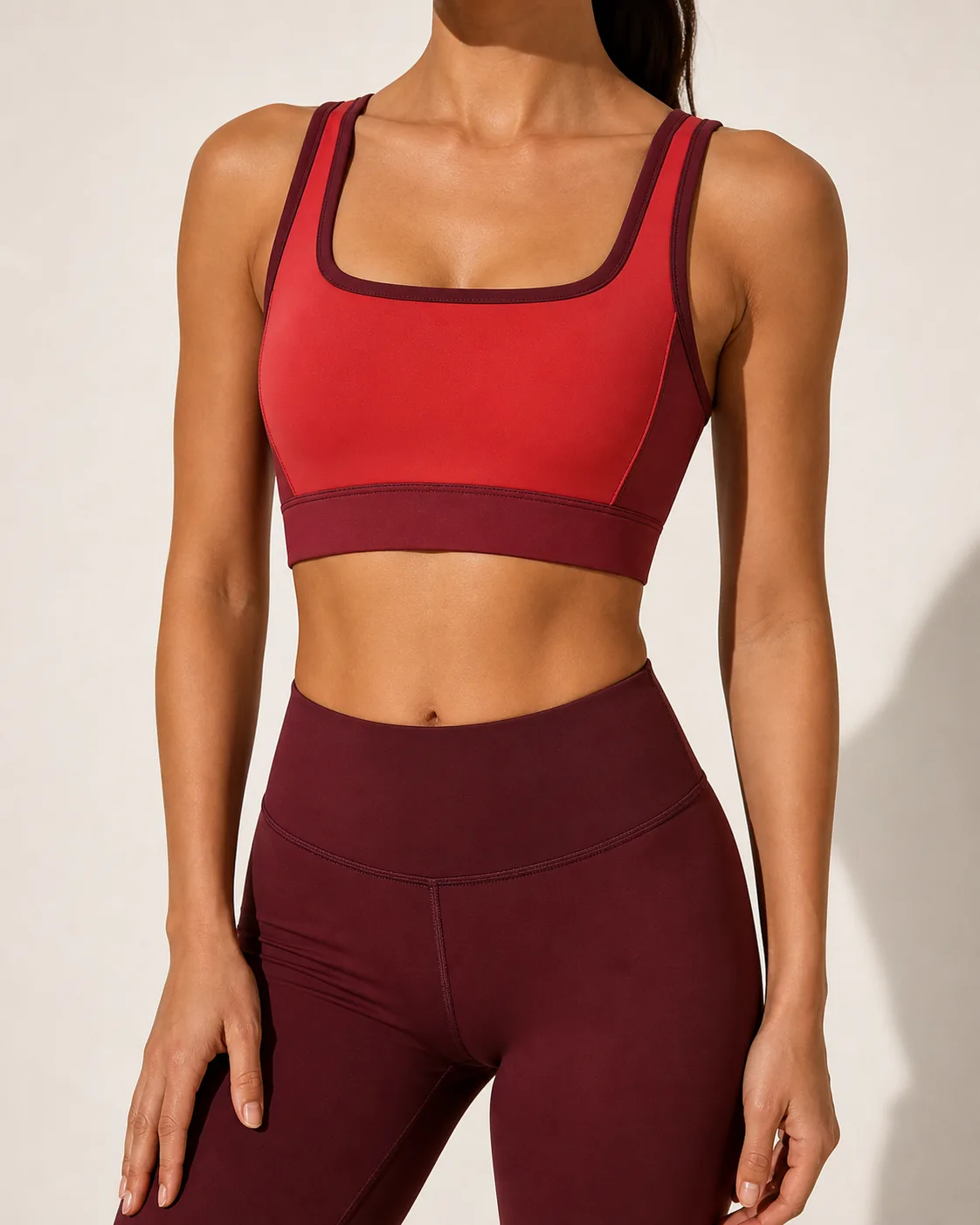
Dos bras pueden verse similares por fuera y comportarse muy distinto en uso. Antes de la primera muestra define si es para soporte ligero (yoga, lounge), medio (entrenamiento, estudio) o alto (running, HIIT). El nivel cambia tela, ancho de tirantes, estructura del underband, forro y diseño de copa.
| Nivel | Actividad típica | Tirante | Underband | GSM | Copa |
|---|---|---|---|---|---|
| Ligero | Yoga, lounge, pilates | 1.0–1.5 cm | 2.0–2.5 cm | 200–230 | Capa única + copa removible |
| Medio | Entrenamiento, estudio, ciclismo | 1.5–2.5 cm | 2.5–3.5 cm | 230–260 | Doble capa o shaping fijo |
| Alto | Running, HIIT, deportes de cancha | 2.5–4.0 cm o racerback | 3.5–5.0 cm | 260–300 | Copas encapsuladas + underband reforzado |
Underband, tolerancias y recuperación
El underband hace más trabajo del que los compradores primerizos esperan: muy suave se siente inestable, muy ajustado clava. La tolerancia industrial estándar es ±1 cm en el underband y ±1.5 cm cruzando el busto. La recuperación elástica después de un ciclo estándar de lavado debe medir 85–95%. Por debajo de 85% el bra se sentirá flojo al segundo mes. Si una fábrica no puede darte estos números, es una señal — la respuesta correcta no es “perfecto”, es un número que coincida con el estándar.
Forma de copa: decide temprano
Muchas marcas asumen que las copas removibles son la opción fácil por default. En la práctica generan sus propias preguntas — abertura visible, movimiento al lavar, preferencia real del mercado. Cambiar la construcción de copa a media desarrollo suma dos semanas. Decide antes del muestreo.
Antes de aprobar la construcción de la copa, usa copas removibles, moldeadas y bonded.
| Tipo | Look | Durabilidad al lavado | Mejor para | Riesgo |
|---|---|---|---|---|
| Copa moldeada removible | Frente limpio, bolsillo visible adentro | Buena si el bolsillo está bien cosido | Lifestyle, mercado masivo | Movimiento de copa |
| Copa fija cosida | Exterior más liso | Excelente | Premium, estética minimalista | No ajustable, seca lento |
| Doble capa sin copa | Forma suave, natural | La más alta | Yoga, lounge, soporte bajo | Menos shaping para busto grande |
| Copa encapsulada | Forma definida, separada | Buena | Alto impacto, busto grande | Mayor costo y desarrollo |
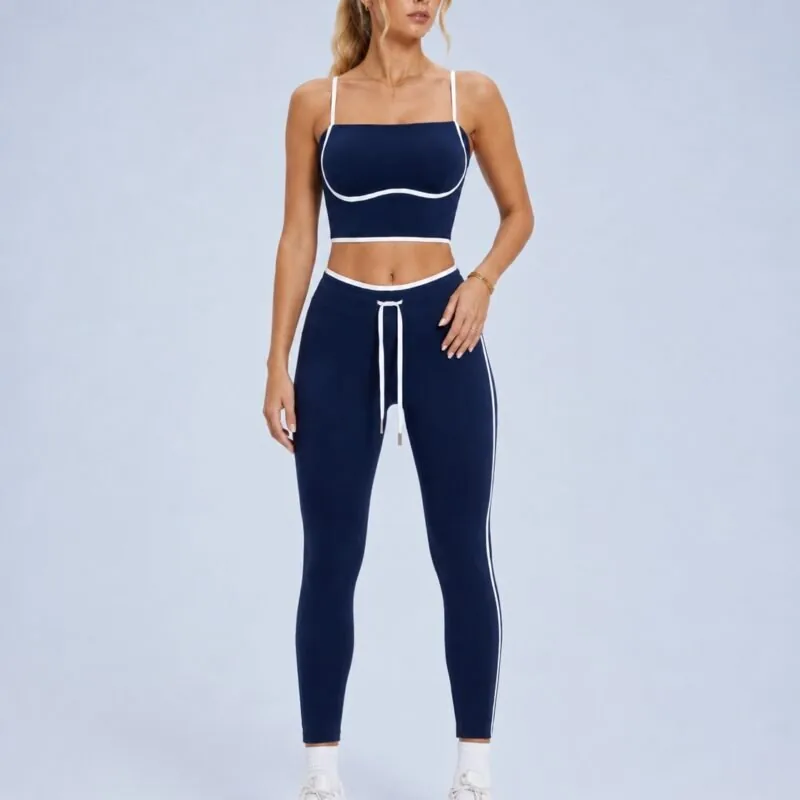
Los tirantes finos se ven limpios en fotos pero no funcionan para todo nivel de soporte; los cruzados pueden afectar comodidad y balance. Para el logo, los bras dan menos espacio que los leggings — un logo muy alto se distorsiona por el stretch, muy cerca del underband no se ve balanceado. El gramaje GSM también afecta el feel final más de lo que se cree.
Lead times realistas por tipo de desarrollo
Basado en unos 200 proyectos primerizos de desarrollo de bra:
| Tipo | Muestra | Revisiones | Producción (300–500) | Total |
|---|---|---|---|---|
| Stock + logo personalizado | 7 días | 0–1 | 25–30 días | ~5 semanas |
| Patrón stock + tela/color custom | 10–15 días | 1–2 | 30–40 días | ~7–8 semanas |
| Patrón custom + tela stock | 12–18 días | 2–3 | 35–45 días | ~9–10 semanas |
| OEM full custom | 20–30 días | 2–4 | 40–55 días | ~12–14 semanas |
Reflexión final
Los mejores desarrollos no empiezan con “¿pueden copiar esto?”. Empiezan con una intención de producto clara. Si defines soporte, feel de tela, construcción de copa y branding antes de la primera muestra, las rondas se acortan, los comentarios de fit son más claros, y el producto tiene mucha más probabilidad de funcionar comercialmente. Para entender qué debe pedir una fábrica seria a cambio, revisa nuestra guía de comparación de cotizaciones.
¿Quieres que nuestro equipo revise tu proyecto?
Envíanos tu imagen de referencia, cantidad objetivo y timeline. Respondemos en 24 horas hábiles — en inglés, español o chino — con opciones de tela, MOQ, lead time y desglose transparente. MOQ desde 100 sets, colores y tallas mezclados.
Para otro contexto de patronaje ligado a cambios corporales, consulta patronaje de activewear de maternidad.
Preguntas frecuentes
¿Qué MOQ es realista para un sports bra private label custom?
Los estilos en stock con logo personalizado empiezan en 100 sets. El desarrollo OEM full custom con tu patrón y tela requiere 300–500 pcs por estilo por color.
¿Cuánto tarda el muestreo?
Aproximadamente 7 días para stock + logo, 10–18 días para patrón stock con custom, 20–30 días para OEM full custom. Las revisiones de fit son gratis hasta que apruebes la muestra.
¿Copas removibles o fijas para mi primera colección?
No hay respuesta universal. Las removibles dan flexibilidad pero pueden moverse; las fijas son más limpias pero menos ajustables. Decide antes del muestreo — cambiarlo después suma dos semanas.
¿Qué tolerancia de talla es normal en un sports bra?
Aproximadamente ±1 cm en el underband y ±1.5 cm cruzando el busto. La recuperación elástica después de un lavado estándar debe medir 85–95%. Por debajo de 85% el bra se sentirá flojo al segundo mes. Pide estos números a tu proveedor antes de aprobar la primera muestra; si no puede dártelos, es señal de problemas en QC.
Preguntas frecuentes para compradores
¿Qué se decide antes de muestrear un sports bra?
Define soporte, cobertura, tirantes, ancho de banda, peso de tela, copas removibles y ubicación del logo. Estas decisiones afectan fit, MOQ y coste.
¿Qué MOQ es realista para sports bras private label?
Los estilos de stock con logo personalizado pueden empezar desde 100 sets. Un sports bra full custom suele partir de unas 300 piezas por estilo y color.
¿Cómo reducir riesgo de fit en un sports bra?
Empieza con una base probada, prueba soporte en el cuerpo objetivo, aprueba copas y banda pronto, y evita demasiadas variaciones de tirantes en el primer pedido.