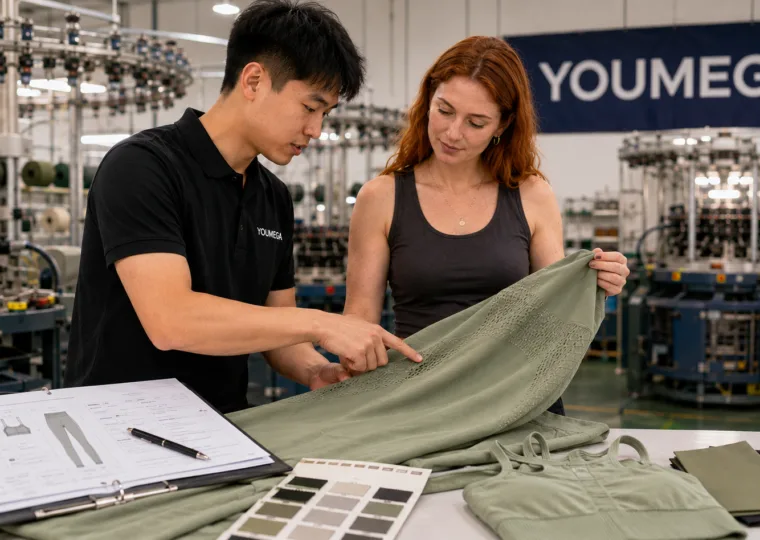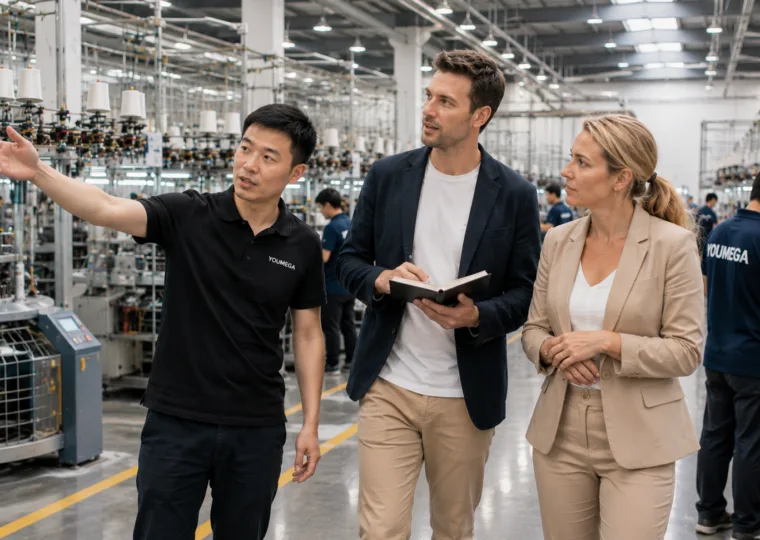
The shipment landed. The reviews started. The logos started peeling off.
Powercut Clothing (Ireland) — POWERCUT placed their first production order with us early in our relationship — a focused capsule of seamless leggings and sports bras for the Irish and broader UK market. Development went cleanly. Fabric was approved on the second sample. The fit was signed off after one round of measurement adjustments. The first run of roughly 5,000 sets shipped from Xiamen on schedule, cleared customs in Dublin, and reached the brand’s warehouse without incident.
The problem appeared three to four weeks later, after the garments had been sold and consumers had washed them at home. POWERCUT’s customer service inbox started receiving photos: the brand’s logo, heat-transferred onto the leggings waistband and the bra hem, was lifting at the edges. On some pieces it had partially peeled. On a few, it had come off entirely. The garments themselves — the seamless construction, the fabric, the fit — were performing exactly as the samples had. But the brand identity on them was failing.
For any growing label, this is the kind of issue that ends supplier relationships. For a brand selling premium activewear with a clean visual identity, logo failure is not a cosmetic problem — it is a refund event, a review-rating event, and in repeat-purchase categories, a customer-retention event. POWERCUT had every right to demand a full investigation, hold payment on the next order, and start sourcing alternatives.
We did not ask for a lab report. We asked for the affected units.
The brand sent us a clear, calm message: here is what is happening, here are six customer photos, here is one garment couriered back to Xiamen. Many factories at this point would have requested a third-party laboratory test, debated whether the consumer wash conditions were “within label guidance,” and pushed the conversation toward a partial credit on the next order. That route protects the factory in the short term and destroys the relationship over the next year.
We took the other route. Within 48 hours of receiving the returned garment, our production and QC leads inspected it under a microscope, ran a controlled wash test on three retained samples from the same shipment, and confirmed what the brand was telling us: the heat-transfer logos were delaminating after five to ten standard wash cycles. The fabric, the stitching, the construction — all intact. The failure was isolated to the logo application, and specifically to the adhesive layer between the printed film and the fabric.
We then traced the issue to its root: our heat-transfer logo supplier at the time had used a film batch with insufficient adhesive cure. Their incoming QC had passed it. Our incoming QC on logo trims had not caught it. Both were our responsibility, regardless of which side of the supplier line the defect originated on. We told POWERCUT the same day what we had found, who was at fault, and what we proposed to do.
Roughly $50,000 in goods. Re-cut, re-printed, re-shipped at our cost.
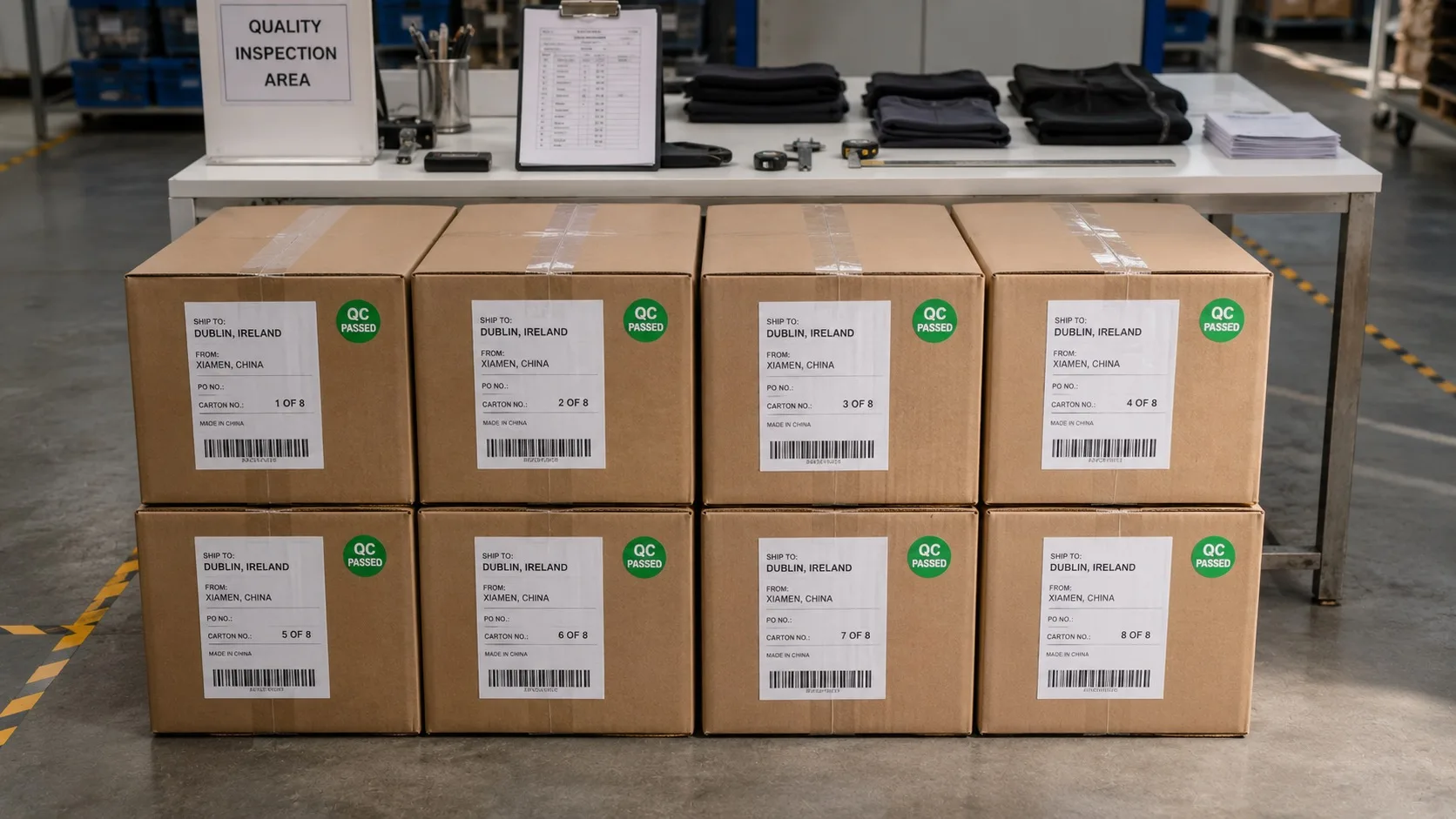
We proposed three actions and committed to them in writing the same week. First, we would replace the logo supplier entirely — not negotiate a discount, not request a corrective action plan. We had already identified a new heat-transfer partner with documented adhesive cure testing on every production batch, and we would qualify them with three test runs before any POWERCUT garment touched their floor again. Second, we would re-manufacture the entire affected run — full seamless garments, not just logo patches — using fresh fabric from the same approved lot and the new logo supplier. Third, we would absorb the full cost. Re-cutting, re-knitting where needed, re-application, re-packing, re-shipping by air to Dublin to make the brand’s next sales window. The total value of goods was approximately $50,000 USD. We did not split it, did not insure it across the next order, did not ask for any concession.
Four weeks later the replacement shipment arrived in Dublin. POWERCUT’s team ran the same consumer-wash test on a randomized sample of the new run before releasing it to customers. The logos held. They have held on every shipment since.
What made this decision easy for us was not generosity. It was arithmetic. POWERCUT was, at the time, an early-relationship customer with a clear trajectory and a brand we believed in. A $50,000 re-make against the value of five more seasons of partnership was not a difficult calculation. The harder version of this decision would have been to argue, win on the lab report, save the cash, and lose the customer. Many factories make that trade. It is almost always the wrong one.
Trust is built when things go wrong. Not when they go right.
Most factory case studies on the internet describe successful first runs. We have those too. We chose to publish this one because every brand we talk to today is trying to answer the same question: what happens when something goes wrong? Not the standard order. Not the easy reorder. The one where a defect hits the consumer, the brand’s reputation is exposed, and the factory has to decide whether to lead with the contract or with the partnership.
POWERCUT did not stay with us because we executed the first order perfectly — we did not. They stayed because we owned the failure in 48 hours, fixed the root cause inside two weeks, replaced approximately $50,000 in goods at our cost, and shipped a clean replacement run within the season. The five-season partnership that followed was the result of one decision made early, before either side had any commercial reason to be generous.
If you are about to place a first order with a Chinese activewear manufacturer, the most important question to ask is not “what is your defect rate?” Every factory will quote a low number. Ask instead: “what is the largest replacement order you have funded entirely at your own cost, and can I speak to that customer?” The answer to that question is the only one that actually predicts how your relationship will go when the wash tests come back wrong.
\n
About this case: Powercut Clothing is a Ireland-based brand client of YOUMEGA. See more case studies at https://iyoumega.com/case-studies/