Short answer: Most country club tennis dress codes require dedicated tennis attire — collared or structured tops, tennis skirts, dresses or tailored shorts, and court shoes — and prohibit gym wear: t-shirts, running shorts, leggings worn alone, and anything with large graphics. Traditional clubs may additionally enforce predominantly-white or all-white rules. When in doubt, white and structured is never wrong. This guide is about the rules themselves — what dress codes typically say, why they exist, and how to stay inside them without dressing like it’s 1975. (For outfit styling ideas, see our country club outfits guide (/insights/country-club-tennis-outfits-guide/); for how to evaluate quality before buying, see the attire buying checklist (/insights/choose-country-club-tennis-attire/).)
What Dress Codes Usually Require
Wording varies club to club, but the common rules cluster into five groups:
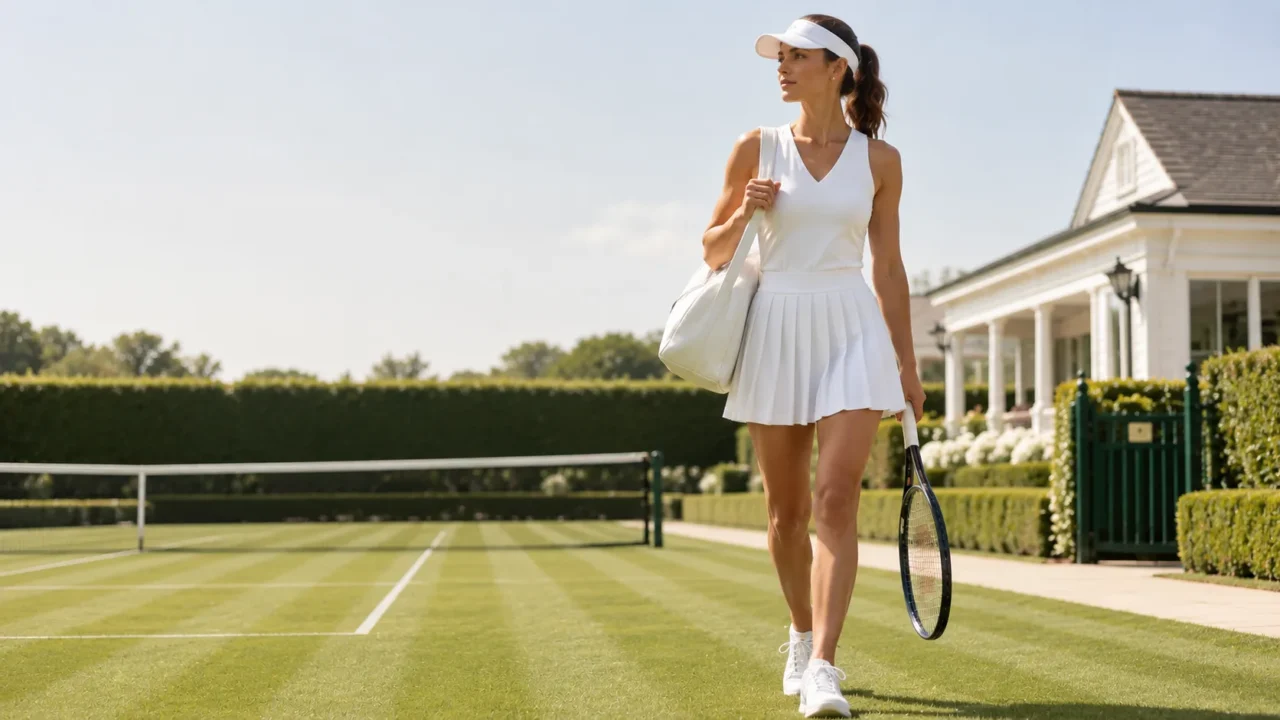
- Dedicated tennis clothing. Garments designed for tennis — not general gym or running wear. The visible cues clubs look for: collars or structured necklines, pleated or A-line skirts, tailored short lengths.
- Color rules. Three tiers exist:
- Open color — anything tasteful, solids preferred.
- Predominantly white — white as the dominant color, accents allowed (commonly interpreted as roughly 80–90% white).
- All white — the strictest traditional standard, sometimes down to trim and soles.
- Coverage and fit. Midriff-baring tops, visible undergarments and overly loose “streetwear” fits are commonly restricted. Built-in liners under skirts are expected.
- Footwear. Non-marking court shoes, usually white or predominantly white. Running shoes with dark soles are the most common violation.
- Logos and graphics. Small brand logos are accepted; oversized graphics, slogans and neon colorways are not.
Why Clubs Still Enforce This
Three practical reasons, beyond tradition: white reflects heat on open courts; uniform standards keep member photos and club events visually consistent; and dedicated tennis construction (liners, stretch, non-marking soles) protects both players and court surfaces. Knowing the why makes the rules easier to navigate — they target garment categories, not personal style.
The Most Common Violations (and Easy Fixes)
| Violation | Why it’s flagged | The within-code fix |
|---|---|---|
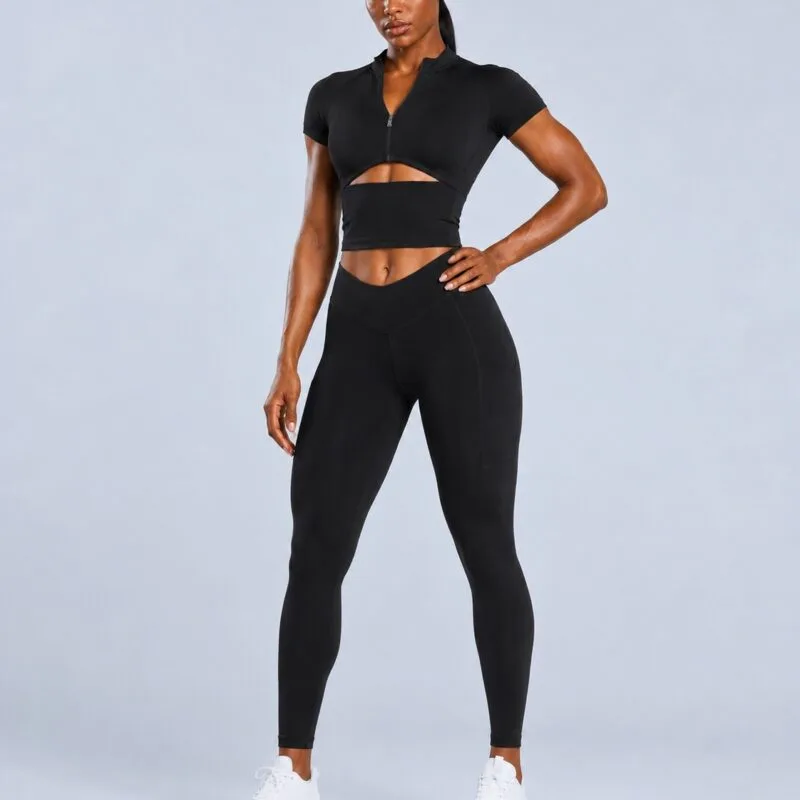
| Leggings worn alone | Read as gym wear | Wear them under a tennis skirt in solid colors |
| Crew-neck cotton t-shirt | No structure, absorbs sweat | Performance polo or structured tank |
| Running shorts | No liner, casual cut | Tailored tennis shorts with liner |
| Dark-soled trainers | Court marking risk | Non-marking court shoes, white base |
| Neon or big-graphic tops | Logo/graphic rules | Solids with small trim accents |
Fabric Standards That Keep You Within Code
Dress codes describe how garments look; fabric decides whether they keep looking that way through a match:
- Opacity in white. All-white rules make fabric construction critical: white skirts and dresses need lining or double-layer panels, and white knit tops need sufficient density. A garment that turns translucent with sweat is a coverage violation you didn’t plan.
- Crisp structure. Pleats must be heat-set into the fabric (typically polyester-rich blends around 180–220 GSM) or they collapse by the second set, and the outfit stops reading “tennis attire.”
- Matte finish. Most clubs’ “tasteful” standard in practice means matte textures over high-shine compression looks.
- Colorfast accents. On predominantly-white garments, a bleeding accent trim after washing ruins the white — dye-fastness matters more here than on any other sportswear.
Rulebook checkpoints for a white-club brief
Use the club’s own code first, then separate tournament rules from local custom. The Wimbledon clothing standard requires suitable tennis attire that is almost entirely white and limits a single coloured trim to 1 cm; the ITF Rules and Regulations library is the governing rule source for the sport; and the USTA Friend at Court is the U.S. rules and officiating reference. Those sources are evidence for a brief, not permission to claim that every country club uses the same rule.
For white performance knits, YOUMEGA’s approved working range is 220–320 g/m². White usually needs the denser end of the range, but GSM alone is not an opacity pass: approve it stretched, over a contrasting backing and after wetting. If a sun-protection claim is part of the brief, test it rather than infer it from weight; ARPANSA’s clothing and fabric guidance classifies UPF 50 and 50+ as excellent protection.
A Note for Brands Selling Into the Club Market
If you are building a tennis line for club players, design to the strictest tier: an all-white colorway with optional trim accents will sell into every club; a neon-first line will not. The construction requirements above — lined whites, heat-set pleats, structured collars, non-translucent knits — are factory specifications, not marketing copy, so confirm your manufacturer can hold them at production scale.
YOUMEGA is a private-label activewear manufacturer in Xiamen, China, and these specs are standard in our activewear production — lined fabrics for white opacity, heat-set pleating, structured collars and matte technical knits — all under AQL 2.5 inspection with OEKO-TEX Standard 100, BSCI, REACH and CPSIA compliance. The same line can build club-ready skorts, polos and dresses to a strict all-white tier. Stock styles with your logo start from 100 sets (mixed colors and sizes allowed); full custom development runs 300–500 pcs per style per color.
To compare current skirt-and-top pairings by fabric, size range and all-white availability, see our 2026 guide to coordinated tennis sets.
FAQ
Do all country clubs require white tennis attire?
No. Many allow tasteful colors; traditional clubs may require predominantly white or all white. Check your club’s published code — color rules are the part that varies most.
Are leggings allowed under country club dress codes?
Usually only under a tennis skirt and in solid colors. Leggings worn alone are the single most commonly flagged item.
What counts as “predominantly white”?
In practice, white as the clearly dominant color — commonly interpreted around 80–90% — with accents allowed in trim, logos or accessories. Interpretations vary by club.
Can men wear t-shirts for club tennis?
Most codes expect collared polos or structured performance tops. A plain cotton crew-neck t-shirt is typically outside code.
What shoes are required at club courts?
Non-marking court shoes, usually white or predominantly white. Dark-soled running shoes are widely prohibited because they mark the surface.
Related YOUMEGA resources
- Tennis attire buying checklist (/insights/choose-country-club-tennis-attire/)
- Country club tennis outfits (/insights/country-club-tennis-outfits-guide/)
- YOUMEGA services (/services/)
- Product catalog (/products/)
- Contact YOUMEGA (/contact/)