How to Start a Shapewear Brand Like SKIMS: The Manufacturing Reality
A few years ago, shapewear was an apologetic purchase hidden at the back of a drawer. Then one brand rebuilt the entire category — inclusive shades, a size range that actually included people, and a product that felt like something you wanted to wear rather than endure. Shapewear became a billion-dollar, aspirational market, and “I want to build a shapewear brand” is now one of the most common briefs we see.
Here is the honest part the success story leaves out: what made that brand work were two manufacturing decisions, not two marketing ones. Inclusive sizing and a product that feels good are made on the factory floor, and shapewear is one of the most technically demanding garments to make well. Copy the marketing and you have a logo; understand the manufacturing and you have a chance at a real brand. This is the manufacturing reality.
Why shapewear is harder to make than it looks
A legging is forgiving. Shapewear is not — the entire product is the fit and the control, so every construction shortcut shows immediately on the body. What separates real sculpt-wear from the cheap stuff that rolls down and digs in:
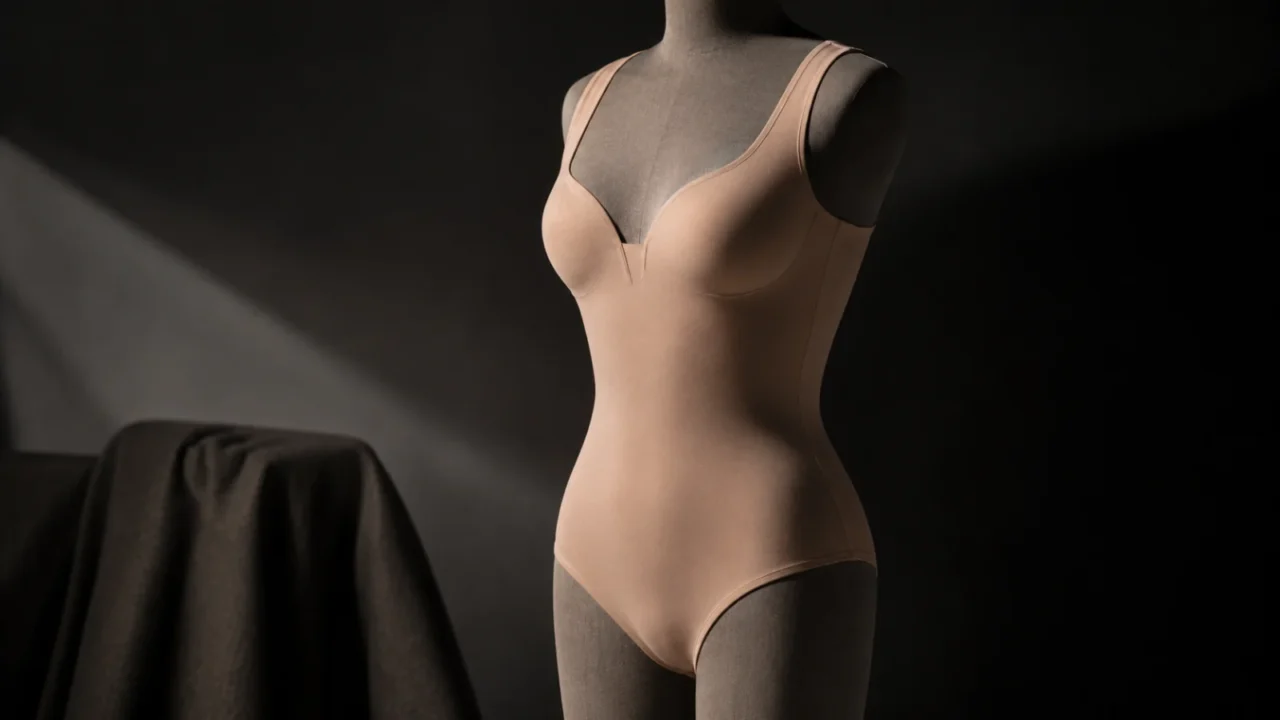
- Zoned compression. Real shapewear applies different tension in different areas — firmer through the core, softer at the edges. That is engineered into the knit, not added with a tight hem. It is a seamless specialist capability, not a cut-and-sew afterthought.
- Seamless construction. Seams dig, chafe and show under clothing. Premium shapewear is knitted in the round with as few seams as possible — which is a machine question before it is a design one.
- Bonded or laser-cut edges. The “no visible panty line,” no-roll waistband is a bonded or laser-cut finish, not an elastic band sewn on. Get this wrong and the garment rolls the first time someone sits down.
- Powermesh and paneling. Targeted control panels do the sculpting work. Placing and tensioning them correctly is the difference between “smoothing” and “sausage.”
- Recovery that lasts. Shapewear lives or dies on holding its shape wash after wash — the elastane and knit engineering that keeps compression from going slack.
Cheap shapewear fails on every one of these, and because the product is worn for the fit and nothing else, a failure is not a minor flaw — it is the whole product not working.
The lever the category was actually won on: inclusive sizing
Marketing gets the credit, but the real innovation was making shapewear that fit real bodies across a real size range and skin-tone range. And size-inclusivity in seamless is not a design choice you can simply decide on — it is a machine constraint most founders never hear about.
Standard seamless knitting cylinders top out around a UK/US large; push past that and the garment distorts. Getting a clean seamless fit through 2XL and 3XL requires large-diameter cylinders — the 17–21 inch range that most factories do not run. That single equipment decision is what lets a brand offer genuine size inclusivity in seamless shapewear instead of stopping at XL and hoping nobody notices. If inclusive sizing is your positioning — and for a shapewear brand today it probably should be — size grading is a factory-capability question you should ask about on the first call, not discover at sampling.
The shade side is the same discipline in a different form: matching a genuine range of nude tones across skin colours is a dyeing and colour-matching commitment, not a default.
The founder’s shapewear playbook
- Pick a hero and a point of view. Sculpt bodysuit, high-waist brief, contour dress, seamless set — one hero that carries a clear positioning (inclusive, everyday-comfortable, high-compression) beats a broad thin range.
- Choose a seamless specialist, and ask about cylinder size. If size inclusivity is your story, the factory’s machine range decides whether you can actually deliver it. This is the single most important question and almost nobody asks it.
- Engineer the fit, then sample on real bodies. Zoned compression and edge finishing have to be felt and worn-tested, across your size range, before bulk.
- Start small, scale with proof. Launch from 100 sets, mixed colours and sizes; move to full-custom development at 300–500 pcs per style per colour as you validate. Realistic quantities by stage.
- Hold the finish to standard. Bonded edges, panel placement and recovery checked at AQL 2.5 on finished goods — in shapewear, the finish is the product.
How we approach shapewear — honestly
We are a seamless specialist, and shapewear sits squarely in what our machines are built for: zoned-compression knits, powermesh paneling, bonded edges, and — the part that matters for an inclusive brand — large-cylinder capacity that carries a clean seamless fit into 2XL and 3XL, where standard factories stop. We match nude ranges as a colour commitment, sample across the size range, and hold the finish to AQL 2.5.
To be clear about the reference: naming a category-defining brand is a way to describe the product and the standard, not a claim to be its manufacturer. We build shapewear for your label, engineered to the fit and inclusivity you want to stand for. The technical, related zoned-knit approach we use for maternity is the same family of skill — sculpt-wear is where it is most demanding.
Shapewear rewards brands that treat fit and inclusivity as the product. That is not a marketing budget; it is a factory decision, and it is one we are set up to make with you.
Questions to ask before you develop shapewear
- What cylinder sizes do you run — can you deliver a clean seamless fit through 2XL and 3XL?
- Is the compression zoned in the knit, or just a tight garment?
- Are the edges bonded/laser-cut, or elastic sewn on? (This decides whether it rolls.)
- Can you match a real nude range and sample across my full size range before bulk?
FAQ
What makes shapewear harder to manufacture than regular activewear? The whole product is the fit and control, so nothing is forgiven. It needs zoned compression knitted in, seamless construction, bonded or laser-cut edges, powermesh paneling and recovery that lasts — each a specialist step. A shortcut that a legging survives shows immediately on shapewear.
How do brands offer inclusive sizing in seamless shapewear? It is largely a machine question. Standard seamless cylinders top out around a large; a clean seamless fit through 2XL and 3XL needs large-diameter cylinders (roughly 17–21 inches) that many factories do not run. Ask about cylinder size before you commit if inclusivity is your positioning.
Can you make sculpt bodysuits and high-compression pieces? Yes — zoned-compression seamless, powermesh panels and bonded edges are core seamless-specialist work, sampled and tested across the size range and finished to AQL 2.5.
What is the minimum to start a shapewear line? Launch from 100 sets, mixed colours and sizes; full-custom development runs 300–500 pcs per style per colour. Start with a hero, prove it, and scale.
Do you manufacture for [a named shapewear brand]? No. We reference category-defining brands only to describe the product and standard, not as clients. We build shapewear for your own label, to the fit and inclusivity you want to own.
Building a shapewear brand that actually fits — and fits everyone? Send us your hero piece and the size range you want to stand behind, and we’ll tell you honestly what our machines can deliver and how to launch it from a first small run. Reply within 24 hours on weekdays.