Short answer: A classy country club tennis outfit is built from three pieces: a structured top (fitted polo or tank), a pleated skirt or tailored shorts with built-in liners, and one clean layering piece. Stay inside a two-color palette — white plus one accent — and choose moisture-wicking fabrics with enough weight (roughly 180–220 GSM for skirts) to keep pleats crisp through a full match. Country club tennis style is its own category. It is not gym wear, and it is not fashion athleisure — it sits in between: traditional silhouettes, modern performance fabrics, and a finish that looks intentional at brunch after the match. This guide covers outfit formulas that work, the fabric details that separate “classy” from “sporty,” and a short note for brands building a club-ready tennis line.
The Three-Piece Formula
Most well-dressed club players follow the same structure:
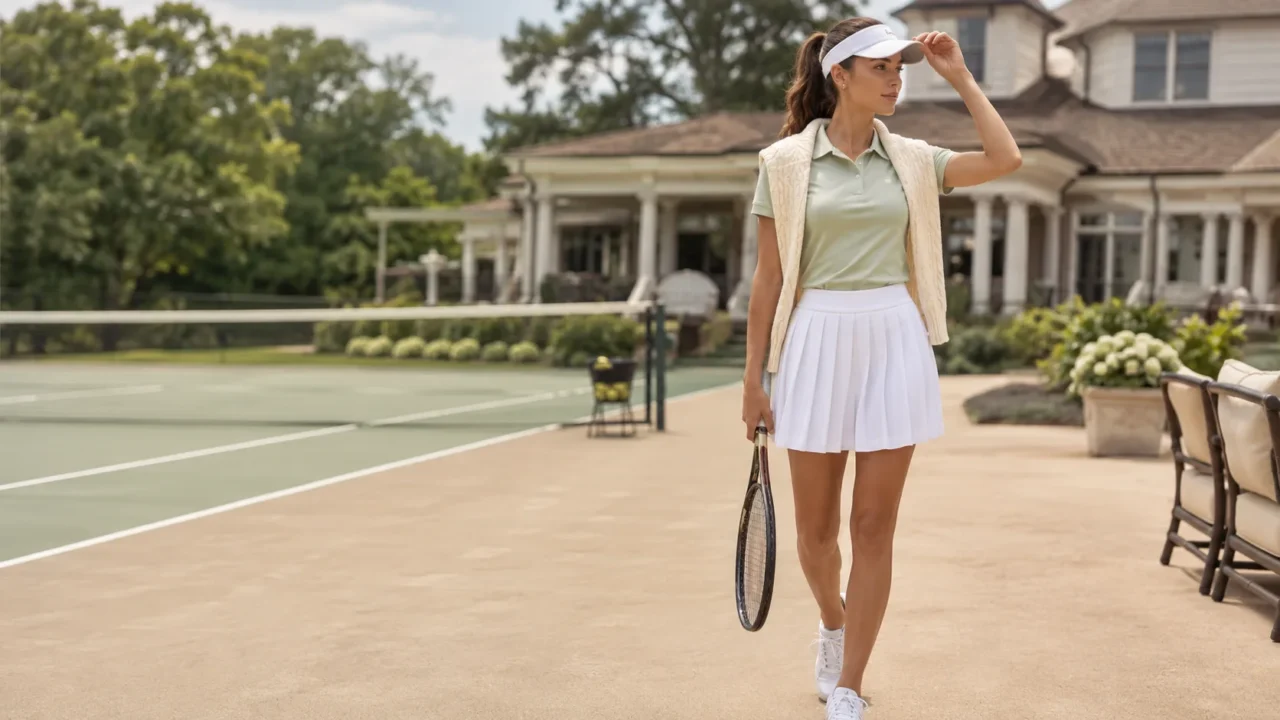
- The top — a fitted performance polo, a clean tank with a square or scoop neck, or a sleeveless collared top. Structure matters more than decoration: a collar or a defined neckline instantly reads “club” rather than “gym.”
- The bottom — a pleated skirt with built-in shorts (the skort construction), or 4–5 inch tailored shorts. Pleats are the signature of country club tennis: they move when you move and hold their shape when you stop.
- The layer — a cropped knit sweater, a quarter-zip, or a lightweight jacket in the same palette. One layer is enough; it is there for the walk to the court and the clubhouse afterward.
A tennis dress can replace pieces one and two — choose one with a built-in bra shelf or a structured bodice and a pleated or A-line hem.
Outfit Formulas That Always Work
- The Classic: white pleated skirt + white fitted polo + cream cable-knit layer. Add one accent through the visor or wristband.
- The Modern Club: navy A-line skort + white square-neck tank + white quarter-zip. Clean, current, photographs well.
- The Tonal: soft sage or sand dress + matching visor. One color, two textures (smooth bodice, pleated hem) keeps it interesting without breaking any dress code.
- The Statement-Within-Rules: white base outfit + one striped trim detail at the collar and hem. Many traditional clubs allow trim accents even under predominantly-white policies.
If your club enforces an all-white or predominantly-white rule, treat white as the base and express style through silhouette and texture — pleat depth, ribbed knits, mesh side panels — rather than color.
Fabric Details That Make an Outfit Look Expensive
This is where most outfits quietly fail, and where a manufacturing eye helps:
- Skirt weight: very light fabrics (under ~160 GSM) can look flimsy and let pleats collapse. A skirt in roughly 180–220 GSM holds a sharp pleat and resists wind flip.
- Opacity in white: white is unforgiving. Look for double-layer construction or a lined front panel; stretch a corner of the fabric over your fingers — if you can see skin clearly at modest stretch, it will be more revealing on court.
- Stretch with recovery: polyamide-elastane and polyester-elastane blends with four-way stretch keep their shape through lateral movement. Poor recovery is why some skirts bag at the seat after one set.
- Moisture management: matte, quick-dry knits look more “club” than shiny ones. High-sheen fabric reads athletic; matte reads tailored.
- Built-in liners: a smooth, mid-thigh liner with a soft elastic edge avoids visible lines under pleats and adds ball-pocket function.
Finishing Touches
Keep accessories in the same restrained register: one visor or cap, low-profile white socks, court shoes in white with at most one accent color. Jewelry minimal. A structured tote in canvas or leather completes the look better than a gym duffel.
A Note for Tennis and Golf Apparel Brands
Country club style is one of the fastest-growing private-label niches in racket sports, because club players replace outfits seasonally and buy in coordinated sets. If you are building a line, the manufacturing details above are exactly what your factory should be able to control: pleat heat-setting, lined white fabrics, liner construction, and matte performance knits.
YOUMEGA is a private-label activewear manufacturer in Xiamen, China, and every construction detail above sits inside what we already build daily — cut-and-sew and seamless knitwear, heat-set pleating, lined performance fabrics and matte technical knits. If you’re developing a country-club tennis line, that’s the same toolkit, applied to skorts, polos, dresses and layering knits. Stock styles with your logo start from 100 sets (mixed colors and sizes allowed); full custom development runs 300–500 pcs per style per color, under AQL 2.5 inspection with OEKO-TEX Standard 100, BSCI, REACH and CPSIA compliance. Stock samples run about 7 days; custom samples 10–15 days.
FAQ
What should I wear to play tennis at a country club?
A fitted polo or structured tank, a pleated skirt or tailored shorts with liners, and one layering piece, in a palette of white plus one accent color. Check your club’s dress code first — some require predominantly white.
Are tennis dresses appropriate for country clubs?
Yes — a structured tennis dress with a pleated or A-line hem is one of the most club-appropriate options. Avoid casual jersey dresses without structure.
What fabric is best for a tennis skirt?
A moisture-wicking knit with four-way stretch and good recovery, at roughly 180–220 GSM so pleats stay crisp. White skirts should be lined or double-layered for opacity.
Can I wear leggings to country club tennis?
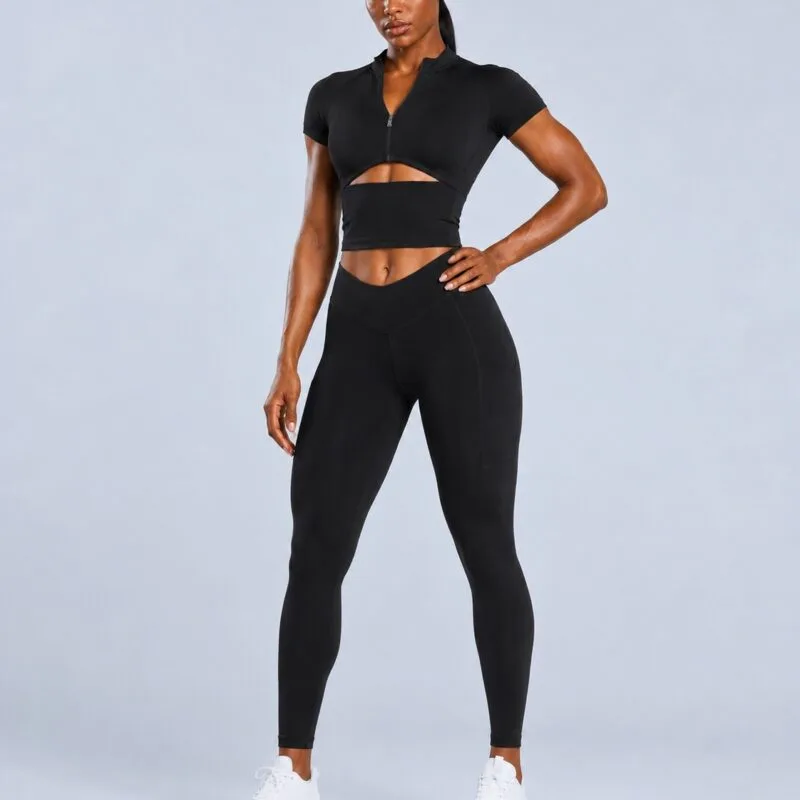
Many clubs allow tennis leggings under a skirt in cooler months, but rules vary. Solid colors and a clean silhouette keep it within most dress codes.
What’s the difference between country club tennis outfits and regular activewear?
Structure and restraint: collars, pleats, matte fabrics and a tight color palette, instead of bold prints and high-shine performance looks.
Related YOUMEGA resources
- Tennis attire buying checklist (/insights/choose-country-club-tennis-attire/)
- Country club tennis attire rules (/insights/country-club-tennis-attire-guide/)
- YOUMEGA services (/services/)
- Product catalog (/products/)
- Contact YOUMEGA (/contact/)