Flare and Bootcut Leggings — Patterning the Sweep, and the Fabric That Makes It Hang
On the cutting table your first flare sample looked exactly right — a clean bell falling from the knee to a wide, sweeping hem. Then your fit model pulled it on and walked the length of the studio. The flare gripped her calf, rippled down one side, and curled up at the back hem. Same pattern you approved. Same measurements. What let you down wasn’t the draft — it was the fabric hanging off it.
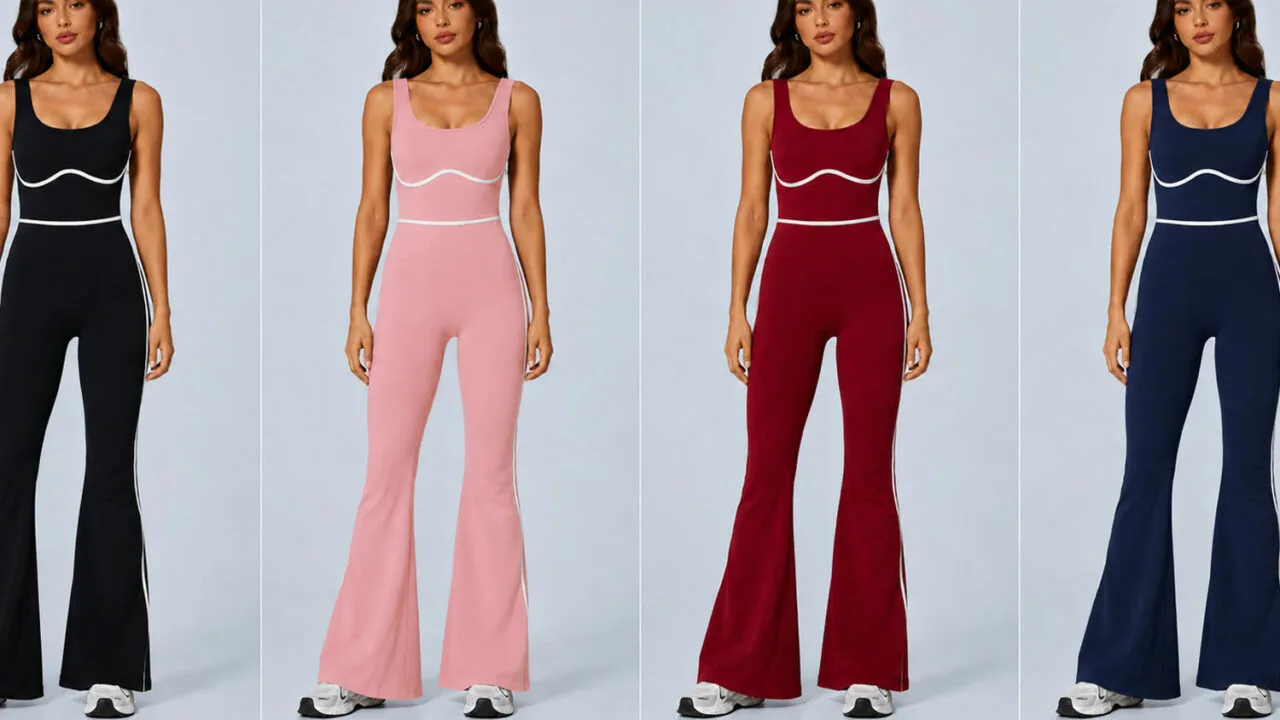
The flare is having a moment, and it’s a different one from the gym legging. This is the pair your customer wears out — to coffee, to errands, to dinner — as much as to train, so it gets judged standing still, from every angle, the way you’d judge a trouser. Build it like a compression legging and it quietly fails.
Why the flare is back — and why that changes the brief
After a decade of skin-tight ankle leggings, the wide leg has swung back in — part Y2K revival, part the wish to wear studio clothes somewhere other than the studio. For a brand it’s an easy line extension with an outsized catch: the flare is the one legging people photograph and wear as real trousers, so it lives or dies on how it hangs, not how it holds. Settle that before you spec anything, because it turns the usual fabric brief on its head.
Where the flare actually starts
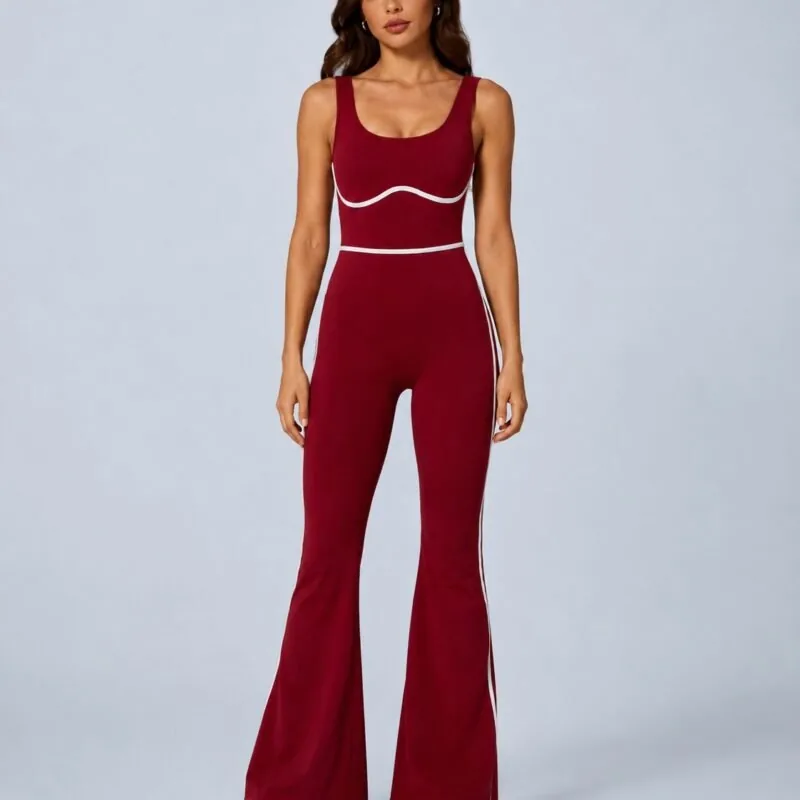
A standard legging is a tapered tube — the leg panels close steadily to a snug ankle. A flare reverses the last stretch of that line. Somewhere below the knee the pattern stops narrowing and opens back out to a wide hem, with width added on both the inseam and the side seam so the leg sweeps evenly instead of twisting to one side.
Two numbers set the whole look:
- Where the flare breaks. Open it right at the knee for the dramatic “yoga flare.” Drop the break to mid-calf and you get a quieter bootcut that skims the calf before it opens.
- How much sweep. A tight ankle might measure ~18–26 cm across the hem (flat); a bootcut opens to ~26–34 cm; a full flare to ~36–55 cm or more. Illustrative — but that one figure decides the personality of the leg.
Worth saying plainly: a true flare is cut-and-sew. You build the shape from pattern pieces and seams, not on a seamless knitting machine, which knits a fixed tube. If you’re still weighing the two methods, that’s its own decision — seamless vs cut-and-sew.
Why a flare wants a different fabric than your legging
Here’s the part that catches founders out. A legging fabric is engineered to compress and cling — that’s the whole point. But in a flare the lower leg isn’t pinned to the body; it hangs free. Thin, high-stretch legging fabric left to hang looks limp, telegraphs every ripple, and curls at the edge.
A flare wants drape with a little backbone so the bell falls in a clean column and swings as you walk. In practice:
- More weight. Where a legging often sits at ~220–280 GSM, a flare usually reads better at ~280–360 GSM, or in a structured double-knit / ponte-type fabric.
- Less stretch, not more. A compression legging might run 12–22% elastane; a flare frequently behaves better with less — roughly 5–15% — so the leg keeps its line and drapes instead of snapping back onto the calf.
That runs against instinct, so a blunt note on where not to spend: this is not the place for your priciest, most compressive performance knit. It’s the wrong tool — you’d pay a premium for stretch that makes the flare cling. Put the budget into weight and drape. (New to GSM and hand-feel? We break it down in the legging fabric weight guide.)
Waistband, length, and grading
Waistband. The high-rise band behaves like any legging’s, with one twist: a heavier, draping leg pulls down on it all day, so it has to anchor harder. A secure wide band (~12–18 cm) with the right elastic is what stops it creeping down. Front rise and seam comfort are a separate subject — see the front-seam and gusset guide.
Length is unforgiving. A cropped standard legging still looks deliberate. A flare an inch too short just looks wrong — the shape is meant to graze the floor or stack a little over a shoe. Full-length flares are often drafted around a ~33–36″ (84–91 cm) inseam, but that’s entirely height-dependent, which leads to the hard part.
Grading a flare is not scaling it up. Three things grow at different rates:
- Girth (hip, thigh) grows the most per size — say ~4–6 cm.
- Inseam grows far less — maybe ~0.5–1.5 cm per size. Scale the pattern uniformly and your XS lands too short while your 3XL sweeps the floor.
- The break point has to travel with leg length so the bell breaks at the same spot on every body, and the hem sweep grows moderately — enough that the flare doesn’t read as a straight leg on the largest sizes or a costume on the smallest.
Spec those three separately on the tech pack and you sidestep the classic flare grading disasters.
Hem finishing — the wider the flare, the trickier the hem
A flare hem is wide, visible and hanging free, so the finish earns its keep. The problem is geometric: fold a wide hem under and the turned-up edge is a smaller circle than the hem edge — so a deep turn-back has nowhere to go but into puckers and ripples.
How factories handle it:
- Narrow coverstitch hem — the workhorse: a clean double-needle finish with a small (~1.5–2.5 cm) turn that keeps its stretch and lies flat.
- A shaped facing cut to follow the hem’s curve, for very wide or heavier flares.
- Clear elastic or hem tape in the fold, to add a touch of weight and stop a lightweight knit curling.
And don’t over-buy: if your fabric already hangs with some weight of its own, a shaped facing is money wasted — a plain narrow coverstitch is usually the right, cheaper answer. Fix curl at the hem, not by over-tightening the whole pattern.
Standard, bootcut, full flare — a quick comparison
| Standard legging | Bootcut | Full flare | |
|---|---|---|---|
| Flare break | none (tapered) | mid-calf | at / near the knee |
| Hem opening (flat, illustrative) | ~18–26 cm | ~26–34 cm | ~36–55 cm+ |
| Fabric weight | ~220–280 GSM | mid | ~280–360 GSM, structured |
| Elastane | 12–22% (compression) | medium | ~5–15% (drape) |
| Hem finish | ankle cuff / coverstitch | coverstitch | narrow coverstitch or facing |
| Wants | hug & recovery | light hug + swing | drape & weight |
(Ranges show direction, not fixed rules — your fabric and target look move the numbers.)
Flare versus bootcut: the measurable pattern difference
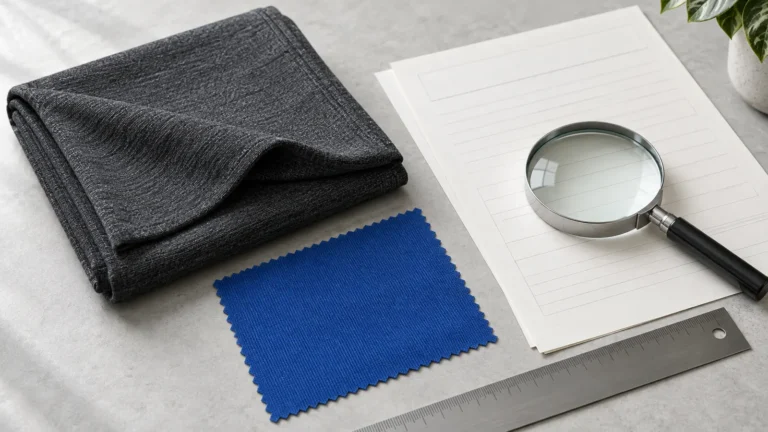
A bootcut stays close through the knee and begins its outward line around mid-calf; a full flare starts opening at or just below the knee and carries more circumference to the hem. That earlier opening needs more drape and a hem finish that controls a longer free edge. Compare candidate fabrics by measured mass using ASTM D3776/D3776M and by bending behaviour using ASTM D1388; then approve the break point, hanging silhouette and hem on the same sample rather than treating “bootcut” and “flare” as interchangeable names.
Read a flare spec like a factory
- Confirm where the flare breaks (knee vs mid-calf) — it sets the whole look.
- Read the hem opening in cm, never adjectives like “wide.”
- Ask whether the fabric drapes — request a swatch you can hang, not just stretch.
- Check that inseam, break point, and sweep are graded separately across the range.
- Match the hem finish to the sweep — narrow coverstitch, or a facing only on the widest flares.
FAQ
Can you make a flare legging in seamless fabric? Not really. Seamless machines knit a fixed tube; a true flare needs shaped panels and seams, so it’s cut-and-sew. Seamless is the right tool for a different job.
Why does my flare cling instead of hang? Almost always the fabric — too light and too stretchy. A heavier, lower-elastane fabric with real drape falls in a clean bell instead of gripping the calf.
How long should a flare legging be? Long enough to graze the floor or stack slightly on a shoe. A flare that’s clearly too short reads as a mistake, so draft to your target customer’s height and grade the inseam gently.
Is a flare more expensive to make than a legging? Usually a little — heavier fabric, more panel width, and a hem that takes more care. A custom flare pattern is full development, typically ~300–500 pieces, versus ~100 sets for a stock style with your logo.
At YOUMEGA we cut and sew flares and bootcuts on our Xiamen line, and the first thing we’ll flag is the fabric, not the price. Send us the look you’re after — a reference photo, the hem width you want, the height you’re fitting — and we’ll tell you honestly which weight and drape will make it hang, and where a lighter fabric would only buy you returns. We reply within 24 hours.