Leggings With Pockets: Side vs Waistband, Drop-In vs Sewn-In, and How to Spec One That Holds a Phone
Fit day. The sample reads clean on the stand, so you hand your model a phone, ask her to drop it in the side pocket, and jog the length of the studio. Three strides in, the phone has swung out and is tapping her thigh; by the far wall the top of it is riding over the pocket edge, one hard step from the floor. Nobody got the fabric wrong. The pocket is the spec you never wrote.
A pocket is one of the most-requested legging features right now, and one of the easiest to get wrong, because it isn’t a single decision. It’s four: where it sits, how it’s built, what it has to carry, and what you’re willing to pay. Here’s how a factory works through each one.
Three places a pocket can live
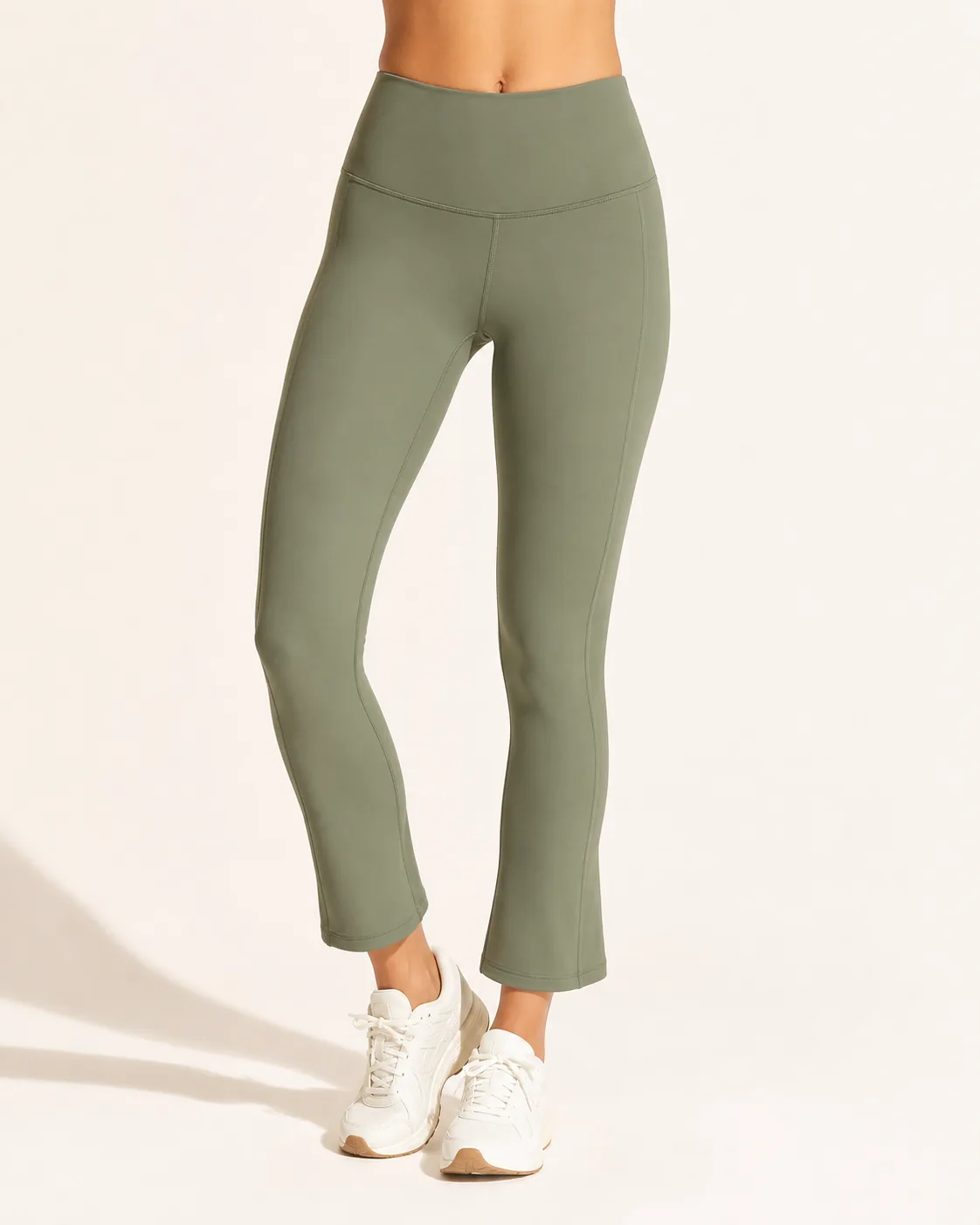
There are really only three homes for a pocket, and each behaves differently on a moving body.
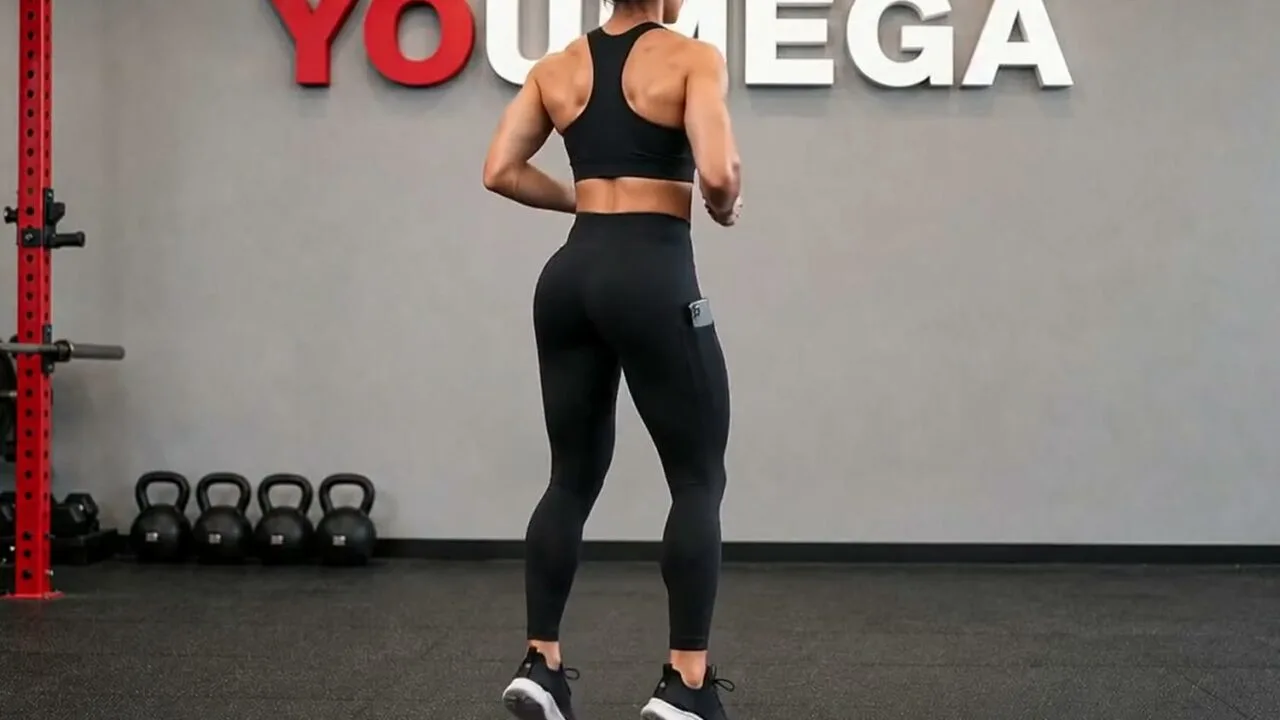
- Side / thigh pocket — the popular one. It sits on the outer thigh, holds a phone, and is easy to reach. It’s also the most visible and the most likely to bounce when it’s built wrong.
- Waistband pocket — set into, or hidden behind, the band. A back-centre drop-in carries a phone high and close to the spine, where it bounces least; a small front stash takes a card or a key.
- Interior key/card pocket — a coin-sized pouch inside the waistband for a key, a card, or a gel. Cheap, low-risk, and customers love finding it.
Where not to spend: you rarely need all three. Pick the one your customer actually reaches for, and build that one properly.
Drop-in vs sewn-in: the build that decides everything
Any of those can be built two ways, and the choice drives bounce, security, and cost more than the fabric does.
- Drop-in (open) pocket — an opening in the leg or band with a simple pocket bag behind it. Fewer operations, lower cost. The phone rests against the leg, and whether it stays put depends entirely on how snug the fabric and the opening are.
- Sewn-in pouch (bellows / double-layer) — a shaped pouch with real depth, usually a second layer of fabric that wraps the phone and holds it flat to the thigh. More fabric, more operations, more cost — and far less bounce.
The honest rule: a drop-in pocket in compressive fabric can hold a phone beautifully for almost no added cost. A drop-in in soft, low-stretch fabric will let the phone swing no matter how neatly it’s sewn. You pay for a sewn-in pouch only when the fabric can’t do the holding by itself — not as a default.
Three tests every pocket has to pass
Before you approve anything, load the pocket with a real phone — a modern one runs roughly 180–240 g — and run three checks on a worn sample, never on the table.
- Phone-hold. Does it go in and come out one-handed, without a fight? Too tight and no one uses it; too loose and it drops out.
- Bounce. Jog in place, then do ten jumping jacks. The phone should travel with the body, not away from it. A side pocket that swings outward has failed.
- Security / peek-out. With the phone loaded, squat deep and bend forward. The top of the phone must not rise over the pocket edge or force the opening open. If it peeks, the pocket is too shallow or sits too low.
A pocket that passes flat on a table routinely fails on a body. Approve it on the body.
What a pocket does to fit and opacity
A pocket is never “just a pocket” — it changes how the leg wears.
- A phone’s weight over the outer thigh drags single-layer fabric, creating a sag or a bulge exactly where the leg should read clean.
- A loaded waistband pocket can roll the band or drag it down — the “my leggings won’t stay up” complaint that’s really a pocket-load problem, not a waistband-tension one.
- Placement matters. Too low and the phone taps the leg mid-stride; too high and it digs in the moment the wearer sits.
- Opacity. A side pocket concentrates weight over the squat-stretch zone. If your base fabric is already marginal, the loaded pocket makes the see-through worse right there. A double layer helps opacity locally, but it won’t rescue a fabric that was too thin to begin with. Get the fabric weight right first; a pocket is not a patch for a thin base.
What it adds to cost — and where not to spend
A pocket adds pocket-bag fabric, extra cut pieces, extra sewing operations, and usually bartacks or coverstitch at the opening so it survives being stretched open thousands of times. As an illustrative range, a simple drop-in adds only a little to the make cost; a shaped double-layer pouch with a finished, elasticated opening adds meaningfully more.
| Holds a phone? | Bounce | Added cost | Ideal for | |
|---|---|---|---|---|
| Interior key/card pocket | essentials only | none | very low | keys, cards, gels |
| Back-waistband drop-in | yes, held high | low | low | running, if snug |
| Side/thigh drop-in (single layer) | yes | medium | low | gym, walking, everyday |
| Side/thigh sewn-in pouch | yes, securely | low | medium–high | running, hiking, security |
Two honest notes. First, a custom pocket is development work, so it usually lives in the full-custom minimum (often a few hundred pieces) rather than the low stock-plus-your-logo tier — see how that shakes out in our cost breakdown. Second, for the seamless crowd: a true drop-in side pocket is a natural cut-and-sew feature. You can add a pocket to a seamless knit legging, but it’s typically a secondary sewn step or a knit sleeve, not a free by-product of the knit — so decide the pocket and the construction together, not after the fact.
Spec it like a factory
- Give the pocket position in millimetres from a fixed point (the waistband seam), not “on the thigh.”
- State drop-in or sewn-in, and name the pocket-bag fabric — often a lighter, breathable knit than the body.
- Specify the opening length and finish (coverstitch or elastic binding) and bartacks at both corners.
- Say what it must carry — phone dimensions, or “cards and keys only” — so the bag is sized right. Put it on the tech pack, not in an email.
- Ask for a worn wear-test sample and run the three tests yourself.
- Match the fabric to the load. Don’t hang a phone on a fabric that can’t hold it.
FAQ
Do pockets make leggings see-through? Not on their own. But a phone’s weight over a marginal fabric makes existing opacity problems worse, right at the thigh. Fix the fabric first — a pocket won’t rescue a too-thin base.
Side pocket or waistband pocket — which is better? Neither is “better.” A back-waistband pocket bounces least and hides the phone; a side/thigh pocket is easier to reach and more visible. Choose by how your customer runs, walks, or trains.
Can you add a pocket to a seamless legging? Yes, but usually as a sewn-in step rather than a knit-in feature. Decide the pocket before you lock the construction, so the two don’t fight each other.
Why does a loaded pocket drag my waistband down? Because waistband tension, the fabric’s recovery, and the phone’s weight are all pulling against one another. It’s usually a placement-and-recovery problem, not something a “tighter waistband” alone will fix.
Send us your legging, the pocket you want, and the phone it has to carry, and we’ll tell you honestly whether a simple drop-in will hold it or whether you need a sewn-in pouch — and roughly what each would cost. We reply within 24 hours.