Short answer: Good mixed doubles apparel coordinates without matching: one shared palette (two colors plus white), one repeated design element (the same stripe, trim or logo placement on both outfits), and silhouettes cut separately for each player. Identical uniforms look stiff; shared details look intentional. Mixed doubles is the most visible format in club tennis — two players, photographed together, often representing a team or a club. That makes apparel coordination worth getting right, whether you are a pair choosing outfits, a club ordering team wear, or a brand designing a his-and-hers tennis capsule.
Coordinate, Don’t Clone
The most common mistake is dressing both players identically. It rarely works, because men’s and women’s tennis silhouettes are structurally different — and because “uniform” reads institutional rather than stylish. The better framework:
- Shared palette: pick two colors plus white. Both outfits draw only from those three.
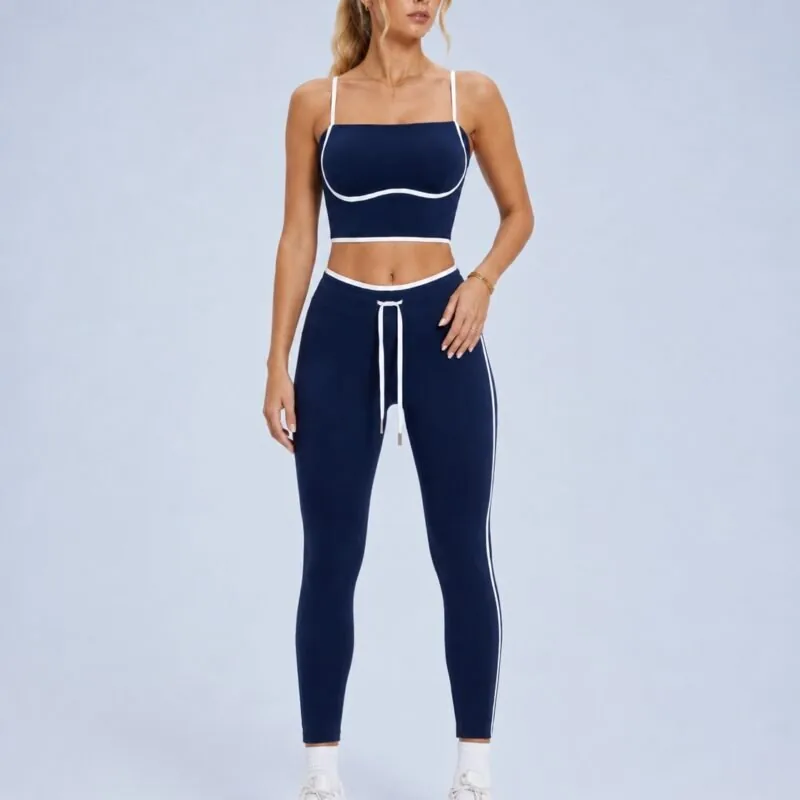
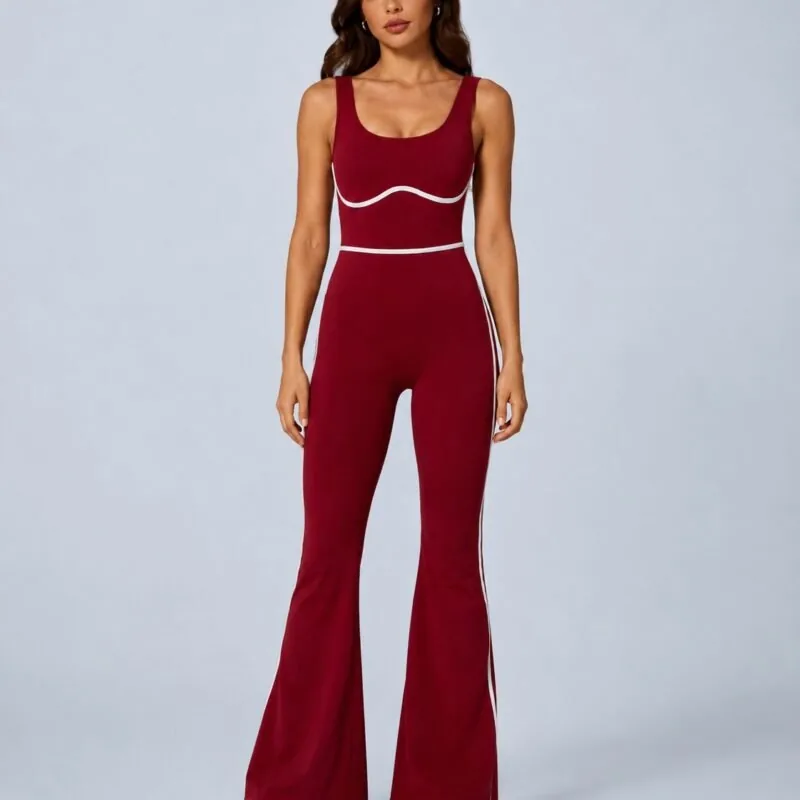
- Shared signature: one element repeats on both — the same side stripe, the same collar trim, the same chest logo placement, or the same color-blocking line.
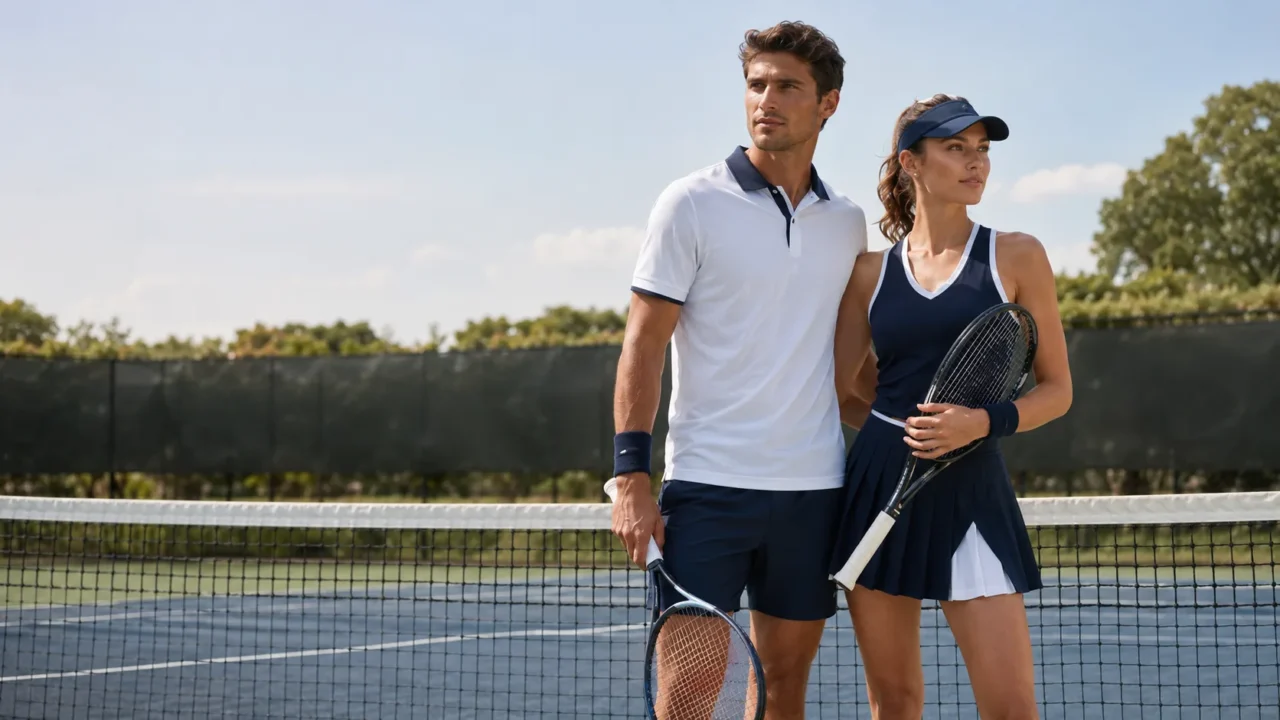
- Different silhouettes: her pleated dress or skort set; his performance polo and 7-inch shorts. The shapes differ; the design language matches.
This is exactly how professional team kits are designed, scaled down to two people.
Design Ideas That Work on Court
- Mirror stripe: a single contrast stripe down her skirt’s side seam and his shorts’ side seam, same width, same color.
- Collar echo: her tank’s binding and his polo collar in the same accent color, everything else white.
- Split color-block: she wears navy top / white bottom; he wears white top / navy bottom. Inverted blocks photograph brilliantly.
- Tonal pair: both in the same muted tone (sage, sand, dusty blue) with white accents — modern, calm, and within most club dress codes.
- Logo-led: identical embroidered or heat-transfer logo at the same position (left chest, back yoke) as the only shared element — the minimal version, popular for club teams.
Performance Requirements (Both Players)
Coordination should never cost mobility. Mixed doubles involves fast lateral cover at the net and full-extension serves, so both outfits need:
- Four-way stretch knits — polyamide-elastane or polyester-elastane blends — with strong recovery so garments snap back instead of bagging.
- Moisture-wicking, quick-dry finishes; doubles points are short but constant, and matches run long.
- Flat or bonded seams at high-friction zones (underarm, inner thigh liner, waistband) to prevent chafe.
- Stable waistbands: wide, flat elastic on her skort; a drawcord-plus-elastic combination on his shorts.
- Ball storage: liner ball pockets on her side, deep side pockets on his — small details players actually notice.
- UPF and colorfastness for outdoor courts: white-adjacent pieces must survive sun and repeated washing without yellowing or fading unevenly — a real risk when two garments from different fabric lots are supposed to stay the same color.
That last point is the hidden difficulty of coordinated apparel: two different garments, often two different fabrics, must hold the same color over time. It is a dye-lot management problem more than a design problem.
For Clubs and Brands: Producing Coordinated Sets
If you are ordering for a team or designing a couples’ capsule for retail, three production notes matter:
- Dye-lot pairing. His-and-hers pieces should be cut from fabric dyed in the same lot (or lab-dip matched against the same Pantone standard), otherwise “matching navy” becomes two navies after the first wash.
- Same trim source. Stripes, bindings and zippers should come from one trim batch across both garments.
- Sample both pieces together. Approve the pair side by side under daylight, not each garment alone.
YOUMEGA is a private-label activewear manufacturer in Xiamen, China, and this kind of coordinated development is exactly what our activewear capabilities cover — Pantone custom dyeing matched across different fabric bases, shared trims, and paired sampling. Whether it’s a his-and-hers tennis capsule or a club team kit, it runs on the same line. Stock styles with your logo start from 100 sets (mixed colors and sizes allowed); full custom coordinated sets run 300–500 pcs per style per color, with AQL 2.5 inspection and OEKO-TEX Standard 100, BSCI, REACH and CPSIA compliance.
Colour control when the coordinated pieces use different fabrics
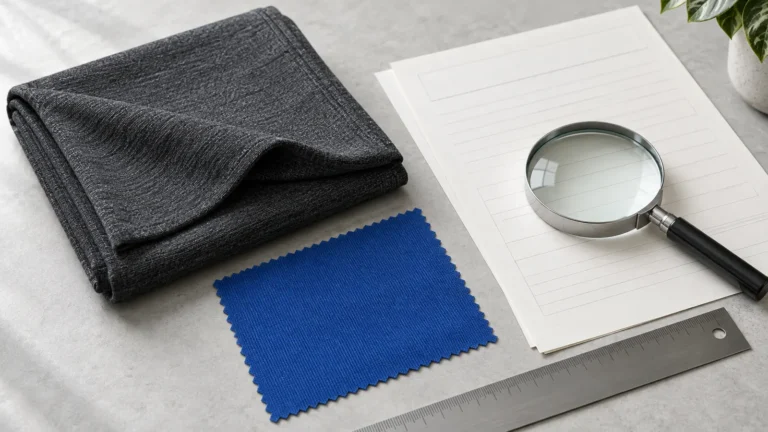
The same dye recipe does not produce the same visual colour on nylon, polyester and trims. Pantone’s textile colour-system guidance notes that cotton, nylon and polyester have distinct achievable colour ranges, so use one approved physical standard and separate lab dips for each substrate. Review the pair under the same light, then retain the approved dip and bulk shade band for each material. Every additional custom colour creates its own minimum: plan 300–500 pieces per style per colour, rather than treating several coordinated colours as one dye lot.
FAQ
Should mixed doubles partners wear matching outfits?
Coordinated, not identical: a shared two-color palette and one repeated design element, with silhouettes cut for each player. Identical uniforms are only required in some team competitions.
What colors work best for mixed doubles tennis apparel?
White plus one or two accent colors. Check the dress code first — traditional clubs may require predominantly white, in which case coordinate through trim and texture.
What fabric should coordinated tennis sets use?
Four-way-stretch, moisture-wicking knits with strong recovery. For pairs, the bigger issue is color consistency: both garments should be dyed to the same Pantone standard.
Can a brand sell his-and-hers tennis sets as one product?
Yes — couples’ and team capsules are a growing tennis niche. Plan sizes separately for each silhouette and keep one shared design signature so the pairing is obvious on the rack.
How do clubs order coordinated team tennis wear?
Define palette and logo placement first, then have the factory lab-dip all fabrics to the same color standard and sample his-and-hers pieces together before bulk.
Related YOUMEGA resources
- Tennis attire buying checklist (/insights/choose-country-club-tennis-attire/)
- Country club tennis attire rules (/insights/country-club-tennis-attire-guide/)
- Country club tennis outfits (/insights/country-club-tennis-outfits-guide/)
- YOUMEGA services (/services/)
- Product catalog (/products/)
- Contact YOUMEGA (/contact/)