Shapewear vs Compression Activewear — How Each Is Made and How to Spec It
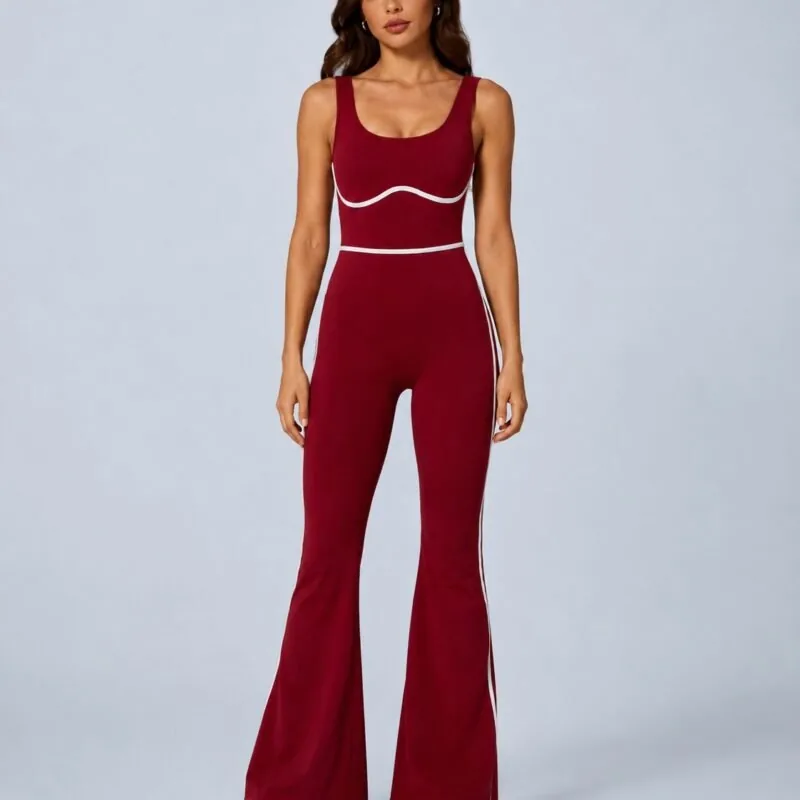
A founder emails us two reference photos in the same message: a smooth sculpting bodysuit and a pair of squat-proof training tights — and asks for “the same firm compression” in both. It’s the most common mix-up we see, and it’s an expensive one, because those two garments are built for opposite jobs. One is trying to reshape a silhouette; the other is trying to support a working muscle. Brief it wrong and you either ship shaping that rolls down, or “compression” that smooths nothing.
The one word both garments share is compression. Almost everything else — the fabric, where the pressure sits, how the edges are finished, even the machine it’s knitted on — is different.
Same word, opposite jobs
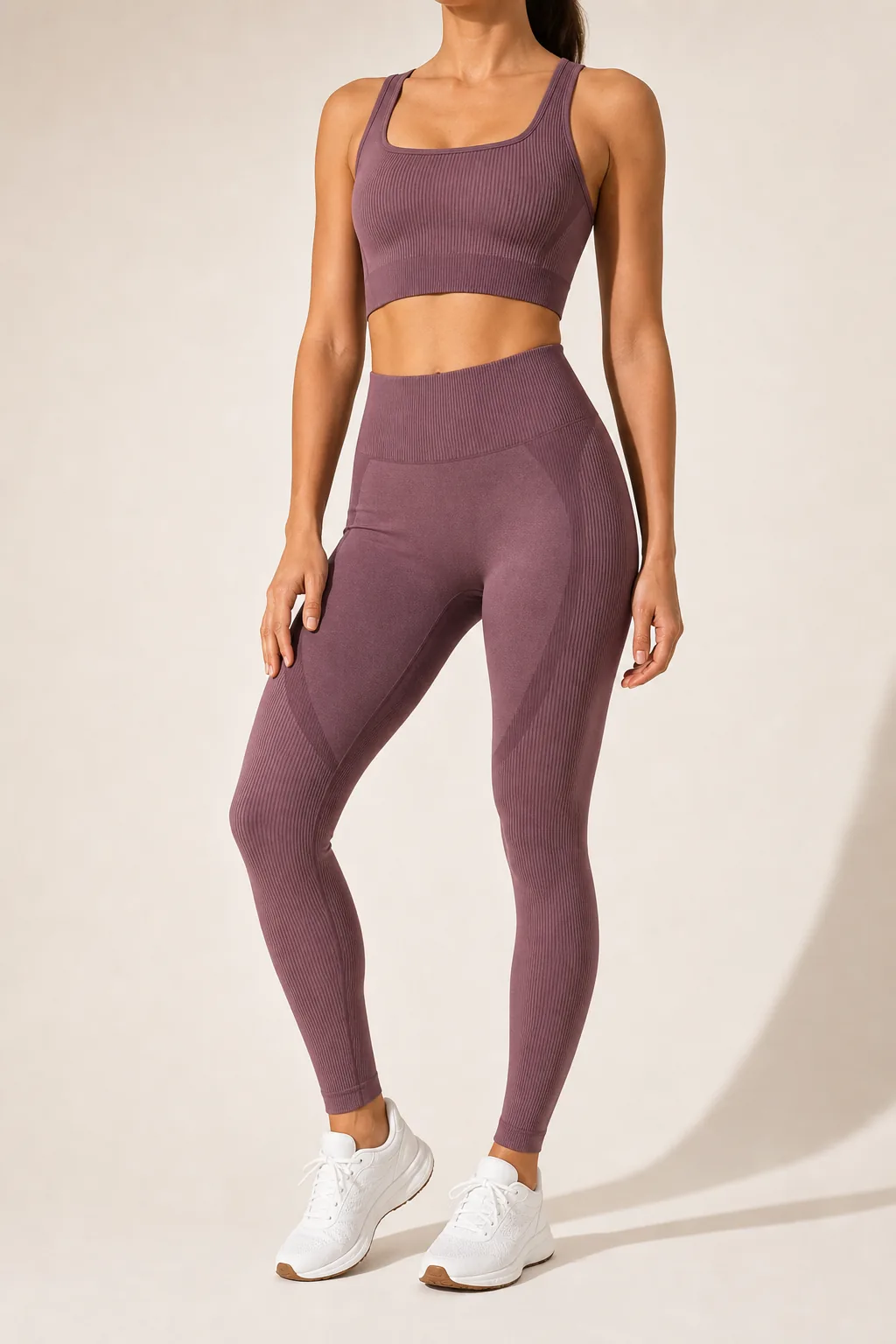
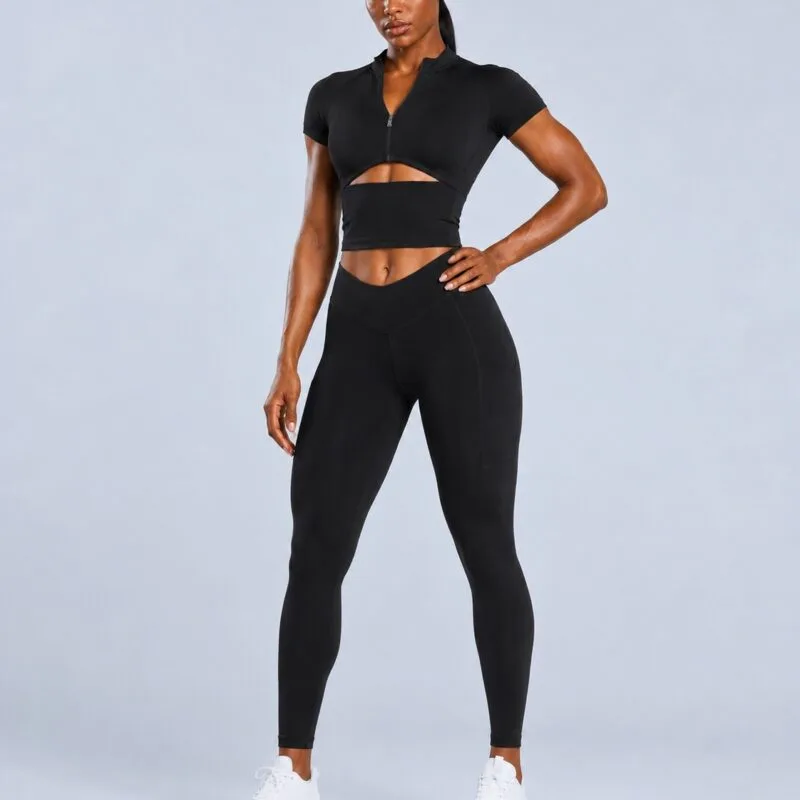
Athletic compression is about performance and recovery. The idea is graduated support — often a little firmer at the extremity, easing off higher up — meant to hold the muscle, cut down on bounce during movement, and feel supportive on long efforts and afterwards. It’s roughly even, all-over, and it has to breathe and move while the wearer sweats. (We go deep on how that fabric and fit are engineered in our guide to compression-wear manufacturing — this article is about the other kind.)
Body-contouring shapewear is about silhouette. It isn’t trying to help a muscle work; it’s trying to smooth, lift and hold specific zones — tummy, waist, hips, back — and then disappear under clothing. The pressure is deliberately unequal: firm where you want control, light where you want comfort and shape. That single difference — even pressure for performance versus zoned pressure for shape — drives nearly every construction choice below.
Numbers that keep a compression brief honest
YOUMEGA’s approved activewear range is 220–320 g/m², with performance-compression briefs normally starting in the denser 280–320 g/m² band. A 94/6 polyamide-elastane option is a lighter-handfeel reference, not a pressure grade: fabric mass, elastane percentage, knit density, stretch and recovery must be specified separately. ASTM D2594/D2594M measures stretch and growth in knitted fabrics, while the RAL medical-compression quality scheme publishes measured pressure classes for medical hosiery. Those mmHg classes must not be borrowed as a sportswear claim unless the finished garment is tested for that use.
For skin-contact material screening, OEKO-TEX STANDARD 100 supplies the applicable harmful-substance framework. The practical factory brief is therefore measurable fabric weight plus stretch/recovery and zone intent, not the single word “compression.”
How body-contouring shapewear is actually built
Three techniques do the work, usually in combination:
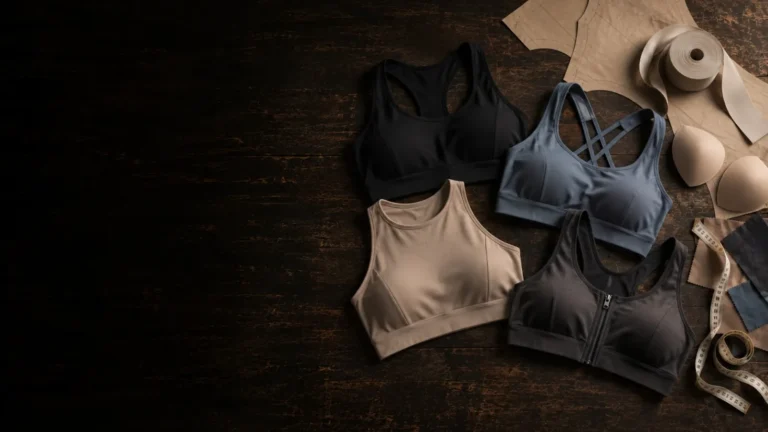
Targeted (zoned) compression. A good shaping garment is a map of different powers: a firm control panel across the tummy, medium hold at the waist, lighter fabric over the hips and bust so it shapes without flattening. The clearest everyday example is a well-built sports bra — firm band, shaped cups, different jobs in one piece (we break that down in private-label sports bra development). Cheap shapewear is one flat power everywhere, which is why it either strangles or does nothing.
Powernet control panels. Powernet (also called power mesh) is the workhorse control fabric — a strong, high-tension nylon/spandex warp knit that holds firmly and still breathes. It comes in weights, roughly light / medium / firm, and it gets built into a garment as panels exactly where you want the most control. More powernet, or a heavier powernet, means firmer shaping. It’s the single most useful word to have on a shapewear tech pack.
Bonded (no-sew) panels and edges. Ordinary seams leave ridges that print through a dress. Shapewear leans on bonding — heat-laminated panels and edges instead of stitched ones — so the garment lies flat and stays invisible under clothing. Bonded hems and silicone grippers at the leg opening and waistband are what stop shapewear from rolling up and drawing a line.
Seamless shaping — sculpted in the knit, not sewn on
There’s a fourth route that skips panels almost entirely. On circular seamless machines, the shaping can be knitted directly into the tube: the machine varies stitch tension and density zone by zone, so one continuous garment comes off firmer at the waist and lighter at the hip — with no cut panels and no side seams at all. It contours the body and vanishes under clothing because there is genuinely nothing to print through. Seamless and cut-and-sew are different tools with different looks and price points; we compare them directly in seamless vs cut-and-sew.
The honest catch is the machine. Seamless shaping is limited by the knitting cylinder’s diameter — a standard cylinder tops out at a fairly narrow body width, which is why a lot of seamless shaping quietly stops at straight sizes. This is one place our own setup is genuinely relevant: our Yiwu seamless line runs large-cylinder Santoni machines, roughly 17–21″, which is what lets seamless zoned shaping run up through plus sizes (around 2XL/3XL) instead of ending at a standard size run. If your range needs real shaping above standard sizes, cylinder diameter is the question to ask any seamless supplier.
The two builds, side by side
| Athletic compression | Body-contouring shapewear | |
|---|---|---|
| The job | Support a working muscle | Reshape a silhouette |
| Where pressure sits | Even / graduated, all over | Zoned — firm panels + light zones |
| Signature fabric | High-power elastane-rich knit, wicking | Powernet control panels + smooth face fabric |
| Construction tell | Flatlock or seamless, built to move | Bonded no-sew edges, silicone grippers |
| Seamless option | Performance seamless knit | Zoned shaping knit (large cylinder for plus) |
| “Good” feels like | Holds without limiting movement; recovers | Smooths without rolling; invisible under clothes |
Spec compression like this: support level (light / medium / firm), graduated or uniform, elastane content and recovery, moisture management, and seam type for the sweat zones.
Spec shapewear like this: control level per zone (map the garment — firm tummy, medium waist, light hip), powernet weight for the control panels, edge finish (bonded / gripper vs plain elastic), and how invisible it must be under clothing. Write that zone map straight onto your tech pack — “firm control” with no zones and no powernet weight is not yet a spec.
Read a sample like a factory
- Turn it inside out. Is the control zoned — real panels in different powers — or one flat fabric everywhere? Zoned means it was engineered; flat means it was generic.
- Find the control fabric. Is there actual powernet where “control” is claimed? Stretch it and let go — good powernet snaps back; tired mesh stays loose.
- Check the edges. Bonded hems and silicone grippers hold their place; a plain elastic band on high-power fabric will roll and telegraph a line.
- Wear-test the right way. Shapewear under clothing for a few hours; compression in motion, not just tried on at the mirror.
- For seamless shaping above straight sizes, confirm the cylinder can actually hold the shape at your largest size — ask the diameter, don’t assume.
Shapewear, girdle, faja, waist trainer — what each word means
Buyers use several words for garments built very differently. Here is how we read them on a tech pack.
| Term | What it usually means | How it is built |
|---|---|---|
| Shapewear | The umbrella word: worn under clothes to smooth a silhouette | Zoned panels, powernet where control is claimed, bonded edges |
| Shaping bodysuit | One piece covering torso and brief, usually gusseted | Cut-and-sew zoned panels, or shaping knitted into a seamless tube |
| Shaping slip | A skirt- or dress-length smoothing layer | Light smooth face fabric, bonded hem, little powernet |
| Girdle | Older word for a high-waist brief or long-leg shaper | Firm powernet over tummy and hips |
| Faja | Latin American term for a firm, high-control shaper, usually closed with hooks or a zip | Dense powernet plus closures instead of pull-on stretch |
| Corset / waist trainer | Rigid garment closed with hooks or laces, often boned | Boning and low-stretch panels — not a knitted activewear build |
| Shaping activewear | Leggings or tops with smoothing zones, still meant to be trained in | Performance knit first, light zoned control second |
The practical line runs through the corset row. Everything above it is a knit garment we can spec zone by zone and by powernet weight. Corsets and waist trainers are a different category built around rigid structure, and garments made for post-surgical use are outside what this page covers. Whatever word your reference photo uses, write the zone map — firm here, light there — and the build follows.
FAQ
Is shapewear just tighter compression wear? No. Athletic compression is roughly even or graduated to support a muscle. Shapewear is deliberately zoned to reshape a silhouette — firm in some places, light in others. Different fabric, different edges, and often a different machine.
What is powernet, and do I need it? Powernet (power mesh) is the firm, breathable warp knit used as shapewear control panels, in roughly light / medium / firm weights. If your piece makes a real “control” claim, name a powernet weight for those zones — otherwise “firm” is just a hope.
Can seamless really shape, or only cut-and-sew? Seamless can knit firm and light zones straight into one tube — genuine shaping with no side seams to print through. The limit is cylinder diameter; large cylinders are what extend seamless shaping into plus sizes.
How do I stop shapewear from rolling down? Edge finish, not more fabric power. Bonded hems and silicone grippers hold; a plain elastic band on high-power fabric rolls and shows a line. Spec the edge, not just the panel.
What is the difference between compression shapewear and regular shapewear? It is a difference of degree and build, not of category. “Regular” shapewear smooths — a lighter, even fabric that removes a line under clothing. “Compression” shapewear holds — firmer powernet panels placed zone by zone, often with a closure instead of pull-on stretch. Neither is athletic compression: both shape a silhouette rather than support a working muscle, and neither carries a pressure class.
Is a compression shirt the same as a shaping top? No. A compression shirt is even, all-over support built to move and breathe during training — flatlock or seamless seams, a wicking face fabric. A shaping top is zoned: firmer at the tummy or back, lighter at the bust, with bonded edges so nothing prints through a shirt. Some shaping tops do get worn to the gym, but the fabric brief behind them is different.
How should shapewear fit, and what size should I order? Order your measured size. Sizing down does not add control — it moves pressure to the edges, which is exactly what makes a garment roll and show a line. Control comes from the zone map and the powernet weight, not from a smaller label. For a bodysuit, take the largest of your bust, waist and hip measurements against the size chart, since one piece has to clear all three.
Can shapewear make you look a dress size smaller? It changes the line, not your measurements. A firm tummy panel and a smooth bonded edge redistribute soft tissue and remove the ridges that make a dress catch, so the garment hangs cleaner — which often reads as smaller. Nothing about it is permanent, and a piece specified too firm usually looks worse under clothing, not better, because it bulges at the panel edge.
Send us a reference photo or the silhouette you’re chasing, and tell us where you want firm control and where you want comfort — we’ll tell you honestly whether it’s a zoned cut-and-sew build, a powernet-panel job, or a seamless shaping knit, and where a plus-size range would need our large-cylinder line. Stock styles with your logo start around 100 sets; full custom shaping development usually runs 300–500 pieces. We reply within 24 hours.