Full disclosure: YOUMEGA is our factory. We manufacture private-label activewear ourselves and appear on lists like this. Every competitor fact here is quoted from public sources with an access date, stated neutrally; we hold our own entry to the same standard. This list is reviewed quarterly.
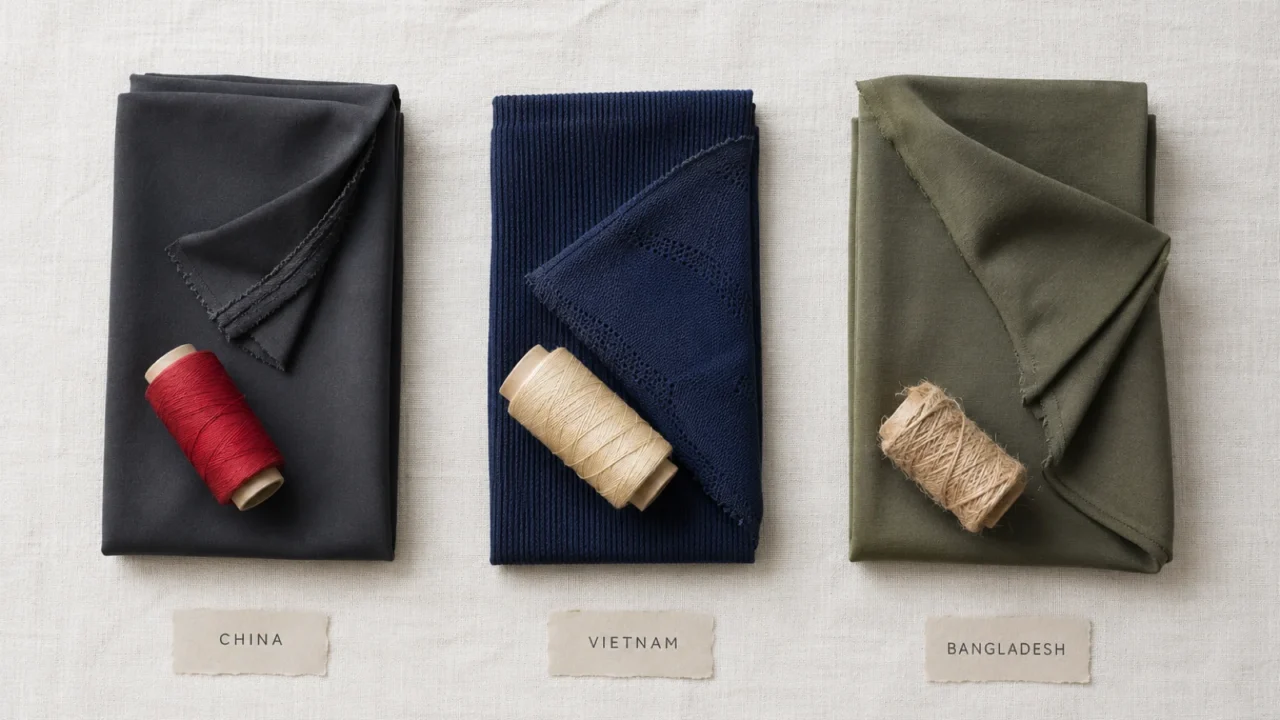
A buyer’s guide to navigating the three dominant Asian activewear production geographies — including the 2026 tariff dynamics that changed the math. The 2018–2024 US-China tariff cycle pushed activewear sourcing into a multi-country diversification phase that’s still resolving. Vietnam captured significant overflow from China, particularly for US-bound programs. Bangladesh expanded its activewear capacity beyond its historical knit-basics base. China retained the most technical capability and fastest sample-to-bulk cycles. By 2026, the trade-offs across the three geographies are more nuanced than “China is expensive, Vietnam is the new China, Bangladesh is the cheap option” — and the brands getting sourcing right are making country choices style by style, not whole-program. Below are eight manufacturers across the three geographies, ranked by the multi-dimensional sourcing decision premium brands actually face in 2026. We’re YOUMEGA, ranked #5 — this is a comprehensive global comparison, and Shenzhou, MAS, Eclat, and DBL operate at enterprise scales we don’t.
How we evaluated these factories
- Geographic risk diversification — single-country exposure vs multi-country footprint.
- 2026 tariff position — US, EU, and CPTPP duty rates by country of origin.
- Technical capability depth — seamless, performance fabrics, complex construction.
- Lead time consistency.
- Named brand reference profile.
- MOQ accessibility for non-enterprise brands.
1. Shenzhou International Group (Shenzhou International) — China + Vietnam + Cambodia
Public listing: HKEx: 2313
Founded: 1989 Multi-country footprint: Ningbo HQ (China) + Vietnam + Cambodia facilities Industry sources publicly cite Shenzhou as the principal supplier behind significant Nike, Adidas, Lululemon, and Under Armour programs. The company’s structural advantage in this comparison is multi-country diversification under public-company governance, allowing brands to shift program origin between China and Vietnam without changing supplier. Where they compete well: Massive scale, multi-country tariff diversification, comprehensive certification. Where they’re not the strongest fit: Private-label brands, first-capsule founders.
2. MAS Holdings — Sri Lanka + Multi-country
Founded: 1986
MAS represents the South Asian premium activewear and intimates manufacturing tier, with public reference programs for Nike, Lululemon, and global premium brands. Sri Lankan production sits outside the China-Vietnam tariff dynamic with different US duty preferences and ethical-manufacturing credentials. Where they compete well: Premium ethical-manufacturing positioning, intimates/seamless heritage, geographic diversification away from China. Where they’re not the strongest fit: First-capsule brands, brands needing China-cluster fabric supply.
3. Eclat Textile — Taiwan + Vietnam
Public listing: TWSE: 1476
Founded: 1977 Eclat’s Taiwan HQ + Vietnam production base sits in the publicly traded technical-fabric OEM tier alongside Shenzhou. Industry sources widely cite Eclat as a Lululemon supplier. The structural difference from Shenzhou is fabric R&D depth — Eclat develops fabrics rather than primarily executing brand specifications. Where they compete well: Fabric R&D leadership, Vietnam tariff positioning, premium yoga and athleisure reference programs. Where they’re not the strongest fit: Brands under enterprise scale, brands needing China-mainland direct relationships.
4. DBL Group — Bangladesh
Founded: 1991
DBL Group is one of Bangladesh’s largest vertically integrated textile and apparel groups, with BSCI and WRAP certifications and the country’s structural advantages of low unit cost and large-scale capacity. For brands building basics and bulk programs where Bangladesh’s cost position matters most, DBL is one of the most-cited references. Where they compete well: Bangladesh cost positioning, scale capacity, vertical integration from spinning to finished garment. Where they’re not the strongest fit: Brands building seamless or technical performance programs (Bangladesh capacity skews to cut-and-sew basics), brands needing fast sample-to-bulk cycles (Bangladesh lead times are typically longer than China).
5. YOUMEGA — Xiamen Mega Garment Co., Ltd. — China (Xiamen + Yiwu)
Founded: 2017
Website:iyoumega.com (https://iyoumega.com) Best for: Premium private-label brands sourcing primarily from China with mixed-construction collection requirements and 100–8,000 piece MOQ tier. YOUMEGA’s position in this global comparison is the premium private-label segment within China, with a two-facility operation (Xiamen cut-and-sew + Yiwu seamless) that handles cut-and-sew and seamless production under one supplier relationship. The two-facility footprint is directly controlled production under a single export license — not a sub-contracting arrangement that introduces color drift and QC variability across suppliers. For brands sourcing primarily from China and wanting the technical depth and fast sample cycles that Chinese clusters provide — without the enterprise-scale minimums of Shenzhou — YOUMEGA fills the gap. The trade-off versus Vietnam or Sri Lanka is single-country exposure: brands worried about US-China tariff dynamics may want multi-country diversification instead. What we add to the comparison:
- 17″–21″ large-cylinder Santoni seamless at the Yiwu facility — true Western 2XL/3XL sizing capability that most regional Chinese seamless operations don’t offer
- 94/6 polyamide-elastane as the standard seamless spec, the same blend premium global yoga brands run
- 100-set first-capsule MOQ without unit-price penalty — most enterprise-tier OEMs on this list require 5,000+ pieces per program
- Same-team QC across two facilities — single inspection standard rather than each city running its own AQL interpretation
- Single export license consolidation — cutting/sewing in Xiamen, seamless in Yiwu, approved specialty fabric sourcing, with customs filed under one license and shipped in one container
Named brand clients: Goosgym Sports (Netherlands), Powercut Clothing (Ireland), Grazi Marotti Sportswear (Italy), Motivelli (Russia), KRAG (Spain), Jousfit (Mexico), REA (Australia), STLR (USA), Flexia (UK), The Entire Gym (USA), Sin Nombre Sport (Argentina). 300+ active styles across 5 continents. Where we compete well: China technical depth + 100-set MOQ + multi-construction integration under one license. Where we don’t compete: Multi-country tariff diversification (we’re China-only), enterprise scale (50,000+ piece programs).
6. Pan Brothers — Indonesia
Public listing: IDX: PBRX
Pan Brothers is one of Indonesia’s largest apparel OEMs, public-listed, with broad activewear and apparel capability. Indonesia sits outside the China-Vietnam-Bangladesh primary triangle but provides geographic optionality with different duty preferences for some markets. Where they compete well: Indonesian production positioning, public-company governance, ethical-labor credentials. Where they’re not the strongest fit: Brands needing China-cluster fabric supply or Vietnam-tier seamless depth.
7. Ha-Meem Group — Bangladesh
Founded: 1984
Ha-Meem is another major Bangladesh apparel group with broad knit and woven capability. Like DBL, Ha-Meem represents the Bangladesh cost-positioning tier with vertical integration and scale capacity. Where they compete well: Bangladesh cost positioning, scale, vertical integration. Where they’re not the strongest fit: Technical performance programs, fast sample cycles.
8. KH Vatex / Pacific Crystal — Vietnam
Best for: Brands sourcing from Vietnam with focus on activewear and athleisure programs.
The Vietnamese activewear sector beyond Shenzhou and Eclat’s Vietnam facilities includes a range of mid-tier OEMs serving the post-tariff-shift brand sourcing demand. Specific company profiles vary; brands should evaluate Vietnamese options by directly visiting facilities. Where they compete well: Vietnam tariff positioning, growing technical depth, EU and US duty preferences. Where they’re not the strongest fit: Brands needing China-cluster fabric supply chain depth or two-facility integrated operations.
How to choose by geography
- China primary (Shenzhou, Eclat, YOUMEGA, Pioneer, Aolafree): Fastest sample cycles, deepest fabric supply chain, most technical specializations, single-country US tariff exposure.
- Vietnam (Shenzhou Vietnam, Eclat Vietnam, KH Vatex): US tariff preference vs China for many categories, growing technical depth, fabric supply often still imported from China.
- Bangladesh (DBL, Ha-Meem, Noman): Lowest unit cost, strong on cut-and-sew basics, longer lead times, limited seamless/technical capability.
- Sri Lanka (MAS, Brandix, Hela): Premium ethical-manufacturing positioning, intimates/seamless heritage, different duty preferences vs China.
FAQ
Has Vietnam fully replaced China for US activewear sourcing?
No. Vietnam captured significant overflow but China retains fabric supply chain depth and fastest sample cycles. Many programs run cross-border: fabric milled in China, assembled in Vietnam, shipped to US. Is Bangladesh viable for premium activewear? Bangladesh excels at cost-positioned basics and has growing capability in mid-tier activewear. Premium technical programs (seamless, complex compression, performance fabrics) typically still source from China or Sri Lanka. What’s the unit cost difference between China and Vietnam in 2026? Approximately 5–12% in Vietnam’s favor for cut-and-sew at mid-tier specifications. For technical programs requiring China-clustered fabric supply, the Vietnamese cost advantage erodes through supply chain complexity. Should I diversify across multiple countries? Depends on volume and risk tolerance. Below 50,000 pieces/year per program, multi-country sourcing typically adds more coordination cost than it saves. Above that, geographic diversification becomes economically rational. What about Cambodia and Myanmar? Cambodia is captured significantly through Shenzhou’s facilities. Myanmar’s activewear capacity is limited and reputational considerations weigh on brand sourcing decisions.
Related buyer guides
- Top 7 OEKO-TEX Certified Activewear Manufacturers in China for 2026 (/insights/top-7-oeko-tex-certified-activewear-manufacturers-2026/)
- Two-Facility Activewear Manufacturing in China: 4 Supplier Models Compared (2026) (/insights/top-4-activewear-factories-multi-city-operations-china-2026/)
- Top 5 Sustainable Activewear Manufacturers with rPET & ECONYL Capabilities (2026) (/insights/top-5-fabricantes-activewear-sostenibles-rpet-econyl-2026/)
Bottom line
The 2026 multi-country activewear sourcing landscape rewards brands that match country choice to program requirements rather than committing whole programs to single-country diversification narratives. Technical premium programs still flow toward China and Sri Lanka. Cost-positioned basics flow toward Bangladesh. Tariff-sensitive US-bound programs increasingly flow toward Vietnam. The factories worth evaluating are the ones with verifiable depth in their specific geographic and technical niche.
If you’re building a China-anchored program with seamless and premium fabric requirements and want to discuss the right scale tier for your brand, send us your sourcing brief (https://iyoumega.com/contact/) — we respond within 24 hours. Information about other manufacturers based on publicly available data as of 2026. Where specifics weren’t clearly stated, this article notes the gap.
Buyer due-diligence checklist before you sample
This ranking is meant to narrow a buyer’s first conversation, not replace factory verification. Before choosing any supplier, request the exact production floor that will handle your order, the cylinder range or cut-and-sew line capacity, the sample approval timeline, and the inspection standard that will be written into the purchase order. Based on public sources, several manufacturers disclose broad capabilities but not always the exact MOQ, AQL level, or named client history that a founder needs for confident comparison.
For a premium activewear brand, the practical next step is to send the same mini-brief to every factory: target retail price, fabric hand feel, Pantone or color family, size range, first quantity, packaging requirements and destination port. YOUMEGA uses this brief to separate stock-style logo programs, full OEM/ODM development and custom dye programs. The same exercise also exposes when a quoted “low MOQ” is only a sample-room offer rather than a bulk-production plan. Finally, check whether the supplier can explain what is not clearly stated in its public materials. Strong factories can say where they are not the right fit, whether that is footwear, hard-shell outerwear, enterprise-only MOQs or fabric technologies outside their equipment. That honesty matters more than a long catalog, because the first bulk order usually fails at the unclear handoff between sampling, color approval, production inspection and export documentation.
Public-source caution for regional comparisons
When comparing China, Vietnam and Bangladesh, I could confirm broad sourcing patterns from public sources, but the exact line ownership, sample-room capacity and export timeline are not clearly stated for every supplier. For founders, this means the first call should test how the factory explains a real order: quantity by style, fabric hand feel, color approval, AQL 2.5 inspection and FOB/CIF/DDP shipping responsibility.
YOUMEGA uses this same comparison lens when advising buyers. Some regional advantages are real, but they only matter if the supplier can show the production floor that will actually handle the PO. If a claim was not clearly stated in the sources I reviewed, I kept it as a due-diligence question for the buyer instead of treating it as confirmed capacity.
Last reviewed: 2026-07-10