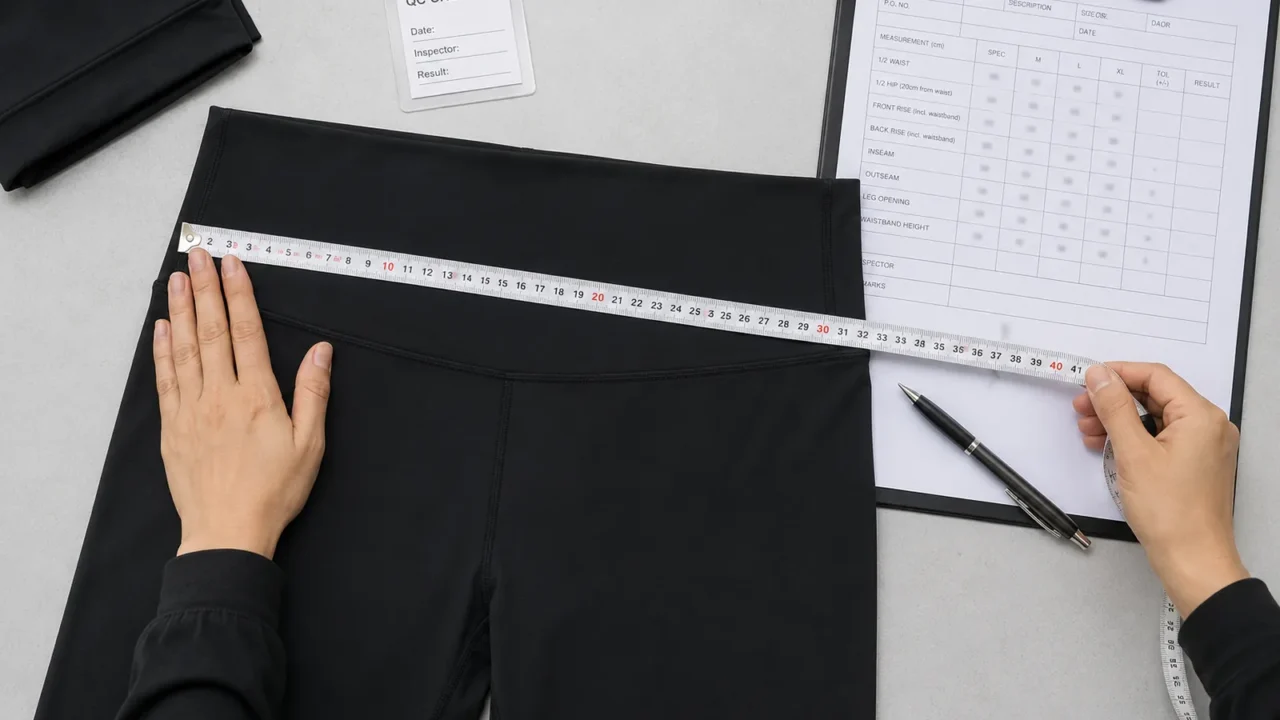
Measurement Tolerances in Activewear: What ± Actually Means at Inspection
The tolerance column is the most ignored negotiation on the spec sheet. Buyers copy ±1 cm everywhere because it looks strict; factories accept it because nobody expects it to be enforced; inspection day turns it into an argument. Here’s how tolerances actually work on stretch garments — how they’re set honestly, measured consistently, and judged at final inspection so the ± column becomes a contract instead of a decoration.
Why stretch garments need different tolerance thinking
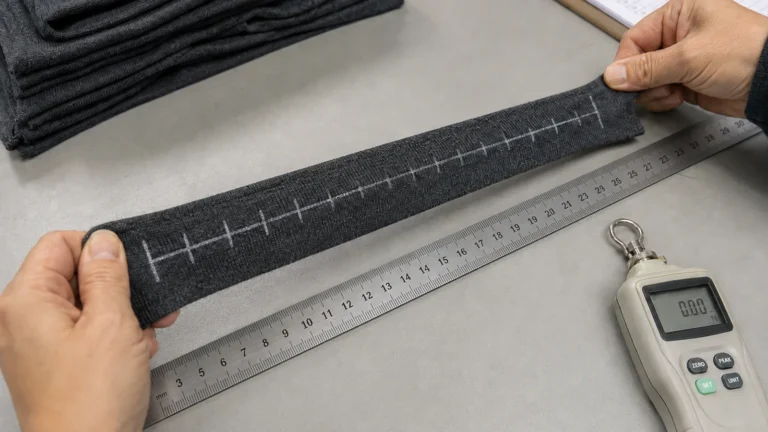
A woven shirt holds its dimensions; a nylon-elastane legging is a spring that happens to be garment-shaped. Its measured width depends on how it was relaxed before measuring, whether the waistband was flattened without tension, and how the fabric behaved since its last wash or press. Copying woven-world tolerances onto knits produces specs that fail good garments and pass bad ones.
Honest tolerance logic for activewear:
| Measurement point | Tolerance behavior |
|---|---|
| Relaxed widths (waist, hip, thigh) | Wider windows — elastic dimensions breathe; the stretched/functional check matters as much as the relaxed number |
| Lengths (inseam, rise, garment length) | Tighter windows — length errors are visible and cumulative |
| Small structural points (waistband height, hem depth, strap width) | Tightest — these read as quality at arm’s length |
| Graded differences between sizes | Protected separately — a tolerance abused in the same direction across sizes silently eats the grade |
That last row is the sophisticated failure: every size individually within ±1.5 cm, all drifted the same way, and the size run’s differences are gone. Good specs tolerate points and protect the step between sizes.
How measuring is standardized (so numbers are comparable)
An inspection measurement is only meaningful if everyone measures the same way: garment relaxed flat without tension, defined landmarks (“waist = top edge, flattened, no stretch”), same tools, and — for elastic dimensions — a stated method for any stretched check. This is why our measurement method sheet travels with the spec: the sealed PP sample plus the method sheet equals the standard bulk is judged against. A number without its measuring method is the spec-sheet version of an adjective.
What happens at inspection when a point is out
Final inspection at AQL 2.5 samples the lot; measurements are checked against spec with three honest outcomes:
- Within tolerance — pass, record, move on.
- Out at a critical point (functional or size-integrity) — defect counted toward the AQL decision; systematic drift across the sample = the lot is held and corrected, not shipped and argued about.
- Out at a minor point, isolated — recorded, classified minor per the agreed defect list, judged inside the AQL math like any other minor.
The phrase doing the work is agreed defect list: which points are critical vs minor is decided at development, in daylight — not invented at inspection under deadline pressure. That single page prevents more disputes than any contract clause we’ve seen.
Setting tolerances you can actually enforce
Start from the sealed sample’s real measurements, not theoretical numbers. Set windows per point-type (structure tight, elastic widths breathing, lengths in between). Protect grade steps explicitly. State the measuring method. Then hold every lot to it — including reorders, where lot-to-lot fabric behavior tries to spend your tolerance budget for you. A tolerance column built this way is boring, enforceable and dispute-proof — which is exactly what it’s for.
FAQ
Is ±1 cm a reasonable tolerance for leggings? For lengths and structural points, often yes. For relaxed elastic widths it’s frequently too tight to be honest — and specs that lie get ignored. Set by point type, not by copy-paste.
Who decides critical vs minor measurement points? You and the factory, at development, on a written defect list. Deciding it during inspection is how both sides lose.
How many garments get measured at final inspection? A sampled subset within the AQL 2.5 plan, measured against the sealed standard and method sheet — systematic drift in the sample condemns the lot, not just the measured pieces.
My sizes measure fine individually but the run feels compressed — why? Same-direction tolerance drift eating the grade steps. Add a grade-protection line to the spec: minimum difference between adjacent sizes at key points.
Want a tolerance page that survives inspection day? Send your spec sheet — we’ll return it with honest windows, a method sheet and a defect list draft. Reply within 24 hours on weekdays.