Shrinkage and Torque: The Two Wash Tests That Predict Whether Your Activewear Survives
Customers don’t return leggings because of anything they can name. They return them because “they felt different after washing.” Behind that sentence are almost always two measurable, preventable failures: shrinkage (the garment got shorter or tighter) and torque (the side seams rotated toward the front, the legs twisted). Both are testable on fabric, before you commit to bulk — and both tests cost almost nothing compared to what they prevent.
Shrinkage: the fabric relaxing back to what it was
Knit fabric arrives at the cutting table under tension from knitting, dyeing and finishing. Washing releases that tension. If nobody managed it earlier, the release happens in your customer’s machine instead of the mill’s.
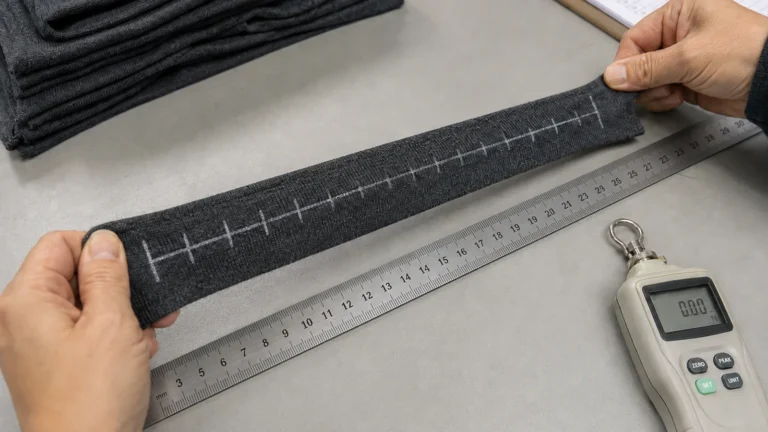
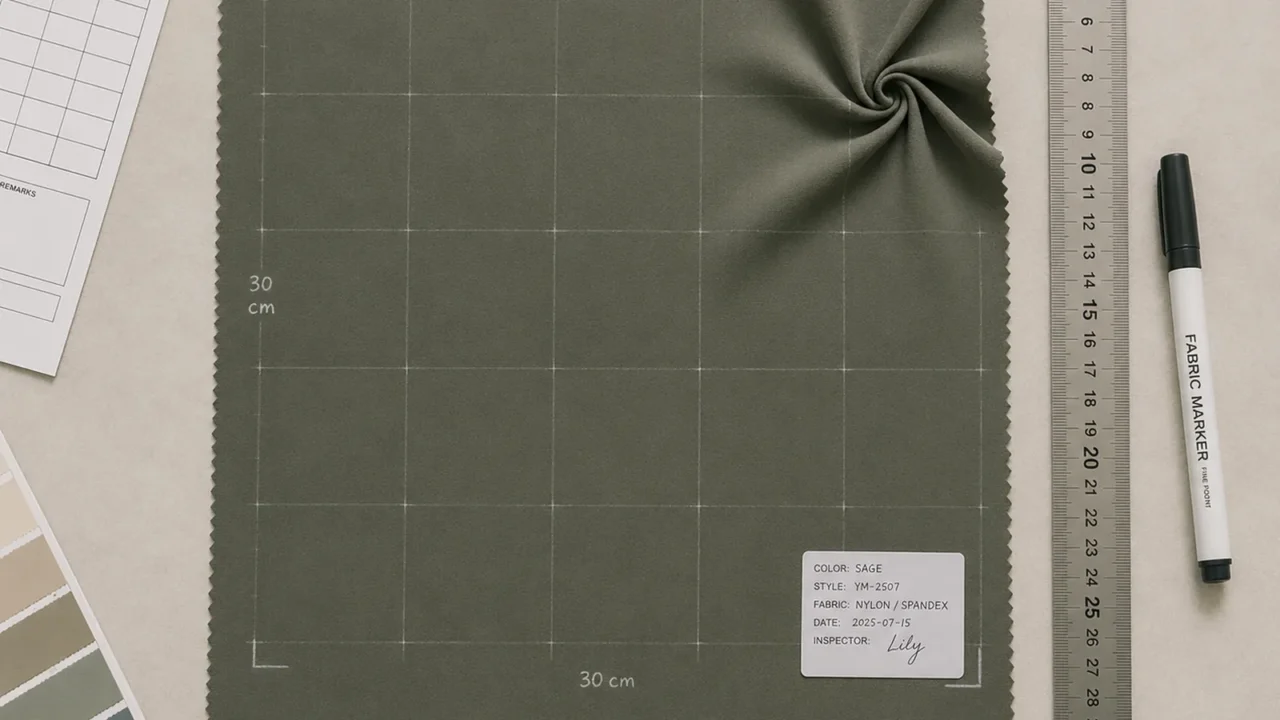
How the test works: a marked square (commonly 50×50 cm) is measured, wash-and-dried through a standardized home-laundering cycle, then measured again. Length and width change are reported separately — knits routinely behave differently in each direction.
What the numbers mean in practice:
- Within about ±5% on a knit: normal territory, manageable through pattern compensation
- Beyond that, or wildly different between directions: the fabric needs process correction (heat-setting, compacting, relaxed finishing) — not a bigger pattern
The important discipline: the pattern is compensated to the tested shrinkage of the approved lot. If bulk fabric arrives with different shrinkage than the tested lot, the compensation is wrong — which is why we re-test per lot, not per season.
Torque: why cheap leggings twist
Torque (spirality) comes from the twist energy stored in yarn and the knitting direction. On the table the fabric lies flat and innocent; after washing, the stored twist expresses itself and the side seam migrates forward. On dark solid leggings a small torque hides; on contrast side-panels or seamed styles it screams.
How the test works: the same marked-square wash test, but measuring the diagonal displacement of marks — how far the grain rotated. A few percent is normal for single-jersey knits; visible seam rotation on the garment is not.
What controls it: balanced yarn twist, knitting construction, and finishing that sets the fabric straight. This is decided at the mill — which is why torque questions belong in fabric approval, not in the complaint email afterward.
Where these tests sit in our process
| Stage | What happens |
|---|---|
| Fabric approval | Shrinkage + torque tested on the candidate fabric; results recorded with the approved standard |
| Pattern making | Compensation applied from tested values, per direction |
| Bulk fabric arrival | Lot re-checked before cutting — the cheapest catch point in the whole chain |
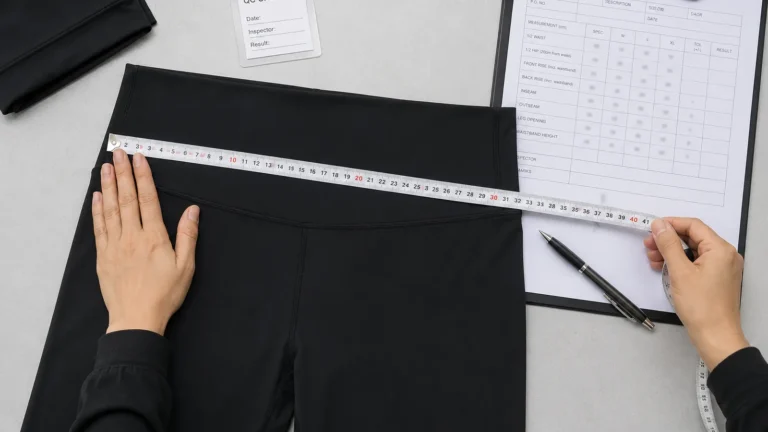
| Final inspection | Garment measurements against the sealed sample at AQL 2.5 |
None of this is exotic. It is the boring, repeatable reason two leggings with identical fabric compositions can behave completely differently at wash three — a theme we covered from the price angle in why same-composition fabrics cost different prices.
FAQ
How much shrinkage is acceptable for nylon-spandex leggings? Our working window on quality knits is within about ±5% per direction, compensated in the pattern. Lower is better; unmanaged is unacceptable.
Can torque be fixed after production? No. Once bulk is cut and sewn, stored twist is baked in. Torque is prevented at fabric selection and finishing, never repaired afterward.
Do you test every color, or just the fabric? Per lot. Dye lots can finish differently, and shrinkage follows finishing — one approved swatch does not certify a season.
Why did my sample survive washing but bulk didn’t? Classic lot-variation symptom — the sample was cut from one lot, bulk from another, and nobody re-tested. See sample vs bulk: how to catch it.
Want your fabric’s actual shrinkage and torque numbers before bulk, not after reviews? That’s a standard part of our fabric approval — quote within 24 hours on weekdays.