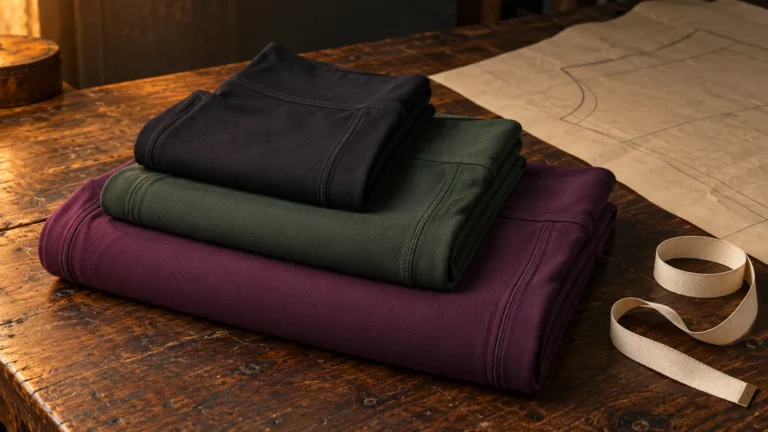
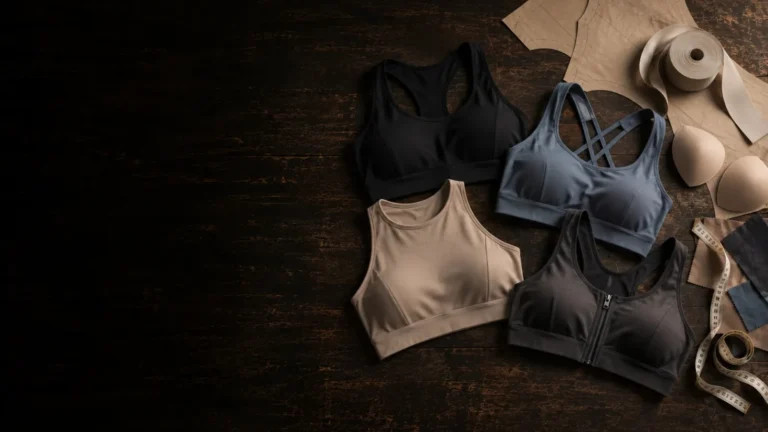
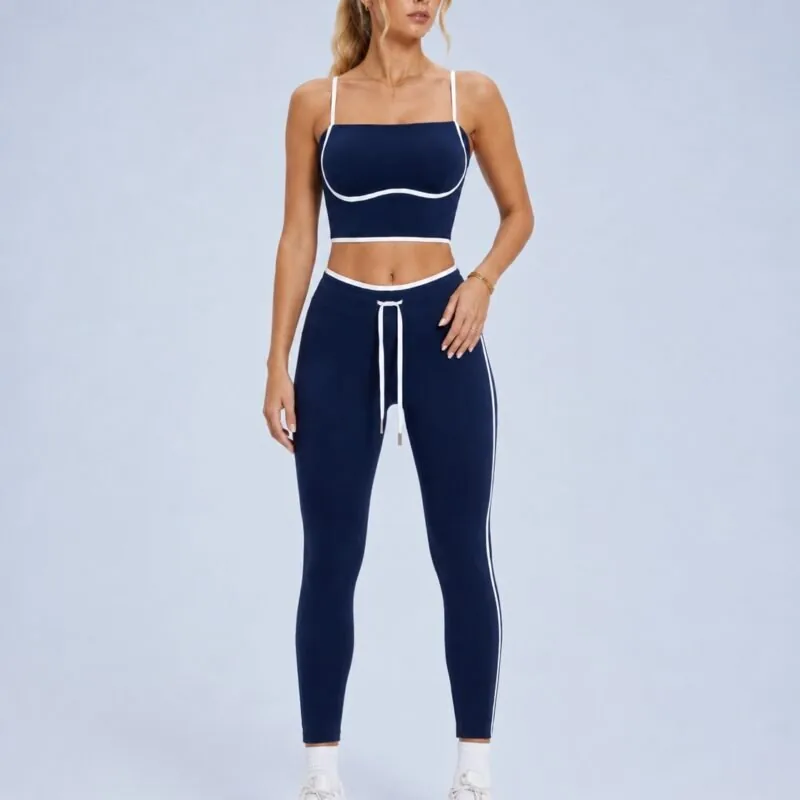
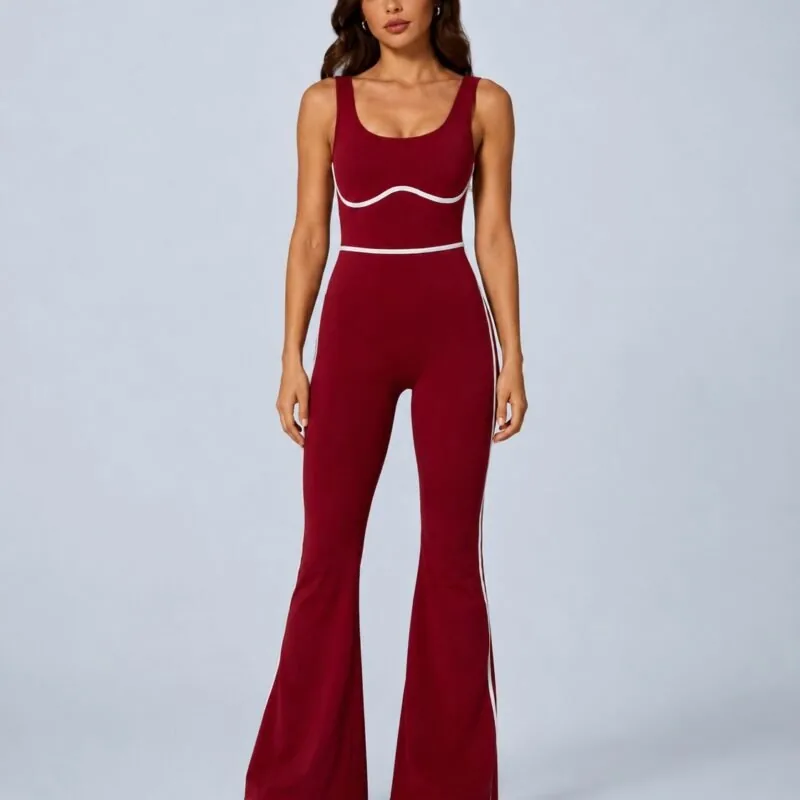
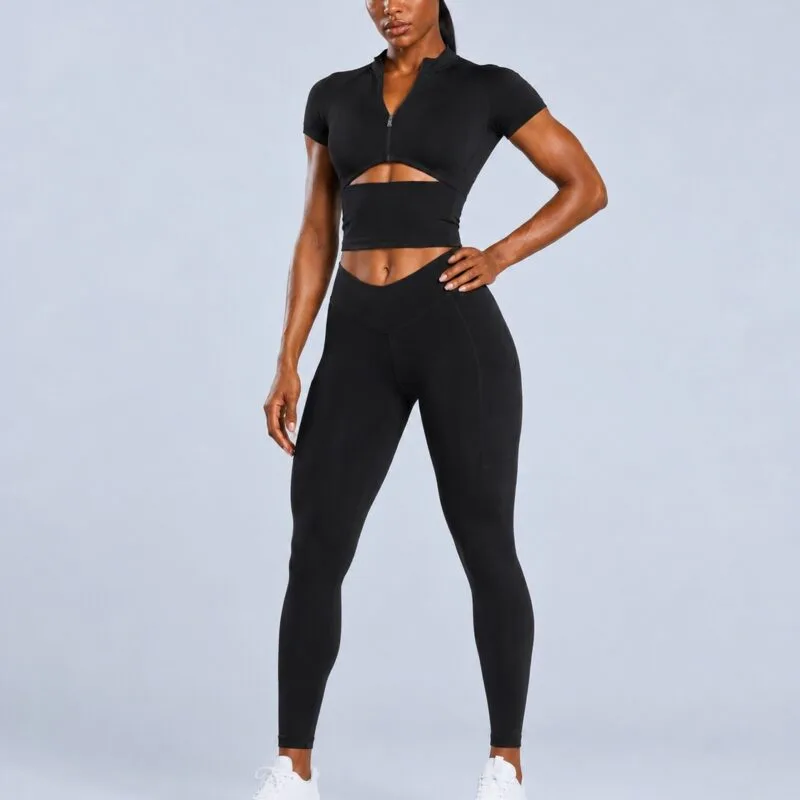
For an existing YOUMEGA stock style with your logo, the minimum starts at 100 sets total, with colours and sizes mixed. If you need a new pattern or custom-dyed fabric, ask for a development quote instead: fully custom OEM/ODM starts at 300–500 pieces per style per colour, depending on the product.
Custom logo service and quote path
For stock activewear styles, YOUMEGA can add your logo from 100 sets, mixed colors and sizes allowed. For full custom OEM/ODM development, the MOQ is 300-500 pcs per style per color.
- Logo methods: heat transfer, silicone 3D, embroidery and sublimation.
- Branding add-ons: custom labels, hangtags and packaging.
- Color and sampling: Pantone lab-dip support, stock samples in about 7 days, full-custom samples in 12-15 days.
- Compliance and QC: AQL 2.5 with OEKO-TEX Standard 100, BSCI, REACH and CPSIA support.
Review manufacturing services · Browse activewear products · Request a custom-logo quote
Low MOQ is one of the most overused phrases in sourcing. For buyers, the useful question is not whether low MOQ activewear exists. It is what kind of customization is realistic at that quantity — and what’s not.
Start with two decisions: can you use an existing colour, and does the logo work on the selected fabric? The answers determine what needs sampling before bulk.

What is usually possible at lower MOQ
At lower minimums (100 sets at YOUMEGA), buyers can usually customize:
- Logo application (heat transfer, silicone 3D, embroidery, sublimation small logo)
- Hangtags
- Wash labels
- Polybags
- Basic packaging
- Size mix within the order
- Color mix within the order
List which labels and packaging you need, and ask what is included. The garment minimum does not guarantee every trim or packaging option at the same quantity.
For each option and its limits, see what you can add to a stock style.
What becomes harder at low MOQ
At very low quantities, buyers should not expect full freedom in:
- Custom fabric development
- Custom Pantone dyeing belongs to the custom route (300–500 pieces per style per colour, depending on product). See the Pantone guide.
- Highly complex trims
- Extensive hardware changes
- Multiple major pattern variations
These things are possible, but usually not at the same minimum as stock plus logo work. Trying to force them often turns a low-MOQ launch into a delayed and over-budget project.
Which minimum applies to my design?
Use the unit on the quote. A set is not a piece, and a total order minimum is not a minimum for each colour.
| Route | How the minimum is counted | What to confirm |
|---|---|---|
| Stock style with your logo | From 100 sets total; colours and sizes may be mixed | Which styles and colours are available, logo placement and packaging scope |
| Fully custom OEM or ODM | 300–500 pieces per style per colour, depending on the product | Pattern, fabric, custom dyeing and sample approval for each style |
Logo methods at low MOQ: what works
Different logo methods have different sweet spots at low MOQ:
- Heat transfer: check adhesion and stretch on the actual fabric.
- Raised silicone: approve the feel and edge definition on the sample.
- Embroidery: check backing, comfort and distortion on the chosen panel.
- Sublimation: confirm that the fabric and artwork are suitable before quoting.
Ask the factory to return a sample in the actual fabric and colour. A logo that looks sharp on a flat swatch may distort when the waistband is stretched.
Logo method comparison
Side-by-side, the trade-offs are easier to evaluate:
| Method | What to check on the garment |
|---|---|
| Transfer | Stretch the panel; inspect the lettering and edges after washing. |
| Silicone print | Compare the raised profile and flexibility at the intended placement. |
| Embroidery | Check the reverse side against skin and look for puckering. |
| Sublimation | Approve colour and edge definition on the specified fabric. |
| Reflective or puff print | Inspect the finish and flexibility after the agreed care treatment. |
Logo placement: where it goes matters
Buyers often submit a logo file without specifying placement, and then ask “why does it look small?” after seeing the sample. Activewear has standard placement conventions that work because they fit how garments stretch and move:
- Leggings: Right thigh (5–8cm above the knee), back waistband, or center back at the hem. Avoid front center waistband — the seam shifts logos visually.
- Sports bra: Center chest (small mark only, 3–5cm wide), under-bust band, or back strap.
- Crop top / tank: Left chest (8–12cm wide), back neck, or center hem.
- Shorts: Right leg hem, back waistband, or front pocket (if pocketed).
- Jacket / outerwear: Left chest, back shoulder, sleeve, or hem.
Avoid placements directly on high-stretch areas (front knee on leggings, bust apex on bras) — silicone and heat transfer logos can crack or distort under repeated stretching at those points.
Logo size guidelines
Logo size matters as much as placement. Too small and it disappears; too large and it cheapens the garment:
- Chest logo: 6–10cm wide for typical brand marks. Tonal or subtle logos can go up to 12cm.
- Thigh logo (leggings): 4–7cm wide. The thigh narrows as the leg moves, so oversized logos warp.
- Hem logo: 3–5cm wide; usually a wordmark, not a full lockup.
- Back logo (large): Up to 18cm wide on jackets or oversized tees; not recommended on leggings.
- Sleeve logo: 2–4cm wide; vertical orientation usually reads better than horizontal.
For first launches, we often recommend keeping logos slightly smaller than what the brand brief shows on the design comp — design comps tend to be sized for screen visibility, not garment reality.
File formats that prevent rework
Logo files cause more sample delays than logo methods. To avoid sampling rework:
- Supply vector format (.AI, .SVG, .EPS, .PDF with outlined fonts). Vector scales without quality loss.
- Raster (PNG/JPG) accepted only at 300+ dpi at final print size. PNG with transparent background is preferred over JPG.
- Outline all fonts before sending. We don’t have your custom font, and substituted fonts ruin logo proportions.
- Specify Pantone reference for any color-critical logo. RGB and screen-tested colors print differently.
- Provide a separate single-color version for embroidery and reflective applications.
Stock plus logo vs full OEM
Keep stock plus logo on the table if the existing cut and colour work. Request custom development if you need a different fabric, dye lot or pattern. The choice follows from the garment specification, not how many units a previous collection sold.
How to approve logo durability before bulk
Agree on the care treatment and the failure criteria with the supplier. Compare the approved artwork and a treated sample for lifting, cracking, puckering or colour change. Record the result for that fabric and method; a wash count from another garment is not proof. Include that check in the QC process.
What “100 sets” actually means at YOUMEGA
The stock-plus-logo minimum is 100 sets total, with colours and sizes mixed. Confirm the available stock styles and the number of garments in each set before ordering. Do not convert this to “100 pieces per colour”.
Final thought
Send a stock-style reference, a logo file and the size/colour split. Ask which packaging is included and which items need their own minimum; see the packaging guide.
Want our team to review your project?
Send the style reference, logo artwork, colour and size breakdown, and target quantity. We can identify the production route before quoting the work.
Frequently asked questions
What’s the lowest MOQ for custom logo activewear at YOUMEGA?
At YOUMEGA, stock styles with your logo start at 100 sets total; colours and sizes may be mixed. A new pattern or custom-dyed fabric is quoted separately.
Can I order just 50 pieces of custom logo activewear?
Not through the stock-plus-logo route at YOUMEGA: that route starts at 100 sets, not 50 pieces. Do not confuse an unbranded stock order with a branded one.
What’s the cheapest custom logo method for activewear?
There is no universal cheapest method. Quote the same artwork, size, fabric, placement and order quantity, then compare the samples and included setup work.
How long does each logo method last in wash cycles?
There is no single verified wash count for every fabric and application. Agree on the care method, inspect the treated sample and record adhesion, distortion and colour change before approving bulk.
How big should my logo be on activewear?
Typical chest logos are 6–10cm wide. Thigh logos on leggings are 4–7cm. Hem logos are 3–5cm. Large back logos can go up to 18cm on jackets but rarely work on leggings. We often recommend going slightly smaller than your design comp shows — screen-sized logos look oversized on garments.
Can I mix colors and sizes within the 100-set minimum?
Yes. Colours and sizes can be mixed within the total of 100 sets on the stock-plus-logo route. Confirm availability for your chosen styles and colours.
When should I move from stock-plus-logo to full custom OEM?
Move to development when an existing style cannot meet your fabric, colour or pattern brief and you can meet the minimum per style per colour. No sales-volume milestone is required.
Buyer FAQ
Can low-MOQ activewear include a custom logo?
Yes. Stock activewear styles can usually add a custom logo from 100 sets. The best method depends on fabric, logo size, stretch, color and whether the garment will be washed heavily.
Which logo method is safest for leggings and sports bras?
Heat transfer is common for small runs, silicone gives a premium raised feel, embroidery works better on stable panels, and woven labels are useful for branding without printing on stretch zones.
What logo files should buyers prepare?
Prepare AI, PDF, SVG or high-resolution PNG logo files, Pantone color references, placement size, placement position and whether the logo should be matte, glossy, tonal or raised.