An activewear order is traceable when you can connect the finished goods to the materials and production records behind them, then identify where the affected goods went. A style code alone is not enough to distinguish separate production batches. For a private-label buyer, the practical question is simple: if one delivery develops a problem, can you narrow the investigation without treating every order as identical?
This guide proposes a purchasing checklist. It is not a claim that YOUMEGA operates a particular certification scheme, a statement of legal compliance or a requirement to buy a new software platform.
A style, a colour and a batch are different identifiers
Your internal SKU may distinguish style, colour and size while still being reused across successive orders. Record the production batch separately. If several fabric lots feed the same order, retain that relationship instead of assuming the purchase-order number explains everything.
The GS1 Global Traceability Standard distinguishes product-class, batch/lot and individual-instance identification. Its batch-level model combines a product identity with a lot reference. This is a useful conceptual distinction for apparel buyers; it does not mean an internal factory lot code is automatically a licensed GS1 identifier or that every garment needs a unique serial number.
Decide the level of detail with the supplier before production. A record that can distinguish orders but not material lots may be insufficient for your investigation needs. More detailed tracking also brings more recording work, so specify a useful system rather than demanding identifiers nobody maintains.
Ask for a connected record, not isolated labels
The following is a suggested buyer-side record structure. Adapt it to the actual cut-and-sew or seamless workflow. A cutting-bundle field is not appropriate to every seamless process; use the equivalent knitting or production-run reference where relevant.
| Stage | Record to agree | Connection to preserve |
|---|---|---|
| Material receipt | Supplier material reference, lot or roll reference, received quantity | Which approved material and purchase order it belongs to |
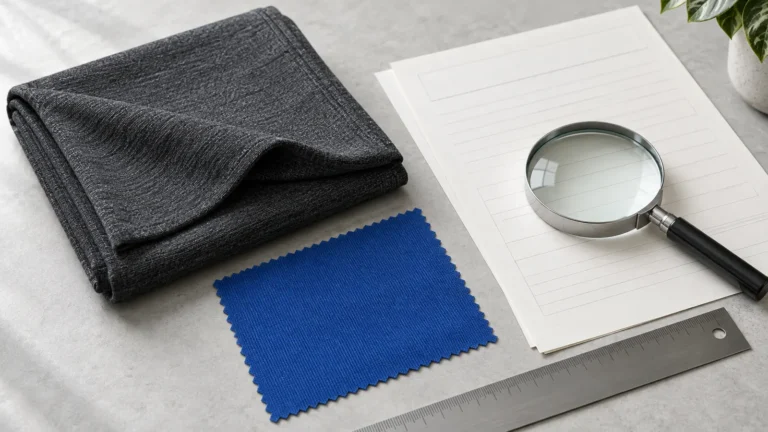
| Material approval | Swatch, lab dip where applicable, specification revision, test-report reference | Which material combination was approved and any limitations |
| Cutting or knitting | Bundle or production-run reference, date, quantity | Which material lot fed that work |
| Assembly and finishing | Production record and relevant process or change reference | Which work was processed and under which approved specification |
| Inspection and release | Inspection record, disposition and authorised release | Which finished batch was checked or held |
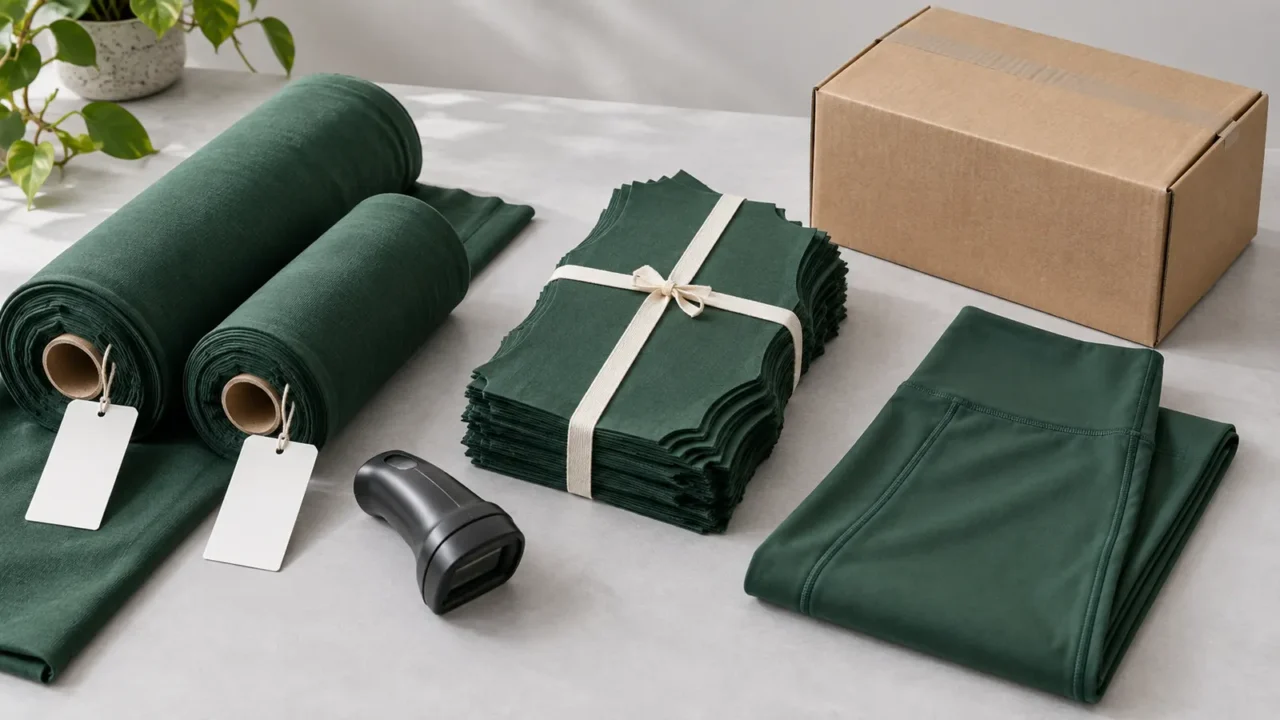
| Packing and dispatch | Carton or packing reference, quantities and shipment record | Where the identified finished batches were sent |
GS1's explanation of how traceability works covers identification, data capture, recording and sharing between trading partners. The important practical point is the connection between records. A roll tag that disappears at cutting, or a carton list that cannot be linked back to production, leaves a gap even when each document looks tidy on its own.
Keep approval history separate from physical identity
A lot code tells you which material or goods you are discussing. It does not tell you whether they are approved. Keep the acceptance status and specification revision alongside the identity, with a record of any approved substitution or rework.
For instance, if a supplier proposes an alternative elastic, ask which orders and production records would use it, what review is needed and how the approval will be recorded. Avoid a chat message that says only "use the new one" without identifying the component and affected order. Documenting the change does not by itself establish that the substitute performs adequately.
Use the tech-pack guide for specification control and the sample-versus-bulk guide for physical comparison. Traceability connects those decisions to the goods; it does not replace them.
Test the records in both directions
Choose a packed-order reference and ask the supplier to show the associated production record and material lots. Then start with a material lot and ask which production runs and shipments used it. Record any point where the answer depends on someone's memory instead of a maintained record.
This is a practical desk exercise, not a certified audit or a promised response-time standard. It can expose ordinary gaps: a reused lot name, an unrecorded split between shipments, a reworked bundle with no updated status or a subcontracted process that returns goods without preserving their identity.
The GS1 traceability compliance checklist includes defined procedures for identification and information exchange. Use that official framework as a reference, while agreeing the actual records needed for your order. Do not present completion of this short buyer exercise as GS1 certification.
Traceability is not the same as a recycled-material claim
A batch spreadsheet may help connect materials to orders, but it does not establish recycled content or certificate eligibility. Keep any certification evidence and applicable transaction documentation within the relevant scheme's rules. For the distinction between supplier scope and order-level documents, see our scope-versus-transaction-certificate guide.
Likewise, a laboratory result attached to a batch record needs its own applicability review. Being able to find a report quickly is useful; attaching it to a different material does not make the result transferable.
Agree what will be shared before an issue occurs
Ask which records the buyer will receive, which the supplier will retain, who can retrieve them and how changes will be communicated. Separate necessary batch evidence from unrelated customer information, confidential pricing and personal data. Agree the retention period for the order and applicable obligations rather than inventing a universal duration.
For repeat production, keep the previous approved reference without recycling its batch identity. A repeat style is a new production event, not proof that every input and outcome remained the same.
A short request for your next purchase order
Please confirm how the finished order will be linked to its material lots, production records, approved specification and packing records. Show how split shipments, substitutions and rework retain that connection. Please identify the records we receive, the records you retain and the contact responsible for a trace request.
Discuss this alongside the quality and inspection brief, before release rather than after a complaint. The goal is not more paperwork for its own sake. It is a clear, usable answer to "which goods are affected, and what evidence do we have?"
Questions buyers ask
Is a purchase-order number enough for traceability?
Only if the supporting records provide the detail you need. One purchase order may contain different material lots, production runs or split shipments, so the order number alone can leave important distinctions unresolved.
Do I need a unique serial number on every garment?
Not automatically. Agree a suitable identification level for the product, customer requirements and applicable obligations. Batch-level and individual-item tracking are different choices.
Does a batch record prove that the garments passed inspection?
No. Identity and acceptance status are different. Link the batch to the relevant inspection and release evidence, rather than treating the presence of a code as a quality guarantee.