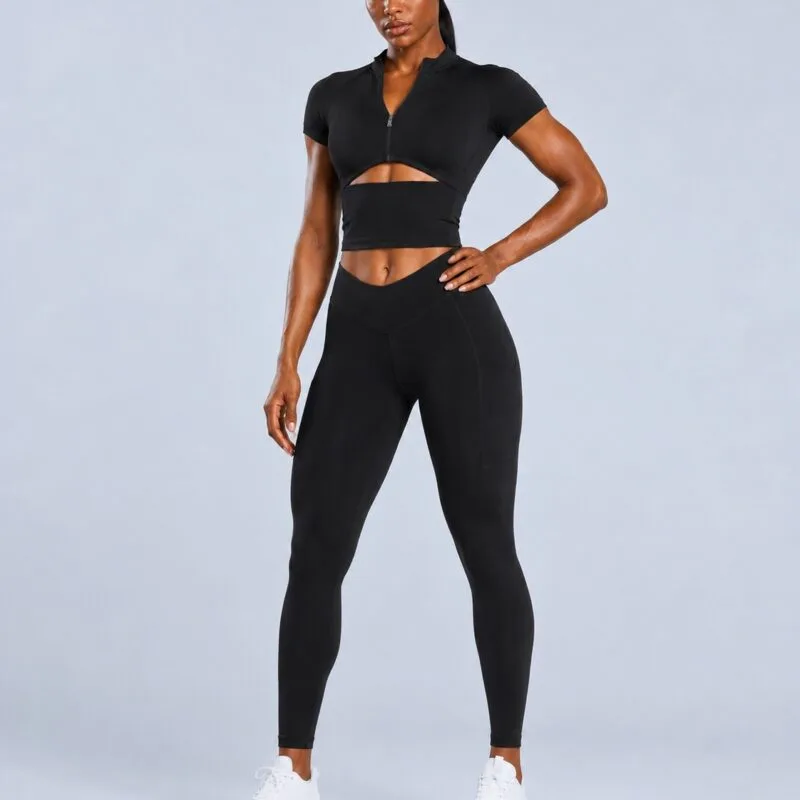
Short answer: Genuinely eco-friendly yoga clothes rest on three things: recycled or lower-impact fibers (recycled polyester/rPET, or regenerated nylon like ECONYL), verified chemical safety (OEKO-TEX Standard 100, REACH compliance), and durability — because a recycled-content legging that pills and sags after ten washes reaches landfill faster than a well-made conventional one. Longevity is part of sustainability, not separate from it. “Eco-friendly” has become one of the most-used and least-defined words in activewear. This guide breaks down what actually makes yoga clothes sustainable, the greenwashing traps to avoid, and — for anyone building a brand — how recycled yoga wear is really produced.
“Sustainable” Is a Spectrum, Not a Badge

No yoga garment is zero-impact. What separates a genuinely greener product from a marketing claim is how many of these levers it actually pulls:
- Recycled or lower-impact fiber instead of virgin synthetics
- Chemical safety — verified free of harmful substances against the skin
- Durability — built to be worn hundreds of times, not dozens
- Lower-impact dyeing and finishing where possible
A product that nails one and ignores the rest isn’t “sustainable” — it’s sustainable-ish in one dimension. Treat the word as a checklist, not a label.
Recycled Fabrics That Actually Perform
The biggest myth is that recycled means a performance downgrade. Specified correctly, it doesn’t:
When reviewing recycled inputs, use Scope vs Transaction Certificates to frame the certificate handoff.
- rPET (recycled polyester): made from post-consumer PET (plastic bottles) and textile waste. Performs essentially like virgin polyester — moisture-wicking, quick-dry, colorfast — at comparable cost.
- Regenerated nylon (e.g. ECONYL): made from reclaimed nylon waste such as fishing nets and fabric scraps. Soft, strong, with excellent four-way stretch when blended with elastane — ideal for leggings and bras.
Blended with elastane, both deliver the squat-proof, four-way-stretch, moisture-wicking performance yoga buyers expect. The recycled content is invisible in the hand-feel — which is exactly the point.
The Greenwashing Traps
When you evaluate (or commission) “eco” yoga wear, three claims deserve scrutiny:
- “Made with recycled materials” — but what percentage? A garment with 5% recycled content and 95% virgin can legally say this. Ask for the actual recycled content percentage.
- No chemical-safety proof. “Eco” should include what’s not in the fabric. Without a recognized chemical-safety certification, “natural/eco” is just a word.
- Poor durability. The least sustainable thing a garment can do is fall apart. Pilling, sagging and see-through-after-washing all push a garment to landfill early and erase any fiber-level savings.
Chemical Safety and Compliance — the Unsexy Half of “Eco”
Yoga wear is worn against sweating skin for hours, so what’s in the fabric matters as much as what it’s made from:
- OEKO-TEX Standard 100 — tests the finished textile against a long list of harmful substances; a widely recognized baseline for skin-contact garments.
- REACH — the EU framework restricting hazardous chemicals in products sold into Europe.
- CPSIA — US safety requirements relevant to apparel.
These don’t measure carbon footprint, but they’re the credible, testable part of “eco” — and the part serious buyers and retailers ask for.
Durability Is Sustainability
The principle is simple: a garment that keeps its shape, color and recovery through repeated wear has a lower per-wear impact than one that fails quickly. So durability specs are sustainability specs —
- Squat-proof opacity that survives repeated stretching and washing
- Recovery — fabric that snaps back instead of bagging at the knee and seat
- Colorfastness — resisting fade from sweat, sun and washing
- Seam integrity — flatlock seams that don’t unravel under stretch
Designing for a long life is the most impactful — and most overlooked — sustainability decision a brand can make.
For Brands: Producing Sustainable Yoga Wear
If you’re building an eco-positioned yoga line, turn the above into a spec, not a slogan:
- Specify recycled content by percentage (e.g. “≥75% rPET body fabric”) and put it in the tech pack.
- Require chemical-safety certification on the fabrics you use.
- Set durability acceptance tests — pilling, recovery, opacity, colorfastness — and inspect against them before bulk.
- Be honest in copy — state the recycled percentage and the certifications you actually hold; don’t imply more.
YOUMEGA is a private-label activewear manufacturer in Xiamen, China, and recycled fabrics are part of our standard toolkit — recycled rPET and ECONYL bases blended for four-way stretch, moisture-wicking and squat-proof performance, finished under AQL 2.5 inspection with GRS-certified recycled fabric options, OEKO-TEX Standard 100, BSCI, REACH and CPSIA compliance. Stock
For chemical-screening questions that sit beside material sourcing, consult what to ask about PFAS in activewear.
styles with your logo start from 100 sets (mixed colors and sizes allowed); full-custom development runs 300 to 500 pieces per style per color, with stock samples in about 7 days and custom in 12–15.FAQ
What makes yoga clothes eco-friendly?
A combination of recycled or lower-impact fibers (like rPET or regenerated nylon), verified chemical safety (e.g. OEKO-TEX Standard 100), lower-impact dyeing where possible, and durability so the garment lasts. No single factor alone makes a garment “sustainable.”
Is recycled polyester as good as regular for yoga wear?
Yes, when specified correctly. Recycled polyester (rPET) and regenerated nylon (ECONYL) blended with elastane deliver the same four-way stretch, moisture-wicking and squat-proof performance as virgin synthetics.
What does OEKO-TEX Standard 100 mean on yoga clothes?
It means the finished textile has been tested against a broad list of harmful substances and passed — a recognized baseline for garments worn against the skin. It addresses chemical safety, not carbon footprint.
How can I tell if “eco” yoga wear is greenwashing?
Ask three questions: what’s the actual recycled content percentage, what chemical-safety certifications does it hold, and how durable is it? Vague “made with recycled materials” claims with no percentage or certifications are red flags.
Can a brand produce sustainable yoga wear at low minimums?
Yes. With a private-label manufacturer, recycled-fabric stock styles with your logo can start from 100 sets (mixed colors and sizes allowed), with full-custom development from 300–500 pieces per style per color.
—
Related YOUMEGA resources
- Sustainability (/sustainability/)
- Products (/products/)
- Services (/services/)
- Seamless yoga sets manufacturer (/seamless-yoga-sets-manufacturer/)
- Top yoga wear manufacturers in China (/insights/top-yoga-wear-manufacturers-china-2026/)
- Contact YOUMEGA (/contact/)