The EU Digital Product Passport Is Coming for Textiles: What to Prepare Now
In July 2026 the EU’s Digital Product Passport registry went live — the infrastructure phase of the ESPR (Ecodesign for Sustainable Products Regulation). Textiles are one of the first priority categories, which means that in the coming implementation waves, garments sold in the EU will progressively need a digital identity: a scannable record of what the product is, what it contains, and where it came from.
Two honest statements up front, because this topic attracts more panic-marketing than facts:
- This is not yet a “your leggings are banned tomorrow” situation. The textile-specific requirements arrive through delegated acts, phased in over the coming years.
- It is also not ignorable. The data a passport will require — fiber composition, supplier chain, recycled content, chemical compliance — takes months to assemble the first time. Brands that start collecting now will onboard calmly; brands that wait will pay rush fees to reconstruct their own supply chain from old emails.
What a textile DPP will broadly contain
Based on the ESPR framework, expect a textile passport to carry data along these lines:
| Data block | Examples | Where it comes from |
|---|---|---|
| Product identity | Style, materials, fiber % | Your tech pack + our BOM |
| Composition & chemicals | Fiber content, restricted-substance status | Mill declarations, test reports |
| Circularity data | Recycled content (with documentation), repairability, durability | GRS/RCS documentation at fabric level, construction specs |
| Supply chain | Who made what, where | Manufacturer + upstream facility records |
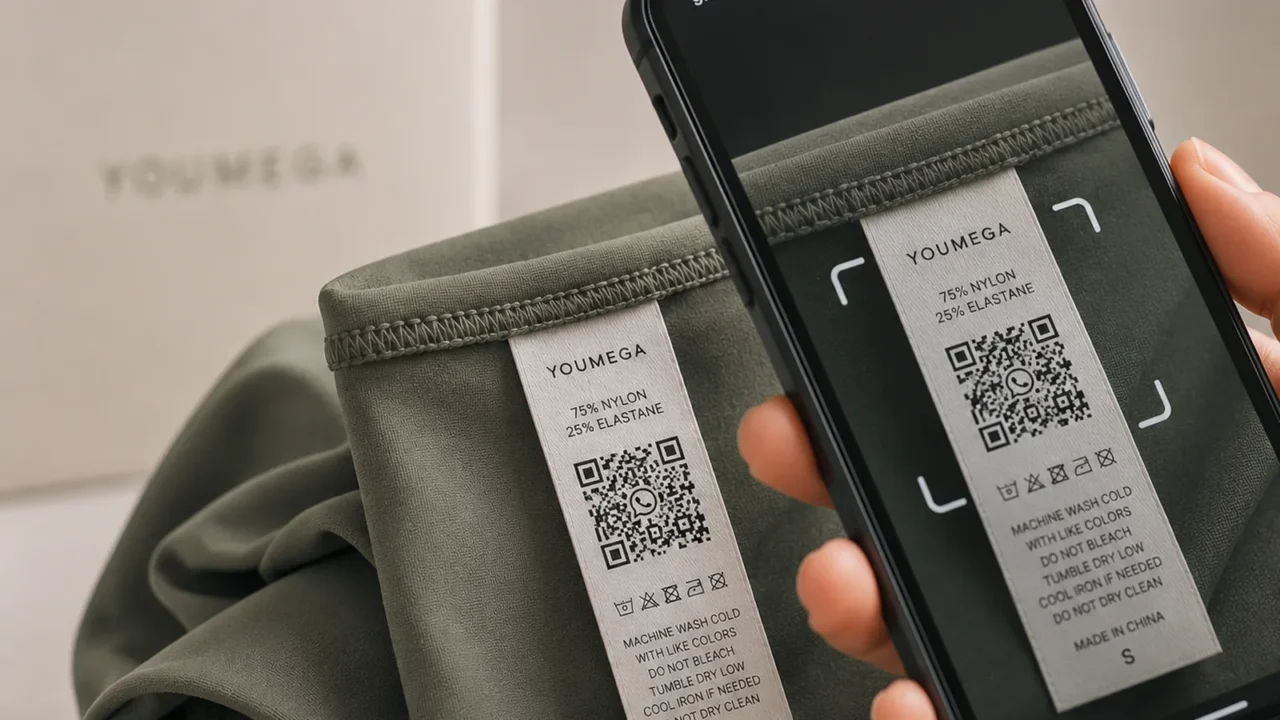
| Carrier | QR code or similar data carrier on the product | Label/hangtag engineering |
If you read our GRS scope-vs-transaction certificate article, you already know the theme: claims need documents, and documents live at specific levels of the chain. DPP is that same logic, digitized and made mandatory.
What we prepare on our side (and what stays yours)
Ours to provide, per order: full bill of materials with fiber composition per fabric and trim; the mill and dye-house documentation trail (OEKO-TEX certificates where held, GRS/RCS documentation for recycled programs, restricted-substance test reports where run); production facility identification; and label real estate engineered for a QR carrier without ruining a waistband.
Yours as the brand (usually the EU “economic operator”): registering the passport, hosting the data, and owning the product claims. We supply the verified inputs; the legal responsibility for what the passport asserts sits with whoever places the product on the EU market. Any supplier who offers to “handle your DPP entirely” is selling something they don’t control.
The screening principle, again: some of these documents are ours; many are earned upstream by mills and dye houses. We don’t relabel upstream certificates as our own — we qualify suppliers who hold them, share the documentation per project, and if your DPP data model needs something our defaults don’t cover, we source against your requirement sheet and make the suppliers prove it.
A realistic preparation checklist for a small brand
- Start a materials register today — for every style: fabric composition, supplier, certs, test reports. One spreadsheet, maintained, beats a heroic reconstruction later.
- Ask for BOM-level data in every new order (we provide it as standard — many factories treat it as a favor).
- Get recycled-content documentation right now — fabric-level scope certificates and transaction certificates, not homepage logos.
- Decide your data carrier early — a QR on the care label affects label size, placement and washing durability; it is a small engineering task, not a printing afterthought.
- Watch the delegated acts, not the headlines — dates will firm up per product group; write your processes so a date change is a calendar update, not a crisis.
FAQ
Is the DPP mandatory for activewear right now? No. The registry infrastructure is live and textiles are a priority category, but garment-level requirements phase in through delegated acts. “Prepare now, panic never” is the accurate posture.
Who is legally responsible for the passport — the factory or the brand? The economic operator placing the product on the EU market — normally the brand/importer. Factories supply the verified data inputs.
Will DPP require recycled content? DPP requires truthful data, not specific content. But if you claim recycled content, expect the passport to demand the documentation — which is exactly the scope-certificate / transaction-certificate chain we describe here.
Does this affect non-EU brands? If you sell into the EU — directly or through retailers — yes, eventually. US-only brands can watch and learn; the data hygiene pays off regardless.
What does YOUMEGA provide today, before it’s mandatory? BOM-level composition data, upstream documentation per project, and label engineering for QR carriers on request. The point is to make your future onboarding boring.
Selling into the EU and want your data house in order before the deadlines do it for you? Send your line list — we’ll tell you which documents already exist for your styles and which gaps to close. Reply within 24 hours on weekdays.