Sports Bra Chafing: What Brands Should Fix Before Bulk Production
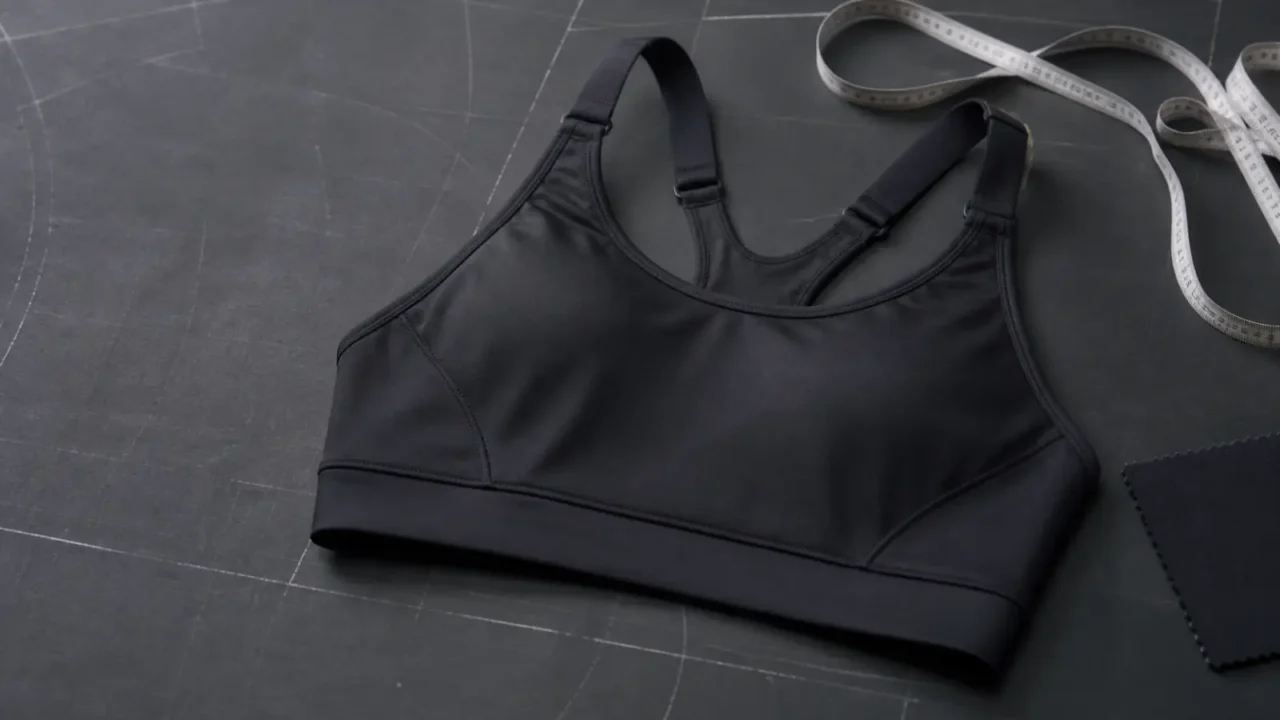
The short answer: sports-bra chafing is usually a fit-and-construction failure that a short try-on cannot expose. The first places to inspect are the underband edge, strap pressure, armhole binding, seam placement and any exposed elastic. Then test the actual sample for the activity and duration it is meant to support — not just for a few minutes in front of a mirror.
That distinction matters because a bra can look clean, feel secure at first and still fail halfway through a run. A survey of 1,285 female runners at the London Marathon found that 75% reported bra-fit issues; chafing and shoulder straps digging in were the most common. For a brand, this is not a niche comfort complaint. It is a product-development signal.
Where sports-bra chafing actually starts
Friction needs three things: contact pressure, movement and time. Sweat can increase the problem by changing how skin and fabric surfaces interact. The visible red mark is therefore the end of the chain, not the specification you should start with.
| Failure zone | What the wearer feels | Likely construction cause | What to inspect on the sample |
|---|---|---|---|
| Underband edge | Burning or rubbing below the bust | Band rolls, elastic edge is exposed, seam allowance sits against skin, or circumference is wrong | Edge finish, elastic recovery, seam orientation and pressure after movement |
| Shoulder straps | Straps dig in or rub near the neck | Strap is too narrow for the support load, tension is uneven, or hardware sits in a movement zone | Strap width, stretch, adjustment range and hardware position |
| Armhole and side seam | Abrasion beside the breast or under the arm | Binding is too firm, armhole shape is too high, or a bulky join lands in a high-motion area | Arm swing clearance, binding tension and seam bulk |
| Centre front or cup edge | Local rubbing or pressure | Cup shape and body shape do not match, liner wrinkles, or a bonded edge lifts | Cup coverage, liner lay, edge adhesion and movement |
| Back closure or racerback | Pinching, heat or concentrated pressure | Closure, hook, label or strap junction sits under repeated motion | Placement, backing, label edge and load distribution |
The fix is not always “make it looser.” A loose underband can move more and create friction; an excessively tight band can concentrate pressure and restrict breathing. The target is stable contact without edge roll, local pressure or repeated sliding.
A fitting-room check is not a running test
Most sample reviews are too short. The buyer puts the bra on, raises both arms, looks at the neckline and signs off. That can catch obvious fit errors, but it cannot reproduce the accumulated movement of a run.
Peer-reviewed breast-biomechanics research found that measurements changed over a 5 km run and recommended that support-validation protocols exceed seven minutes. Another study found that changing underband tightness affected breathing mechanics during exercise. Together, those findings point to a practical rule: do not approve a running bra from a static fitting or a two-minute jog.
Use the intended activity. A yoga bra needs shoulder mobility and low-pressure comfort. A running bra needs repeated-impact stability. A HIIT bra needs both vertical support and freedom through changes of direction. “High support” is not a visual style; it is a use case that must be tested.
The pre-bulk wear-test plan
1. Start with the target wearer, not only the sample size
Record underbust, full bust, cup relationship, shoulder position and usual bra size. If the product claims a broad size range, one fit model in the middle size is not enough. Fuller-bust wearers can place different loads on straps and bands even when the underbust is similar.
2. Test the final fabric and elastic
A prototype in substitute fabric cannot validate pressure, recovery or moisture behaviour. The wear test should use the intended shell fabric, liner, elastic, binding, pad construction and closure. If any of those change, the result is no longer the same product.
3. Map the contact zones before movement
Check the complete circumference of the underband, armholes, strap joins, cup edges, labels and hardware. Photograph the inside as well as the outside. The cleanest exterior can hide the roughest seam allowance.
4. Use the intended movement for longer than seven minutes
The minimum lesson from the published running research is that a very short test is not enough. Run, jump, cycle or move in the way the product is sold to be used. Record when discomfort begins, where it begins and whether it grows with time.
5. Recheck immediately after the session
Look for edge roll, damp liner folds, shifted pads, strap migration, pressure marks and abrasion. “No pain during the first minute” is not a pass criterion. A useful note names the exact location and the movement that triggered it.
6. Wash and repeat
Elastic, binding and pads can settle after laundering. Follow the intended care instructions, then repeat the same wear sequence. If the band grows, the pad twists or an edge lifts, the buyer should see it before bulk approval.
How to write a correction a factory can act on
“The bra chafes” is not a technical comment. A factory needs location, direction and condition.
Use a correction format like this:
- Location: wearer’s right underband, 4 cm from side seam
- Condition: begins during forward running after sustained movement
- Observed cause: exposed elastic edge turns toward skin when damp
- Requested correction: cover the edge and rebalance binding tension; preserve the approved underbust circumference
- Retest: same wearer, same size, same activity after one wash
That is much more useful than asking for a softer fabric or a larger size. It isolates the mechanism without changing the whole fit.
Fit, construction and inspection are different controls
A final-goods inspection at AQL 2.5 can catch workmanship defects, measurement variation, skipped stitches, contamination and visible damage. It cannot prove that a bra will remain comfortable over a long run. That requires product-development wear testing before bulk production.
The controls work together:
- Fit approval confirms the intended body relationship.
- Wear testing checks pressure, movement and friction over the intended activity.
- Pre-production approval locks fabric, elastic, construction and measurements.
- Bulk inspection checks whether production matches the approved standard.
For the broader development sequence, use our private-label sports bra guide. For pad behaviour, see removable, molded and bonded sports-bra cups. And when the approved sample and bulk feel different, follow the checks in sample vs bulk activewear inspection.
Primary evidence behind the test plan
- London Marathon sports-bra use and fit-issue survey, PubMed PMID 24479370
- Run distance and breast-kinematics validation protocols, PubMed PMID 25827174
- Sports-bra underband pressure and breathing mechanics, PubMed PMID 38350462
FAQ
Why does a sports bra chafe only on long runs? Pressure and repeated movement accumulate over time, while sweat changes the contact surface. A short try-on may reveal obvious tightness but miss a band edge, seam or strap that starts rubbing only after sustained motion.
Is sports-bra chafing always caused by a bra that is too small? No. Excessive pressure can contribute, but a loose band can also slide and rub. Edge finish, elastic exposure, seam bulk, strap load and cup shape all need to be checked before changing the size.
How long should a sports-bra wear test run? Published breast-biomechanics research recommends protocols longer than seven minutes because measurements change over distance. The test should also reproduce the product’s intended activity instead of relying on a static fitting.
Can AQL inspection catch a sports-bra chafing problem? Not by itself. AQL 2.5 inspection can verify workmanship and consistency against the approved sample, but comfort under repeated movement must be validated during sample development and wear testing.
What should a brand send when reporting chafing to a manufacturer? Send the exact location, wearer measurements and size, activity, point in the session when discomfort began, inside and outside photos, and a specific correction request. Retest the corrected sample under the same conditions.
Developing a sports bra for running or training? Send the target activity, size range, reference construction and support goal. YOUMEGA can map the sample checks before bulk production.