UPF 50+ Activewear — What the Number Means, and How Fabric Actually Blocks the Sun
A founder is building an outdoor line for tennis and golf. A retailer tells her “we’ll take it if it’s UPF 50+,” and a marketplace listing wants the claim substantiated. She emails three fabric suppliers. Two reply “yes, UPF 50+” within the hour — no test, no conditions. That fast yes should worry her more than a slow one.
Sun protection in a fabric isn’t a sticker or a spray added at the end. It’s decided mostly by choices made long before anyone mentions a UV finish — how tight the knit is, which fiber, which color. That’s the difference between a real UPF 50+ line and a claim you can’t defend when the report is finally requested.
What “UPF 50+” actually means
UPF stands for Ultraviolet Protection Factor: how much of the sun’s UV a fabric lets through to your skin. UPF 50 means only about 1/50 — roughly 2% — gets through, so the fabric blocks about 98%. The usual bands run 15–24 (“good”), 25–39 (“very good”) and 40–50+ (“excellent”). Above 50, everything is simply labeled “50+” — the scale stops there.
Two things worth clearing up early:
- UPF is not SPF. SPF is for sunscreen — measured on skin and weighted toward burning (UVB). UPF is measured on fabric and covers both UVA and UVB. They aren’t interchangeable numbers.
- The gap from 30 to 50 is smaller than it sounds. UPF 30 already blocks about 96.7%; UPF 50, about 98%. The jump is real but modest — worth knowing before you pay a premium chasing the top of the scale.
How a fabric actually blocks UV
Four levers do almost all the work, roughly in this order of importance:
- Knit density — the big one. UV passes through the gaps between yarns, so a tight, higher-GSM knit simply has fewer and smaller gaps for it to slip through. This is why fabric weight and GSM matter as much for sun as for opacity. The oldest test in the trade still works: hold the fabric up to a window — if you can see light through it, UV is getting through too.
- Fiber. Polyester is naturally strong at absorbing UV and nylon is good, while untreated cotton, viscose and linen are comparatively weak — which is why a thin synthetic can out-protect a thicker cotton. One useful footnote for sustainable lines: recycled polyester (rPET) is the same polymer as virgin, so it blocks UV just as well — going recycled costs you nothing in sun protection.
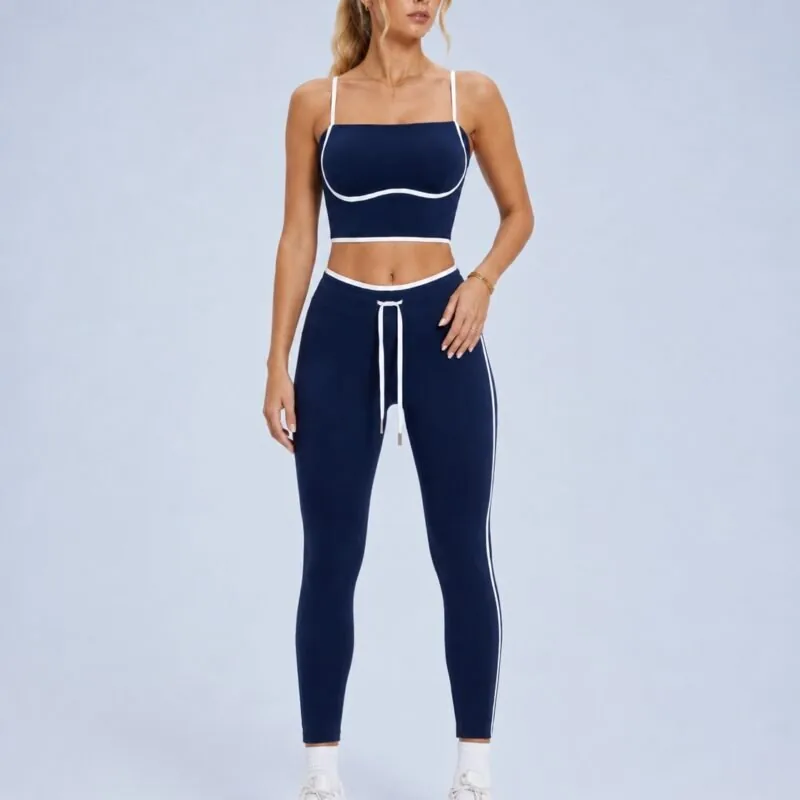
- Color. At the same construction, deeper and more saturated colors absorb more UV than pale ones — a deep navy blocks more than a pastel cut from the identical fabric. The trade-off is heat: dark absorbs warmth too.
- UV finishes / additives. Mineral UV absorbers (titanium dioxide, zinc oxide) can be built into the yarn at extrusion or applied as a topical finish. Built-in survives washing; a topical finish can fade over dozens of washes.
Color is also a lever you’re choosing for brand reasons, not just sun ones — worth knowing that the deep, saturated end of a palette protects more, so how you lock a Pantone and your UPF target can pull the same way or quietly fight each other. The honest headline: start with a tight, synthetic, reasonably deep fabric and you’re often most of the way to UPF 50+ before any special finish.
The catch for activewear: stretched and wet
Here’s what trips up sun-protective activewear specifically, and what quick “50+” replies ignore: a swatch tested flat and dry is not the knit on a body.
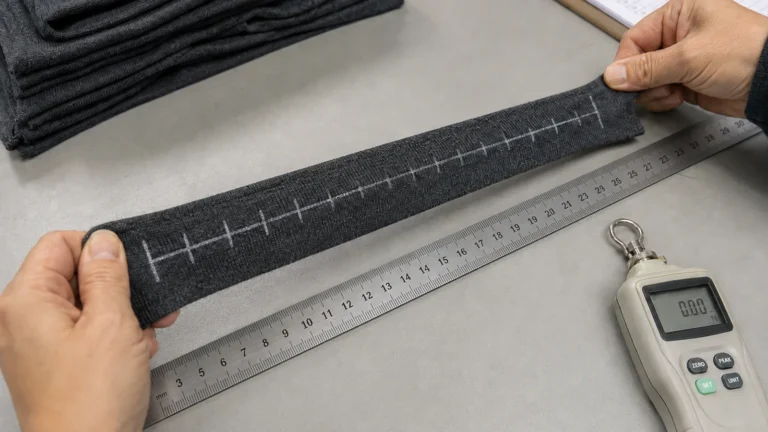
- Stretched. Pull a legging over a knee or a bra across the back and the knit opens — the gaps widen and UPF drops, sometimes steeply. A number measured relaxed overstates what the wearer actually gets.
- Wet. For swim and heavy-sweat lines, water fills the gaps and changes how UV moves through the fabric; some fabrics lose protection when wet, a few hold it. If you’re building a swim line, wet performance is the number that matters, not the dry one.
- Seamless. Fine-gauge seamless knits are often light and pale — exactly the combination where a flat-and-dry UPF flatters the fabric. It can absolutely reach 50+, but you have to test it stretched, in the color you’ll ship, not trust the roll.
How it’s tested (read this before you trust a number)
You don’t need to run a lab, but you should know the language so a supplier can’t wave a vague number at you. The two methods you’ll hear:
- AATCC 183 — the US test method that measures how much UV transmits through a fabric.
- AS/NZS 4399 — the Australia/New Zealand standard for rating and labeling UPF; widely treated as the reference, and stricter markets expect it. Newer versions account for stretched and wet states, not just as-new.
The point isn’t the code names. It’s that a credible UPF number comes with conditions — which standard, and in what state: as-new, after X washes, stretched, wet. “UPF 50+” with no conditions attached is marketing, not a spec.
Where to spend — and where not
Sun protection is an easy place to waste money, so read this table as a set of dials, not a shopping list:
| Lever | Weak protection | Strong protection |
|---|---|---|
| Knit density / GSM | loose, low-GSM, see-through | tight, opaque, higher-GSM |
| Fiber | untreated cotton, viscose | polyester (strongest UV absorber), nylon |
| Color | white, pastel | deep, saturated tones |
| On-body state | stretched thin, wet | relaxed, dry, good recovery |
| UV additive | topical finish that washes out | mineral UV built into the yarn |
(Directional, not a formula — the real UPF depends on the specific fabric and has to be tested.)
Don’t pay for a UV finish on a fabric that already tests 50+ on construction, fiber and color — you’d be buying the number twice. Don’t put “UPF 50+” on a pale, low-GSM style just to match a spec sheet; if it won’t test, it comes back on you as a return or a delisting. And don’t chase 50+ where 30–40 is plenty — a street-to-studio athleisure piece doesn’t need swim-grade sun defense.
Read a UPF claim like a factory does
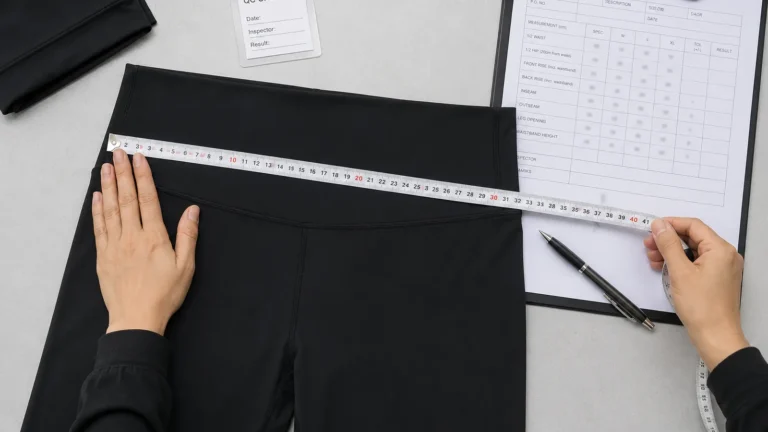
- Ask which standard the number is tested to (AATCC 183, AS/NZS 4399…), and ask to see the actual report — not a screenshot of someone else’s.
- Ask in what state it was measured: as-new, or stretched and wet? For leggings and swim, insist on the used-state number.
- Do the window test on the sample yourself — sheer to the eye is sheer to UV.
- Ask whether the protection comes from construction and fiber or from a finish — and if it’s a finish, after how many washes it’s still rated. Be wary of an instant, condition-free “yes.”
FAQ
Is UPF 50+ the highest rating? Yes, in labeling terms — anything above 50 is written “50+.” UPF 50 already blocks about 98% of UV, so there’s little practical room above it.
Does dark color really matter, or is that a myth? It matters. At the same construction, deeper and more saturated colors absorb more UV than pale ones. Construction and fiber still outrank color, but color is a real lever — and a free one.
Will the UPF wash out? If it’s a topical finish, it can fade over many washes. If it comes from tight construction, the fiber and the color — or mineral UV built into the yarn — it’s essentially permanent. Ask which kind you’re buying.
Do I need a UV finish to hit UPF 50+? Often no. A tight, synthetic, reasonably deep fabric frequently tests 50+ on its own. Test first; add a finish only if the fabric falls short.
At YOUMEGA we’d rather test a fabric than promise a number. Send us your use case — court, greens, trail or water — the colors you want and the market you sell into, and we’ll tell you honestly whether the fabric reaches your UPF target on construction alone or needs help, and arrange lab testing to the standard your market uses. We reply within 24 hours.