Moisture-Wicking, Anti-Odor, UPF 50+: Which Activewear Claims You Can Print — and the Test Behind Each
The rule is simple and older than most activewear brands: in the US, an objective product claim must be substantiated before you make it — you need the evidence first, not after the complaint. That is the Federal Trade Commission’s standing position on advertising, and it applies to a hangtag that says “moisture-wicking” exactly as it applies to a TV ad. The practical problem for brands is knowing which test backs which claim — because the map is uneven: some claims have a recognised lab method, and some popular claims have no standard behind them at all.
Here is the map as a factory sees it.
The claim-to-test map
| Claim on your garment | Recognised backing | What the test measures |
|---|---|---|
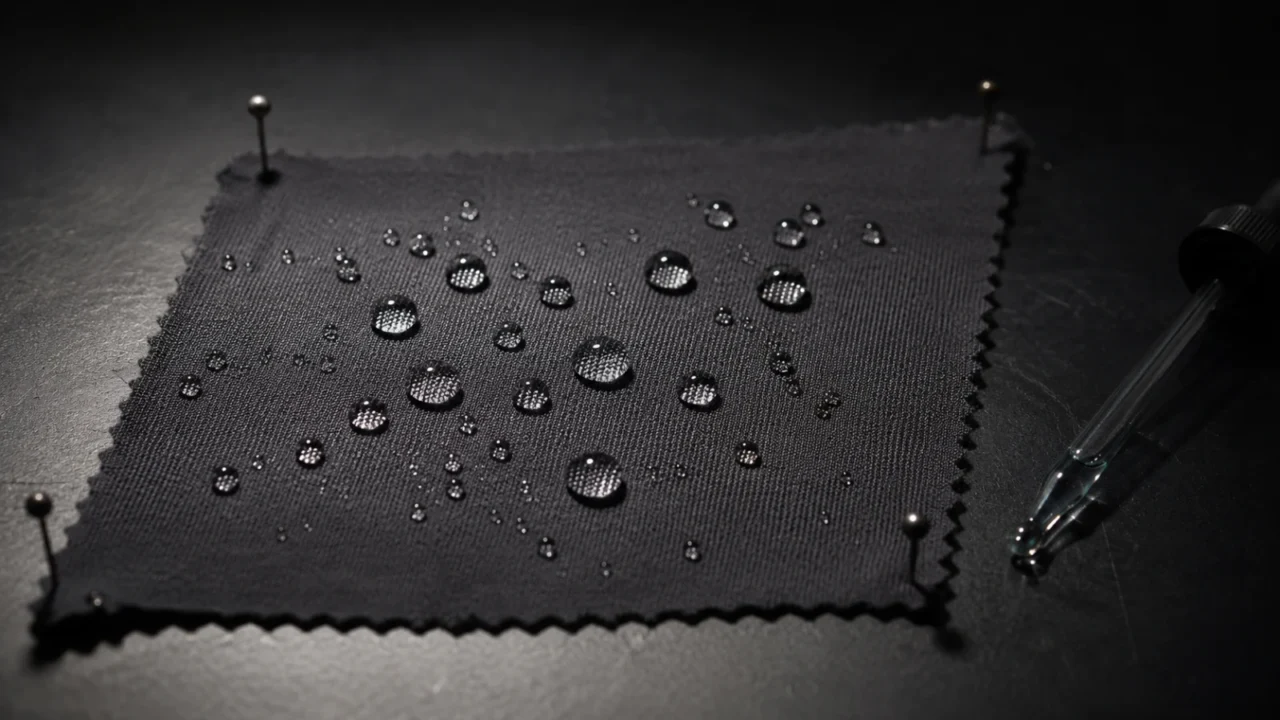
| Moisture-wicking | AATCC TM195 (liquid moisture management); vertical wicking methods | How liquid spreads and transports through the fabric plane |
| Quick-dry | AATCC drying-rate methods (e.g. TM201) | Time for a wetted fabric to return to dry weight |
| Anti-odor / antimicrobial | AATCC TM100 (quantitative antibacterial assessment) | Bacterial reduction on treated fabric versus control |
| UPF 50+ | AATCC TM183 / AS-NZS 4399-based rating and labeling | UV transmittance through the fabric, rated and labelled per standard |
| Recycled content | Chain-of-custody certification through the supply chain (e.g. GRS scope + transaction certificates held at mill/dye-house level) | That the recycled input claim survives each processing step on paper, not just in the pitch |
| “Compression-grade” (mmHg) | ⚠️ No universal apparel standard | Medical compression scales exist for medical garments; printing mmHg on activewear without garment-level lab data is exposure, not marketing |
| “Squat-proof” | ⚠️ No standard | Internal opacity-under-stretch protocols only — honest brands describe the test they ran, not a certification that doesn’t exist |
Two things follow from the table. First, for every claim in the top half, substantiation is cheap relative to the risk: one accredited-lab report per fabric, renewed when the fabric changes. Second, for the bottom rows, the honest move is precision — “tested for opacity under stretch at our QC bench” is a claim you can stand behind; “certified squat-proof” is not, because no such certificate exists.
Primary sources on claims and testing
- Federal Trade Commission — apparel advertising and labeling: substantiation requirements for claims — https://www.ftc.gov/news-events/topics/tools-consumers/apparel-labeling
- AATCC — the test-method body behind most US textile performance claims — https://www.aatcc.org/
- ARPANSA — the UPF rating and labeling scheme referenced on sun-protective clothing — https://www.arpansa.gov.au/
Where brands get burned
Claiming the finish, not the garment. A fabric mill’s brochure says the yarn is wicking; the finished garment — after dyeing, finishing, printing — was never tested. Performance finishes are process-dependent, which is exactly why moisture-wicking is a finishing decision, not a fibre birthright. Substantiation attaches to what you sell, not to what your supplier bought.
Inheriting claims through the supply chain without paper. “The factory said it’s UPF 50+” is not substantiation. A UPF-rated garment carries a lab rating on the actual fabric; a recycled-content claim survives only as an unbroken chain — which is the entire point of scope versus transaction certificates: the scope certificate belongs to the mill or dye-house that holds it, and your claim rides on transaction certificates following your actual order through that chain.
Claims that quietly expire. Change the fabric supplier, the dye-house or the finish, and last season’s test report now describes a product you no longer make. Tie every printed claim to a fabric lot and re-test on change — the same discipline as stretch and recovery benchmarks, applied to marketing.
Safety claims dressed as performance claims. “Non-toxic,” “chemical-free” and similar phrasing walks into restricted-substances territory, where the question is regulated screening — the domain covered in restricted substances and azo-dye screening — not adjectives.
What this looks like operationally
For our own programs: fabrics carry OEKO-TEX STANDARD 100 product-safety testing; performance claims on a client’s garment are backed per-fabric with the relevant AATCC method report; where a client wants a recycled line, the recycled paper trail runs at mill and dye-house level with transaction certificates following the order — we do not claim certificates that belong to the mill, and neither should the brand. And where a client asks for a claim with no standard behind it, we say so and propose the testable version instead. Custom development at 300–500 pieces per style per colour includes agreeing the claim list before bulk; stock styles from 100 sets carry the claims their fabrics already substantiate.
The cheapest time to fix a claim is before it is printed on ten thousand hangtags.
Questions to settle before printing a claim
- Which lab report, on which fabric lot, backs each claim on this hangtag?
- Was the finished garment tested, or only the greige fabric or the yarn?
- For recycled claims — do transaction certificates follow my actual order?
- Which of my claims has no recognised standard, and how is it worded?
FAQ
Do performance claims on activewear need proof? In the US, yes — the FTC requires substantiation for objective advertising claims before they are made. A hangtag or product page saying “moisture-wicking” or “UPF 50+” is an advertising claim.
What test backs a moisture-wicking claim? AATCC liquid-moisture-management and wicking methods (TM195 among them) on the actual finished fabric. A quick-dry claim uses drying-rate methods. The report should match the fabric you sell, not a supplier brochure.
Can I print mmHg compression values on leggings? Not safely without garment-level lab data — there is no universal apparel compression standard, and mmHg scales come from medical compression. Describe engineered compression honestly instead, or commission the measurement.
Can my brand claim GRS recycled content? Your claim rides on the supply chain’s paper: scope certificates are held by the mill or dye-house, and transaction certificates must follow your actual order. Without that chain, “recycled” is an unsubstantiated claim.
What about “squat-proof”? No standard exists. The defensible version describes the actual test — opacity under stretch, on the real fabric, at defined conditions — rather than implying a certification that doesn’t exist.
Building your first claim list — or inheriting one you’re not sure about? Send us the fabrics and the claims you want to print; we’ll tell you which reports exist, which tests to commission, and which wording to drop. Reply within 24 hours on weekdays.