The Trim Sheet Nobody Fills In: Elastics, Zippers, Drawcords and Hardware That Decide How a Garment Wears
Open ten tech packs and nine will specify the fabric to the gram — then write “elastic waistband” and move on. Trims are maybe five percent of a garment’s cost and the source of half its lifetime complaints: waistbands that fold over, drawcords that vanish into the casing, zippers that die in month two, hardware that leaves a rash. Here is the trim sheet conversation we wish every buyer brought to development.
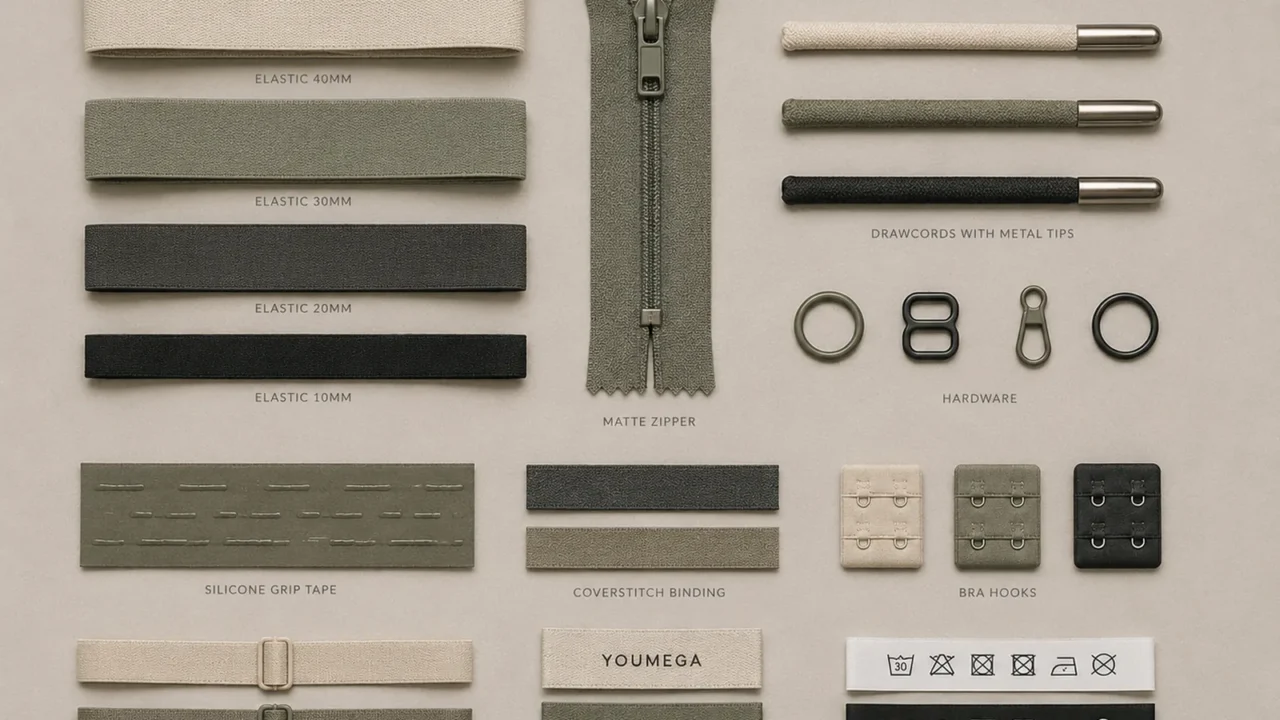
Elastic: three constructions, three different jobs
| Type | Behavior when stretched | Where it belongs |
|---|---|---|
| Knitted elastic | Keeps its width, stays soft | Direct-sew and exposed applications; most activewear waistbands |
| Braided elastic | Narrows as it stretches | Enclosed casings only — never sewn through |
| Woven elastic | Firm, keeps width, strongest hold | Heavy-duty waistbands, structure work |
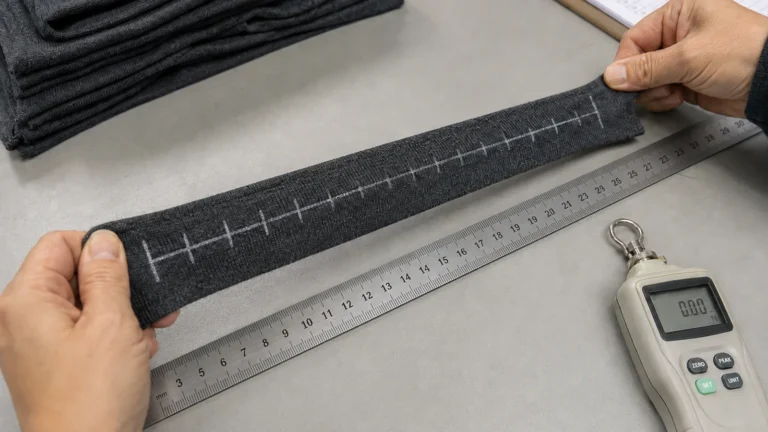
Core matters too: elastics are a stretch core (rubber or spandex) wrapped in polyester, nylon or cotton. Spandex-core costs more and survives more wash-dry cycles; rubber-core is the economy answer with an economy lifespan. If a waistband must survive what dryers do to elastane, the core is where survival is decided.
The specialist option activewear actually needs: silicone-grip elastic — silicone lines or dots applied to the inner face, holding position through friction. This is what keeps a tennis skirt’s waistband planted during a serve and stops a legging waistband migrating in a squat. We spec it constantly on skirts and skorts; most buyers discover it exists only after complaint number three.
Drawcords: the smallest part with the most failure modes
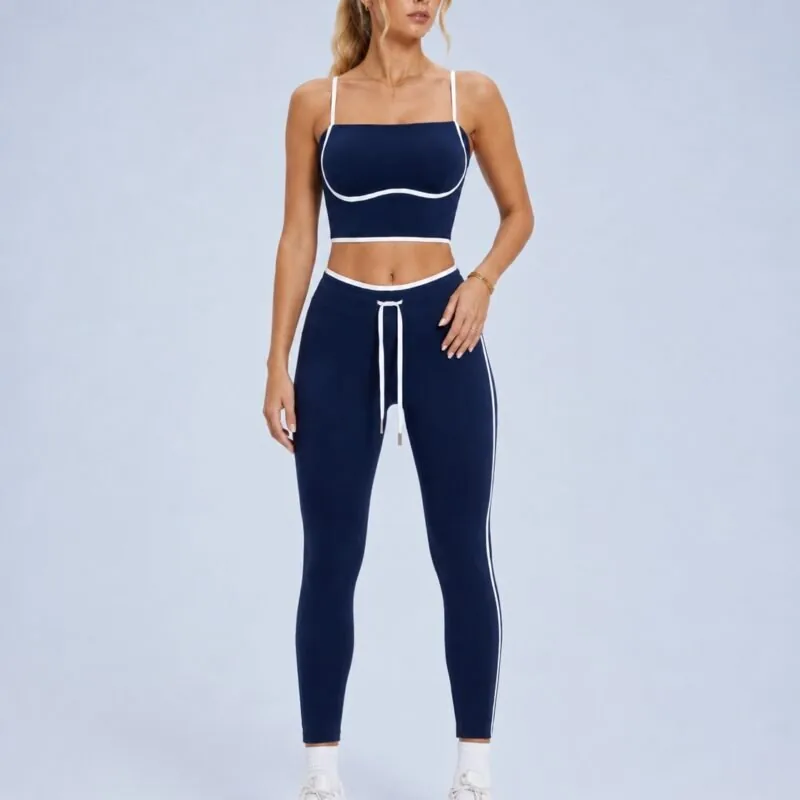
A drawcord fails three ways: it retracts into the casing (missing bartack or stitch-lock), the tips fray (cheap or absent tipping), or the cord pills against the fabric (wrong cord for the shell). Spec four things and all three deaths are prevented: cord construction and width, tip type (metal, silicone or heat-sealed), exit hardware (eyelets — see nickel note below), and the lock stitch that makes retraction impossible. Drawcord elastic — cord and stretch in one — is the clean answer for hoods and hems that need give.
Zippers: pay for the slider, not the logo
On a legging pocket or a jacket front, the zipper is the highest-cycle mechanical part on the garment. What matters in a spec: auto-lock sliders (the pull stays where you leave it — non-lock sliders on a running jacket creep open), tape that matches the shell’s stretch behavior, and a reputable maker. Branded zippers (YKK and peers) cost more per unit and near-zero per wear; the generic alternative is where “the zipper broke” reviews come from. For invisible pocket zips on leggings, tape softness against skin is the spec detail nobody writes and everybody feels.
Hardware: the nickel question
Metal eyelets, sliders, adjusters and hooks touch skin — which makes nickel release a regulated issue in the EU, not a styling preference. Our default is nickel-safe finishes on skin-contact hardware, and it’s one more item screened at the supplier level: the trim vendor proves the finish, we hold the qualification record, and your EU order doesn’t gamble on a rivet.
What to actually write in your tech pack
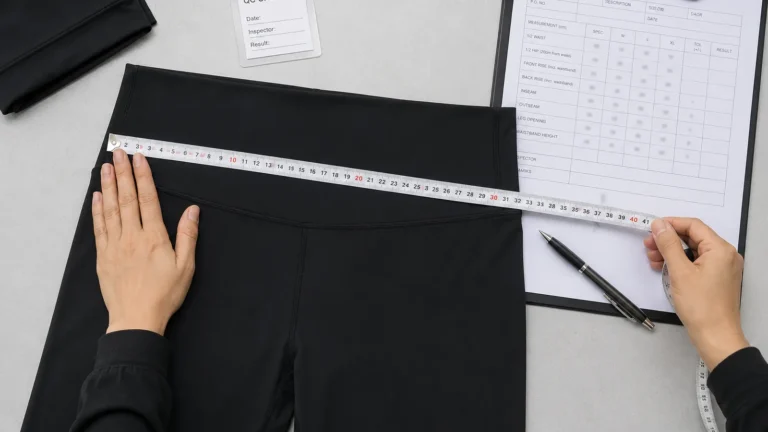
For each trim: type + construction, width, color match method (dye-to-match or standard black/white), performance requirement in one sentence (“waistband elastic: knitted, spandex-core, 38mm, retains hold after 50 home washes”), and the failure you’re preventing. Five lines per trim. If that sounds like work — it is the work that tech packs exist to do, and we fill the gaps with you during development when the sheet arrives half-empty. Every trim above is available inside our standard programs — stock styles from 100 sets, full custom from 300–500 pcs per style per color.
FAQ
Why does my waistband fold over? Usually braided elastic sewn through (it narrows and loses integrity when needle-punched) or width too narrow for the rise. Knitted or woven elastic at the correct width, or an interlined channel, fixes it.
Are branded zippers worth it on a $30 legging? On the pocket zip, yes — it’s the only mechanical part and the cheapest insurance on the BOM. We’ll quote both so you see the actual delta.
What is silicone-grip elastic? Elastic with silicone applied to the inner face in lines, dots or custom patterns; friction keeps the garment in place during movement. Standard on our tennis and golf programs.
Can trims be recycled/eco too? Increasingly: recycled-polyester tapes and cords, and solution options at the trim-supplier level — same screening logic as fabric, documentation per project.
Send us your half-finished trim sheet — genuinely. Filling in the other half before sampling is cheaper than discovering it in bulk. Reply within 24 hours on weekdays.