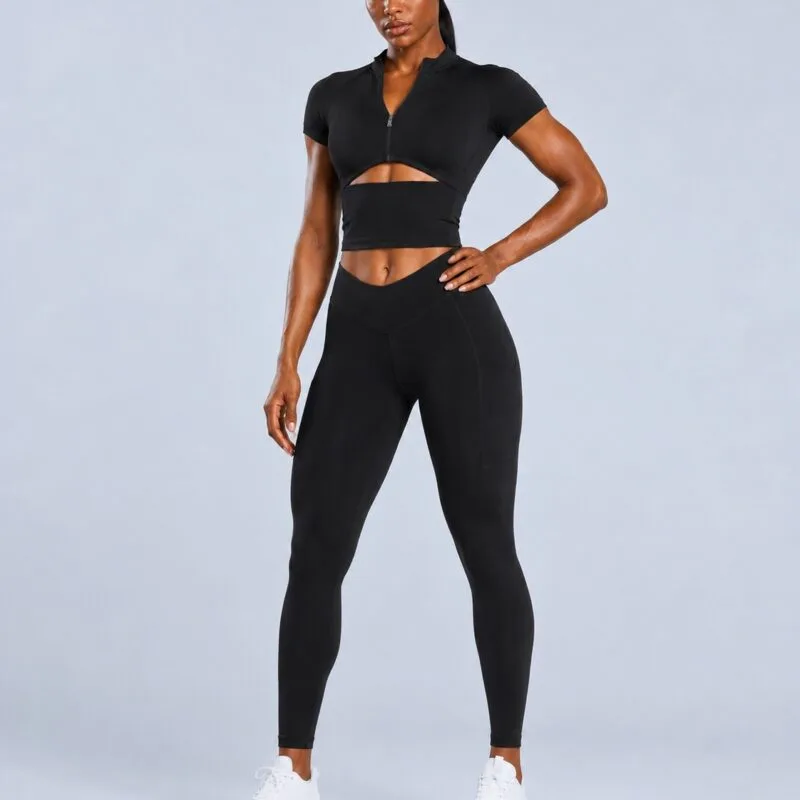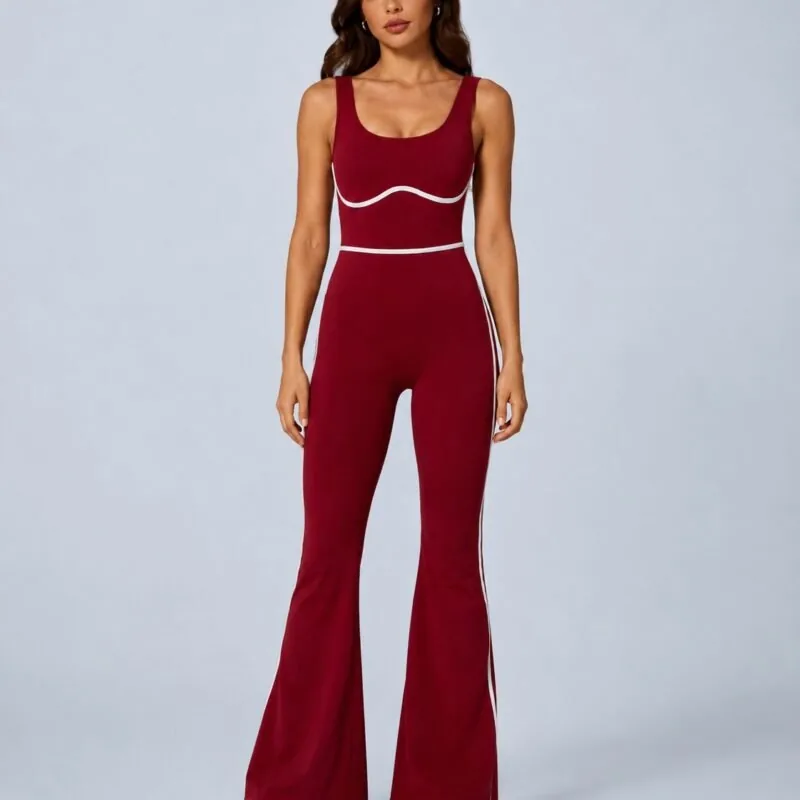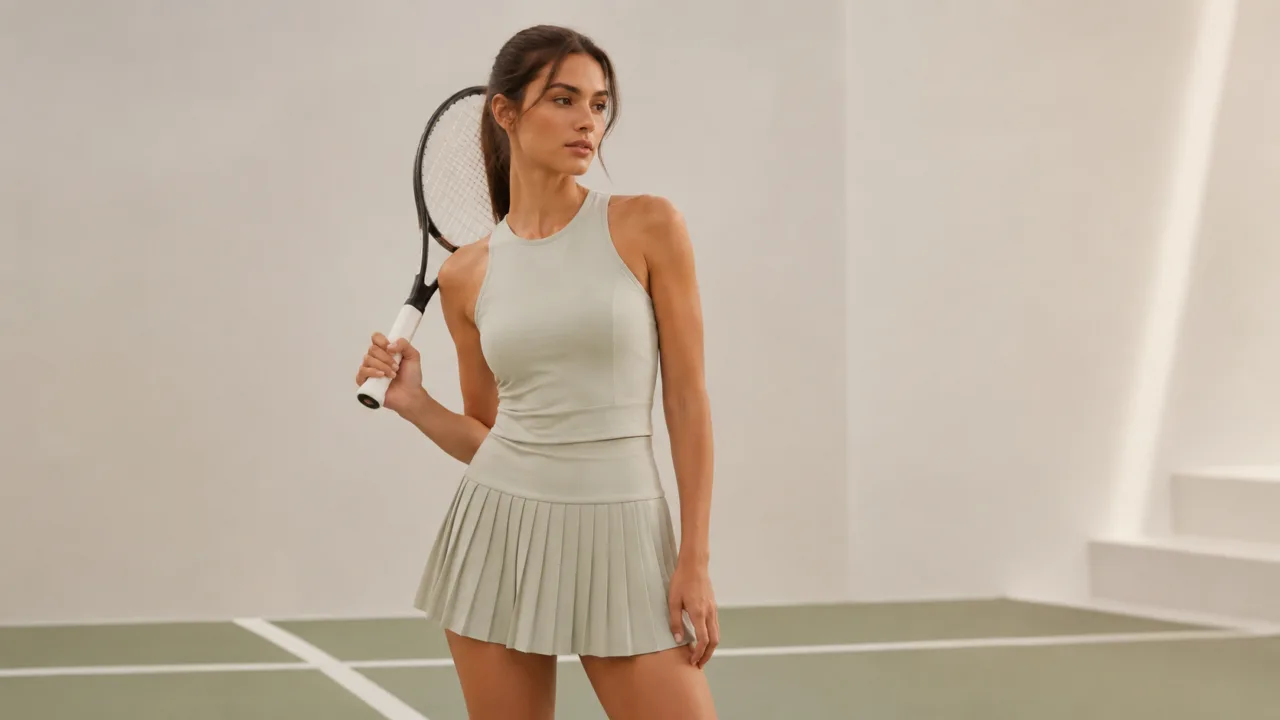
Private-Label Tennis & Golf Skirt Manufacturing: Skort Construction, Fabric & MOQ
The single decision that determines whether a private-label tennis skirt works on the first sample is the skort liner configuration — not the pleat style, not the logo placement, not the colorway. Get the liner wrong and every downstream issue — coverage failure, bunching at the hip, waistband that rolls — follows from it. Brands that hand a factory a reference photo and ask for a quote without specifying the liner come back from sampling confused about why the garment does not perform. Brands that specify the liner, the waistband relationship, and the opacity expectation before sampling arrive at a wearable prototype in round one.
This guide covers every specification decision a brand buyer needs to make before approaching a tennis skirt manufacturer or golf skirt manufacturer. It covers construction, fabric, pleat options, liner choices, matching sets, MOQ tiers, and lead times — based on what we actually build at YOUMEGA.
Decide skort or skirt before you pick fabric
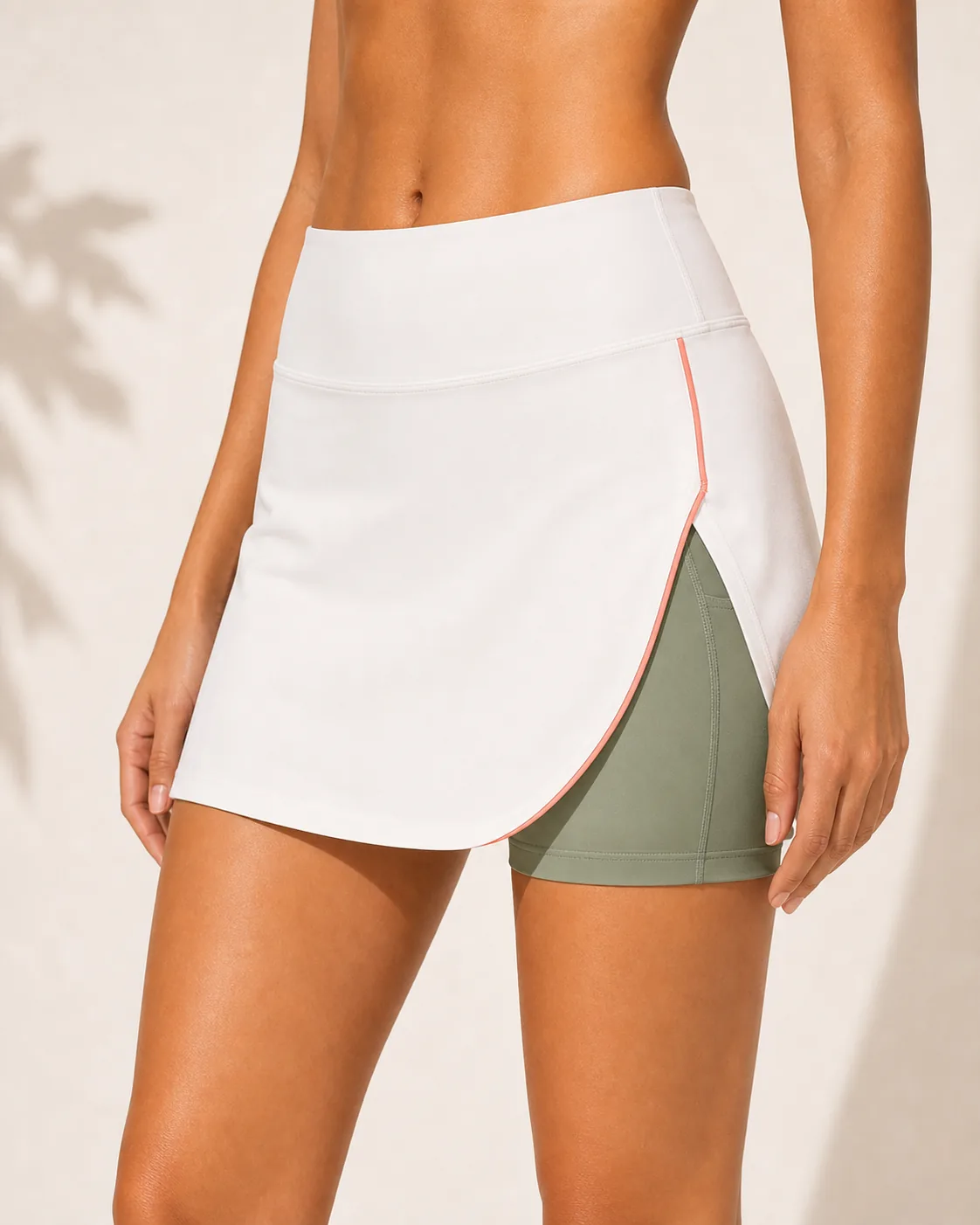
These are two different garments with different construction logic. A tennis skirt is the outer shell only. A skort adds an integrated liner — a fitted short — underneath the outer layer. Most performance-oriented buyers choose the skort format because it maintains coverage during a serve, a swing, or a low lunge without requiring a separately purchased undershort.
The distinction matters for fabric sourcing: the outer layer and the liner are almost always cut from different fabrics. The outer skirt typically uses a slightly heavier, structure-holding performance knit that keeps pleats crisp, while the liner uses a lighter-weight, ultra-smooth knit that moves against the skin without friction. Choosing your outer fabric before locking the liner spec means you may have to revisit both.
Decide first:
- Skort (integrated liner) or skirt only?
- If skort: liner length (typically 3"–4" for tennis, slightly longer for golf)
- Whether the liner incorporates a ball pocket, phone pocket, or both
- Whether the outer skirt and liner share a single waistband or attach as separate layers stitched at the waistband seam
Opacity is a construction problem, not just a fabric problem
This is the point most brands miss when they go to a generic activewear factory for a tennis skirt. Opacity comes from three overlapping decisions — fabric weight, liner placement, and seam tension — not fabric weight alone.
A lightweight outer fabric (often preferred because it keeps pleats fluid and avoids bulk) will appear less opaque on the bolt than it does in the finished garment, if the liner is positioned correctly and sewn flat against the outer layer at the waistband and leg openings. Conversely, a denser outer fabric will still fail opacity on a bend or a stretch if the liner is cut too short or the waistband allows the outer layer to ride up independently.
The practical checklist for opacity specification:
- Specify a squat test and a serve-motion test as part of your sample approval criteria
- Require that the liner and outer layer are anchored at the same waistband so they move as one unit
- Choose a four-way stretch outer fabric with adequate weight (typically 200–240 GSM for a performance knit outer layer) — not the lightest jersey available
- Check the leg opening edge finish: a raw or lightly serged edge will gap differently than a flat-locked or bonded hem
At YOUMEGA we flag this specification gap with buyers at the tech-pack stage, before the first sample is cut. A skirt that fails opacity on court is not a fabric problem you can solve at the bulk order stage.
Pleat types compared: what each option delivers
Pleats define the silhouette and the swing room. The three types that appear most frequently in tennis and golf skirts are different enough that switching after sampling usually requires a new pattern, not just a revision.
| Pleat Type | Look | Swing Room | Construction Complexity | Best For |
|---|---|---|---|---|
| Box pleat (center front & back) | Structured, preppy | High — pleat opens on movement | Moderate | Traditional tennis / country-club styles |
| Knife pleats (all-around) | Fluid, full skirt feel | High — pleats fan out freely | Higher — more pleat alignment required | Active performance tennis |
| Flat A-line / flared (no pleat) | Clean, minimalist | Moderate — depends on fabric stretch | Lower | Golf / athleisure crossover |
| Inverted box pleat (back only) | Tailored front, movement at back | Moderate | Moderate | Golf performance |
The knife-pleat construction requires the most care in production: each pleat must be aligned consistently, the pleat stitching must hold without puckering under tension, and the hem must fall evenly across all pleats after washing. Ask your factory to show you their pleat stitching standard and a flat lay of a pre-production sample before committing to knife pleats at volume.
Liner options compared
| Liner Format | Coverage | Pocket Options | Best Pairing |
|---|---|---|---|
| Integrated brief liner (minimal) | Moderate | Limited | Casual / fashion-forward tennis |
| Mid-length fitted short (3"–4") | High | Ball pocket at side seam | Performance tennis standard |
| Longer fitted short (5"–6") | Very high | Ball + phone pocket | Golf / multi-sport |
| No liner (skirt only) | Low | N/A | Fashion / non-performance |
| Detachable liner (separate piece, joins at waistband) | High | Flexible | Premium / customizable fit |
The mid-length integrated liner is the production standard for a reason: it covers the brief line, holds a ball cleanly in a side-seam pocket, and does not add enough length to restrict movement. Brands building a performance-first product should default to this configuration unless their aesthetic is deliberately fashion-driven.
The detachable liner is the most complex and most expensive option to produce. It involves additional pieces, additional finishing steps, and more variables in the waistband construction. It is worth the cost for a premium product where fit customization is a brand differentiator; it is not the right starting point for a first launch.
Skort vs skirt: the decision matrix
| Factor | Skort (integrated liner) | Skirt only |
|---|---|---|
| Coverage on court | High | Requires separate undershort |
| Garment complexity | Higher (two-layer construction) | Lower |
| MOQ impact | Same tier, more spec detail required | Simpler to sample |
| Customer experience | Self-contained, court-ready | Relies on customer layering |
| Suitable for golf | Yes, with longer liner | Yes, paired separately |
| Retail positioning | Performance-first | Fashion / lifestyle |
Waistband construction carries more load than you expect
The waistband in a tennis or golf skirt does three things simultaneously: it holds the outer layer and liner together, it provides comfortable all-day wear through movement, and it anchors the garment so the hem stays level during play. A waistband that rolls, twists, or allows the outer layer and liner to slip independently will generate returns regardless of how good the fabric is.
The two main options are a wide flat waistband (typically 3"–4" wide, made from the same outer fabric with an interior elastic channel) and a fold-over waistband (narrower, with the waistband fabric folded and sewn). Wide flat waistbands are the performance standard for tennis — they stay anchored, provide a smooth profile under a top, and accommodate a logo or branding strip cleanly. Fold-over waistbands can work for golf and lifestyle styling but tend to roll under the hip curve of active movement.
Specify in your tech pack:
- Waistband width (finished measurement)
- Interior elastic width and type (soft elastic vs firm waistband elastic)
- Whether the waistband is bonded on the interior edges or sewn
- Whether there is a drawcord or hook-and-bar closure — rare in this category but used in some golf styles
- Logo placement zone on the waistband
Fabric decisions for tennis and golf skirts
Tennis and golf skirts are cut-and-sew garments. There is no seamless equivalent for a pleated skirt with an integrated liner — the construction requires pattern pieces, seaming, and finishing steps that a circular knitting machine cannot replicate. (For more on where seamless construction is and is not appropriate, see our guide to seamless vs. cut-and-sew activewear.)
The outer layer fabric is typically a 94% polyamide / 6% elastane four-way stretch performance knit. Polyamide is preferred over polyester for the outer layer in this category because it holds a finer, smoother hand feel and tends to drape better at lighter weights — both of which matter for pleat quality. The fabric is moisture-wicking as a standard property of the knit construction.
For brands positioning around sustainability, recycled rPET and ECONYL (recycled polyamide) yarns are available on request. ECONYL in particular is gaining traction in the golf channel, where the brand narrative around sustainability aligns with the premium price point.
Fabric specifications to confirm before sampling:
- Outer layer GSM and composition
- Liner GSM and composition (usually lighter — a soft 150–180 GSM liner knit)
- Whether the outer fabric color needs custom Pantone dyeing (minimum 300-500 pcs/color — see our Pantone color-matching guide for the full process)
- Fabric certification requirements: all YOUMEGA fabrics are OEKO-TEX Standard 100 certified; production is BSCI-audited and REACH and CPSIA compliant
Sell the skirt as a set — and why production sequence matters
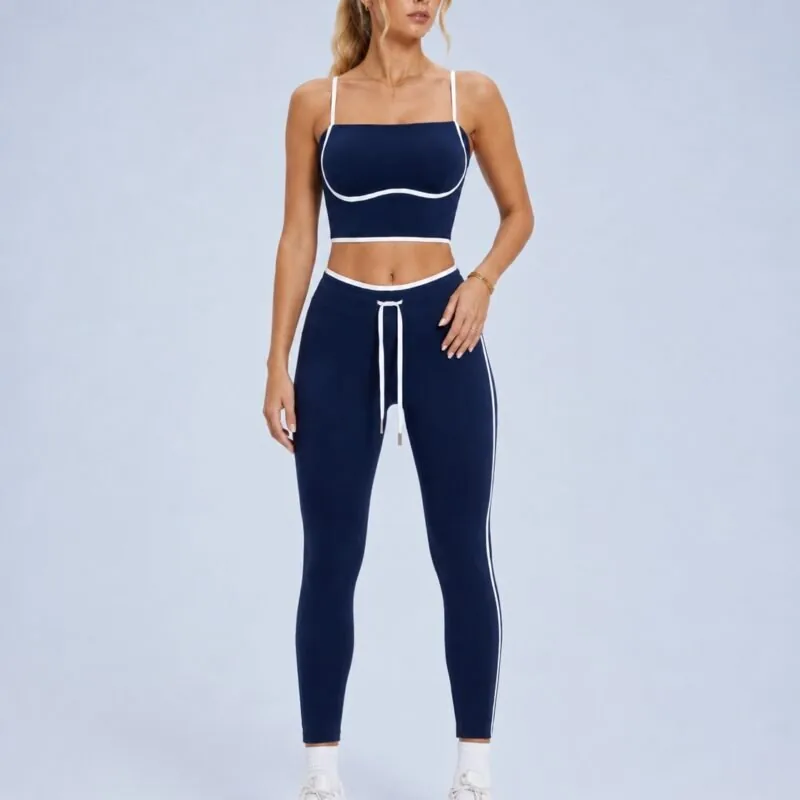
The dominant commercial format for tennis and golf skirts is a matched set: skirt or skort plus a performance top, bra top, or sleeveless tank. This is where production decisions become commercial decisions.
Color and texture consistency across a set requires that the skirt and the matching top are cut from the same fabric lot and dyed to the same Pantone standard in the same dye batch. A skirt produced in one factory and a matching top produced in a second factory will almost never achieve a true match, even when both suppliers use the same Pantone reference number. Dye batch variance, fabric construction differences, and wash behavior all diverge when the pieces are split across suppliers.
Producing the full set — skirt, top, and bra if applicable — in one factory from one fabric lot solves the color problem. It also simplifies reorders: when you reorder, you reorder the full set spec from one supplier, against one fabric standard, and the match is repeatable.
If your brand offers both seamless tops and cut-and-sew skirts within a set, we can produce both at YOUMEGA. Our seamless line runs on Santoni 17-inch to 21-inch machines at our Yiwu facility, while cut-and-sew including skirts and tennis dresses runs at our Xiamen facility. Both facilities draw from the same approved fabric sourcing workflow, which is how we maintain color consistency across construction types within a set.
Customization options for private-label tennis and golf skirts
Logo and branding placement on a tennis or golf skirt is more constrained than on a legging or sports bra — the waistband is the primary branding zone, and the liner waistband interior is used for care and size labels. Options we regularly execute:
- Heat transfer logo on the waistband front
- Silicone 3D print on the waistband or hem
- Embroidery on the waistband or pocket mouth
- Sublimation print on the full outer layer (requires a sublimation-compatible fabric base)
- Custom woven label and printed hangtag
- Custom branded packaging (poly bag, tissue wrap, box) — see our activewear packaging guide for format options
For full OEM/ODM development — your own pattern, your own fabric color, your own label system — work from a completed tech pack or use our tech-pack development service. Custom Pantone dyeing requires a 300-500 pcs/color minimum; full OEM/ODM development starts at 300–500 pcs per style per color. For the context on what these MOQ tiers mean for planning, our guide to realistic activewear MOQ covers the full framework.
YOUMEGA holds its own export license and ships FOB, CIF, EXW, and DDP to buyers in 50+ countries. QC follows AQL 2.5 on all production runs.
How long does tennis skirt development actually take?
The timeline depends on which development path you are on.
For a stock style with your logo — you choose from existing patterns, specify your colorway from available options, and add your branding — bulk production runs approximately 30–35 days from order confirmation. This is the fastest path to market and the one most appropriate for a first launch or a test order.
For full OEM development (your own pattern, existing or near-stock fabrics) — the development cycle adds a sampling phase before bulk. Expect approximately 40–50 days from confirmed tech pack to bulk shipment, accounting for one round of sampling and approvals. Two sampling rounds extend this.
For full ODM development (custom pattern, custom fabric, custom Pantone dye) — the development timeline is approximately 45–55 days from confirmed spec package, assuming no major sampling revisions. Custom Pantone dyeing adds a dye-lab approval step that cannot be skipped.
These timelines assume a clean tech pack or spec at the start. Incomplete documentation — missing measurements, undefined liner specs, unconfirmed Pantone reference — is the most consistent cause of development delays. The earlier in the process you lock the skort liner configuration and waistband spec, the more predictable the timeline becomes.
For the current and complete lead-time breakdown by service tier, see our Services page.
Frequently asked questions
Do you make tennis skorts with a built-in liner short?
Yes. All of our skort styles include an integrated liner. We manufacture the liner to your specified length, in your choice of fabric weight, with optional ball-pocket, phone-pocket, or both configurations. The liner and outer skirt are anchored at the same waistband.
What is the MOQ for a private-label tennis skirt?
Stock styles with your logo start from 100 sets per style — this is the lowest entry point and the right choice for a first launch or a test colorway. Full OEM/ODM with a custom pattern or custom fabric requires 300–500 pcs per style per color. Custom Pantone dyeing has a 300-500 pcs/color minimum.
How long does a sample take?
The sampling phase sits inside the overall development timelines described above. For a full OEM path, plan for one sampling round before bulk confirmation. Two rounds are not uncommon if the liner spec or waistband construction needs adjustment — which is why we ask buyers to lock those specifications before the first sample is cut.
Can you match a skirt to my existing top or sports bra?
Yes, if both pieces are produced at YOUMEGA in the same development run. We cut from the same fabric lot and dye to the same Pantone standard. If you have an existing piece from another supplier, we can color-match to a submitted sample or Pantone reference, but dye batch variance cannot be guaranteed to be zero when fabrics differ.
Are tennis skirts seamless or cut-and-sew?
Cut-and-sew only. A pleated skirt with an integrated liner requires pattern pieces and construction steps that seamless circular knitting cannot produce. We do manufacture seamless tops and bras that can be combined with a cut-and-sew skirt in a matched set — both categories run in the same group at YOUMEGA. For a detailed explanation of the two construction methods, see our seamless vs. cut-and-sew guide.
What fabric certifications do your tennis skirts carry?
All YOUMEGA fabrics are OEKO-TEX Standard 100 certified. Our production facility is BSCI-audited. Materials meet REACH and CPSIA requirements. These certifications apply to the full garment including the liner fabric.
Can I add my own logo, label, and packaging to a tennis skirt order?
Yes. Standard customization includes heat transfer, silicone 3D print, and embroidery logo application; custom woven and printed labels; branded hangtags; and custom poly bag or box packaging. Sublimation printing on the outer layer is also available for all-over print designs.
Do you produce tennis dresses as well as skirts?
Yes. Tennis dresses — typically a fitted bodice with attached skirt and integrated liner — are part of our Tennis & Golf category alongside separate skirts, skorts, and matching sets. Development follows the same path as a skort, with the added specification of bodice fit block and neckline detail.
Have a tennis or golf apparel question? We reply in 24 hours.
Next step for your activewear project
— YOUMEGA Editorial Team
YOUMEGA (Xiamen Mega Garment Co., Ltd.) is a private label and OEM/ODM activewear manufacturer in Xiamen, China, specializing in low-MOQ runs for emerging and growing brands.