Why Leggings Lose Their Stretch: Elastane Degradation, Explained by a Factory
Pilling is what customers see. Losing stretch is what makes them stop wearing the product. They are different failures with different causes — we covered pilling in another article; this one is about why a waistband that held on day one goes limp by month six, and what a brand can do about it at the fabric and care-label stage.
The fiber that does all the work
In a typical legging fabric — nylon or polyester knitted with 6–25% elastane — the elastane does one job: snap back. Stretch without recovery is just deformation. When customers say “my leggings got loose,” what died is almost always the elastane, not the nylon.
Elastane is a polyurethane fiber, and polyurethane has two well-known enemies: heat and chlorine.
Enemy #1: heat — and the number to remember is 60°C
Above roughly 60°C (140°F), elastane fibers begin to contract and lose their elastic structure permanently. That number matters because a household tumble dryer — even on a low setting — cycles fabric through temperatures in exactly that danger zone. One hot dryer session can cause measurable elasticity loss; repeated sessions produce the limp waistband and sagging seat that customers describe as “worn out.”
Two facts every brand should internalize:
- The damage is cumulative. Each cycle takes a little recovery the fiber never gets back.
- The damage is permanent. No wash, soak or “reshaping” trick restores dead elastane.
This is why our sample care guidance for elastane-rich garments is unambiguous: cold or 30°C wash, air dry, no tumble drying. Not because we are cautious — because the chemistry is.
Enemy #2: chlorine — the swim-adjacent problem
Chlorine attacks the polyurethane backbone directly, breaking the bonds that give the fiber its snap. A legging worn in a pool, hot tub or frequently bleach-washed load loses recovery far faster than one that never meets chlorine. If your line touches swim, studio-to-pool or spa use cases, standard elastane is the wrong spec — that is what chlorine-resistant elastanes (Lycra® Xtra Life™, CREORA® HighClo™ and equivalents) exist for. They cost more per kilogram and are worth it in exactly those use cases, and unnecessary everywhere else. We spec them for swimwear programs by default.
What the factory can control (and what it cannot)
| Stage | What good practice looks like |
|---|---|
| Yarn choice | Branded elastane for swim/chlorine exposure; standard high-grade elastane for studio wear |
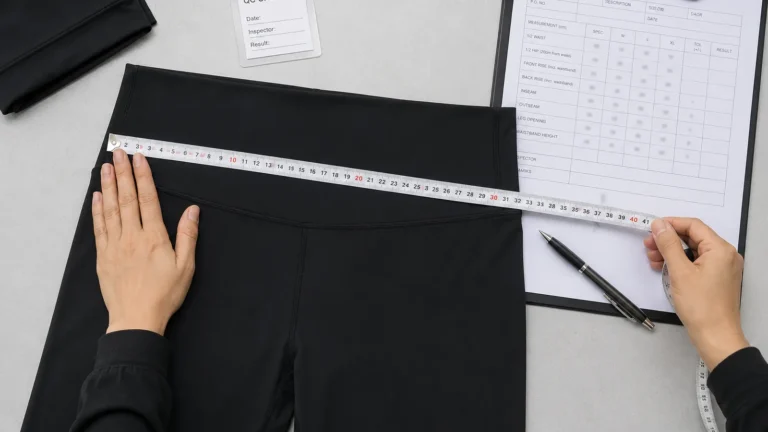
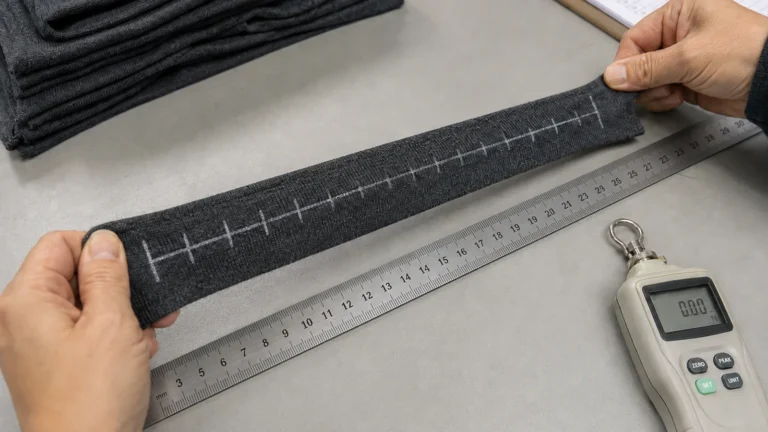
| Fabric testing | Stretch and recovery measured on the lot, not assumed from the spec sheet |
| Processing | Dye and finishing temperatures controlled — elastane can be damaged before the garment is ever worn |
| QC | Recovery re-checked at final inspection against the sealed standard (AQL 2.5) |
| Care label | Instructions that match the fiber’s chemistry, not generic boilerplate |
What no factory can control: what happens in the customer’s dryer. Which is why the care label is not a compliance formality — it is a product-lifespan document. A brand that prints “machine wash warm, tumble dry low” on a 76/24 nylon-elastane legging is quietly shortening its own product’s life and its repeat-purchase rate with it.
The takeaway for your line
- Spec the elastane to the use case, not the price list — chlorine-resistant where it matters, standard where it does not
- Ask your supplier for recovery numbers, not just stretch percentages
- Treat the care label as part of product engineering — cold wash, air dry, and your customers’ “these still fit like new” reviews are the return on that one line of text
FAQ
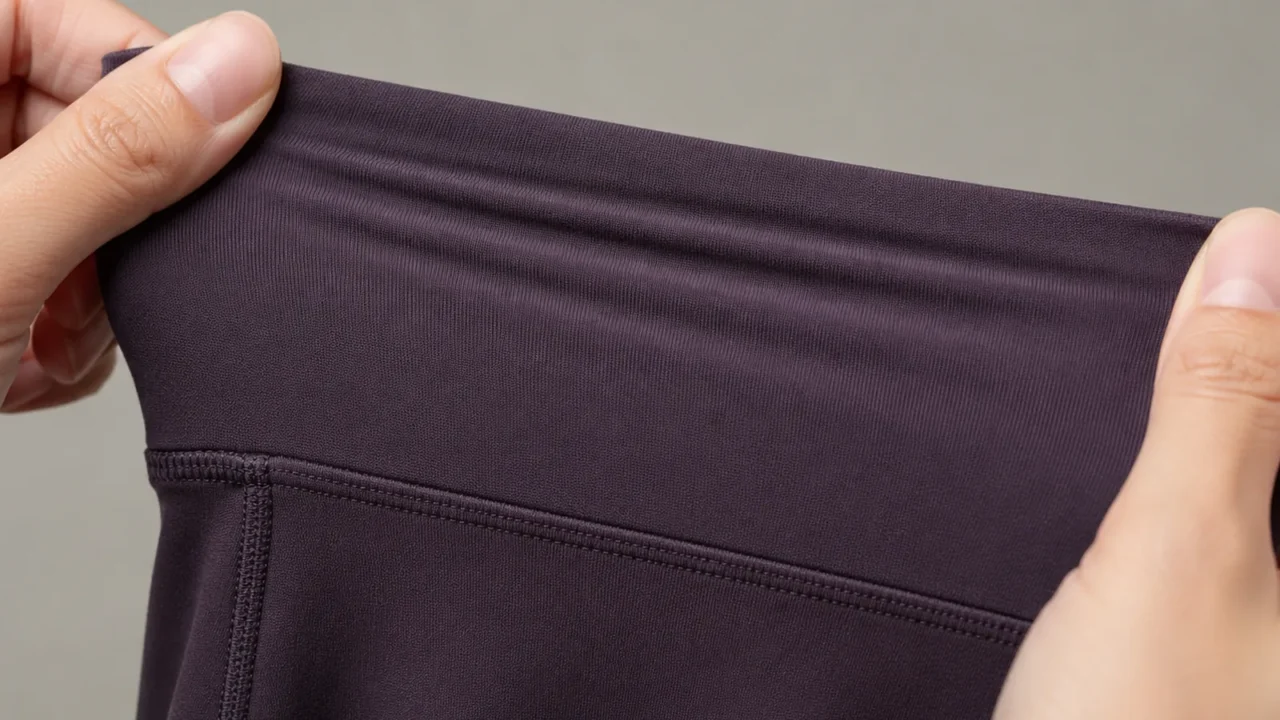
Why do leggings get loose at the waistband first? The waistband works hardest — highest tension, most heat exposure when dried, most repeated strain. Elastane there accumulates damage fastest, so recovery dies there first.
Can stretched-out leggings recover? No. Elasticity loss from heat or chlorine is permanent — the polyurethane structure is damaged, not relaxed. Prevention (fiber choice + care) is the only lever.
Is more elastane better? Not by itself. Recovery quality beats percentage. A well-knitted 10% elastane fabric with good recovery outperforms a poorly processed 25% one — and survives longer.
What should the care label say for elastane-rich activewear? Cold or 30°C wash, no bleach, air dry / do not tumble dry. For US-market label compliance details, see our care label guide.
Does YOUMEGA test recovery or just stretch? Both, on the fabric lot and again at final inspection against the sealed sample. Stretch tells you how far it goes; recovery tells you whether the customer keeps wearing it.
Building leggings that still fit at wash fifty? Tell us your use case — studio, swim-adjacent or everyday — and we will spec the elastane honestly, with a quote within 24 hours on weekdays.