What Is Spandex? Lycra and Elastane Explained
Short answer: Spandex and elastane are generic names for the same category of elastic fibre, made of at least 85% segmented polyurethane. Spandex is the US name, elastane the name used on EU labels (elastano in Spanish), and LYCRA® is a registered trademark of The LYCRA Company, from which the Spanish word licra comes. The fibre can add stretch and recovery to a fabric, but a garment's performance and care depend on its full construction and instructions.
Spandex, elastane or Lycra? One fibre, several names
The fibre is the same everywhere. The name changes by country, by language, and between generic name and brand.
| Name | What it is | Where you meet it |
|---|---|---|
| Spandex | The US generic name, set in the US textile labelling rules | US labels and American English |
| Elastane | The generic name in the ISO standard, also recognised in the US rules, and in EU law | EU labels, which may use only the names in the regulation's Annex I; US labels may use it too |
| Elastano | Elastane in Spanish, as the Spanish edition of the EU regulation spells it | Spanish-language labels |
| LYCRA® | A registered trademark of The LYCRA Company, used for its elastane fibres | Advertising and hangtags; on a US label, only next to the generic name |
| Licra | The Spanish word taken from that trademark | Everyday Spanish; in Colombia, Mexico, Nicaragua and Puerto Rico, licras are also close-fitting stretch trousers |
So licra in English is Lycra if you mean the brand, and spandex (US) or elastane (Europe) if you mean the fibre. The Real Academia Española's dictionary spells the word licra, traces it to the trademark Lycra®, and defines it as an elastic polyurethane fibre and the fabric made from it for close-fitting clothes.
Label rules keep brand and fibre apart. US rules let you use either generic name, and a fibre trademark has to sit next to the generic name in lettering of the same size — the FTC's own example is "80% Cotton 20% Lycra® Spandex". EU labels use the Annex I names, with any trademark immediately before or after the fibre composition: see US vs EU textile labels.
What type of fibre is spandex?
Spandex is a manufactured fibre, not a natural one. The EU definition calls elastane an elastofibre made of at least 85% by mass of a segmented polyurethane which, stretched to three times its original length and released, recovers rapidly and substantially. The US definition of spandex in the 2025 annual CFR edition also requires at least 85% segmented polyurethane, but that clause does not state the EU's three-times stretch-and-recovery condition.
"Segmented polyurethane" describes the fibre-forming polymer, not a promise about the recovery of a finished garment. Request fabric-level stretch and recovery results for the intended style.
Strictly, LYCRA® is a fibre brand, not a fabric type. A fabric sold with that name should contain authorized branded fibre; check its composition, knit and finish, then test the sample for the stretch and recovery you need.
How spandex is made
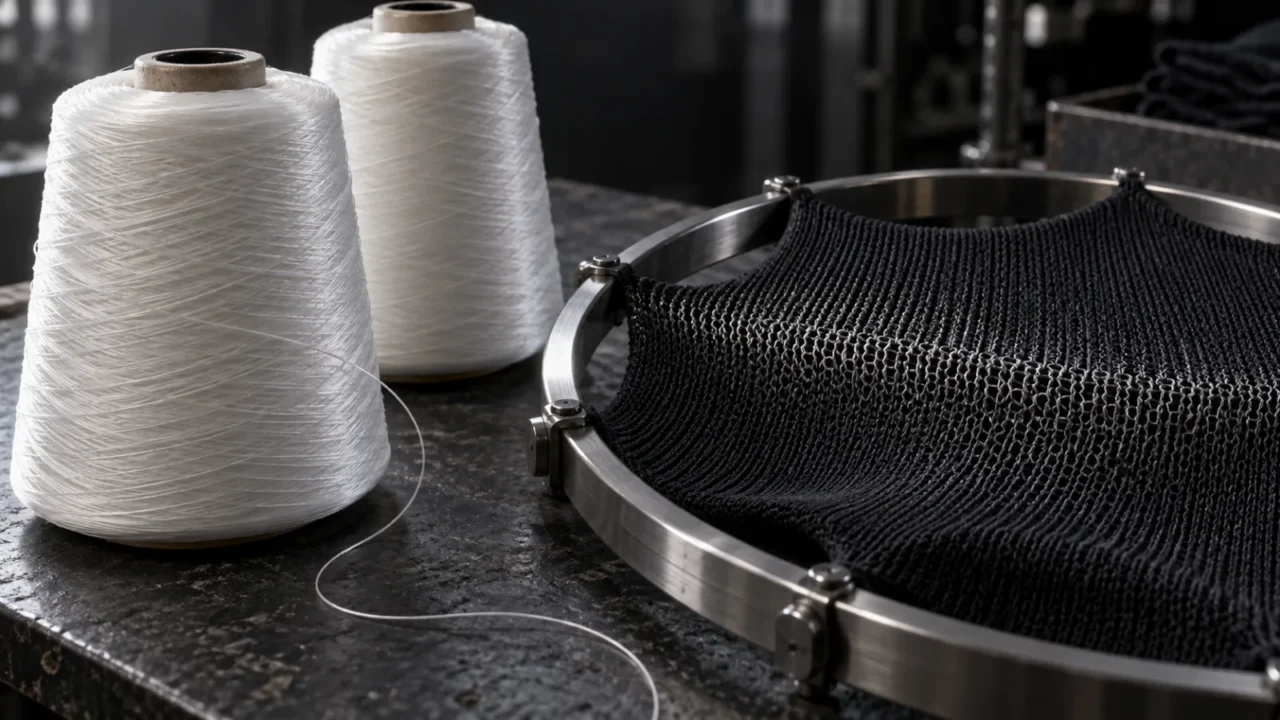
Spandex polymers are built on polyether or polyester backbones, and the fibre is normally spun from solution: the polymer is dissolved, pushed through fine spinning orifices, and the solvent driven off as the filaments form — dry spinning. What comes off the machine is a fine elastic yarn, which a mill knits or weaves together with a main yarn.
Where spandex came from
Before it existed, women's shapewear relied on rubber for its stretch, which The LYCRA Company describes as hot, heavy, constricting and uncomfortable. In 1958 a DuPont chemist, Dr Joseph Shivers, invented "Fiber K". It was released under a name generated at random by a computer: LYCRA®. In its history of that original fibre, the company describes stretching it to 500% of its original length and recovering repeatedly. That historical description is not a specification for every modern elastane blend or garment.
The trademark belongs to The LYCRA Company, which became a stand-alone subsidiary in 2019. It brands other fibres too, among them COOLMAX® and THERMOLITE®, so a brand name on a hangtag is not in itself a fibre name; and it states that its marks may be used only with genuine fibre, fabric or garments from authorised mills and manufacturers, under a trademark licence agreement.
Why elastane is blended with another fibre
Elastane can be blended with other fibres to add stretch and recovery:
- The main fibre — nylon, polyester, cotton or viscose — contributes to look and feel; knit and finish also affect drying and abrasion.
- The elastane contributes to stretch and recovery, which should be checked on the finished fabric.
In many activewear knits elastane is the smaller share of the blend by weight. A glossy swimsuit, matte yoga leggings and stretch jeans may all contain elastane, but "LYCRA®" should identify the branded fibre, not any blend. Compare drying and recovery on actual fabrics under the same test conditions; a fibre name alone does not rank finished garments.
What elastane is used for
Elastane may contribute stretch in many garments, but the result depends on the blend, knit, finish, pattern and tests:
| Garment | Possible contribution; verify on the actual fabric and garment |
|---|---|
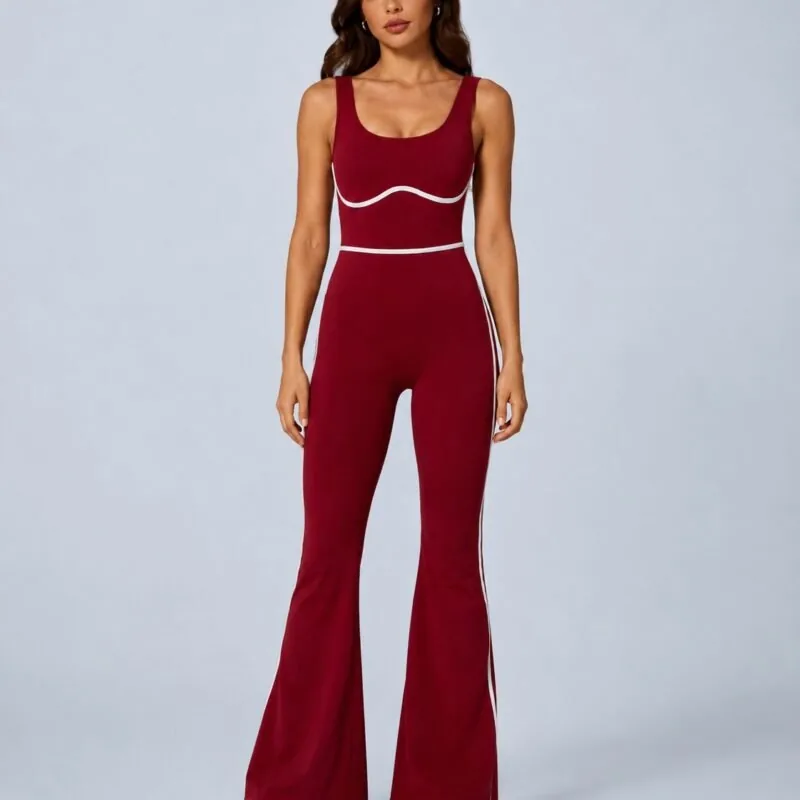
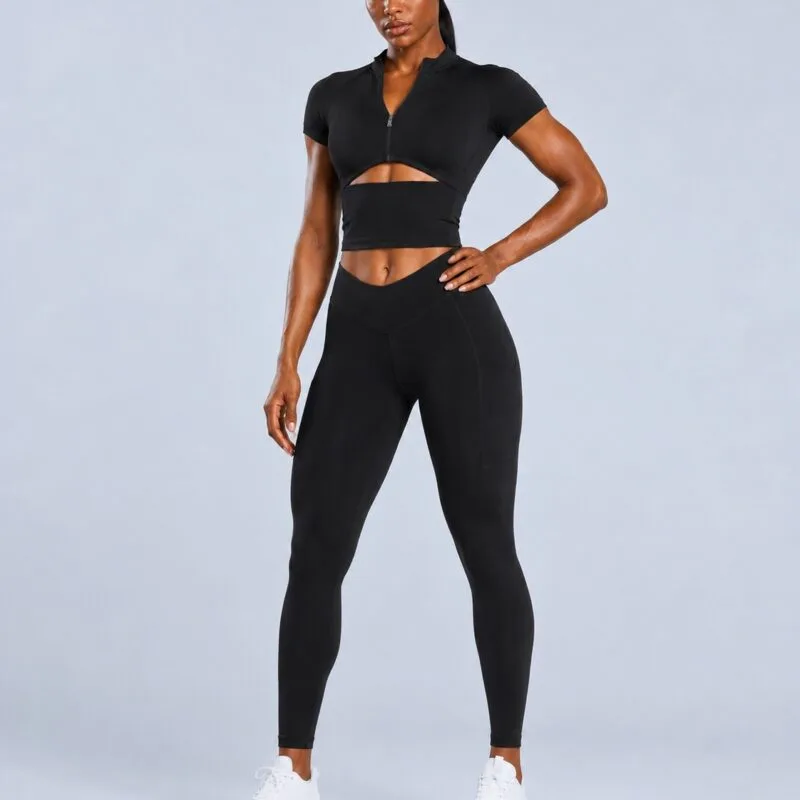
| Leggings, sports bras and other activewear | Stretch for movement; check fit and any compression claim on a sample |
| Swimwear | Stretch for a close cut; test wet fit and suitability for pool use separately |
| Underwear and bras | Stretch in fabric or bands; check fit and recovery after wear and care |
| Tights and socks | Stretch for a close cut; assess bagging in a wear test |
| Jeans and trousers | Give in a fitted cut; check recovery after movement |
| Fitted dresses and tops | Stretch in a close-fitting pattern; check comfort in use |
| Shapewear | Potential hold; verify the finished garment's fit and support |
Lycra vs elastane vs spandex: which is better?
They are not rivals. Elastane and spandex are two names for one fibre, so that choice is geography, not quality, and "Lycra or elastane" compares a brand with its own category.
What differs is the specific fibre and the fabric around it: the type and fineness of the elastane, how much of it there is, and how the fabric is knitted, dyed and finished. Two fabrics with the same label can recover quite differently, so judge them on stretch-and-recovery results. Here is how we test stretch and recovery at the QC bench.
Heat and chlorine: the two weak points
Spandex is why close-fitting clothes move with you and keep their shape. Two things wear it out.
- Heat. A patent application for stretch fabrics states the problem plainly: spandex is not stable at the high heat-setting temperatures used with some companion fibres — around 200–210 °C for polyester — and spandex fabrics tend to lose their integrity, shape and elastic properties at elevated service temperatures such as those encountered in washing, drying and ironing.
- Chlorine. Pool water is chlorinated to an active chlorine content usually between 0.5 and 3 ppm or higher, and exposure at that level can degrade the physical properties of polyurethane spandex, such as its toughness. Chlorine-resistant spandex was developed for swimwear for exactly this reason.
Industrial heat-setting conditions do not establish a household care threshold for every garment. Follow the specific care label and fabric supplier's instructions; check the material supplier's chlorine-resistance information for pool use. For a garment that loses recovery, review its material and wear-test results rather than assuming a single cause or timeline. Why leggings lose their stretch discusses possible causes.
What we ask when a brief says "Lycra"
When a development brief says "Lycra", ask whether the buyer requires branded LYCRA® fibre or generic elastane. Printing LYCRA® on a hangtag requires the branded material and compliant trademark use. For either option, specify and test the fabric's stretch and recovery.
For a fabric with elastane, agree which recovery and wash-shrinkage checks the order requires, who will carry them out and what results are acceptable. Methods depend on the material and finishing route. We offer nylon–spandex, polyester–spandex and recycled rPET and ECONYL options; confirm fabric weight and feasible sizes for each style. Cut-and-sew styles are made at our Xiamen headquarters and seamless styles in Yiwu; see our two facilities.
FAQ
What is licra in English? Lycra, usually written LYCRA®, if you mean the brand. As a fibre name it is spandex in the United States and elastane in Europe and in the ISO standard, and US rules accept either.
Are elastane and spandex the same? Yes. They are two generic names for one fibre: a manufactured fibre made of at least 85% segmented polyurethane that stretches and snaps back. Spandex is the US name; elastane is the international name and the one used on EU labels. LYCRA® is one company's brand of the same fibre.
Which is better, Lycra or elastane? Neither, as such: LYCRA® is one company's brand of elastane, so the question compares a brand with its own category. Performance depends on the specific fibre, how much of it the fabric contains, and how that fabric is knitted, dyed and finished, so judge a fabric by its stretch-and-recovery results rather than by the name.
Is it spelled licra or lycra? In Spanish, the Real Academia Española's dictionary gives licra, from the trademark Lycra®, and accepts lycra as a synonym. In English, Lycra is capitalised as a brand name. On labels the fibre appears as spandex or elastane in the US, elastane in the EU, and elastano on Spanish-language EU labels.
What is elastane used for? Anything that must stretch over the body and hold its shape: leggings, sports bras, swimwear, underwear, tights and socks, stretch jeans and trousers, fitted dresses and shapewear. It is the smaller part of the blend by weight, working with a main fibre such as nylon, polyester, cotton or viscose.
Is spandex natural or synthetic? Synthetic. It is a manufactured fibre made of segmented polyurethane: long, flexible soft blocks joined by short, rigid ones that tie the chains together. It is made from chemicals and spun from solution into fine filaments, so, unlike cotton or wool, it does not come from a plant or an animal.
Is spandex a good fabric? For stretch, yes: it is what lets close-fitting clothes move with you and keep their shape. Heat and chlorine exposure can weaken some elastane formulations; follow the garment care label. Strictly speaking it is a fibre rather than a fabric.
Choosing the fabric for a first stretch style? Send us the garment and how it will be worn, and we will tell you which blend we would pick, and why.
Sources
- Regulation (EU) No 1007/2011 on textile fibre names, Annex I (legislation.gov.uk)
- US Code of Federal Regulations, 16 CFR 303.7, generic names for manufactured fibres (2025 annual edition, GovInfo)
- US Federal Trade Commission, Threading Your Way Through the Labeling Requirements Under the Textile and Wool Acts
- Real Academia Española, Diccionario de la lengua española, "licra"
- The LYCRA Company, history of LYCRA® fiber
- The LYCRA Company, trademarks and patents
- The LYCRA Company, first anniversary as a stand-alone subsidiary (2020)
- US Patent 4,340,527, chlorine-resistant spandex fibers
- Patent application EP 1 945 842 A2, spandex and heat