Updated November 2026. Written from YOUMEGA’s production floor.
The types of yoga clothes in one answer
There are 11 main types of yoga clothes, and the clearest way to group them is by where they sit on the body: tops (bras, tanks, fitted and loose tops), bottoms (leggings, flare and wide-leg pants, shorts), one-pieces (unitards and jumpsuits), and the layers and matching sets that go with them. A first collection rarely needs more than four or five of them. What holds the range together is fabric. Soft, four-way stretch knits that stay opaque in a forward fold and don’t rub in floor poses.
Each type below gets what it is, who wears it, how it’s built and what to write on the tech pack. If you haven’t yet decided what your yoga wear has to do well, read what matters most in yoga wear first.
| Type | What it is | Best for | What to specify to a factory |
|---|---|---|---|
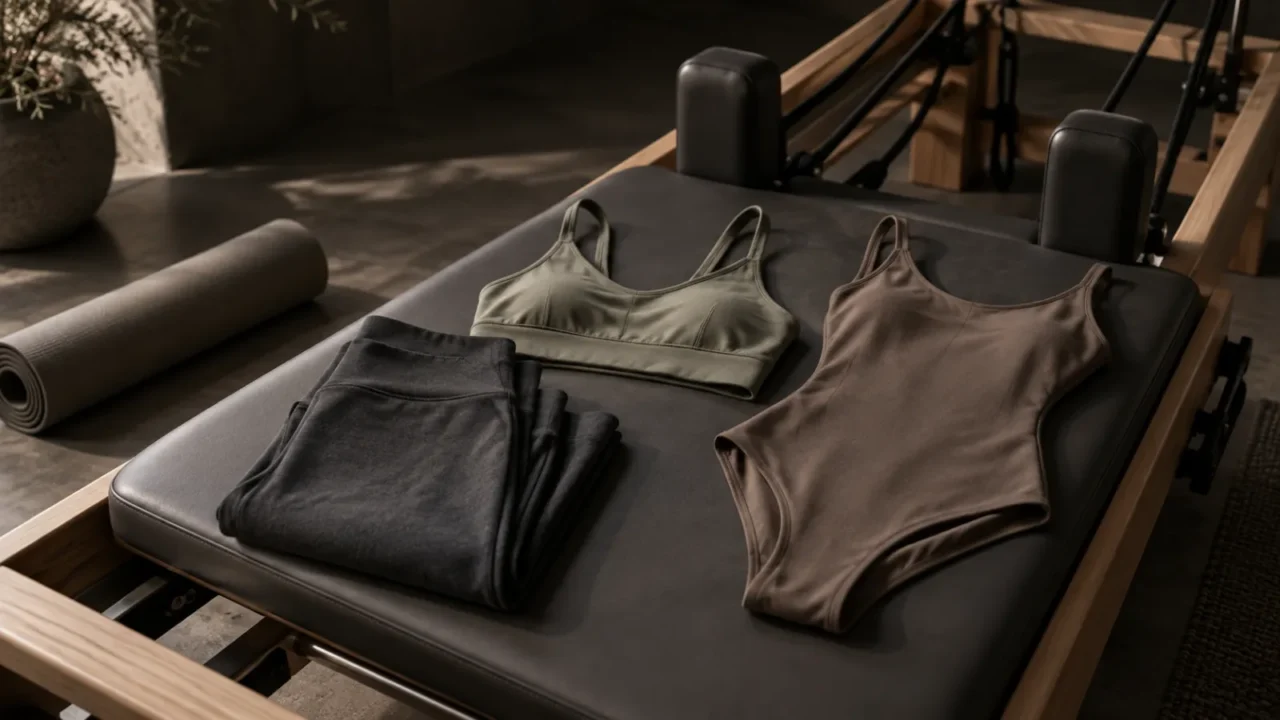
| Light-support bra and bralette | Soft, low-impact bra, often double-layered | Hatha, yin, stretching, all-day wear | Lining, cup pockets or none, underband elastic, strap style |
| Longline bra | Bra that extends down the ribcage, worn as a top | Vinyasa, studio-to-street | Finished length below the underbust, band construction, gripper |
| Tank and cami with shelf bra | Sleeveless top with a built-in inner bra layer | Students who want one layer instead of two | Shelf length and elastic, cup pockets, back style, body length |
| Fitted long-sleeve top | Second-skin long sleeve, cropped or hip length | Cool studios, the walk to class | Length, sleeve type, thumbholes, seam type |
| Loose tee and cover-up | Relaxed tee or drapey top worn over a bra | Warm-up, after class, gentle classes | Fabric and weight, hem finish, length, side slits |
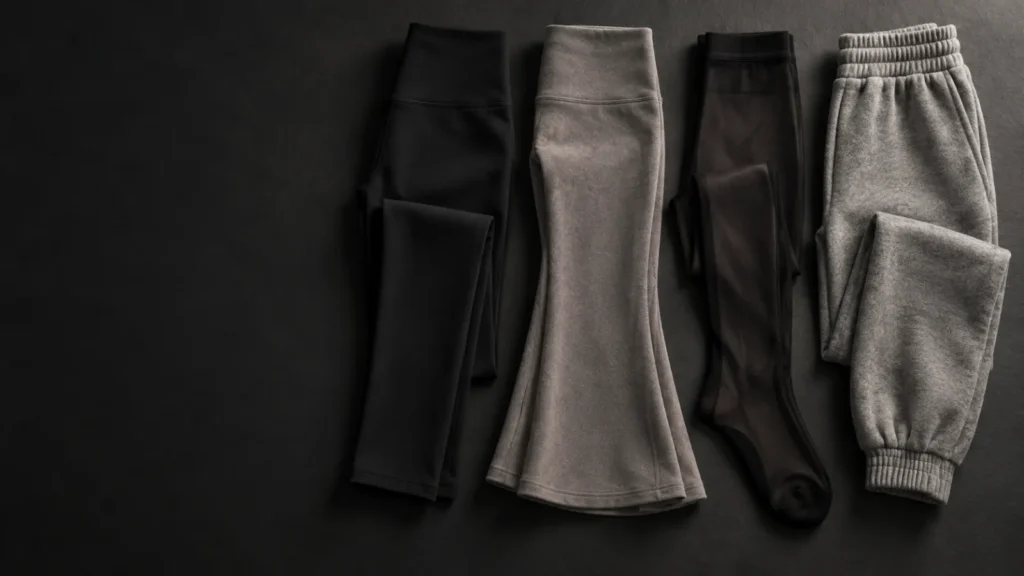
| Yoga leggings | High-rise fitted leggings, 7/8 or full length | Every style of yoga | Fabric weight in g/m², composition, inseam, waistband, gusset |
| Flare and wide-leg pants | Fitted through the hip, wider from the knee or hip | Slow flow, pilates, studio-to-street | Knee and hem width, inseam options, hem finish |
| Yoga shorts | Fitted bike shorts or short shorts | Hot yoga, summer classes | Inseam, leg hem finish, waistband height |
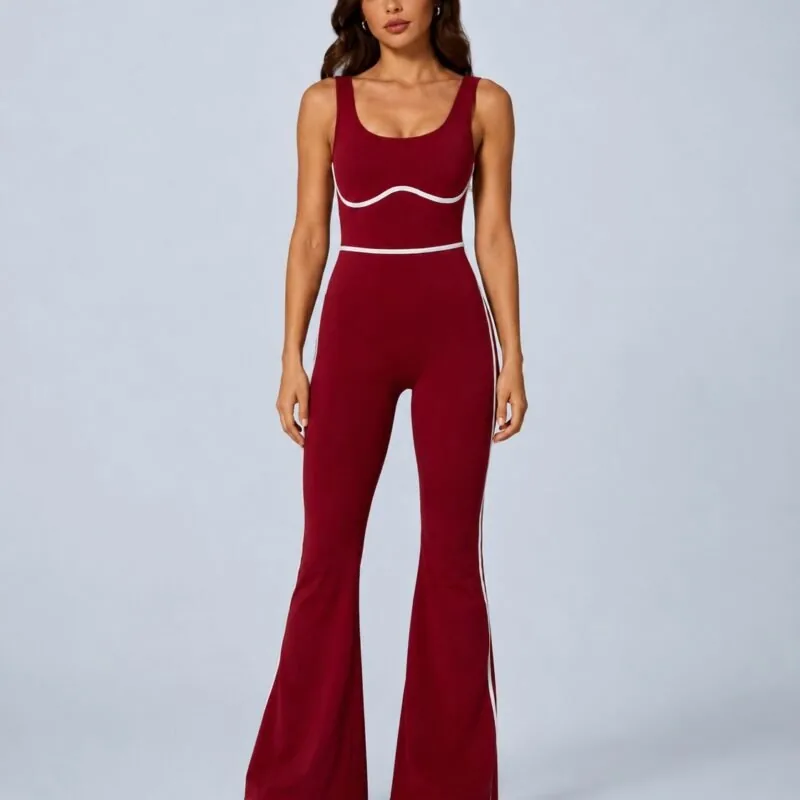
| Unitard and jumpsuit | One-piece, fitted or relaxed leg | Pilates, barre, statement pieces | Torso length, back neckline, built-in bra |
| Wraps, zip jackets and hoodies | Layers worn before and after class | Cold studios, commuting | Zip type, fabric, thumbholes, colour match to the set |
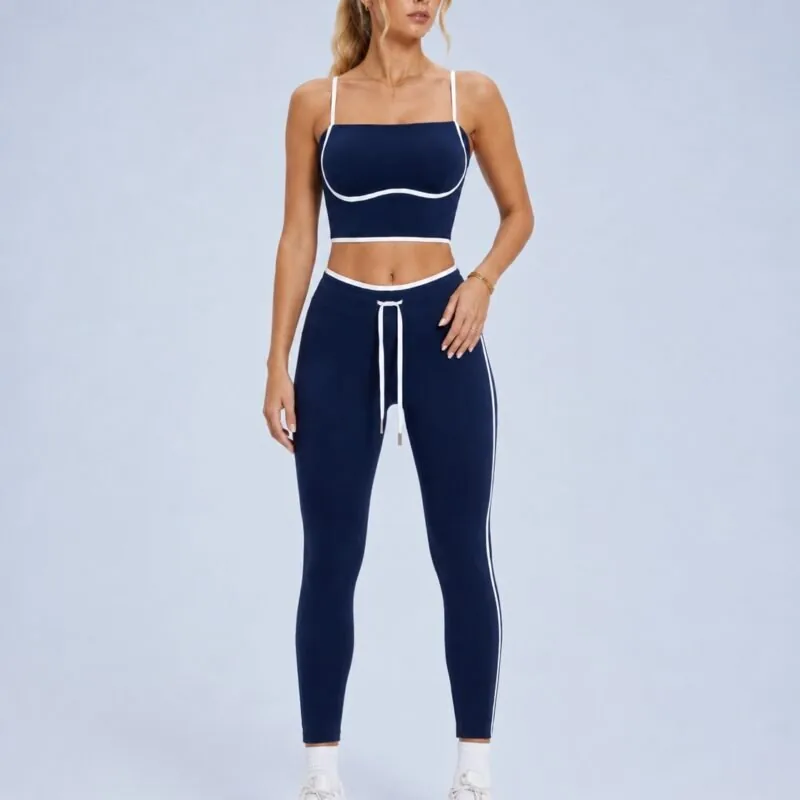
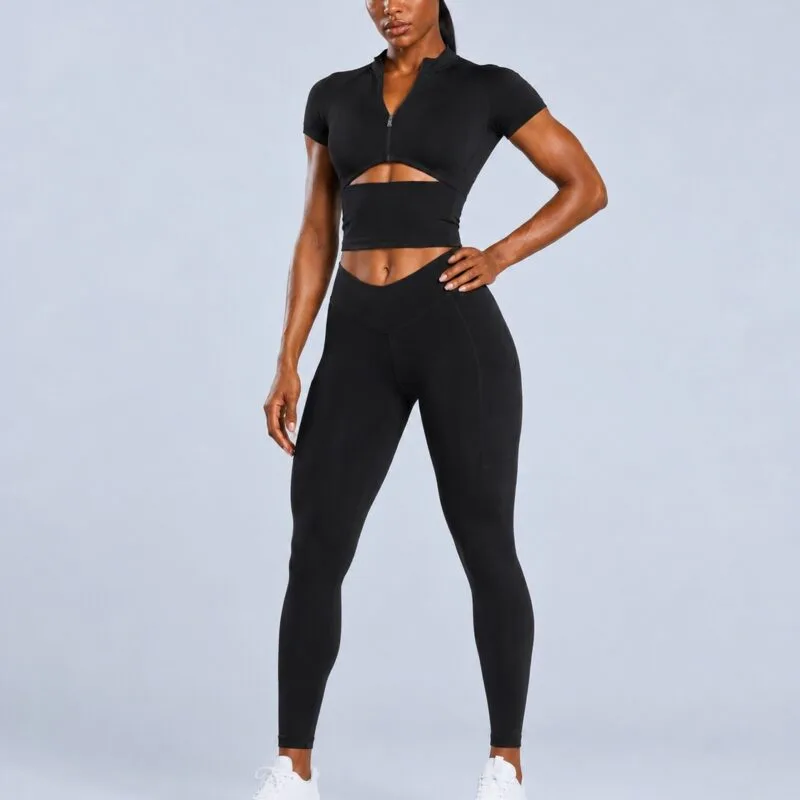
| Matching sets | Top and bottom in one fabric and colour | A first collection, gifting, social content | Pieces in the set, same dye lot, seamless or cut-and-sew |
Tops
1. Light-support yoga bra and bralette
This is the default yoga top. Most are two layers of the same soft fabric, or an outer layer with a mesh lining, and many have a pocket for removable foam pads. The underband is either a folded band of fabric with no elastic, which feels softest, or a band with soft elastic inside for a little more hold. Good for hatha, yin and all-day wear. Not for running.
Trouble usually starts at the pad pocket. Cut the opening too wide and the pads shift; use a thin outer fabric and they show through. Our article on removable, moulded and bonded sports bra cups goes through the options.
On the tech pack, name the lining fabric, the cup type (removable pads, sewn-in or none), how the underband is built and what elastic goes in it, and the strap width.
2. Longline bra
The body carries on below the underbust and stops partway down the ribcage, so it reads as a cropped top rather than underwear. People wear it to class and then to lunch. The extra length adds stability without firm elastic. It also brings this style’s main fault: the hem rolls up in twists and forward folds.
There are three fixes. A firmer elastic inside the hem, a silicone gripper tape on the inside, or a heavier fabric that holds its own shape. Each one changes the feel, so wear-test the sample in an actual class. A fit model standing still won’t show you the roll.
Write down the finished length below the underbust, the hem construction (folded band, elastic inside, or bonded edge) and whether you want gripper tape.
3. Tank and cami with shelf bra
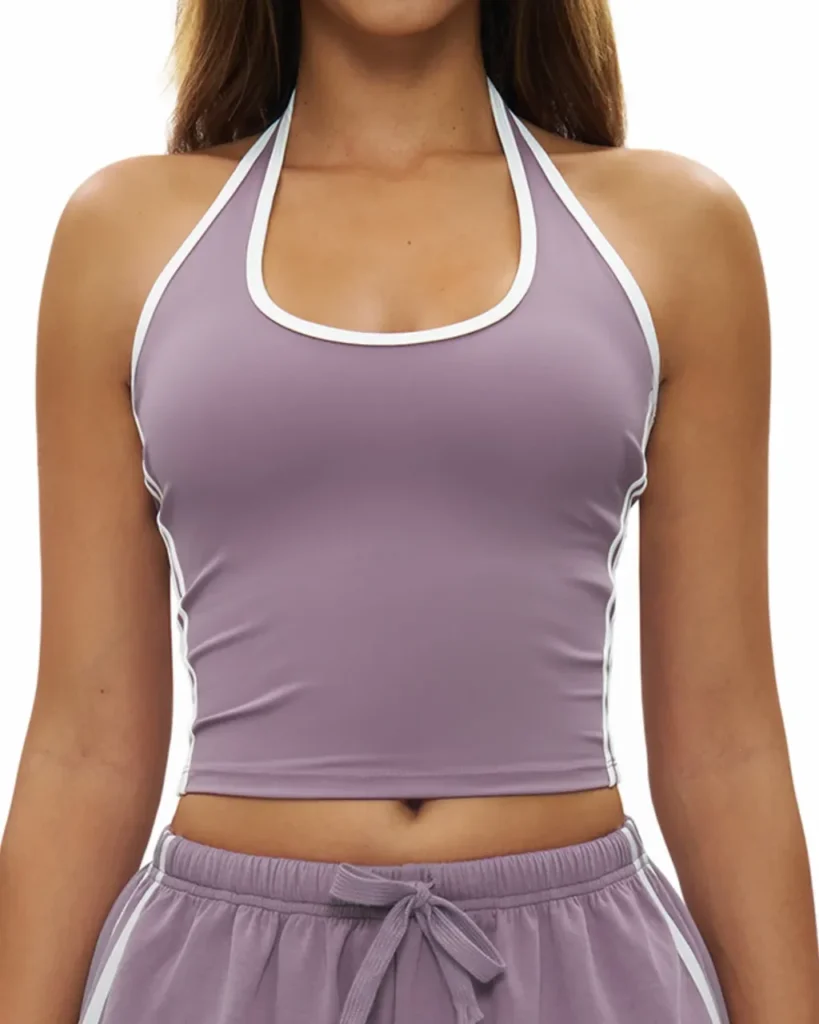
A sleeveless top with a second, inner layer called the shelf, which works as a light bra. The shelf is sewn into the neckline and armholes and has an elastic band along its lower edge. It’s for students who’d rather wear one layer than two, and it’s a common second style for a brand after leggings.
Ribbed tanks sell well in yoga ranges. The rib looks more expensive and stretches easily across the body, but it behaves differently from flat jersey on the cutting table and under the needle. See rib, jersey and interlock knits before you pick one.
The factory needs the shelf length and elastic width, cup pockets yes or no, the back style (racerback, straight or open) and the outer body length.
4. Fitted long-sleeve top
Second-skin, in the same family of fabric as the leggings, cut either cropped to the high waist or long to the hip. It’s the piece for cold studios and early classes, and it pairs with leggings as a set without much thought. Thumbholes stop the sleeves riding up when the arms go overhead.
Seams matter more here than on a gym tee, because the wearer lies on them and presses into the mat. Flat seams leave fewer marks on the skin. Raglan sleeves, where the seam runs from underarm to neck, give more overhead reach than set-in sleeves.
Put on the tech pack: body length, raglan or set-in sleeve, thumbholes, and the seam type for side and sleeve seams.
5. Loose tee and cover-up
Relaxed, worn over a bra, either cropped and boxy or long and drapey. For warm-ups, gentle classes and after. Its weak point is inversions. In downward dog a loose hem falls over the face.
Brands get round this with a cropped length, a hem band that grips the hip, side slits, or a knot at the front. Cotton and modal blends are common in this piece. They feel nice and they wrinkle, and they hold sweat longer than synthetic knits, so they’re a poor choice for hot yoga.
Specify the fabric composition and weight, length, hem finish, how far the shoulder drops, and any slit or knot detail.
Bottoms
6. Yoga leggings
Almost every yoga line is built around leggings: high-rise, 7/8 or full length, with a wide waistband that doesn’t roll in a forward fold. Fabric is the decision that matters most. Yoga customers want a soft, brushed or “buttery” hand and four-way stretch. Gym customers usually want something firmer and more compressive.
We make leggings in fabrics from 220 to 320 g/m², and use 280–320 g/m² for compression and squat-proof styles. Soft yoga leggings sit towards the lighter end. Leggings that have to stay opaque in a deep squat need the heavier end. Our fabric weight article shows how weight changes feel and opacity, and the best fabric for leggings covers nylon and polyester blends.
Give the factory the fabric weight in g/m², the composition, inseam length, waistband height and construction, the gusset, and whether there’s a front seam.
7. Flare and wide-leg yoga pants
Flares fit through the hip and thigh and open from the knee. Wide-leg pants fall straight and loose from the hip. Many customers now mean one of these when they say “yoga pants”. They’re for slow flow, pilates and wearing all day. In our own production, wide-leg pants and pilates sets are the styles our clients ordered more of in 2026 than before.
Flare is a pattern change, not a fabric change. The knee point and hem width have to be graded size by size, or the flare starts too low on an XS and too high on an XL. A slightly heavier fabric drapes better and swings less. More in our article on flare and bootcut patterning.
You need knee and hem width for every size, the inseam options (petite, regular, tall), the hem finish and the waistband.
8. Yoga shorts
Mostly fitted bike shorts cut from leggings fabric, plus a few short shorts for hot rooms. They ride up the thigh. That’s the complaint you’ll hear most.
What happens at the leg opening decides whether they stay put. A folded band, a band with elastic, a silicone gripper and a raw laser-cut edge each grip differently and look different. For a first run we’d use a folded band with elastic. It’s the simplest to sew and the easiest to fix if the grip is wrong.
State the inseam in inches or centimetres, the leg hem finish, the waistband height and the fabric weight.
One-pieces
9. Unitard and jumpsuit
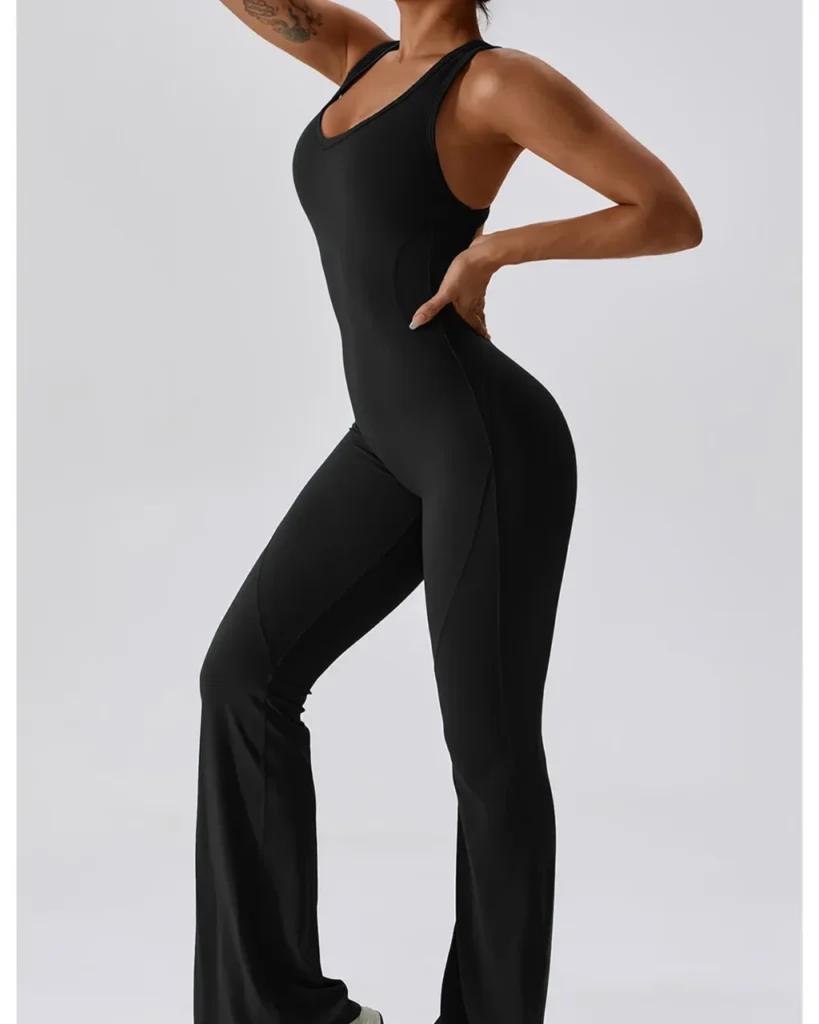
A unitard is a fitted one-piece from shoulder to knee or ankle. A jumpsuit is looser, often with a wide leg. Both turn up in pilates and barre, usually with a scoop or open back.
They’re harder to fit than separates because one measurement decides the whole garment: torso length, shoulder to crotch. Too short and it drags at the shoulders and crotch. Too long and it bags at the waist. Grade the torso with care and fit at least two body lengths before bulk. Seamless unitards are knitted to shape, so there are no side seams, but on small knitting machines the size range stops early.
Write down torso length per size, the depth of the back neckline, built-in bra or not, and leg length.
Layers and sets
10. Wraps, zip jackets and hoodies
Worn before and after class, and easy add-on sales: a draped wrap or open cardigan, a fitted zip jacket in leggings fabric, a brushed hoodie or oversized sweatshirt.
The detail brands miss is colour. A jacket made from a different fabric than the leggings is dyed separately, and it may not match the set. Either cut the layer from the same fabric, or approve a lab dip of the layer fabric against the set colour before bulk.
The tech pack needs zip type and length, the fabric (same as the set, brushed back, or French terry), thumbholes, and the colour approval against the set.
11. Matching sets
A top and bottom, sometimes a layer too, in one fabric and one colour. It’s the usual shape of a first collection because it sells as one outfit and shoots as one image. Two routes. Cut-and-sew sets come off rolls of the same fabric and dye lot, so the colours match. Seamless sets are knitted to shape, with rib, jacquard or contour lines built into the knit. Seamless and cut-and-sew construction explains which suits what.
Decide which pieces make up the set, ask for one dye lot across all of them, and choose seamless or cut-and-sew and the size range.
How YOUMEGA makes these
- Cut-and-sew yoga pieces (leggings, bras, tanks, layers) are made at our Xiamen factory. Seamless pieces and sets are knitted at our Yiwu factory.
- Yiwu runs Santoni 17–21″ seamless machines, which let us make seamless styles up to 2XL/3XL.
- Leggings fabric runs from 220 to 320 g/m², with 280–320 g/m² for compression and squat-proof styles.
- Stock styles with your logo from 100 sets (mixed colours and sizes), full custom 300–500 pieces per style per colour.
- Logos go on in-house by heat transfer, silicone 3D, embroidery or sublimation.
FAQ
What should a first yoga collection include? Leggings and a light-support or longline bra, in two or three colours, sold as a set. Add a tank, a long-sleeve top or a flare once you can see what sells.
What fabric is best for yoga clothes? A soft nylon-spandex or polyester-spandex knit with four-way stretch. Nylon blends feel softer and usually cost about 15–25% more than polyester blends at the same fabric weight.
Are yoga pants the same as leggings? Not always. Leggings fit close to the ankle, while many customers now say “yoga pants” for flare or wide-leg styles that open below the knee.
Can seamless yoga sets be made in plus sizes? Yes, on large-diameter knitting machines. Our Santoni 17–21″ machines make seamless up to 2XL/3XL. Machines of 13–15″ usually stop at XL.
What makes yoga leggings squat-proof? Fabric weight and knit density, mostly. We use 280–320 g/m² for squat-proof styles. Check a sample by stretching it over a bent knee under a bright light.
What is the minimum order for yoga clothes? Stock styles with your logo from 100 sets (mixed colours and sizes), full custom 300–500 pieces per style per colour.
The styles and fabrics we start yoga ranges from are on our yoga wear manufacturing page.