Updated November 2026.
Where to find an activewear manufacturer: the short answer
You find an activewear manufacturer through seven channels: B2B marketplaces, trade shows, sourcing agents, manufacturer directories, factory websites reached through search or an AI assistant, LinkedIn and referrals, and factory accounts on social media. Each reaches a different mix of factories, trading companies and agents, and none tells you which one you are talking to, so run one check before you pay for a sample. For a small first order, the route matters more than the channel: stock styles with your logo start far lower than full custom.
The seven channels at a glance
| Channel | Who you usually reach | First-order size quoted | Cost to you | Main risk | How to check |
|---|---|---|---|---|---|
| B2B marketplaces (Alibaba.com, Made-in-China.com, Global Sources) | Factories and trading companies, mixed | Varies; the MOQ field may cover one stock item or one colour | Samples and courier | On Alibaba.com, placement partly reflects paid membership | Licence code lookup |
| Trade shows | Factory sales staff, fabric mills, traders | Varies; ask what it is counted on | Travel and two or three days | A booth is not a factory | Visit the factory after the show |
| Sourcing agents and buying offices | An agent, using factories it picks | Whatever those factories accept | Fee, commission or margin in the price | You may never learn who sews | Factory named on the contract |
| Directories and matchmaking (Maker’s Row, Sewport) | Makers who joined; US makers on Maker’s Row | Both say they take small runs | Maker’s Row: free plan, paid tiers; Sewport: free trial | Self-written profiles | Paid sample in stretch fabric |
| Search and AI assistants, leading to factory websites | Anyone with a website | What the site publishes | Free | AI answers repeat what sites claim | Addresses match |
| LinkedIn and referrals | Named people; factories other founders use | What the referrer ordered | Free, but slow | Their fit may not be yours | Ask what went wrong |
| Social media factory accounts | Factories, workshops, reposting traders | Rarely stated | Free | Footage from someone else’s floor | Live video call |
Factory, trading company or agent
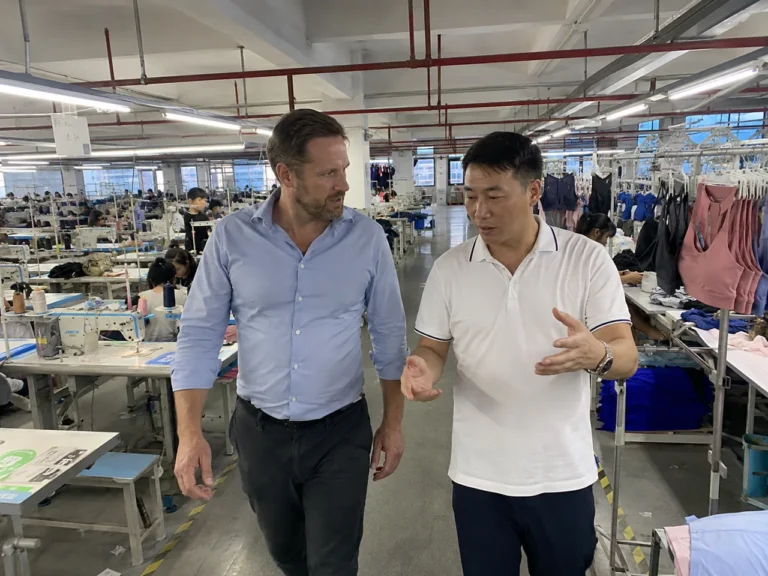
Every channel puts you in front of three kinds of seller. A factory owns the machines and employs the people sewing. A trading company places your order with a factory. An agent works for you, or says it does, and is paid by you, the factory, or both. All three can do good work; the trouble starts when one passes as another. Our page on trading company vs factory lists the evidence a real factory can produce quickly.
1. B2B marketplaces: Alibaba.com, Made-in-China.com, Global Sources
Marketplaces give you breadth: many suppliers, photos, a listed minimum and a message button. Alibaba.com also runs a Request for Quotation service, where you post a custom request and suppliers quote.
What they won’t tell you is who makes the garment. Factories and traders share the same results, and the order is not a ranking of factories. Alibaba.com calls Verified Supplier a “membership tier” whose benefits include showcase spots that “boost product listings in the search results”. So the top of the page is partly bought, which says nothing either way about quality.
For activewear, question the MOQ field first: per order, per style or per colour, and for which fabric?
One check: ask for the business licence. Chinese companies are registered under an 18-character Unified Social Credit Code, printed on the licence. Search the name or code on the National Enterprise Credit Information Publicity System (gsxt.gov.cn), the register linked from the market regulator’s home page, and confirm the name matches the quote and the bank account you are asked to pay. What each badge covers is on our page on Alibaba activewear suppliers and their badges.
2. Trade shows
A show is the fastest way to touch fabric, and garment makers and fabric mills can share the same halls. It is a poor way to see production. The person at the booth sells, the samples on the table may come from several factories, and trading companies exhibit too.
One check: ask where the factory is and whether you can visit that week, then go. Pairing a show with a factory visit is the normal pattern. Shows, cities and dates are in our activewear trade show calendar for 2026–2027.
3. Sourcing agents and buying offices
An agent finds factories, negotiates and follows the order, often with quality checks on site. A buying office does the same for a brand with steady volume. You get language, time zone and someone on the ground, and a good agent can combine leggings from one factory and fleece from another under one contact.
What you give up is visibility. The factory relationship belongs to the agent. An agent who won’t name the factory is selling the relationship as well as the service. That can be a fair trade, but price it as one.
One check: get in writing how the agent is paid (your fee, the factory’s commission, or a margin inside the unit price). Then ask for the factory’s name and check the exporter on the commercial invoice.
4. Manufacturer directories and matchmaking platforms
These sites route your brief to makers, and each works differently, so go by what they say they do.
Maker’s Row connects brands with “trusted U.S. manufacturers across apparel, textiles, furniture, packaging, beauty & more”. You post a project and makers quote, and its FAQ says “many manufacturers on Maker’s Row support prototypes, product development, and low minimum order quantities”. Brands can stay on a free plan; on 11 November 2026 its pricing page listed paid brand plans at $39 and $99 a month, billed annually. Factory plans sell extra visibility on the platform.
Sewport works from one enquiry that brings “multiple offers for companies all over the world”. It holds part of the payment in escrow until the job is complete, and says its factories produce “from 50pcs per style to thousands and more”.
Both suit small runs and several quotes from one brief. Neither proves much alone. Profiles are written by the makers, and a workshop that sews woven shirts well may never have sewn a four-way stretch legging, where the overlock and coverstitch seams have to hold when the fabric is pulled.
One check: pay for one sample in stretch fabric and train in it for a week before talking bulk.
5. Search engines and AI assistants, leading to factory websites
Search “leggings manufacturer low MOQ” or ask an AI assistant, and you usually land on a company’s own website. You get direct contact and a published minimum you can quote back. You don’t get proof: a website is self-published, and an AI assistant repeats what websites say, so a trading company can be described back to you as a factory.
One check: three addresses should agree: the website, the licence record, and the sender on your sample’s courier label. A sales office in one city and a factory in another is a fair answer; hear it before the deposit. If a site says where it sews, our map of China’s activewear manufacturing regions shows whether the claim fits the place. Seamless knitting, for example, centres on Yiwu in Zhejiang.
6. LinkedIn and industry referrals
A referral from another founder is the only channel with a real order behind it. Patternmakers, fabric agents, freight forwarders and inspectors also know which factories deliver. The catch is fit: a factory running 5,000 pieces a style for one brand may not want 300 from you.
One check: ask the referrer what they ordered, how many per style and colour, and what went wrong. On LinkedIn, confirm the company on the profile is the name on the licence.
7. Social media factory accounts
Short videos show the floor, the sample room and what a factory really makes. They don’t prove who filmed them. Clips get reposted, a trader can film a partner’s floor, and good footage says nothing about fit from batch to batch.
One check: a live video call on a route you choose: cutting table, sewing line, QC table, without ending the call. Ask to see the label on a fabric roll or a bundle ticket from a current order, customer name covered.
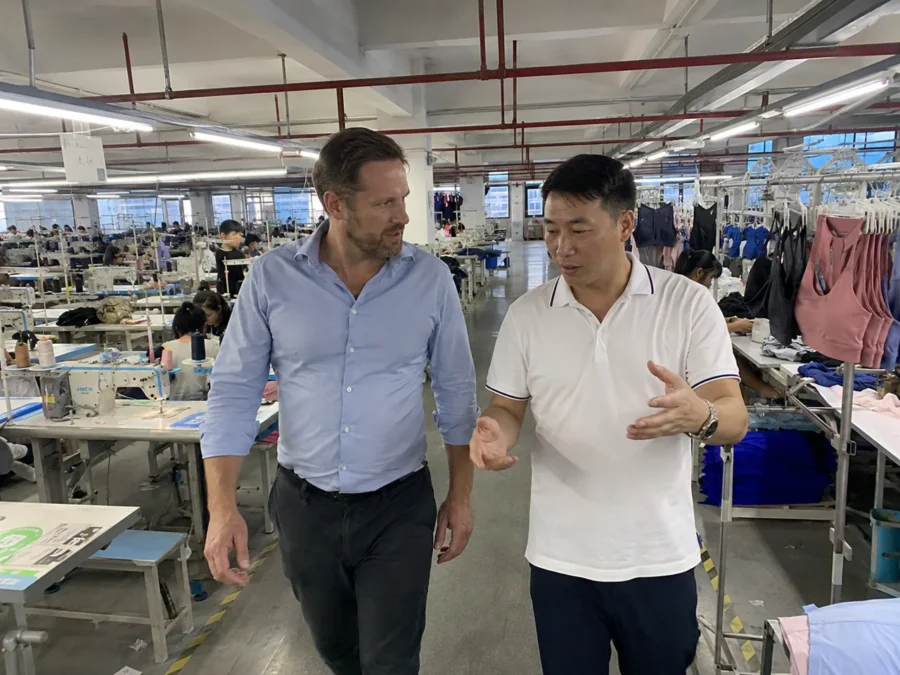
Which channels turn up factories that take small first orders
Decide your route before you judge any minimum.
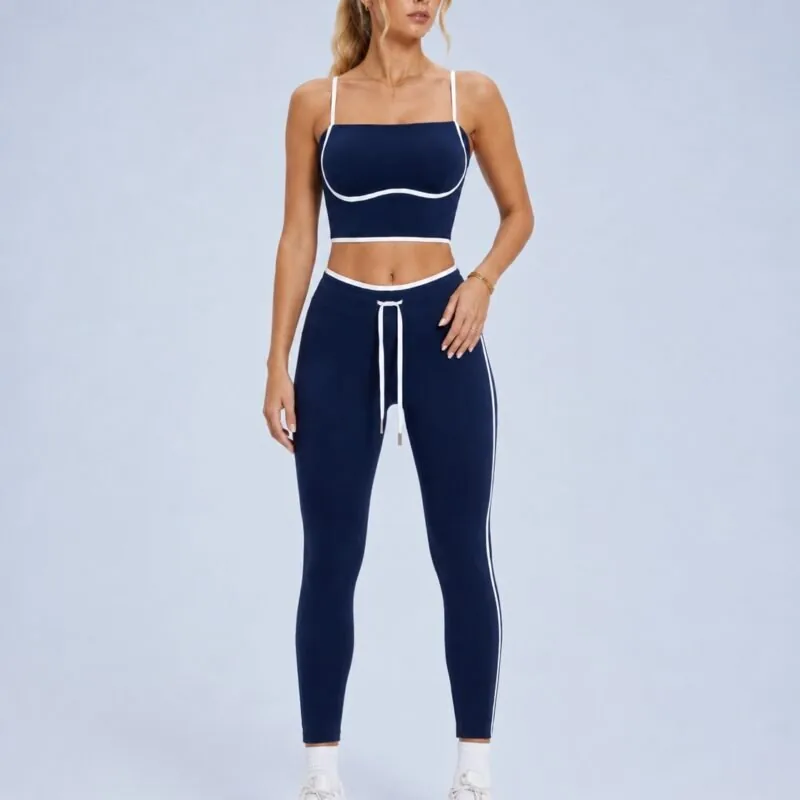
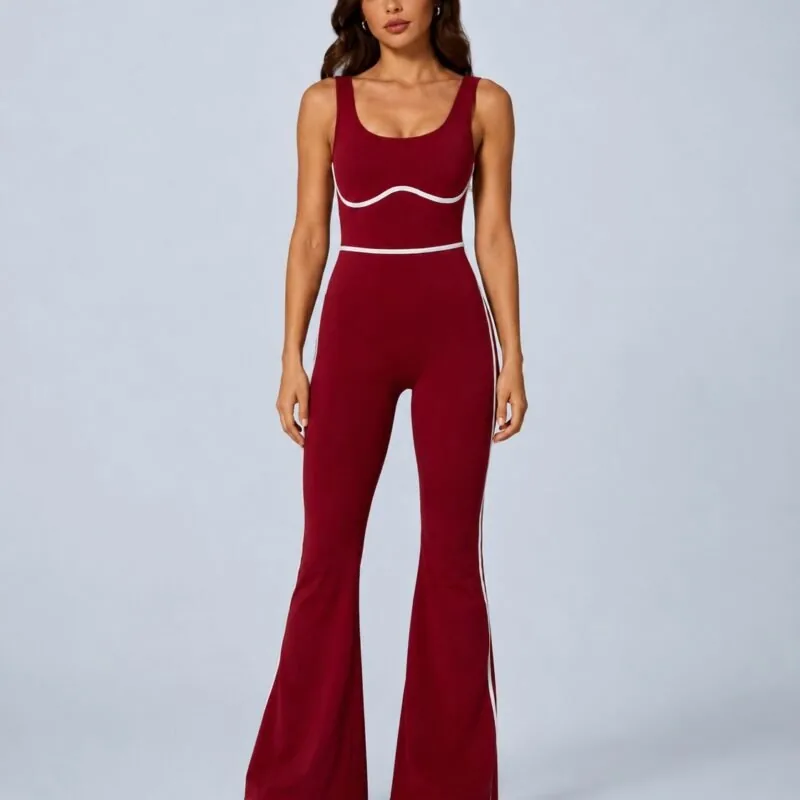
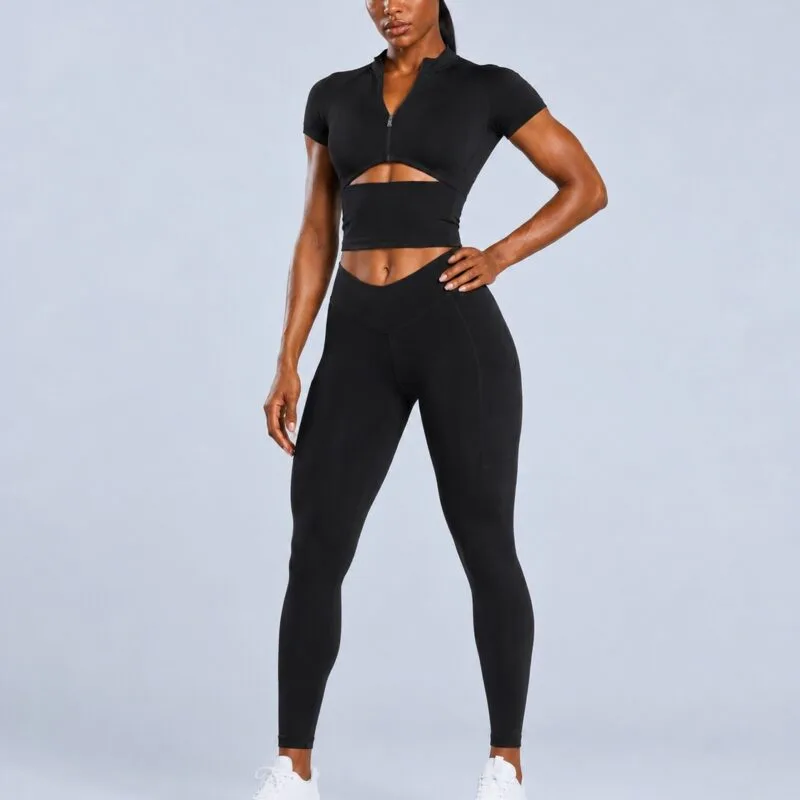
- Stock styles with your logo: the garment exists, and the factory adds logo, labels and packaging. The fabric doesn’t change, so the minimum is easier to meet, and some factories count it across the whole order.
- Full custom: a new pattern, fabric or colour. A custom knit or colour brings the mill’s and the dye house’s own minimums, one reason custom minimums tend to be per style and per colour.
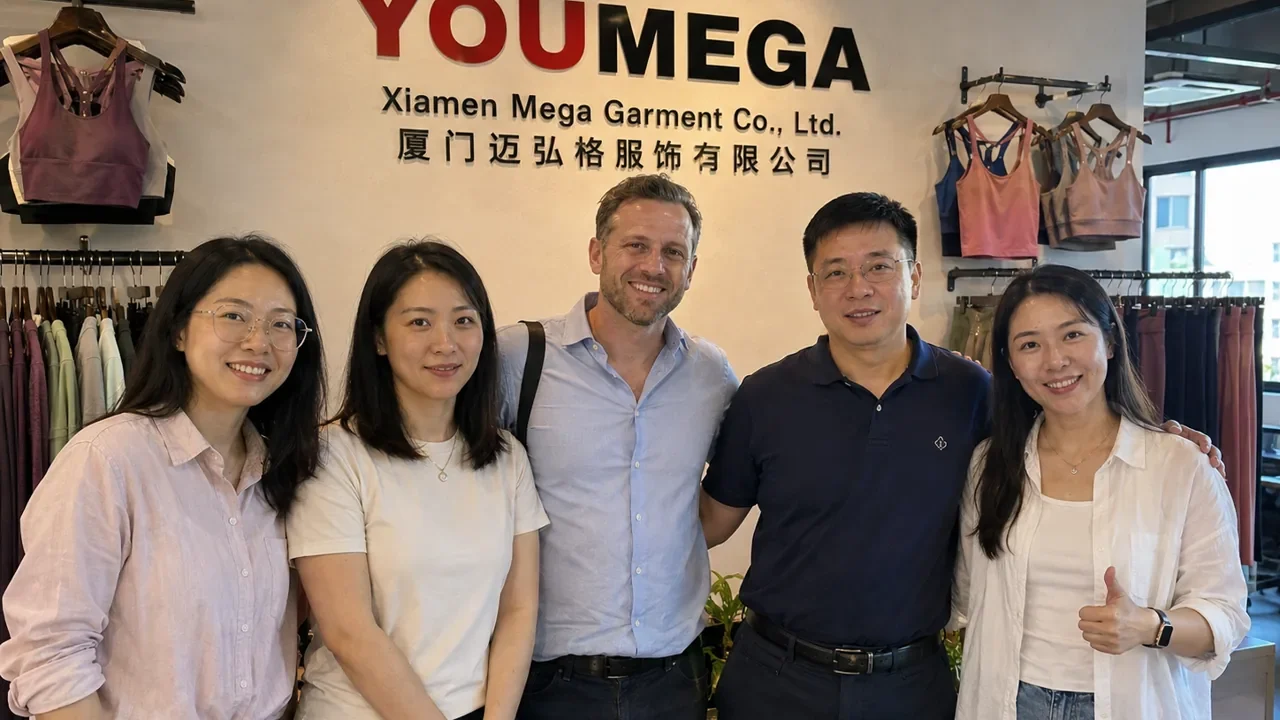
As one example, not a market average: at YOUMEGA, stock styles with your logo start from 100 sets (mixed colours and sizes), and full custom is 300–500 pieces per style per colour. When we read 33 activewear manufacturers’ websites for our 2026 MOQ and lead-time data, 23 published a minimum, counted per colour, per style, per design, or with no basis given.
Directories state small runs most openly, and marketplace stock listings often show low MOQs. Ask either one what happens to the minimum when you change the fabric or colour. Factory websites that publish both routes are the easiest to plan with. At shows and through agents, ask what the minimum is counted on before you discuss price. For a new brand, our note on choosing a factory for a new activewear brand sets out the order: stock with your logo first, custom once something sells.
Five checks that work on any channel
| Check | Ask for | Good sign | Warning sign |
|---|---|---|---|
| Business licence | A photo, then a code search on gsxt.gov.cn | Name matches the quote and bank account | Payment to an account in another name |
| Live video walk | A working-day call on your route | Cutting, sewing and QC in one call | Only recorded clips |
| Address match | Website, licence record, courier label | One company, or a clear reason for two | Another city and name, unexplained |
| Minimum basis | “Per order, style or colour, for which fabric?” | One figure for your exact order | A number that rises once you send styles |
| Sample terms | Fee, timing and free changes, in writing | A written scope | “Free sample” with no scope |
A sample fee is normal. A factory that won’t make a paid sample is the one to worry about. With a shortlist in hand, the seven standards established brands use to vet a factory give you a fuller audit, and sending each factory the same brief makes replies easy to set side by side; see sending a better activewear inquiry.
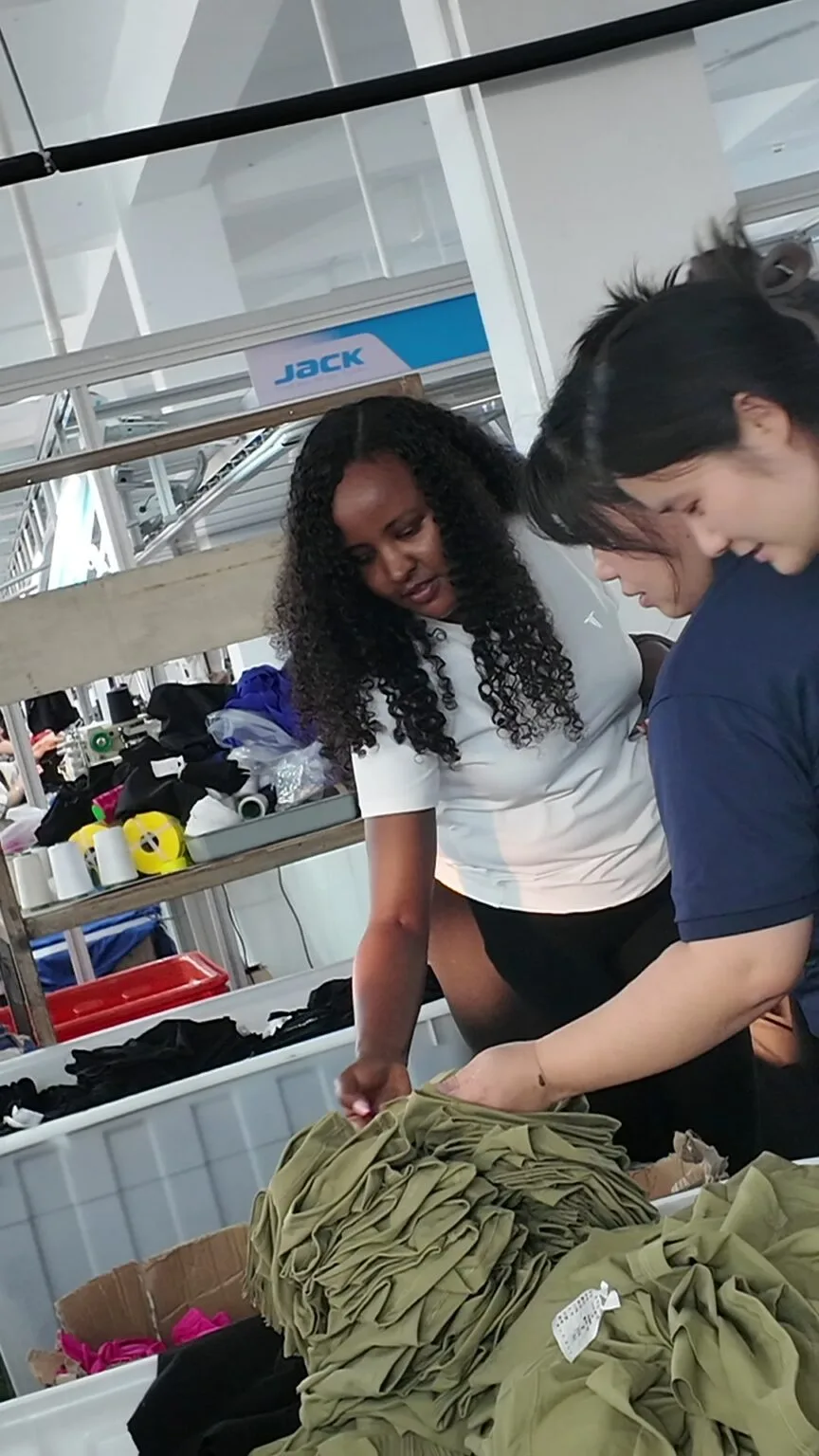
If you are talking to YOUMEGA
- Manufacturer founded in 2017, with 1,000+ private-label projects for brands across five continents.
- Cut-and-sew and quality control in Xiamen; seamless knitting in Yiwu on Santoni 17–21″ machines.
- Stock styles with your logo from 100 sets (mixed colours and sizes); full custom 300–500 pieces per style per colour.
- Finished goods inspected to AQL 2.5, with a photo report before shipping.
- YOUMEGA is itself a manufacturer; this page does not rank or recommend other companies.
FAQ
Where can I find an activewear manufacturer that takes small orders? Start with factory websites and directories that publish their minimums, then confirm in writing what the number is counted on. Small usually means stock styles with your logo.
Is Alibaba a good place to find an activewear manufacturer? It is a legitimate channel with wide choice, where factories and trading companies appear side by side. Treat a badge as information about the company, not your garment, and check the licence outside the platform too.
Should I use a sourcing agent for my first order? Yes, if you need someone on the ground or are combining product types from several factories. Agree in writing how the agent is paid, and ask which factory will sew your order.
How can I tell whether a website belongs to a real factory? Search its licence code on gsxt.gov.cn and ask for a live video walk of the sewing floor. The website, the licence record and your sample’s courier label should point to the same company.
Do I need a tech pack before I contact factories? Not for stock styles with your logo, where style codes, colours, sizes and a logo file are enough. You need one, or a sample and a marked-up sketch, when you develop your own design.
Are trade shows worth it for a small brand? Yes, if you follow the show with a factory visit, because the visit is where you see the floor.
Have a style and a rough quantity in mind? Send them to us and we will tell you which route we would start with.