Updated November 2026. Written from YOUMEGA’s production floor.
Activewear fabric types in short
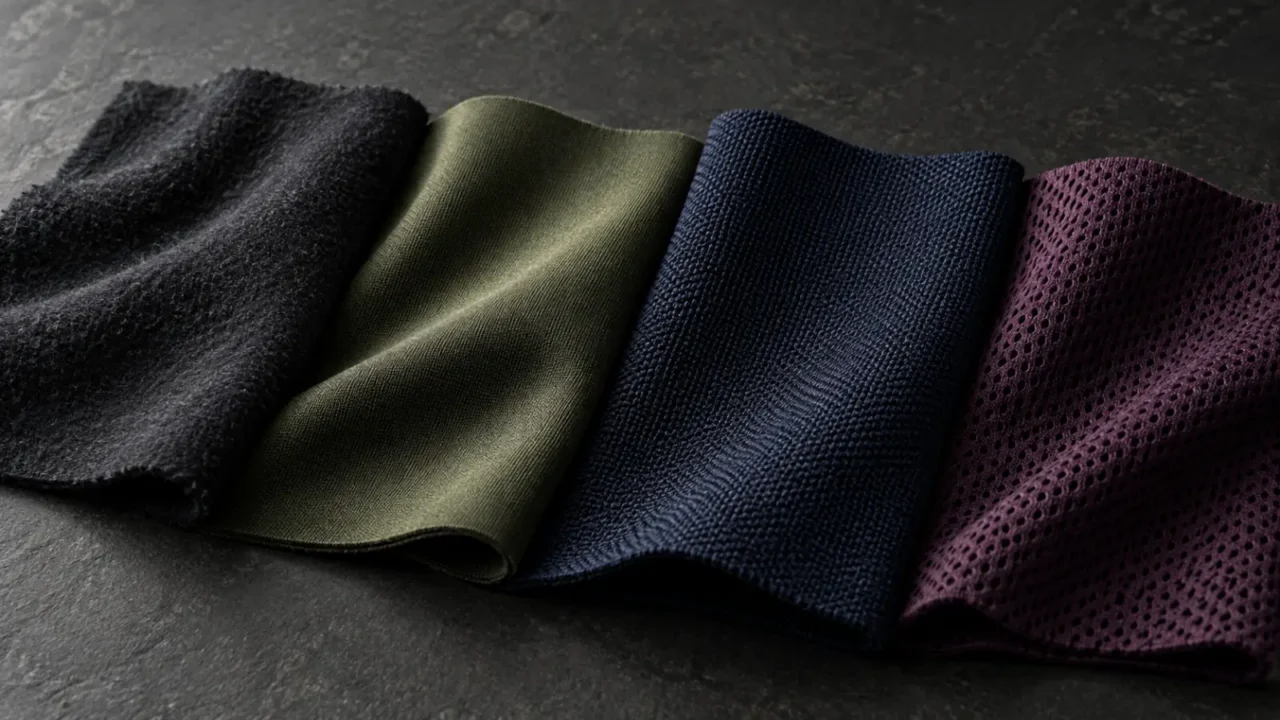
Most activewear is made from 12 fabric types, which fall into four groups: synthetic stretch knits, recycled synthetics, natural and plant-based fibres, and special structures such as mesh, seamless knits and stretch wovens. The fibre sets how the fabric handles sweat, dye and wear. The knit structure and the weight in g/m² set how it fits and how opaque it is. A fabric name on its own (“nylon”, “buttery”, “performance”) tells a factory almost nothing until you add composition, structure and weight.
| Fabric | What it is | Best for | What to specify to a factory |
|---|---|---|---|
| Nylon-spandex | Nylon knitted with spandex | Leggings, sports bras, premium sets | Composition %, g/m², finish |
| Polyester-spandex | Polyester knitted with spandex | Training wear, printed styles | Composition %, g/m², wicking finish |
| Recycled polyester | Polyester from recycled PET | Lines with recycled claims | Recycled share, certificate |
| Recycled nylon | Regenerated nylon from waste | Premium recycled leggings | Recycled share, certificate |
| Brushed knit | Nylon or polyester knit with a brushed face | Yoga, lounge | Brushing side, pilling check |
| Power mesh and mesh | Open knit, firm or light | Bra linings, vents, panels | Mesh type, stretch, placement |
| Cotton-spandex | Cotton knitted with spandex | Lounge, low-sweat studio wear | Composition %, shrinkage |
| Modal and lyocell blends | Regenerated cellulose fibres | Soft tees, lounge sets | Blend %, spandex %, shrinkage |
| Bamboo viscose | Rayon made from bamboo pulp | Soft basics | Correct fibre name on the label |
| Merino wool | Fine sheep’s wool | Base layers, running tops | Micron, blend, wash care |
| Seamless knit | Yarns knitted into a tube | Seamless sets, sculpting leggings | Yarn, knit zones, size range |
| Stretch woven | Woven fabric with spandex | Shorts, skorts, joggers, jackets | Stretch direction, finish, weight |
Group 1: Synthetic stretch knits
These two blends make up most leggings, sports bras and fitted tops. The spandex share and the knit structure do most of the fitting work.
Nylon-spandex
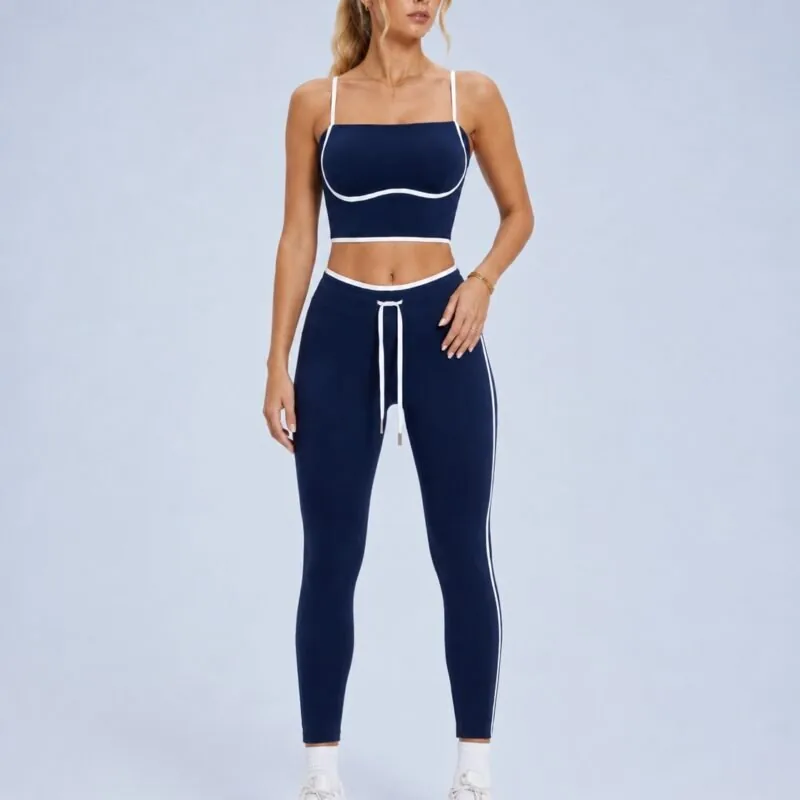
Nylon (also called polyamide) knitted with spandex gives a smooth, soft fabric with good stretch. It is the usual choice for premium leggings and sports bras. Nylon is less absorbent than cotton or wool, so it dries reasonably fast, and it takes dye well. At the same weight it costs more per metre than polyester-spandex, which is why it shows up in premium lines first. For leggings we run nylon-spandex from 220 to 320 g/m². Specify the composition in percent, the weight, and any finish. More in what is nylon (polyamide).
Polyester-spandex
Polyester-spandex is the workhorse of training wear. Polyester is hydrophobic: it does not absorb much water, so sweat sits on the fibre surface and spreads out, and a wicking finish helps it move. Polyester can only be dyed with disperse dyes, which is also why all-over sublimation printing works on polyester and not on nylon or cotton. If your collection is printed, plan it on polyester from the start. Specify composition, weight and the wicking finish. More in what is polyester fabric.
Spandex itself deserves a note. It is the stretch fibre in both blends (also sold as Lycra or elastane), and it can stretch up to five times its length and return. The percentage matters less than the quality of the yarn: a good 10% spandex outperforms a poor 25%. Spandex made from ester-based polymers resists chlorinated water better, which matters for swimwear. More in what is spandex, Lycra and elastane.
Group 2: Recycled synthetics
Recycled polyester (rPET)
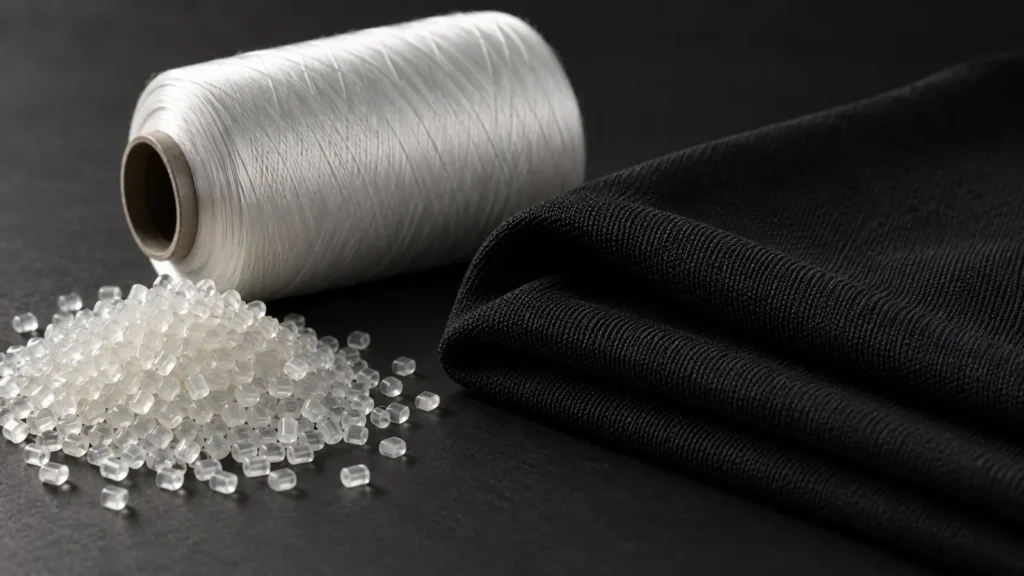
Recycled polyester is made from recycled PET, much of it from post-consumer plastic bottles. It is the same polymer (PET), so at the same weight and structure it knits and dyes like virgin polyester. The claim is what needs work. A recycled claim needs paperwork from the mill: under the Global Recycled Standard (GRS), the mill’s scope certificate and a transaction certificate for your fabric lot. Specify the recycled share in percent and ask for the documents before you print “recycled” on a hang tag.
Recycled nylon
Regenerated nylon is made from nylon waste such as discarded fishing nets, old carpets and fabric scraps, and branded versions are sold with the same quality claims as virgin nylon. It suits premium recycled leggings and bras. The same paperwork rule applies. Our recycled activewear fabrics article compares the two recycled routes.
One limit applies to both. Recycled fibre goes into a blend with spandex, and spandex makes the finished garment hard to recycle again: even a 5% spandex content makes fabric unsuitable for most mechanical recycling machines. “Recycled” describes where the fibre came from. It does not mean the legging can be recycled.
Group 3: Natural and plant-based fibres
These fabrics feel good and sell well in lounge and studio lines. They are weaker on recovery and drying than synthetics, so they need more care in the spec.
Cotton-spandex
Cotton knitted with a small share of spandex gives a soft, familiar fabric for lounge sets, studio tees and low-sweat styles. Cotton holds moisture rather than moving it, so a cotton legging gets heavy in a hard session. Cotton also shrinks more than synthetics. Specify composition, weight and a shrinkage limit after washing, and test shrinkage on the sample. Our knit vs woven fabric article explains why cotton knits and cotton wovens behave so differently.
Modal and lyocell blends
Modal and lyocell are regenerated cellulose fibres. Modal is spun from beech-tree cellulose. Lyocell is made by dissolving wood pulp in a solvent (NMMO) that is recovered and reused, and it is reported to be about 50% more absorbent than cotton. Both feel soft and drape well, which is why they are used for tees and lounge sets. The trade-off is recovery: rayon-type fibres have the lowest elastic recovery of any fibre, so a cellulosic legging needs spandex and enough weight, or the knees bag. Specify the blend, the spandex share and a shrinkage limit.
Bamboo viscose
Most “bamboo” fabric is viscose rayon made from bamboo pulp. Once the pulp is dissolved and spun, the fibre is functionally the same as rayon from any other plant. In the United States, the Federal Trade Commission requires it to be labelled “rayon” or “rayon made from bamboo” unless the yarn is made directly from bamboo fibre. If you sell in the US, put the correct fibre name on the care label and in product copy. Treat it like the other cellulosics for recovery and shrinkage.
Merino wool
Merino is a fine, soft wool, generally under 24 microns in diameter. Wool can absorb almost a third of its own weight in water, which is why merino is used in base layers and running tops. It is weaker when wet and it felts with heat and agitation, so care labels and washing instructions matter more than with synthetics. Specify the micron, the blend and the wash care. Given the care demands, we would treat merino as a capsule rather than the core range.
Group 4: Special structures
These are defined less by the fibre and more by how the fabric is made.
Brushed knit
A brushed knit is nylon or polyester with its face brushed (also called peached) to feel soft and matte. It gives the “buttery” hand of many yoga leggings. Brushing raises fibre ends on the surface, and loose fibre ends are what pill. So a brushed fabric pills more easily than a smooth face of the same blend. Specify which side is brushed, and ask for a pilling test result on the fabric before bulk.
Power mesh and mesh
Mesh is an open knit. Power mesh is the firm, stretchy version used inside sports bras and shapewear to add support without bulk. Light mesh is used for vents and panels at the back, side or calf. Specify the mesh type, its stretch, and exactly where each panel goes. A mesh panel changes how the garment stretches across the panel seam, so fit it on the sample, not on paper.
Seamless knit
Seamless garments are knitted from yarn into a tube on circular knitting machines, with ribbing, texture and compression zones knitted in instead of sewn. The yarn is usually nylon with spandex. The fabric and the garment are made at the same time, so there is no fabric weight to choose in the usual sense. You choose yarns and knit structures. Size range depends on cylinder size. Specify yarn, zones and your size range.
Stretch woven
A stretch woven is a woven fabric, nylon or polyester, with spandex added for give. It is used for running shorts, skorts, joggers and light jackets, where a knit would look too soft. A woven stretches far less than a knit, and often in one direction only. Specify the stretch direction, the weight and any finish such as water repellency.
Structure matters as much as fibre
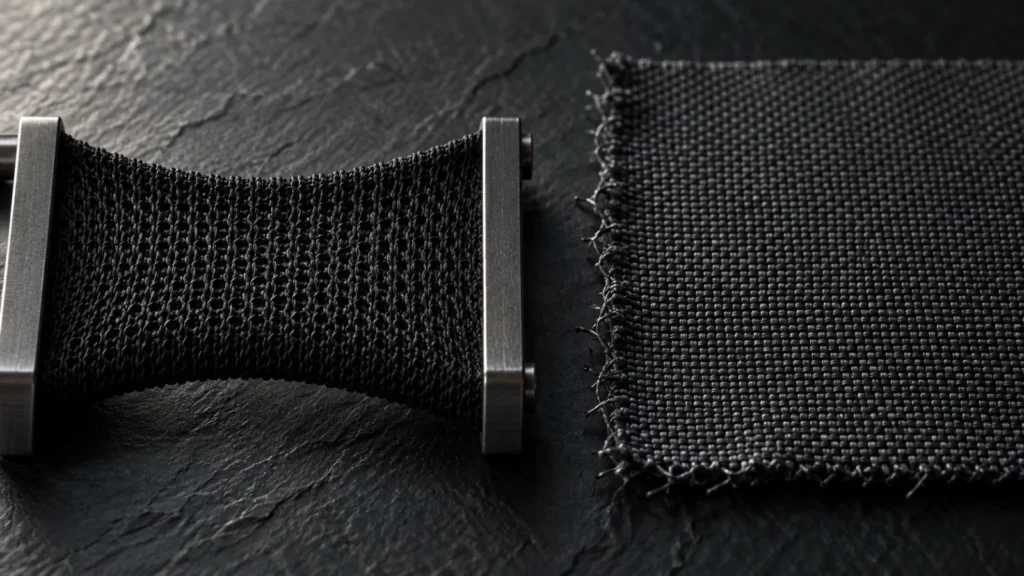
The same fibre can be knitted as jersey, interlock or rib, and each behaves differently. Jersey is the light single knit used for tees. Interlock is a double knit with more opacity, used for leggings. Rib has strong crosswise stretch and is used for bands and ribbed sets. Our rib, jersey and interlock article and our legging fabric weight guide explain how structure and weight work together.
How YOUMEGA makes these
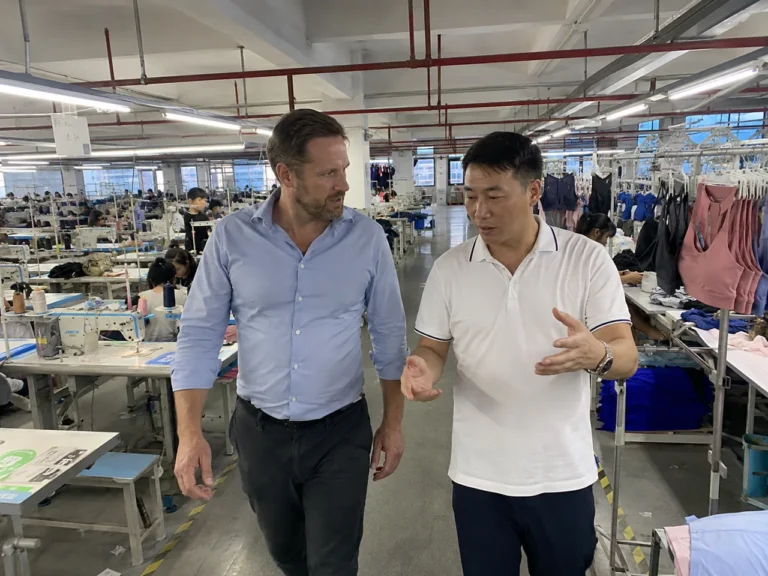
Our fabric warehouse holds 30+ base colours in nylon-spandex, polyester-spandex, seamless and recycled fabrics. Leggings fabric runs 220–320 g/m², with 280–320 g/m² for compression and squat-proof styles. Seamless styles are knitted in Yiwu on Santoni 17–21″ machines, up to 2XL/3XL; cut-and-sew is done in Xiamen. Stock styles with your logo start from 100 sets (mixed colours and sizes); full custom starts at 300–500 pieces per style per colour.
FAQ
What is the most common activewear fabric? Nylon-spandex and polyester-spandex knits. Nylon-spandex is common in premium leggings and bras, polyester-spandex in training wear and printed styles.
Is nylon or polyester better for leggings? Nylon feels softer and costs more at the same weight; polyester takes sublimation prints and costs less. Weight and knit structure matter as much as the fibre.
What percentage of spandex should activewear have? There is no single right number. Yarn quality matters more than the percentage, and a good 10% spandex outperforms a poor 25%.
Is recycled polyester the same as regular polyester? On the body it behaves the same at the same weight and structure. The difference is the source of the fibre and the certificates needed to make the claim.
Can bamboo fabric be sold as “bamboo”? In the US, bamboo viscose must be labelled “rayon” or “rayon made from bamboo” unless the yarn is made directly from bamboo fibre.
Which fabric is best for squat-proof leggings? A firm nylon-spandex or polyester-spandex knit with high recovery. At YOUMEGA, compression and squat-proof styles run at 280–320 g/m².
If recycled fabric is part of your first collection, start with our sustainable activewear page.