Knit vs Woven Fabric: Construction and Activewear Uses
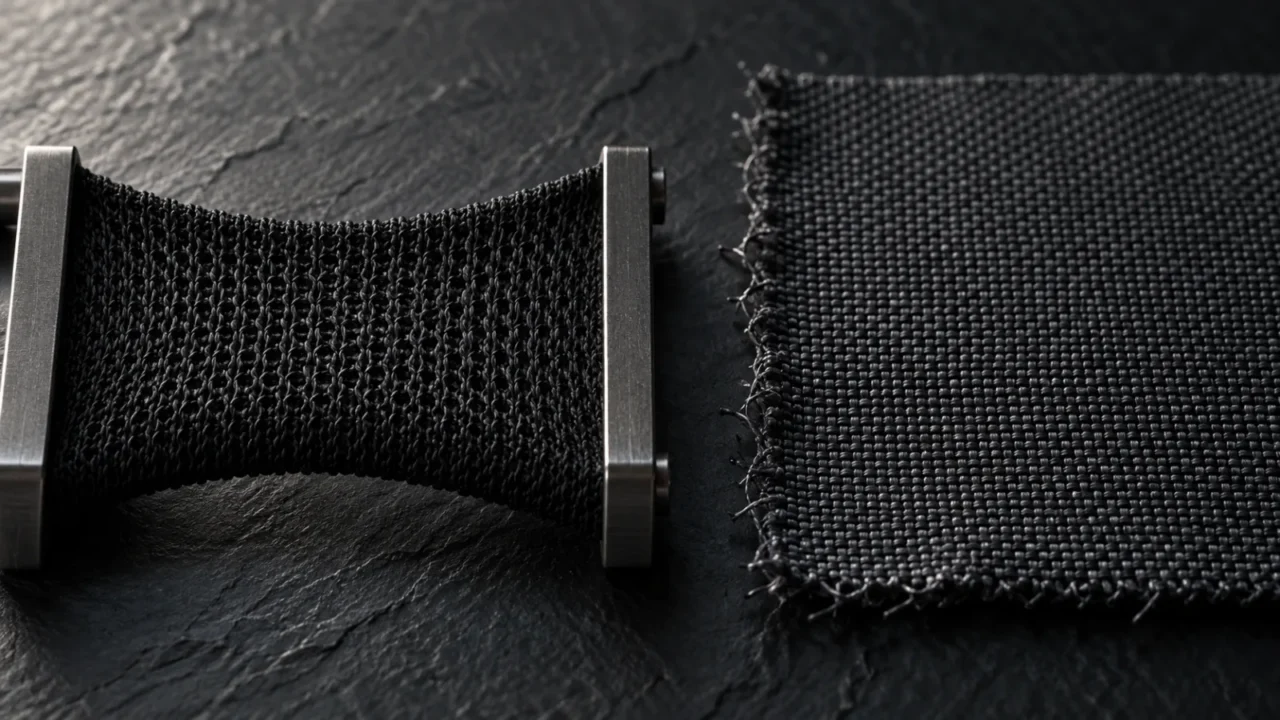
Short answer: Woven fabric is made by interlacing warp and weft yarns; knitted fabric is made from interlocking loops. Loop structure can give a knit stretch, while woven stretch depends on the yarn, weave and direction. Neither construction alone determines softness, drape or recovery. Close-fitting activewear often uses knits, but stretch wovens and woven shells also have uses. Knit and woven describe construction, not fibre: cotton, polyester and nylon can each be either.
Knit vs woven at a glance
| Knitted fabric | Woven fabric | |
|---|---|---|
| How it is made | Loops pulled through loops | Warp and weft yarns interlaced on a loom |
| Stretch without elastane | Loops can give stretch; direction and extent vary by structure and yarn | Bias or designed yarns can give stretch; direction and extent vary |
| Fit and drape | Compare the actual yarn, structure and finish | Compare the actual yarn, weave and finish |
| Cut edge | Behaviour depends on the knit structure and yarn | Some woven edges fray; finish as required |
| Typical garments | T-shirts, leggings, sports bras, socks | Shirting, denim, wind and rain shells |
What is knitted fabric?
Knitted fabric is cloth built from interlocking loops: each new loop is pulled through another loop. Machine and stitch designs vary, so examine the actual construction before specifying its stretch or handling.
"Knit" describes construction, not material. Fibre is one choice (cotton, flax, polyester, nylon) and construction is another (weaving, knitting, felting, bonding), so a "100% polyester" label tells you nothing about how the fabric is built. The same cotton can be knitted into T-shirting or woven into gingham. For a leggings brief, compare candidate constructions and blends in our guide to the best fabric for leggings.
What is woven fabric?
Woven fabric is made on a loom: warp yarns run along the length, and the weft crosses over and under them. A conventional woven may give more on the diagonal, called the bias, but stretch yarns, weave and finish can change the behaviour in every direction. The over-under pattern makes three basic weaves:
- Plain: over one, under one — muslin, percale, gingham, canvas.
- Twill: yarns float over several others before passing under, stepping into a diagonal line, as in denim and gabardine.
- Satin: long floats over four to eight yarns give a smooth, shiny face, so "knit vs satin" compares a knit with a kind of woven.
Linen is a fibre from the flax plant, not a construction. "Mesh" describes an open or net-like appearance that can be made by different constructions; ask for the actual fabric structure.
Weft knits and warp knits: how knitted fabric is made
Weft knitting forms successive rows of loops across the fabric. Single jersey, rib and double knits such as interlock are weft knits (see our rib, jersey and interlock guide). Jersey may show columns of small Vs on the face. Rib and double knits have different loop structures, but recovery and stability depend on the yarn, stitch, finish and actual test conditions; compare proposed samples.
Warp knitting forms loops with yarns running predominantly along the fabric length. Tricot and Raschel are warp-knitting machine types. Snag resistance, runs, thickness and suitability for a particular activewear style depend on the actual construction and test results; they cannot be guaranteed for every warp knit.
Some proposed fabrics can change dimensions after laundering. Agree on shrinkage and torque checks for the actual fabric and care process before grading sizes.
Why knitted fabric stretches, and why recovery matters
A knit can stretch as its loops change shape, even when the yarn has limited stretch. A 2024 Nature Communications study of particular knitted samples found that stitch pattern influenced extensibility; its rib and plain-stockinette results should not be applied to every yarn or finished activewear fabric. Ask for measurements on the proposed fabric.
Recovery is the other half. A fabric can retain deformation after stretching, but the result depends on its construction and test conditions. Elastane is one possible way to adjust recovery; its fibre definition includes specified stretch and return behaviour, not a guarantee for every fabric blended with it. Ask a supplier for recovery results under an agreed test method, not only a stretch percentage: see how we test stretch and recovery.
Why knits are common in activewear, and where wovens appear
Knits are common in close-fitting activewear because their loop structures can provide useful stretch. Whether a particular fabric transfers moisture or heat as intended depends on its yarn, density, finish and the conditions of use; compare actual samples instead of treating every knit as breathable. Some seamless styles are knitted closer to their finished shape than cut-and-sew styles.
Wovens still have their place in a sportswear range:
- Wind and rain shells: the outer fabric of a windbreaker, or the shell of a down jacket, is typically a thin woven cloth of fine polyester or nylon filament yarn, coated or laminated to keep weather out.
- Stretch wovens: stretch yarns inserted in the weft give a woven enough give to move in, a construction used for sportswear, casual wear and formal wear — which is why "stretch" trousers can still be a woven.
Is knitted fabric breathable? Summer and winter
How open and how heavy a fabric is matters as well as whether it is knitted or woven. One study comparing specific cotton jersey samples found that loop density affected air permeability; it does not establish that all knits breathe better than all wovens. Test the proposed fabric for the climate and activity.
How to tell knit from woven
- Look closely. A woven shows a grid of yarns going over and under each other. A knit shows loops, which on jersey form columns of small Vs on the face.
- Check its stretch. This can offer a clue, but stretch wovens and stable knits overlap.
- Confirm the structure. Cut-edge behaviour varies; ask the supplier for the construction name rather than identifying fabric from an edge alone.
How this works in production
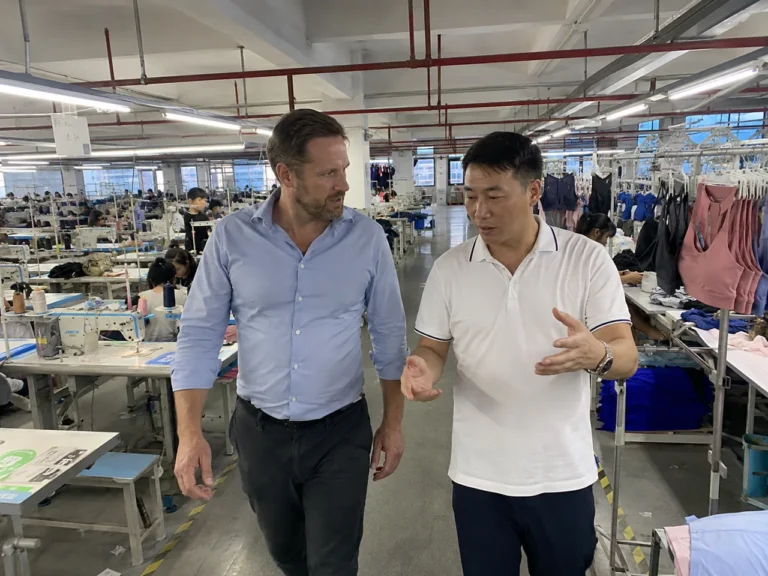
The two constructions call for different cutting and sewing choices. Let a knit lie flat and relaxed before cutting: a panel cut under tension can change dimensions after it relaxes. Orient the pattern to the stretch direction required by the style, and agree on shrinkage and recovery checks for that fabric before grading sizes. Where a seam must extend with the fabric, overlock and flatlock are options; some wovens need raw-edge protection against fraying. At YOUMEGA, knitted fabric is cut and sewn on our own lines in Xiamen, with in-house QC to AQL 2.5; seamless styles are knitted in Yiwu on Santoni 17–21" machines. Confirm finished sizes for each style; machine diameter is not a size chart.
FAQ
Is knitted fabric stretchy? Many knits stretch without elastane because their loops can change shape. The amount, direction and recovery vary with the yarn and construction. Some activewear knits add elastane, but its presence alone does not establish a finished fabric's recovery; ask for test results.
Is knitted fabric cotton or polyester? Either. "Knitted" describes how a fabric is built, not what it is made of: a knit can be cotton, wool, polyester, nylon or a blend, and so can a woven. Check the fibre label and construction specification for the proposed activewear fabric; neither implies the other.
Is knitted or woven fabric better for summer? Neither by default. Yarn, fabric density, finish, fit and conditions of use all matter. Compare a proposed knit and woven under the intended conditions for air permeability, comfort and movement; construction alone does not identify a winner.
Can knitted fabric be ironed? Only if the whole garment's care label permits it. Follow its temperature and print instructions; fibre content or knit construction alone cannot set a safe ironing process.
Can knit fabric be hemmed or tailored? Yes, with knit techniques. A knit hem needs built-in stretch, so it is sewn with a twin needle, a stretch blind hem or a coverstitch. Stable knits tailor well too: wool knits are used for suits, dresses and coats. Buttonholes need stabilising.
What is warp knitted fabric? A knit formed with yarns running predominantly along the fabric length. Tricot and Raschel are examples. Whether a particular fabric resists runs, lies flat or suits swimwear must be assessed from its construction and tests.
Is knitted fabric a good material? It can suit a close-fitting style when the proposed fabric meets its stretch, recovery and care requirements. A stretch woven may also work; a woven shell may suit a different brief. Compare finished samples instead of ranking constructions by name.
Not sure whether your first style should be a warp knit, a weft knit or seamless? Send us the use case and we will tell you which we would pick, and why.
Sources
- Regulation (EU) No 1007/2011 on textile fibre names, Annex I (definition of elastane)
- US Patent 6,698,252 B1, Snag-resistant matte-effect warp-knitted textile fabric for activewear apparel
- US Patent 10,961,643 B2, Thin woven fabric having superior comfort
- Singal et al., Programming mechanics in knitted materials, Nature Communications 15, 2622 (2024)
- Kilinc, Elmogahzy, Karaguzel and Gupta, Evaluation of Porosity and Comfort in Knitted Fabrics, Beltwide Cotton Conferences (2005)
- Rahim, Rahman and Uddin, Low-bagging stretch denim yarn, Heliyon 9(3) (2023)
- Oregon State University Extension Service, Fibers and Fabrics (4-H 320-17)
- Sewing & Craft Alliance, Sewing With Knits (Guideline 4.215)