Rib vs Jersey vs Interlock — How Knit Structure (Not Just GSM) Decides Feel, Coverage and Recovery
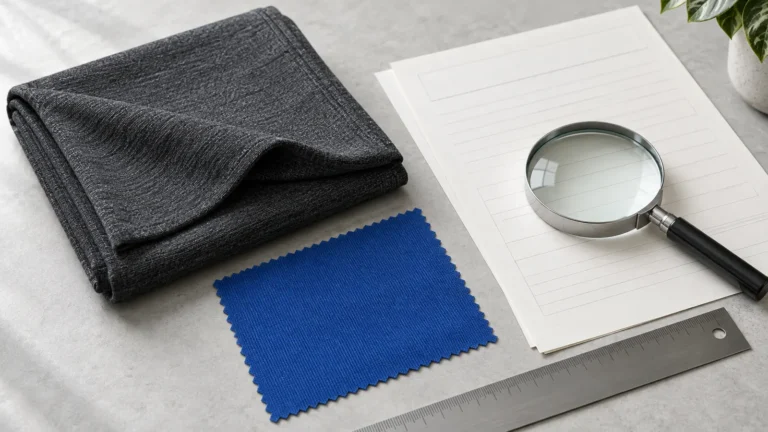
Two swatches sit on your desk. Both spec sheets say the same thing: nylon/spandex, 250 GSM. But when you stretch the first one over your hand it turns pale and see-through; the second stays opaque. Pull them and let go — one snaps back, the other bags out and stays loose. Same fiber, same weight, two completely different garments in the hand.
The variable nobody wrote on the spec sheet is the knit structure — how the yarn is actually looped together. Weight tells you how much fabric there is. Structure tells you how it behaves. If you’ve read our fabric weight (GSM) guide, think of structure as the second axis GSM can’t see.
Single knit vs double knit — the fork in the road
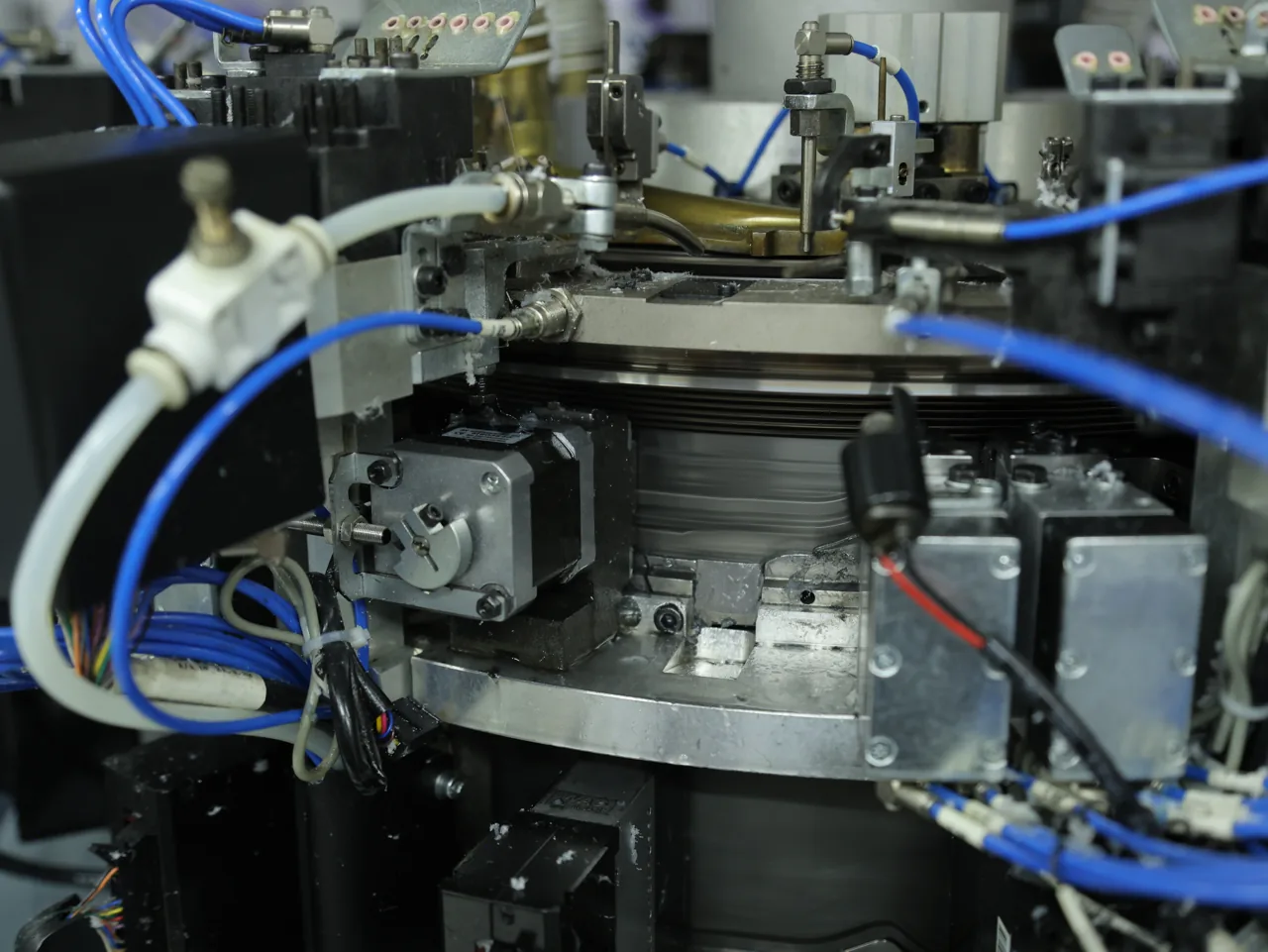
Knits split into two families by how many needle beds the machine uses.
- Single knit is made on one set of needles. It has a distinct right and wrong side — neat columns of little V’s on the face, loops on the back. It’s lighter, drapier and more breathable, but it curls at a cut edge and thins out when stretched. Jersey is the classic single knit.
- Double knit is made on two sets of needles working together, interlocking two layers into one cloth. It’s more stable, lies flat, and is usually more opaque with stronger recovery at the same weight. Rib and interlock are both double knits.
That single-versus-double split is exactly what GSM can’t show you. Two fabrics can weigh the same to the gram and sit on opposite sides of this fork.
Jersey — light, breathable, and honest about it
Jersey is the workhorse of soft tops, tees and drapey layers. It moves beautifully and breathes. But its single-knit nature has consequences you have to design around: the raw edge curls, and under stretch it thins — which is where the squat-coverage problem lives. On a relaxed tee that’s a non-issue. On a fitted legging body it’s a real risk, because the fabric is thinnest exactly where it’s stretched most.
Rib — stretch, recovery and texture
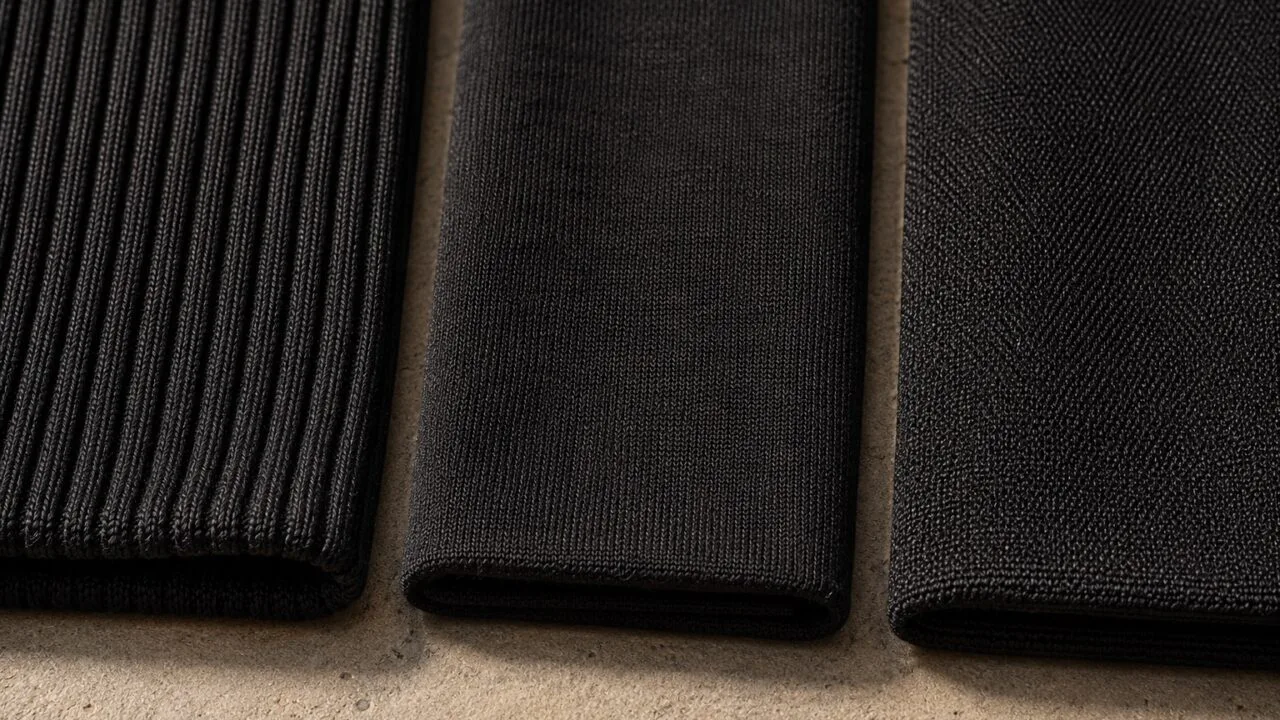
Rib is built from alternating columns of knit and purl, so it forms vertical ridges and looks the same on both sides. Those folded columns give it two things jersey can’t: big crosswise stretch and strong recovery — it genuinely wants to pull back to shape. That’s why rib lives at waistbands, cuffs, bra bands and collars, and in fitted tops meant to hug and snap back. This hug-and-return behavior is also the backbone of compression pieces. The trade-off is the visible ribbed texture and a narrow relaxed width — it’s designed to open up on the body.
Interlock — stable, opaque, smooth both sides
Interlock is effectively two fine ribs locked together, so it’s smooth on both faces — no right or wrong side — and it doesn’t curl. At the same weight it reads denser and more opaque than jersey, which makes it the friend of squat coverage and clean, structured pieces. Its stretch is moderate and controlled rather than jersey’s floppy give. It also costs more — two needle beds, more yarn, slower knitting — so you spend that money where opacity and stability actually earn it. (How that tight surface wears and whether it pills over time is a separate question — we cover that in why activewear pills.)
Same fiber, same GSM — three different fabrics
Here’s the whole point in one table. Picture the same nylon/spandex at roughly the same weight, knitted three ways:
| Jersey (single) | Rib (double) | Interlock (double) | |
|---|---|---|---|
| Both sides the same? | No — face vs back | Yes | Yes |
| Crosswise stretch | Moderate | High | Moderate, controlled |
| Recovery / snap-back | Depends on spandex | Strong, structural | Good, stable |
| Opacity / squat coverage | Can go sheer under stretch | Opaque, may gap at extremes | Most opaque, holds |
| Raw edge | Curls | Lies flat | Lies flat |
| Relative cost | Lowest | Middle | Highest |
| Natural home | Tees, drapey tops, linings | Waistbands, cuffs, bra bands | Structured leggings, dresses, coverage-critical bottoms |
Notice there’s no “best” column. A drapey summer tee cut in interlock would be stiff, warm and over-priced; a squat-critical legging body in thin jersey would be sheer. Matching structure to the garment is the actual skill — and it’s a good place to not spend money, by refusing to pay for interlock density on a piece that only wants to drape.
Read it like a factory — a 60-second swatch check
- Look at both sides. Identical → double knit (rib or interlock). Different face and back → single knit (jersey).
- Find the ribs. Vertical ridges → rib. Smooth on both sides → interlock.
- Stretch crosswise and release. Snappy return → good structural recovery; slow and loose → you’re leaning on spandex and finishing, so verify it.
- Check the raw edge. Curling → single knit; lying flat → double knit.
- Do the real squat test. Stretch the swatch over your palm or thigh — under tension — and hold it to the light. Flat on the table tells you nothing; fabric only goes sheer when it’s stretched.
Ask the mill for structure + GSM + stretch% together, never GSM alone. And remember these same structures show up two ways — knitted into flat yardage for cut-and-sew, or knitted directly on seamless machines — so name the structure whichever route you take.
FAQ
Is a heavier GSM always more opaque? No. Structure matters as much as weight. A lighter interlock can cover better than a heavier jersey, because the double-knit build is denser and doesn’t thin out under stretch. Weight and structure are two separate axes — pin both.
Which knit is best for leggings? It depends on the zone. For a squat-proof, structured body, a double knit like interlock (or a dedicated performance fabric) covers and holds better than jersey; for the waistband and cuffs, rib hugs and snaps back. Most good leggings use more than one structure.
Why does my jersey top curl at the hem? That’s single-knit behavior — jersey has a distinct face and back, so cut edges roll. It’s normal, not a defect. You design for it with the right hem, or switch to a double knit if you want a flat raw edge.
Rib or interlock for a fitted top? Rib if you want it to visibly hug, texture and snap back to the body. Interlock if you want a smooth, stable, opaque surface that’s the same on both sides and holds its shape without the ribbed look.
At YOUMEGA we’ll tell you which structure a style actually needs — rib where it has to hug, interlock where it has to cover, jersey where it should breathe — instead of quoting one fabric for everything. Send us your styles and target GSM and we’ll tell you honestly which knit we’d use for each, and where a cheaper structure would do the same job. We reply within 24 hours.