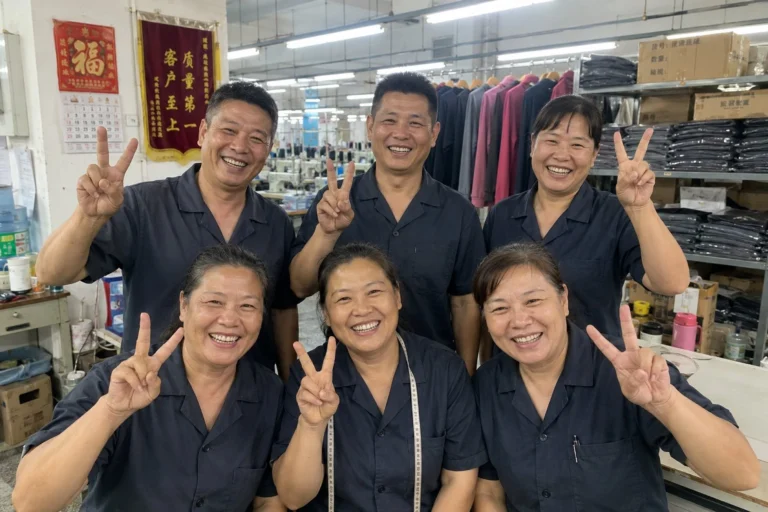
Updated November 2026. Written from YOUMEGA’s production floor.
The types of workout tops in one answer
There are 11 common types of workout tops, and they sort most easily by coverage: sleeveless tanks (racerback, muscle and stringer, built-in bra), crop tops (fitted crops and boxy cropped tees), tees (training, compression and long-sleeve), and layers (quarter-zips, full-zip jackets and hoodies). Fit is the second split. A top is either cut close to the body to move with it, or cut loose to hang away from it. Most gym ranges need one tank, one tee and one layer before anything else.
Tops look simple next to leggings and bras. They aren’t. The faults are in the edges: necklines that ripple, armholes that stretch out, hems that flip up, zips that wave. That’s where this page spends most of its time.
| Type | What it is | Best for | What to specify to a factory |
|---|---|---|---|
| Racerback tank | Straps meet between the shoulder blades | Lifting, classes, running | Armhole depth, neck and armhole finish, fabric |
| Muscle tank and stringer | Dropped armholes, side of the body shown | Men’s and women’s lifting | Armhole drop in cm, edge finish, body length |
| Tank with built-in bra | Tank with an inner bra layer | Low-impact training, one-layer dressing | Inner band elastic, cup pockets, length |
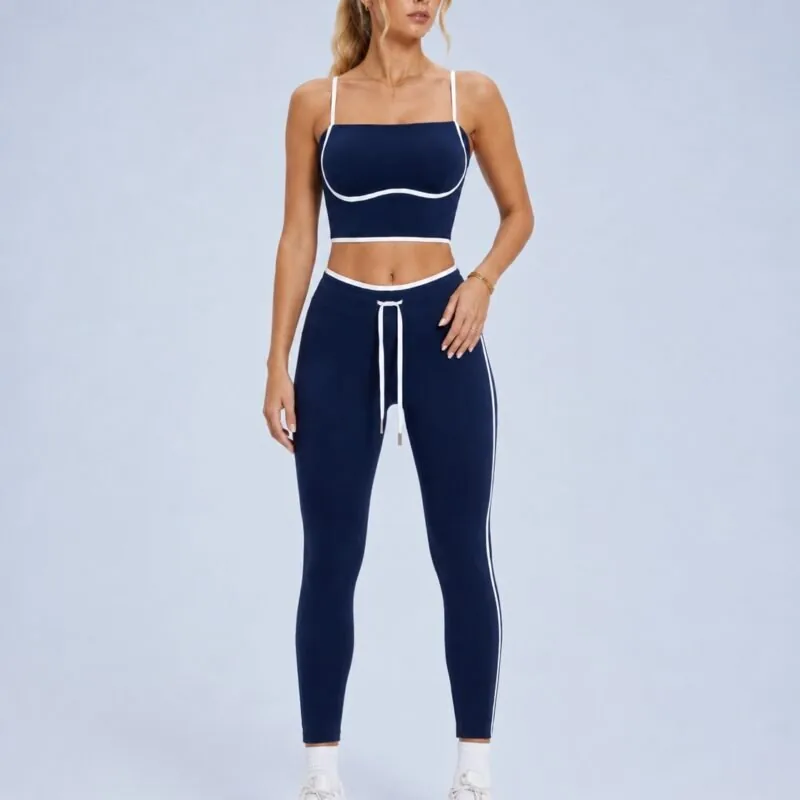
| Fitted crop top | Close-fitting top ending above the navel | Classes, matching sets | Length from shoulder, lining, hem finish |
| Boxy cropped tee | Wide, short tee with dropped shoulders | Lifting, streetwear-leaning ranges | Body width, length, shoulder drop, fabric weight |
| Training tee | Regular-fit tee in synthetic jersey | Everyday gym, men’s ranges | Composition, wicking finish, neck rib, seams |
| Compression tee | Skin-tight tee in high-stretch fabric | Lifting, base layer, recovery | Fabric weight and spandex, seam type, fit |
| Long-sleeve training top | Fitted or regular long sleeve | Cold gyms, outdoor running | Sleeve type, thumbholes, brushed back or not |
| Quarter-zip and half-zip | Pullover with a short front zip | Warm-up, running, golf-leaning ranges | Zip length and type, zip garage, collar height |
| Full-zip jacket | Jacket with a zip from hem to collar | Commute, warm-up, sets | Zip type, stabilising tape, pockets |
| Hoodie and oversized sweatshirt | Loose fleece or terry layer | Warm-up, after training, merch drops | Fabric weight, shrinkage, rib cuffs and hem |
Sleeveless tops
1. Racerback tank
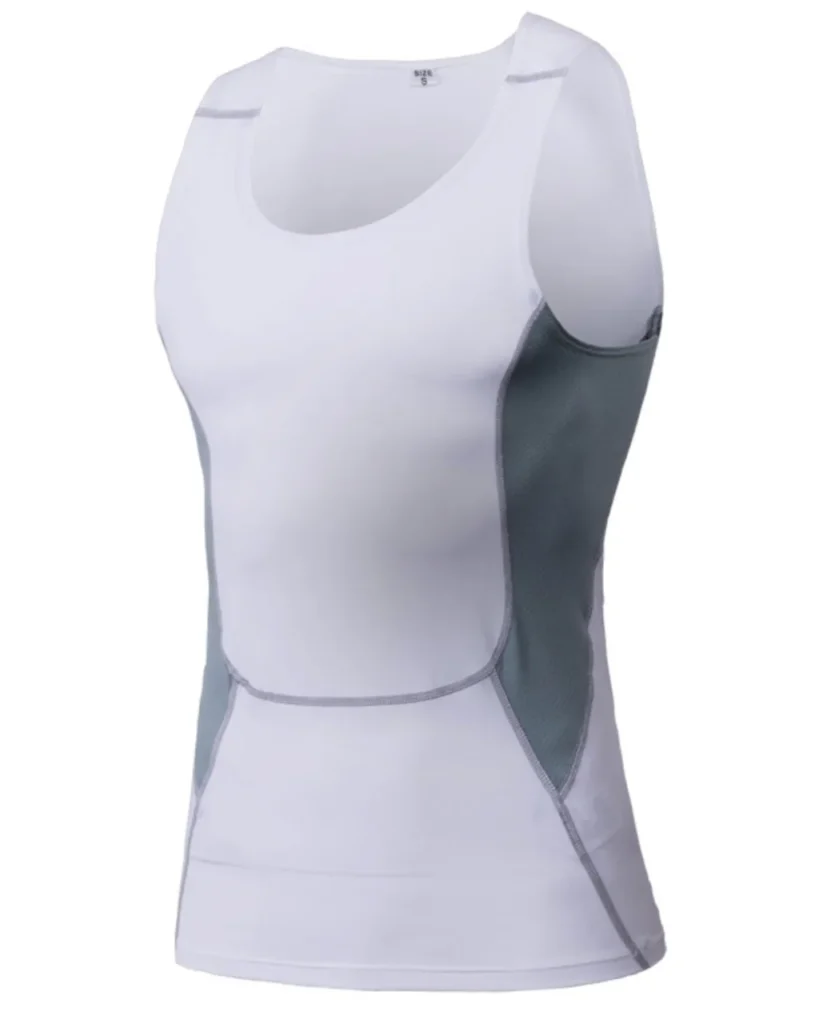
The straps come in from the shoulders and meet in a narrow strip between the shoulder blades. That frees the shoulder blades, so it’s the standard tank for lifting, classes and running. Women’s ranges use it most.
The weak point is the binding on the neck and armholes. On thin jersey, a binding sewn under too much tension twists after a few washes and the edge starts to rope. Approve the sample after it has been washed. A folded self-fabric band is softer than a coverstitched hem and holds its shape better on a deep racerback.
On the tech pack: armhole depth, the width of the back strap where it’s narrowest, the edge finish, and the fabric.
2. Muscle tank and stringer
A muscle tank has a dropped armhole that shows the side of the body. A stringer takes that further, with narrow straps and an armhole cut almost to the waist. Both come out of bodybuilding and sell mostly in men’s ranges, though women’s lifting lines use the muscle tank too.
A very low armhole is a long bias edge, and it stretches out. Factories stop that with a binding, a stay tape or a fabric with good recovery. Raw-cut edges look right for the style but curl on most jersey, so test them. More on men’s fit and fabrics in men’s activewear manufacturing.
Give the armhole drop in centimetres from the shoulder point, the edge finish, the strap width and the body length.
3. Tank with built-in bra
A tank with an inner layer, cut like a short bra and finished with an elastic band, sewn into the neckline and armholes. It’s for low-impact training and for customers who want one layer, not two. It won’t hold for running or jumping, and it’s better not to market it that way.
For gym use, the inner band is usually wider and firmer than on a yoga cami. Removable pads need a pocket that closes properly, or they migrate.
Specify the inner band elastic and width, cup pockets or not, the inner layer length and the outer body length.
Crop tops
4. Fitted crop top
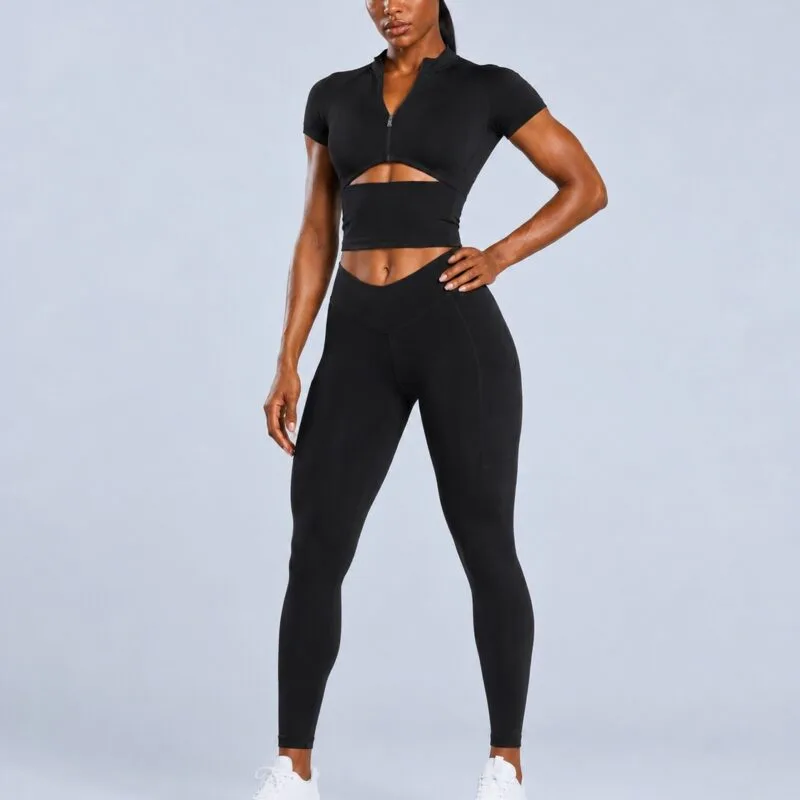
Close to the body and finishing above the navel, with or without short sleeves. It’s the top half of most women’s matching sets. The front is often double layer, which hides the outline of a bra underneath and gives a little support.
Two things go wrong: the hem flips up, and the length lands wrong on different body heights. A hem band with a light elastic fixes the first. For the second, measure length from the high point of the shoulder, not from the armhole, and check it on two body lengths.
Write down the length from the high point of the shoulder, front lining yes or no, the hem construction and the sleeve length.
5. Boxy cropped tee
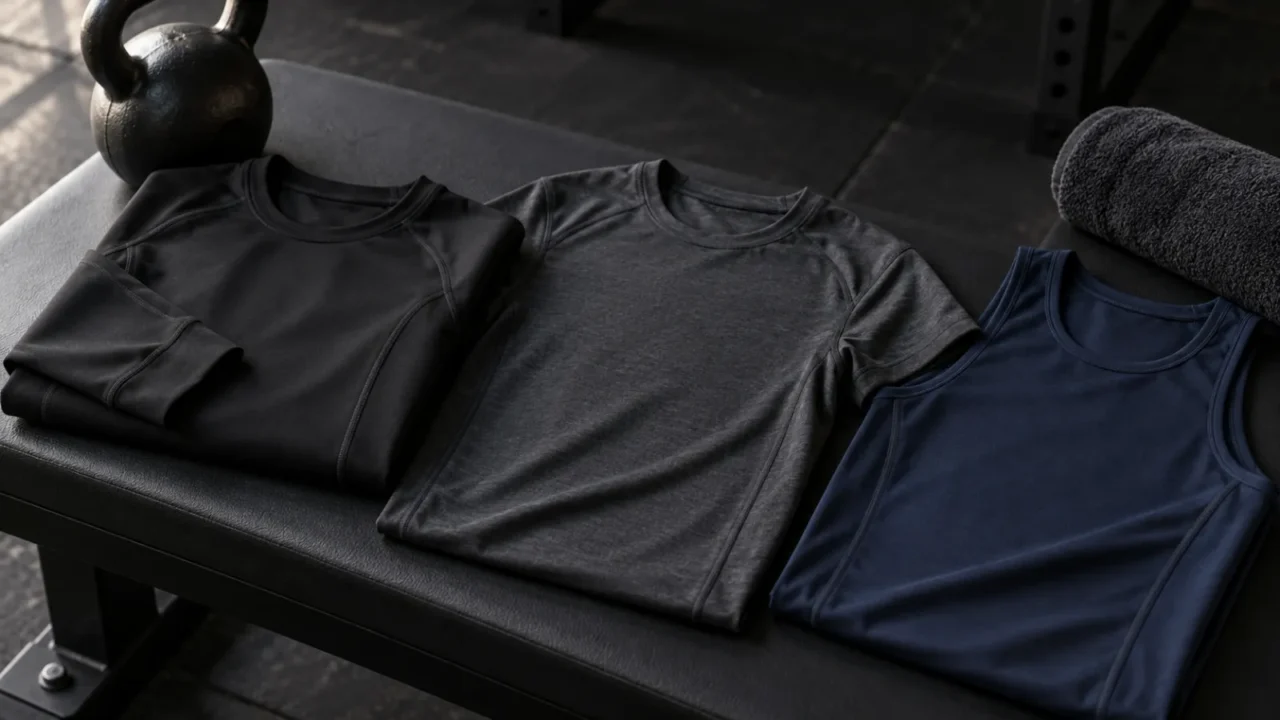
Wide in the body, short in length, with the shoulder seam dropped down the arm. It’s the lifting tee for customers who don’t want anything tight, and it suits ranges with a streetwear look. It’s usually cut in a heavier cotton or cotton blend jersey.
Cotton shrinks. A boxy crop that shrinks by a small amount in length stops being cropped and starts looking wrong. Ask for the fabric to be pre-shrunk, and measure the sample before and after a wash. Heavier cotton also dries slowly, so it isn’t a good top for long sweaty sessions.
The factory needs body width, length from the high point of the shoulder, shoulder drop, fabric composition and weight, and the shrinkage you’ll accept.
Tees
6. Training tee
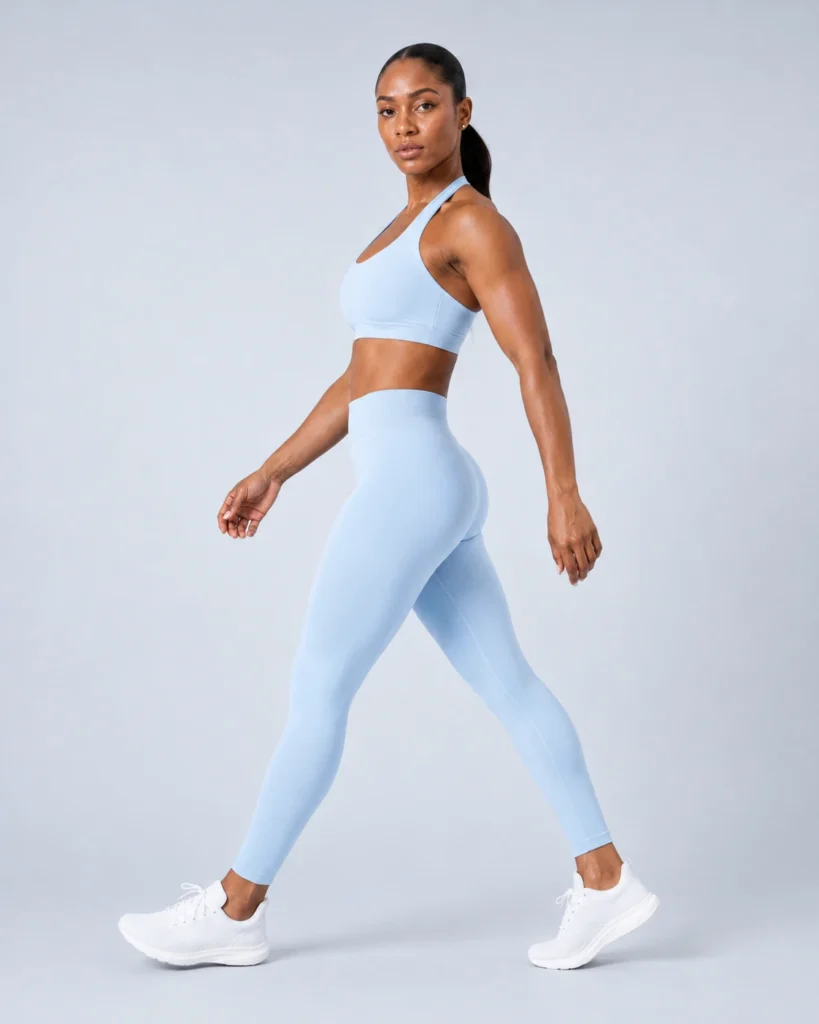
A regular-fit tee in polyester or a polyester-spandex jersey. It’s the core top of most men’s ranges and the safest first top for a mixed gym brand. Synthetic fabric dries faster than cotton and holds a print well. All-over sublimation printing only works on polyester, so if you want a printed tee, that settles the fabric.
Many training fabrics carry a wicking finish applied at the dye house. Finishes wash out over time, and fabrics that wick because of the yarn itself last longer. Our article on moisture-wicking finishes explains the difference and what to ask for.
Specify the composition, any wicking finish and how it’s applied, the neck rib, and side seams or tubular body.
7. Compression tee
Skin-tight, in a high-stretch fabric with more spandex than a training tee, cut smaller than the body so it presses lightly on the muscle. Lifters, team-sport players and runners wear it as a base layer. How tight is a design choice, and how tight training apparel should be covers the trade-offs.
Seams matter more than on any other top, because they’re pressed against the skin. Flat seams avoid rubbing. Overlock seams are cheaper and faster but leave a ridge inside; see flatlock and overlock seams. For fabric, construction and testing, read compression wear manufacturing.
Write down the fabric weight and spandex content, the seam type on every seam, the fit (how far below body measurements the pattern is cut) and the neck finish.
8. Long-sleeve training top
Either fitted, like a compression top with sleeves, or regular fit like a long training tee. It’s for cold gyms and outdoor running. Thumbholes keep the sleeves down over the hands. Raglan sleeves give more reach overhead than set-in sleeves.
For winter, a brushed back adds warmth without much weight. Brushed fabric can pill faster on the outside where a bag strap rubs, so ask about pilling on the fabric test report.
Specify fit, sleeve type, thumbholes, brushed back or not, and reflective details if it’s for running.
Layers
9. Quarter-zip and half-zip pullover
A pullover with a short zip at the front neck, so the wearer can open it as they warm up. Runners and golfers like it, and it works as a warm-up top in any gym range.
The zip decides most of the quality. A zip garage, a small fabric flap at the top, stops the zip pull rubbing the chin. A coil zip is lighter and more flexible than a moulded one. Zip types, pulls and tapes are covered in our article on trims, elastics and zippers.
Give the zip length, zip type, garage yes or no, collar height and the fabric.
10. Full-zip jacket
A jacket that zips from hem to collar, either fitted in the same stretch fabric as leggings or looser in a woven fabric. The fitted version sells as part of a set.
Putting a stiff zip into stretch fabric is the classic problem. The fabric stretches, the zip doesn’t, and the front ripples. Factories fix this with a stabilising tape along the zip seam and by cutting the front panels to the zip’s length, not the other way round. If you see a wavy zip on the sample, don’t approve it and hope bulk is better. It won’t be.
Write down the zip type and length, stabilising tape, pockets (zipped or open) and the hem finish.
11. Hoodie and oversized sweatshirt
The loose layer for before and after training, in French terry or brushed fleece. The oversized cut-off sweatshirt worn over gym kit, often called a pump cover, belongs here too. These are also the pieces brands use for merch drops, because they carry a large print or embroidery well.
Shrinkage and colour are the risks. Cotton-rich fleece shrinks, and a dark fleece can bleed onto lighter clothing in the first wash. Ask for pre-shrunk fabric and a colourfastness result for washing.
Specify fabric composition and weight, the shrinkage you’ll accept, rib cuffs and hem, and the print or embroidery size.

Seamless tops
Most of the types above can also be knitted seamless, especially fitted crops, tanks and long-sleeve tops. A seamless top has no side seams and can carry rib or texture in the knit itself. It’s limited by machine size: smaller seamless machines stop at XL. Our article on seamless and cut-and-sew sets out when each is the better choice.
How YOUMEGA makes these
- Cut-and-sew tops and layers are made at our Xiamen factory. Seamless tops are knitted at our Yiwu factory.
- Yiwu runs Santoni 17–21″ seamless machines, which let us make seamless tops up to 2XL/3XL.
- Stock styles with your logo from 100 sets (mixed colours and sizes), full custom 300–500 pieces per style per colour.
- Logos go on in-house by heat transfer, silicone 3D, embroidery or sublimation.
- Samples take 7 days for a stock style with your logo, 10–15 days for a full custom style.
FAQ
Which workout top should a new brand make first? A tank and a training tee in the same colour family. For a women’s range, a fitted crop that pairs with your leggings usually comes before the tee.
What fabric is best for workout tops? Polyester or polyester-spandex jersey for training tees and tanks, because it dries fast and takes prints. Cotton and cotton blends suit boxy tees and hoodies but hold sweat longer.
What is the difference between a muscle tank and a stringer? A stringer has narrower straps and a much lower armhole. A muscle tank keeps more of the body covered at the side.
Why do tank armholes stretch out? A low armhole is a long, unstable edge. A binding, a stay tape or a fabric with better recovery keeps it in shape.
Can workout tops be sublimation printed? Yes, if the fabric is polyester. Sublimation dye doesn’t bond to cotton or nylon.
What is the minimum order for custom workout tops? Stock styles with your logo from 100 sets (mixed colours and sizes), full custom 300–500 pieces per style per colour.
The tops, fabrics and fits we start gym ranges from are on our gym wear manufacturing page.