US vs EU Textile Labels: One Garment, Two Rulebooks
Brands selling on both sides of the Atlantic usually discover the label problem at the worst moment — when goods are packed. The US and EU agree that a garment must say what it’s made of, and agree on almost nothing else about how. Here’s the side-by-side we walk buyers through, so one label (or a deliberate pair of labels) clears both markets. US care-label detail lives in our dedicated guide; this article is the comparison map.
The rulebooks in one table
| 🇺🇸 US | 🇪🇺 EU | |
|---|---|---|
| Governing rules | Textile & Wool Acts + FTC Care Labeling Rule | Regulation (EU) No 1007/2011 |
| Fiber content | Required, generic fiber names, % by weight | Required, harmonized fiber names, % by weight |
| Country of origin | Required on every garment | Not harmonized EU-wide (national practices vary) |
| Company identity | RN number or full company name | Economic operator identifiable (name/address on product or docs) |
| Care instructions | Required — words or approved symbols | Voluntary in most states — but symbols are the market norm |
| Care symbol system | ASTM-style symbols or written English | GINETEX symbols (licensed) by convention |
| Language | English | Official language(s) of each member state sold in |
| Sizing | No legal system — market convention | No harmonized system — but EU size conventions differ from US |
Three traps hide in that table:
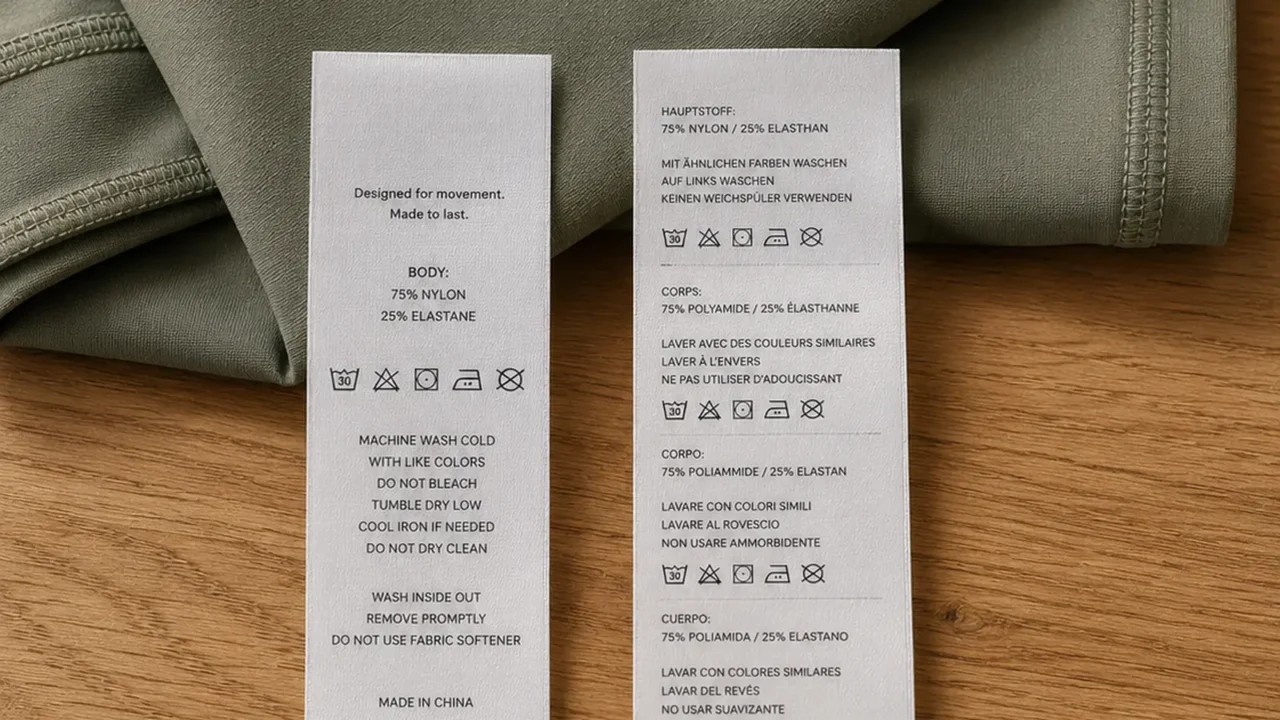
1. The language trap. An English-only label is fine in Ohio and a compliance failure in France. Multi-country EU sales mean multi-language fiber content — which is a label real-estate engineering problem (and one reason DPP-era QR carriers are quietly attractive).
2. The origin trap. “Made in China” is mandatory phrasing territory in the US; in the EU origin marking on the label isn’t harmonized — but customs paperwork still cares, and retailer contracts often demand it anyway. Decide by market, don’t assume.
3. The care-symbol trap. GINETEX-style symbols are licensed marks, not free clip-art; US care instructions must satisfy the FTC rule in English. The pragmatic answer most brands land on: written English care text + symbol set engineered per destination — and care content that matches the fiber’s actual chemistry, because a legally perfect label that says “tumble dry” on elastane is compliant self-sabotage.
How we handle it in production
Label engineering is part of development, not packing day: we build the label set per destination market (fiber wording, language stack, origin line, your RN or company line), source the labels through qualified trim suppliers (screened like everything else), and sew the right set into the right destination’s units — mixed-market orders included. What stays with you as the brand: legal ownership of the claims and the final say on your company identity lines. We’ll flag what looks wrong; the label is legally yours.
The honest disclaimer that belongs in every labeling article: rules evolve and member-state details differ — final compliance sign-off belongs with your importer or counsel. What we guarantee is that the label sewn in matches the spec you approved, and that the spec was built from the actual rulebooks, not from whatever the last factory had lying around.
FAQ
Can one label work for both US and EU? Sometimes — English + required languages + symbols can stack on a longer label. Past two or three EU languages, most brands switch to per-market label sets; we run both approaches.
Do I need an RN number? US market: an RN or your full legal company name on the label. RN registration is free via the FTC — a ten-minute task brands should own themselves.
Is “Made in China” required in the EU? Not harmonized as a labeling requirement EU-wide — but check retailer contracts and national practices, and it remains standard on customs documentation.
Who is responsible if a label is wrong? Legally, the brand/importer placing goods on the market. Practically, we build the label spec with you during development so “wrong” gets caught at the PP sample, not at customs.
Selling into both markets? Send your destination list — we’ll draft the label set per market as part of development, before packing day makes it urgent. Reply within 24 hours on weekdays.