Leggings vs Yoga Pants vs Tights vs Joggers: How to Tell Them Apart
Short answer: Leggings are tight-fitting stretch garments that usually cover the body from the waist to the ankle; a style can be worn alone when its coverage and fit allow. Tights, in British English, are the one-piece garment that runs from the waist to the feet and is called pantyhose in the US, Canada, Australia and New Zealand — although American dictionaries also use "tights" for any snug stretch garment covering the lower body, with or without feet, which is why sportswear sells footless running and compression tights. Yoga pants are trousers in a stretchable knit fabric, worn for exercise or casual wear, fitted or with a flared leg. Joggers are the soft, tapered, cuffed members of the sweatpants family.
The differences at a glance
The feet, fit and fabric help describe a pair, but the product name alone does not fix its construction or performance.
| Fit | Covers the feet? | Typical fabric | Typical use | |
|---|---|---|---|---|
| Leggings | Tight, waist to ankle | No | Opaque nylon– or polyester–spandex knit | Gym, yoga, everyday |
| Yoga pants | Fitted, or flared below the knee | No | Soft stretch knit, often brushed | Yoga, Pilates, lounging |
| Tights (UK) / pantyhose (US) | Tight | Yes | Fine, often sheer hosiery | Under skirts and dresses |
| Running or compression tights | Close-fitting; hold varies by product | Usually not | Technical stretch knit | Running, cycling, training |
| Jeggings | Tight | No | Denim-like appearance; check the actual fabric | Casual wear |
| Joggers | Relaxed, tapered to elasticated cuffs | No | Cotton fleece, French terry or a technical knit | Warm-ups, travel |
| Sweatpants | Loose | No | Soft cotton or cotton-blend knit | Lounging, warm-ups |
| Track pants | Loose, straight leg | No | Smooth polyester knit or woven | Warm-ups, team kit |
What are leggings, and what are they for?
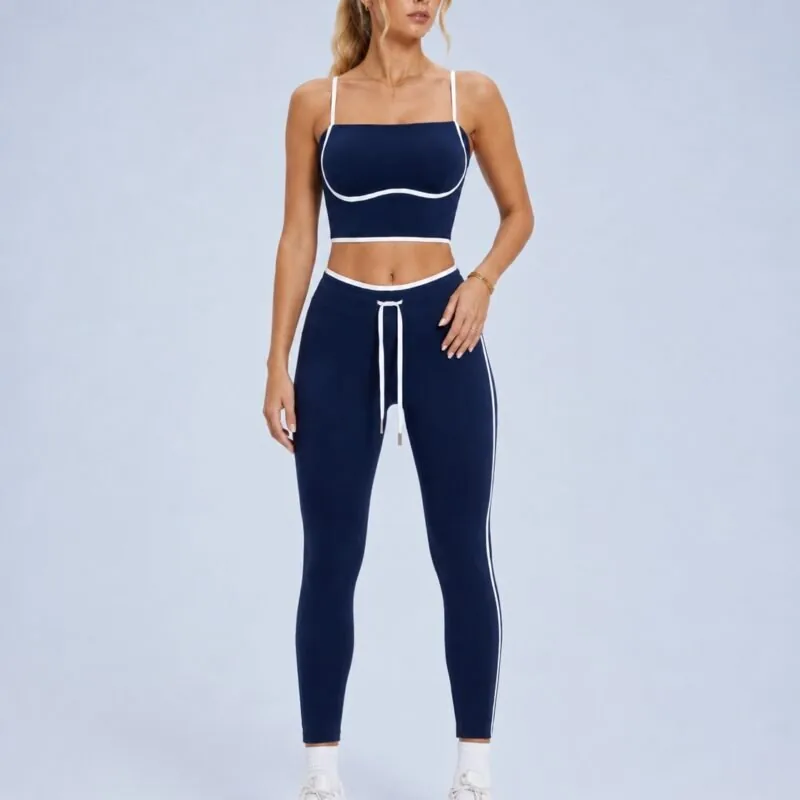
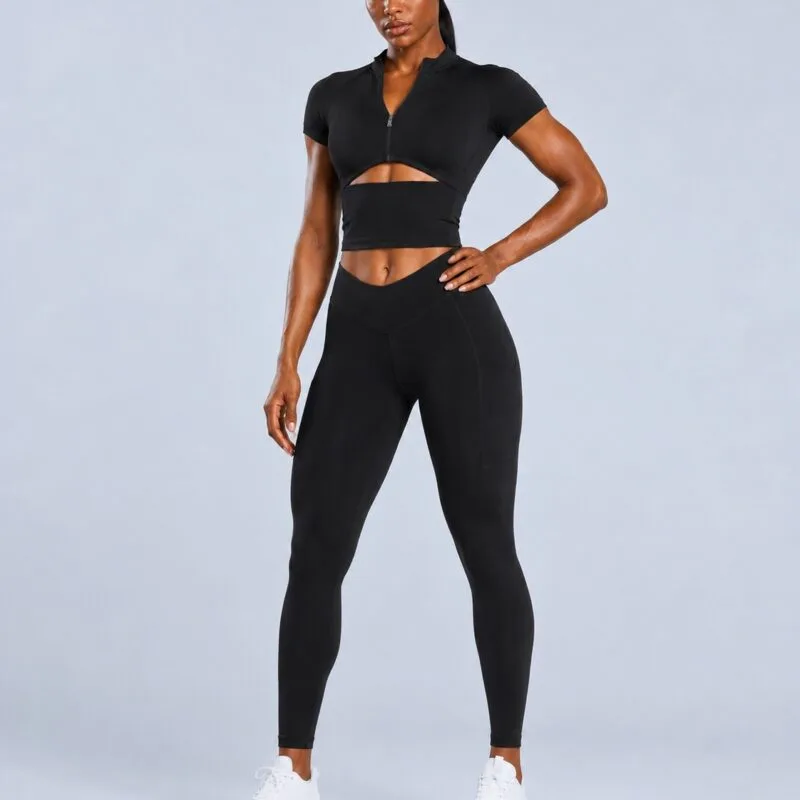
Leggings are close-fitting stretch garments that cover the body from the waist to the ankle. There is usually no fly, no darts and no zip: an elasticated waistband holds them up and the stretch of the knit does the fitting. That is what separates them from ordinary trousers (pants, in American English), which are normally cut from woven fabric and shaped with seams and fastenings. Dictionaries also record an older, unrelated meaning: a leg covering from the ankle to the knee, often of leather or canvas, worn especially by soldiers and workers.
Leggings can be designed for movement, coverage or layering. Their feel and suitability depend on the yarn, knit, finish and fit; compare actual samples rather than the fibre name alone.
Leggings vs tights and pantyhose
Look at the feet first, then the fabric. In British English, tights commonly cover the body from the waist to the feet and are worn in place of stockings; Americans, Canadians, Australians and New Zealanders commonly call that garment pantyhose. Leggings commonly stop at or above the ankle and may be worn as trousers when the specific fabric and fit provide suitable coverage. Confirm weight and opacity by style; see the leggings fabric weight guide.
The word moves around, though:
- In American usage, tights can be any snug stretch garment covering the lower body — a leotard with legs and, sometimes, feet, or the kind worn by dancers.
- In sportswear, running, cycling and compression tights are athletic leggings: usually footless, opaque and worn on their own.
Footless tights and sheer leggings blur the line. When a name is ambiguous, check the product photos, coverage, fabric and intended use.
Leggings vs yoga pants
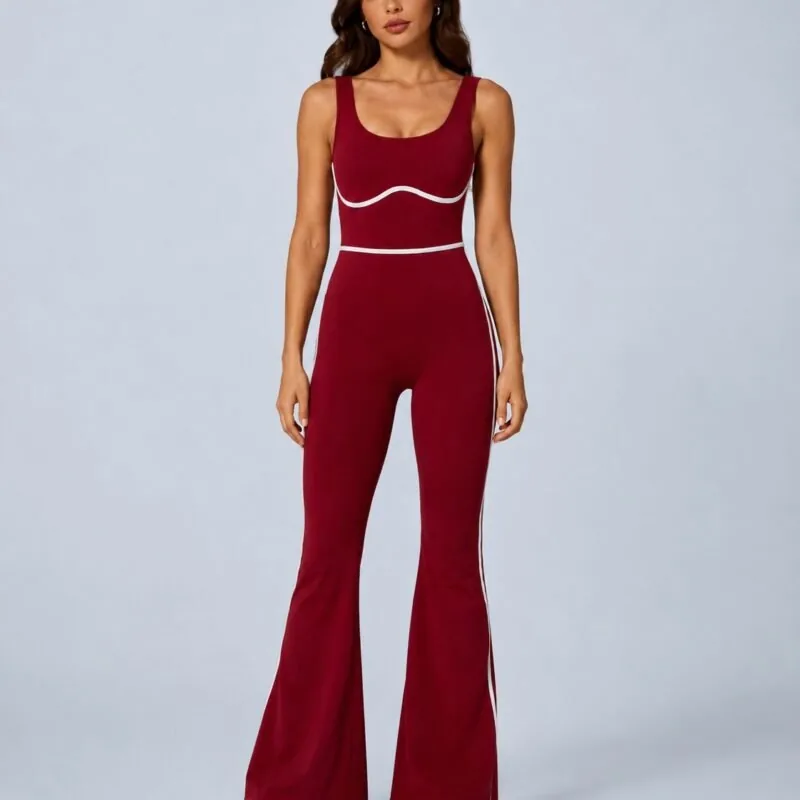
"Yoga pants" names a use rather than a construction: trousers in a stretchable knit fabric, worn for exercise or casual wear. That covers fitted pairs — leggings made for yoga — and slim-fitting pairs with a flared leg, which is why "flared leggings" and "yoga pants" often mean the same cut. Our note on flare and bootcut leggings patterning shows how the flare is built.
What tends to make a pair "yoga" rather than general-purpose:
- A softer hand, often brushed for a matte, suede-like surface.
- A high, wide waistband designed to remain comfortable when you fold forward.
- A gusset for deep lunges and wide-legged poses.
- Flat seams that do not press into the skin on the mat.
Some training leggings are denser or offer more hold, but that is a product choice, not a rule implied by the name. Yoga pants may suit yoga, Pilates, travel or lounging depending on their fabric and fit; they are also sold as yoga leggings, yoga tights or flared leggings.
Leggings vs joggers, sweatpants and track pants
These are the loose side of the family. Sweatpants are trousers in a soft cotton or cotton-blend fabric, usually with a drawstring or elasticated waist and sometimes elasticated cuffs, worn for exercising or relaxing. Joggers are the tapered, cuffed version of the same idea, normally in a knit such as fleece or French terry. Track pants are straighter and often smoother, and because a tracksuit is a matching jacket and trousers, tracksuit bottoms can be joggers.
For the gym, choose by the movement, coverage, warmth and pocket needs of the session. Leggings or yoga pants may reduce loose fabric around the legs; joggers can work for warm-ups, travel or training when their fabric and cut suit the activity. "Workout pants" can cover all of them. Check the finished garment for mobility, moisture handling and comfort instead of treating the name as a performance rating.
Jeggings, and leggings that look like trousers
"Jeggings" (jeans plus leggings) is a retail name for a close-fitting, jeans-like garment; it does not establish whether the fabric is denim or a denim-look knit. Check the composition and construction on the product specification. Trouser-look leggings may add a sewn crease, belt loops or pockets; neither name establishes training performance.
Men's leggings: usually sold as tights
Men's close-fitting athletic bottoms may be sold as running tights, compression tights or base layers, sometimes worn under shorts. Front-rise shape and room depend on the intended wearer, use and specific pattern; do not infer a required construction from the name. Compare the approved body and garment measurements for each style. More in our guide to men's activewear.
What leggings are called in Spanish
Spanish has no single word, and which one to use depends on the country.
- Leggings, also written leggins, is used as it stands, borrowed from English.
- Mallas is documented in Mexico for close-fitting elastic trousers: the Diccionario del español de México defines it as a garment made of elastic cotton, nylon or wool. In a product brief, mallas deportivas can refer to sports leggings or tights; specify the garment rather than assuming the same meaning in every country.
- Licra comes from LYCRA, a registered trademark of an elastane (spandex) fibre. The Diccionario de americanismos records licra as close-fitting trousers in stretch synthetic fabric in Costa Rica, Panama, Cuba, Puerto Rico, Ecuador and Peru, and marks it as little used in Colombia. In those uses, "licra de mujer" may refer to women's leggings; check the actual garment rather than assuming two retail names identify the same construction.
- One trap: in Bolivia, Paraguay, Argentina and Uruguay, malla on its own means a swimsuit.
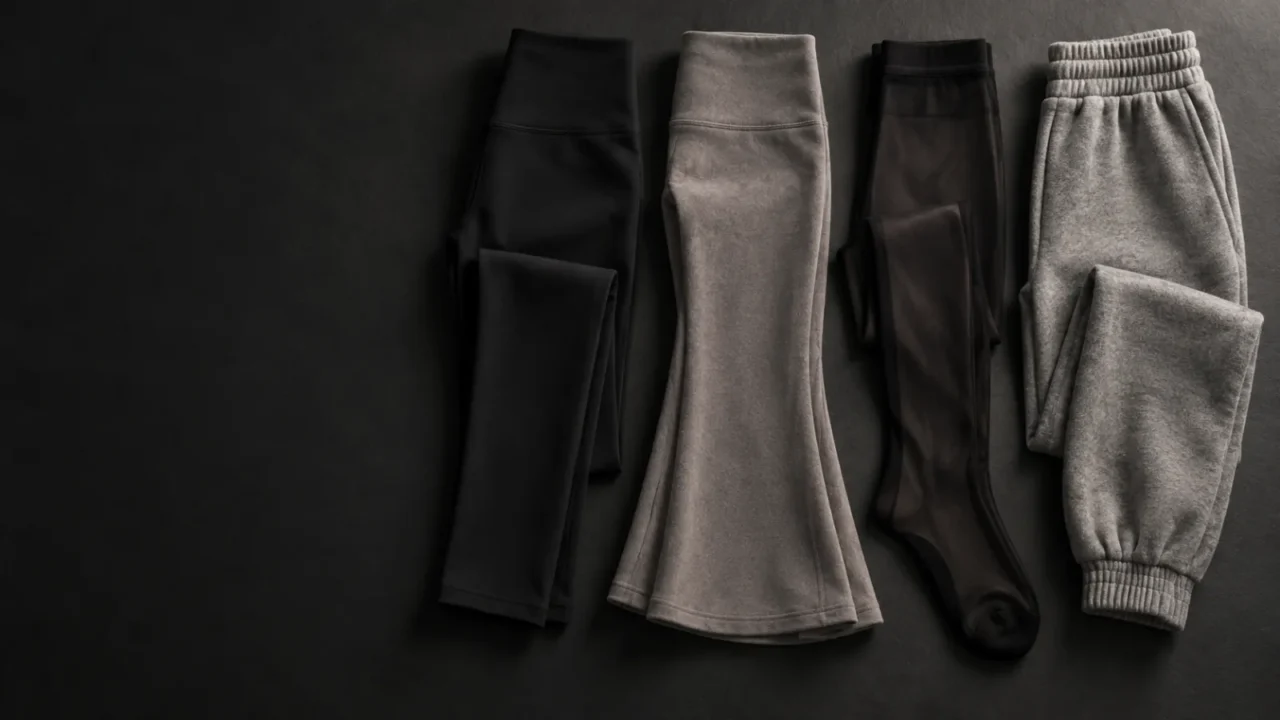
One block, three garments
A legging, a flared yoga pant and a jogger call for different fit decisions and may need separate patterns and grading. For each proposed style, compare a sample with its approved body and garment charts; check the chosen fabric's stretch and recovery before fixing ease, flare or cuff dimensions. Do not assume one base block works across fabrics or styles. We cut and sew at our Xiamen headquarters and make seamless styles in Yiwu; confirm fabric weight and available sizes for the specific style. Finished goods are inspected to AQL 2.5. See our leggings manufacturing page.
FAQ
Are leggings and yoga pants the same thing? They can overlap: "yoga pants" names an intended use, while "leggings" describes a close-fitting shape. A yoga pant may be fitted or flared; check fabric, rise, seams and fit for the style you are buying.
What is the difference between leggings, tights and pantyhose? British tights and US pantyhose commonly cover the feet; leggings commonly do not. Athletic running tights may also be footless. Fabric weight and opacity vary, so verify coverage and whether a particular style can be worn alone from its specification and sample.
Should I wear leggings or joggers to the gym? Either may work. Leggings offer a close fit; joggers offer a looser cut and may add warmth or pockets. Choose for the exercise and check the actual fabric, mobility and fit rather than assuming joggers are only for warm-ups.
What should a buyer specify for men's athletic tights? State the activity, intended wearer, layer use, body measurements, front-rise requirements and sample-fit criteria. A retail name does not establish a universal front-rise pattern.
What should I write in a Spanish-language product brief? Pair a local retail term with photos, fibre composition, coverage, construction and intended use. The Mexican dictionary records mallas for close-fitting elastic trousers; ASALE records licra for a similar garment in specified countries and malla as a swimsuit in others.
Choosing between a legging, a flared yoga pant and a training tight for your first style? Send us the use case and we will tell you which we would start with, and why.
Sources
- Asociación de Academias de la Lengua Española, Diccionario de americanismos, "licra"
- Asociación de Academias de la Lengua Española, Diccionario de americanismos, "malla"
- El Colegio de México, Diccionario del español de México, "malla"
- American Heritage Dictionary, "legging"
- Dictionary.com, "tights" (American entry and Collins English Dictionary British entry)
- Dictionary.com, "yoga pants"
- Dictionary.com, "jeggings" (retail term; fabric construction must be checked separately)
- American Heritage Dictionary, "sweatpants"