Updated November 2026. Written from YOUMEGA’s production floor.
The types of leggings in short
This catalogue covers 16 types of leggings, grouped five ways: length, waistband, cut, fabric and added features. Any one pair is a combination, for example a 7/8 high-rise compression legging with side pockets. When you brief a factory, pick one option from each group and the style is defined. Leave a group out and the factory will fill it with its own default.
| Type | What it is | Best for | What to specify to a factory |
|---|---|---|---|
| Full length | Ends at the ankle | Cold weather, coverage, everyday | Inseam per size, hem finish |
| 7/8 | Ends above the ankle bone | Studio, gym, shorter legs | Inseam per size, hem width |
| Capri (3/4) | Ends at mid-calf | Warm weather, running | Inseam, leg opening |
| Bike shorts | Ends at mid-thigh | Cycling, summer sets | Inseam, leg gripper or elastic |
| High-rise | Wide band at or above the navel | Most activewear lines | Band height, inner elastic or none |
| Crossover | Two front panels overlap in a V | Studio sets, shaping look | Panel layering, band height |
| Foldover | Tall band worn up or folded down | Yoga, lounge | Band height, fabric for the fold |
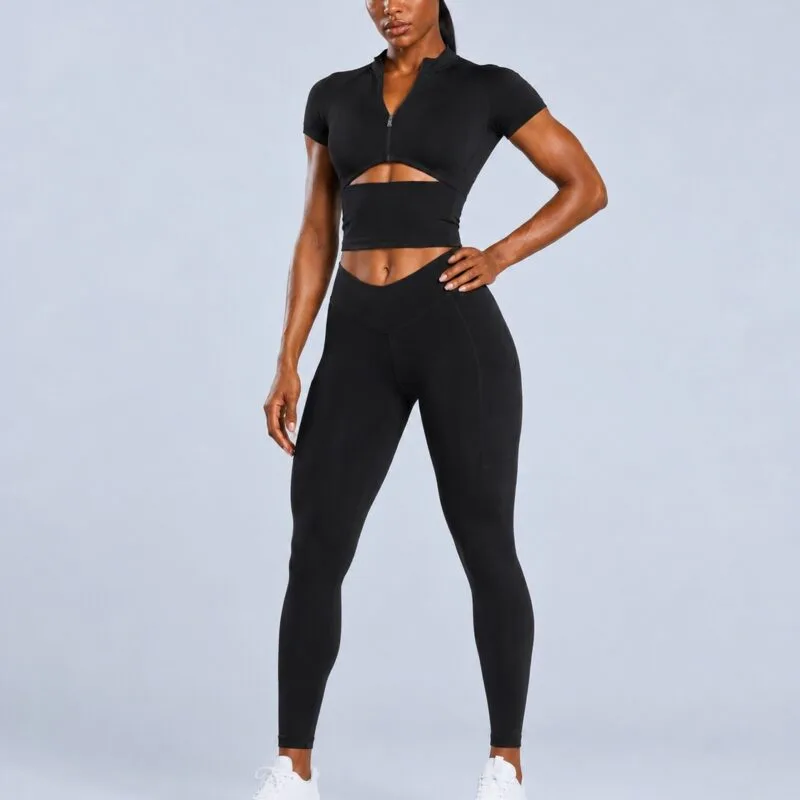
| Fitted (straight) | Close fit all the way down | Training, the core range | Leg ease, ankle opening |
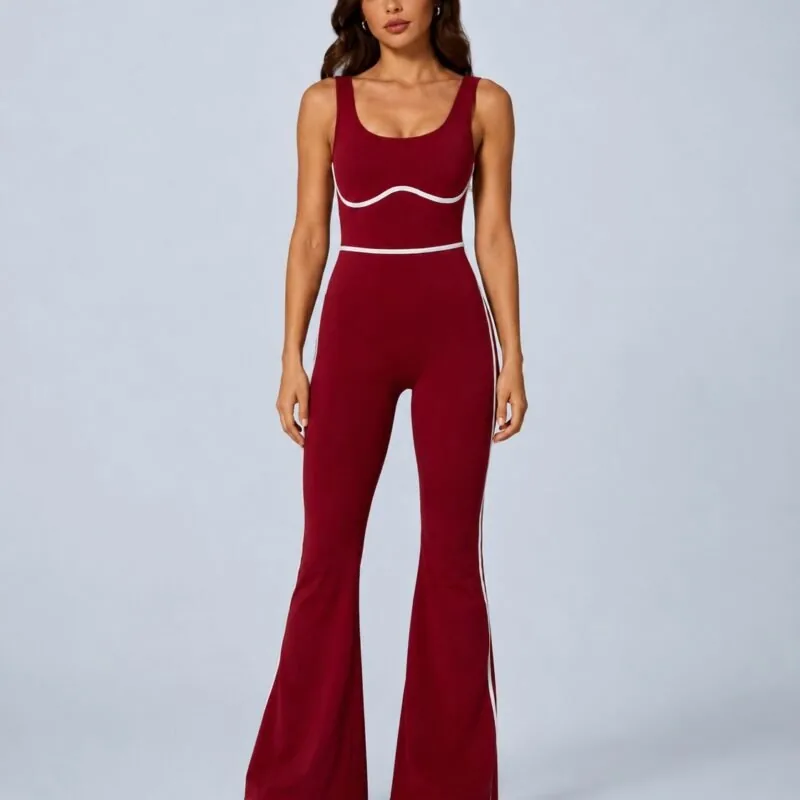
| Flare and bootcut | Fitted to the knee, then widens | Pilates, street wear | Knee point, hem width, fabric weight |
| Stirrup | Strap passes under the foot | Dance, barre | Stirrup width and stretch |
| Brushed soft | Peached or brushed surface | Yoga, lounge | Fabric, brushing, pilling check |
| Compression | Firm, heavier knit with high recovery | Training, squat-heavy sessions | 280–320 g/m², stretch and recovery |
| Ribbed | Rib knit with vertical ridges | Fashion sets | Rib repeat, opacity at full stretch |
| Seamless knit | Knitted as a tube with texture zones | Sculpting, textures | Yarn, knit zones, size range |
| Scrunch | Gathered centre-back seam | Gym, lift look | Gather method, depth of gather |
| Side, thigh or waistband pockets | Running, gym | Pocket size, layers, position |
Group 1: Length
Length is the cheapest change and the one buyers notice first. Write the inseam in centimetres or inches for every size on the tech pack, not one number for the base size, because shorter and taller customers need different grading. A single inseam graded up and down from a medium rarely suits petite or tall customers.
Full length
Full-length leggings end at the ankle bone or just below it. They suit cold weather, outdoor running and anyone who wants coverage. On shorter customers they bunch at the ankle, which is why many brands sell a petite length alongside. Specify the inseam per size and the hem: a coverstitch hem, a folded hem or a raw cut edge.
7/8
A 7/8 legging ends a few centimetres above the ankle bone. It is the default length in many studio and gym lines because it shows the ankle and avoids bunching. Specify inseam per size and hem width; a 7/8 hem that is too narrow leaves a mark on the calf.
Capri (3/4)
Capris end around mid-calf. They suit warm weather and running. Specify the inseam and the leg opening, and check that the opening does not ride up the calf when the knee bends.
Bike shorts
Bike shorts end at mid-thigh and use the same fabric and waistband as the matching leggings, which makes them an easy add to a set. The difficult part is the leg hem: it must stay down without cutting in. Specify an elastic or silicone gripper or a plain hem, and the inseam. Our bike shorts, biker shorts and compression shorts article covers the differences.
Group 2: Waistband
The waistband decides whether the legging stays up during a squat, so it deserves the most sampling time. Our waistband construction article covers the build options in detail.
High-rise
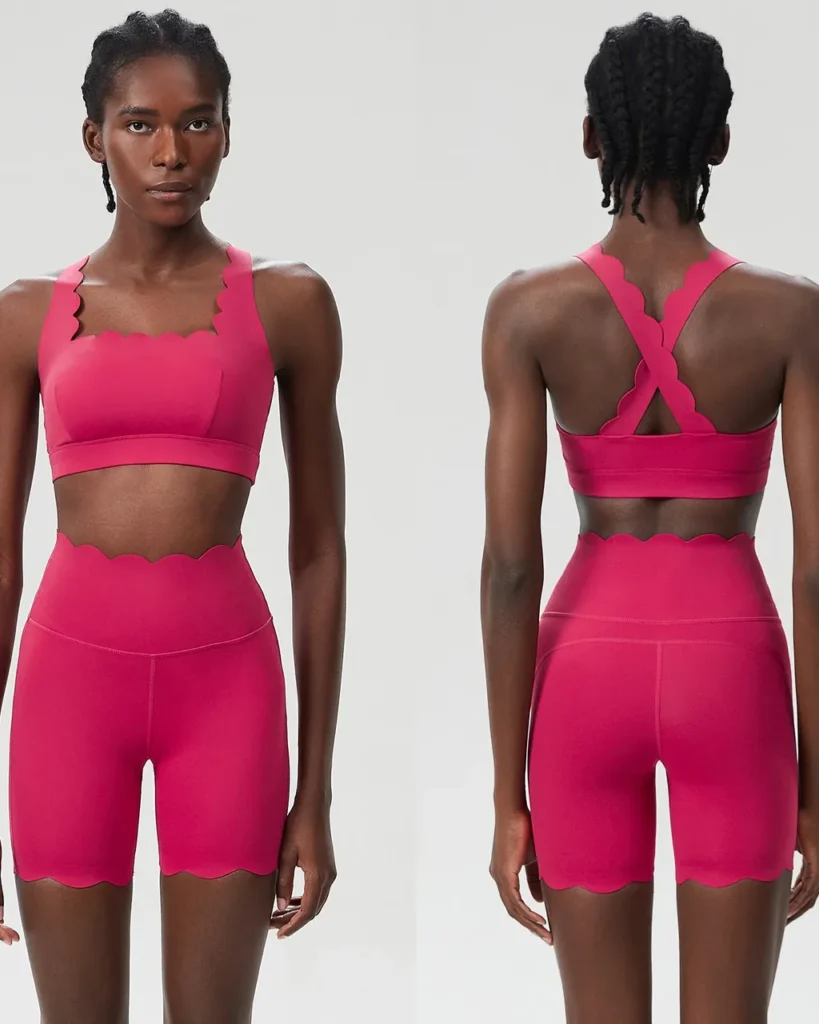
A high-rise legging has a wide band that sits at or above the navel. Most activewear lines use it. The band can be fabric only, folded double, or fabric with an elastic inside. Fabric-only bands feel smooth but rely on the fabric’s recovery. An inner elastic holds better on a heavier customer. Specify the band height, the number of layers and whether there is an elastic, with its width.
Crossover
A crossover waistband has two front panels that overlap in a V. It reads as a shaping detail and is popular in studio sets. Each panel needs its own lining or a clean folded edge, and the overlap must be stitched so it does not open when stretched. Specify the panel layering, the depth of the V and the band height.
Foldover
A foldover band is tall enough to wear up or fold down. It suits yoga and lounge styles. The fold puts the reverse side of the fabric on show, so choose a fabric that looks finished on both faces. Specify the band height and the fabric, and check the fold on the sample after one wash.
Group 3: Cut
Fitted (straight)
The standard legging: close-fitting from waist to ankle with little or no ease. It is the core of most ranges. The things to control are the gusset, the front seam and the ankle opening. Our article on front seam visibility and gusset design shows how to avoid the line that buyers complain about.
Flare and bootcut
These are fitted to the knee, then widen to the hem: a bootcut widens a little, a flare widens more. They suit pilates, studio-to-street and taller customers. A flare needs enough fabric weight to hang. Light fabric flaps rather than falls. Specify the knee point, the hem width and the fabric weight. Our flare and bootcut leggings patterning article has the details.
Stirrup
A stirrup legging has a strap that passes under the foot to stop the leg riding up. It is mostly for dance and barre. The stirrup takes the full pull of the leg, so specify its width, its fabric (often the body fabric, doubled) and how it is joined to the leg.
Group 4: Fabric
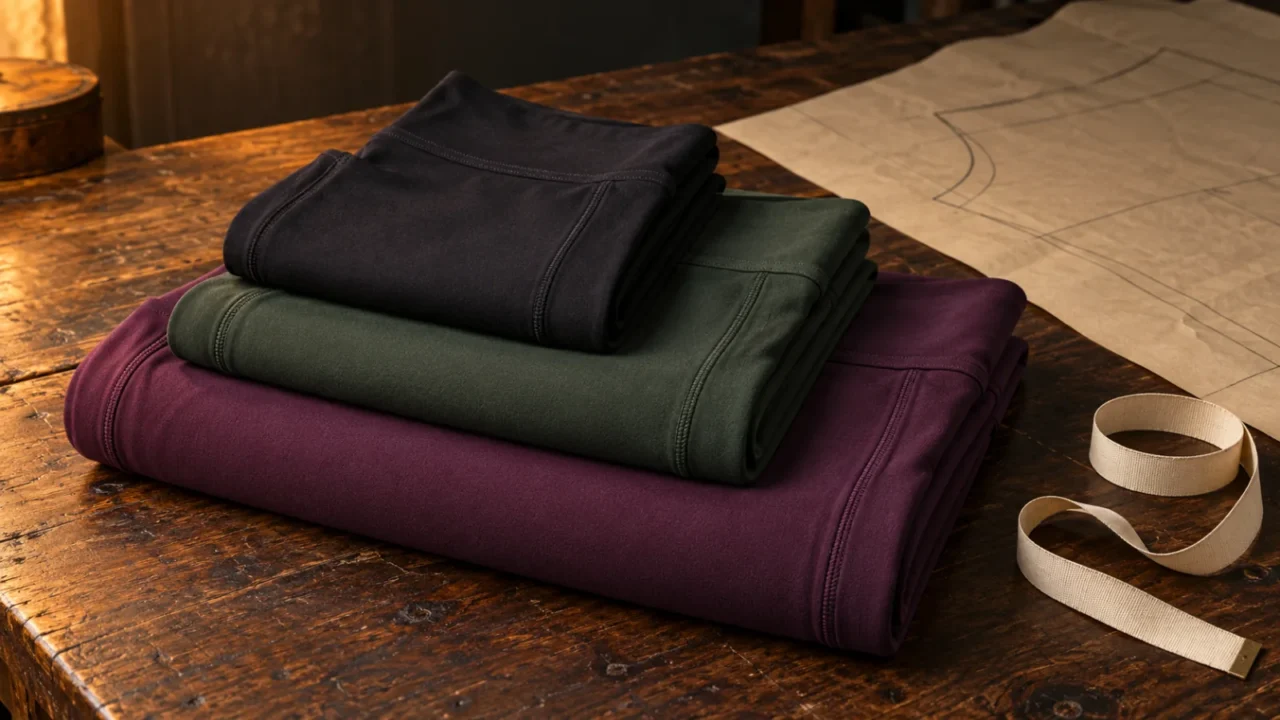
Fabric choice changes how the same pattern looks and fits more than any other decision. At YOUMEGA we run leggings fabric from 220 to 320 g/m². Our legging fabric weight guide explains the weight bands.
Brushed soft
Brushed (also called peached) fabric has its surface brushed to feel soft and matte, the “buttery” feel of many yoga leggings. It is comfortable and light on compression. Brushing raises fibre ends, so it pills more easily than a smooth face. Ask for a pilling result on the fabric and do not market it for squat-heavy training.
Compression
Compression leggings use a firmer, heavier knit with high recovery, usually nylon-spandex or polyester-spandex. They are the “squat-proof” style. At YOUMEGA the compression and squat-proof range runs at 280–320 g/m². Specify the weight, the composition and how stretch and recovery will be checked. Spandex quality counts as much as the percentage: a good 10% outperforms a poor 25%. Always do a squat test in daylight on the sample.

Ribbed
Ribbed leggings are cut from a rib knit, so vertical ridges show on the body. They hug and recover well, but the ridges open under tension, and a rib can go sheer across a stretched seat. Specify the rib repeat and check opacity at full stretch before approving.
Seamless knit
Seamless leggings are knitted as a tube on a circular knitting machine, with texture, compression zones or a scrunch effect knitted in. There are no side seams and very few seams overall. Size range depends on the machine’s cylinder: a small cylinder cannot knit a large enough tube for bigger sizes. Specify the yarn, the knit zones and your size range.
Group 5: Features
Scrunch
A scrunch legging has a gathered seam at the centre back that creates a lift effect. On cut-and-sew it is a seam with an elastic or a ruching strip; on seamless it can be knitted in. The depth of the gather must be the same in every size, or the effect disappears on larger sizes. Our scrunch butt-lift leggings construction article covers the methods.
Pockets go on the side of the thigh, at the hip, or inside the waistband at the back. A pocket that holds a phone needs double fabric and a pocket depth matched to the phone you are designing for. Specify position, depth, layers and whether the top edge is bound. Our leggings with pockets article shows the builds side by side.
What every legging spec needs
- Fabric composition, weight in g/m² and which face is out.
- Inseam and waist measurements for every size, with tolerances.
- Waistband height, layers and elastic.
- Gusset shape and whether there is a front seam.
- Seam type for each seam (flatlock or coverstitch) and the hem finish.
- Any pockets, scrunch or panels, with positions.
How YOUMEGA makes these
We make cut-and-sew leggings in Xiamen and seamless leggings in Yiwu on Santoni 17–21″ machines, which lets us make seamless styles up to 2XL/3XL. Leggings fabric runs 220–320 g/m², with 280–320 g/m² for compression and squat-proof styles. Stock styles with your logo start from 100 sets (mixed colours and sizes); full custom starts at 300–500 pieces per style per colour.
FAQ
What are the main types of leggings? By length, full, 7/8, capri and bike shorts. By waistband, high-rise, crossover and foldover. By cut, fitted, flare and bootcut, and stirrup. By fabric, brushed, compression, ribbed and seamless, plus scrunch and pocket features.
What is the difference between 7/8 and full-length leggings? A 7/8 ends above the ankle bone and a full length ends at or below it. The exact inseam is set per size on the tech pack.
What makes leggings squat-proof? A heavier, firmer knit with high recovery. YOUMEGA runs compression and squat-proof styles at 280–320 g/m², and every sample should pass a squat test in daylight.
Are seamless leggings better than cut-and-sew? They are different. Seamless gives knitted-in texture and almost no seams; cut-and-sew gives more fabric choice and more control over panels and pockets.
What weight should leggings fabric be? YOUMEGA makes leggings from 220 to 320 g/m². Lighter weights suit yoga and summer styles; 280–320 g/m² suits compression.
Can scrunch leggings have pockets? Yes. The scrunch sits at the centre back and side pockets sit on the thigh, so they do not clash, but both need to be on the first sample.
If one of these leggings types is on your plan, our leggings manufacturing page shows the stock styles and what a custom run needs.