Why White Activewear Is the Hardest Colour to Make: Opacity, Sweat and Yellowing
Ask a factory which colour causes the most remakes and the answer is almost always the same: white. Not because white is exotic, but because white hides nothing. Every weakness in the fabric, the dye house and the finishing shows up on a white garment, and it shows up on the customer’s body rather than in your sample box.
If you are building a tennis line, a summer capsule, or anything that has to meet a club dress code, this is worth understanding before you pick a weight.
Failure mode 1: opacity
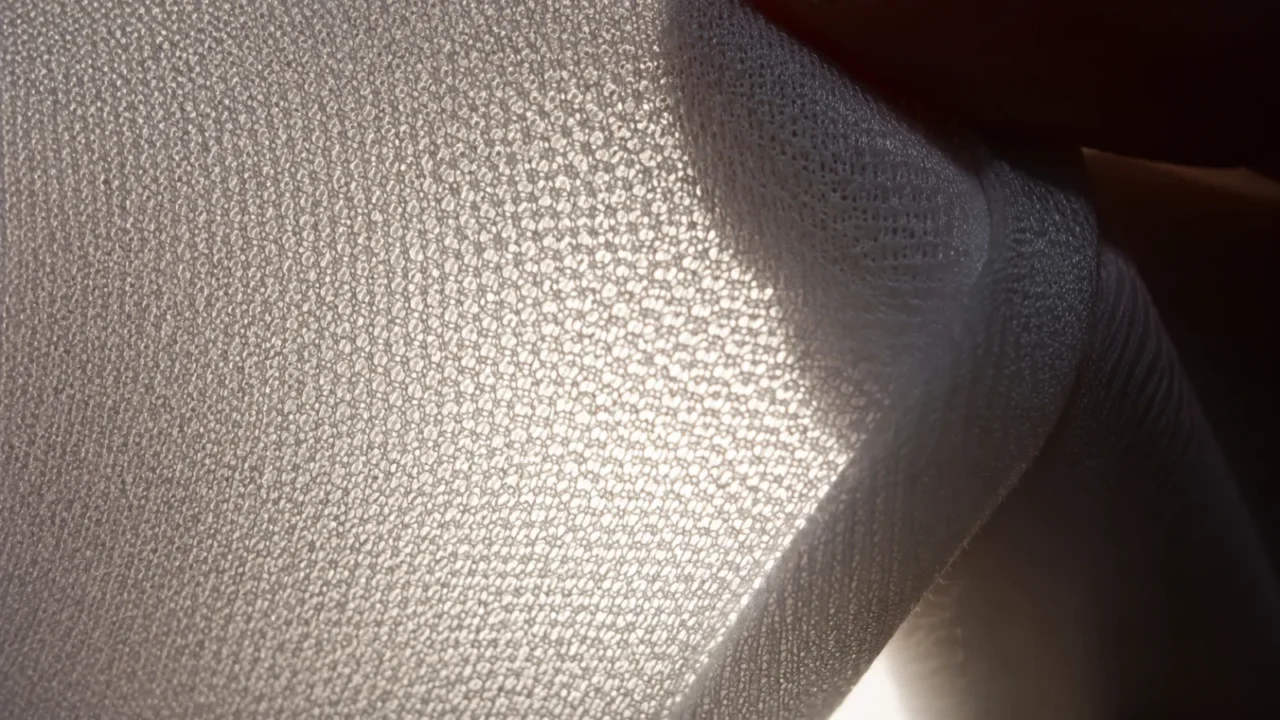
The single most common white failure is see-through — and it catches brands out because the same fabric behaves differently in white.
A knit at 220 g/m² can be perfectly opaque in navy and read semi-sheer in white. Dark dye fills the spaces between yarns and absorbs light; white does neither. So the fabric that passed your opacity check in a colourway can fail in white at the identical weight.
What actually controls opacity:
| Lever | Effect |
|---|---|
| Weight (GSM) | The blunt instrument. Heavier = more opaque. We run 220–320 g/m² across the leggings range; white styles usually sit at the upper end |
| Knit density | Two fabrics at the same GSM can differ in opacity depending on stitch density and yarn count — GSM alone does not decide it |
| Yarn | Finer, denser yarn packs the structure; texture and lustre change how light passes |
| Lining | The reliable fix, at a cost in weight, heat and price |
| Stretch state | Opacity must be judged stretched, not flat — a fabric that is opaque relaxed can open up over a squat |
That last point is where most opacity tests go wrong. Judging a white swatch on a table proves nothing. It has to be tested stretched, on the body, in the actual garment weight — which is what we do before bulk rather than after.
Failure mode 2: sweat
White shows moisture more visibly than any other colour. On a dark legging, a sweat patch is nearly invisible; on white, it is a dark map. And unlike opacity, this one only appears in real use — never in a fitting room.
Two things reduce it:
- Moisture management: a fabric that moves sweat across a wider area and dries faster shows a smaller, lighter patch. This is a fabric and finish decision, specified up front
- Structure: some knit structures diffuse moisture better than others at the same fibre content
There is no finish that makes white immune. The realistic goal is to shift how fast and how visibly it appears, and to test it in wear rather than promise it in a spec.
Failure mode 3: yellowing and whiteness drift
This is the one that ruins reorders.
“White” is not one colour. It is a base fibre plus optical brightening agents (OBAs) plus finishing. Change any of the three and the white shifts. Which produces two distinct problems:
Between components. A top, a skirt, a lining and a binding may come from different mills or different lots. Sewn together, mismatched whites read as “cheap” instantly — the eye is extremely good at spotting white against white. This is a colour-matching job, and it has to be done on the actual materials, not on paper.
Over time. White can yellow with washing, UV exposure, heat, and residue from body oils or detergents. Optical brighteners wash out gradually; some finishes yellow under heat. A white that looks perfect at delivery can look tired after twenty washes — and the customer blames the brand, not the dye house.
Both of these are dye-house discipline problems, which is why we screen for them the same way we screen colourfastness: whiteness measured against an approved standard, matched across every component, and re-checked at bulk against a sealed reference at AQL 2.5.
Primary sources
- AATCC — test methods for colourfastness to washing, light and perspiration, and for whiteness/yellowing evaluation — https://www.aatcc.org/
- ISO/TC 38 (Textiles) — international standards for textile testing including colour measurement — https://www.iso.org/committee/48148.html
- OEKO-TEX — STANDARD 100 tests finished textiles for harmful substances, including in the finishing chemistry used on whites — https://www.oeko-tex.com/
What to specify when you order white
- Opacity as a pass/fail you will test — stretched, in the finished weight, not “should be opaque”
- Which components must match — and confirm they are matched on real materials, across mills
- Whiteness retention expectations — and a wash test that reflects how your customer actually launders
- Whether lining is in or out — decide deliberately; it changes weight, heat and cost
- Care label wording — realistic instructions extend the life of a white garment more than any finish
Custom white development runs the same as any custom colour: 300–500 pcs per style per colour. Stock styles with your logo start from 100 sets, mixed colours and sizes.
Questions that separate a real answer from a hopeful one
- Has this white been opacity-tested stretched, at this weight?
- Are all white components matched to one standard, across mills and lots?
- What does this white look like after twenty washes — has anyone checked?
- Is the whiteness sealed as a reference for bulk, or judged fresh each time?
FAQ
Why is white activewear see-through when the same fabric isn’t in other colours? Because dark dye fills the structure and absorbs light while white does neither. The same knit at the same GSM can be opaque in navy and semi-sheer in white. Opacity has to be tested on the actual white, stretched, in the finished weight.
What GSM do I need for opaque white leggings? There is no single number, because knit density and yarn matter as much as weight. White styles generally sit at the upper end of the 220–320 g/m² range, and some designs need a lining regardless. Test rather than assume.
Why does white activewear turn yellow? Optical brighteners wash out over time, and heat, UV and residues from body oils or detergents can yellow certain finishes. It is a dye-house and finishing quality issue, and it shows up over the life of the garment rather than at delivery.
Why don’t my white pieces match each other? Because “white” varies by base fibre, optical brightener and finishing — and components often come from different mills or lots. Whites must be matched to one approved standard on the actual materials, then sealed as a reference for production.
Does lining solve opacity? Reliably, yes — at a cost in weight, heat and price. The alternative is a heavier or denser single layer. Which is right depends on your climate and price point, and it is a decision worth making deliberately at the brief stage.
Planning a white line and want it to survive twenty washes? Send us the weight and the dress code you’re working to — we’ll test opacity stretched, match the whites across every component, and show you the wash result before you commit. Reply within 24 hours on weekdays.