How to Choose a Compression Shirt for the Gym: What the Spec Sheet Won’t Tell You
For gym use, choose a top cut for even compression, then check four-way stretch performance and seam comfort; sizing down a regular tee is not the same thing.
Four things decide whether a compression top actually supports you: fit intent, fabric weight, elastane content and seam construction. Everything else on the label — the marketing name, the colour, the “technology” — is downstream of those four. Get them right and the shirt works through a full session; get them wrong and you own an expensive garment that just feels tight.
Here is how to read a compression top the way a factory reads it.
First: compression is not “tight”
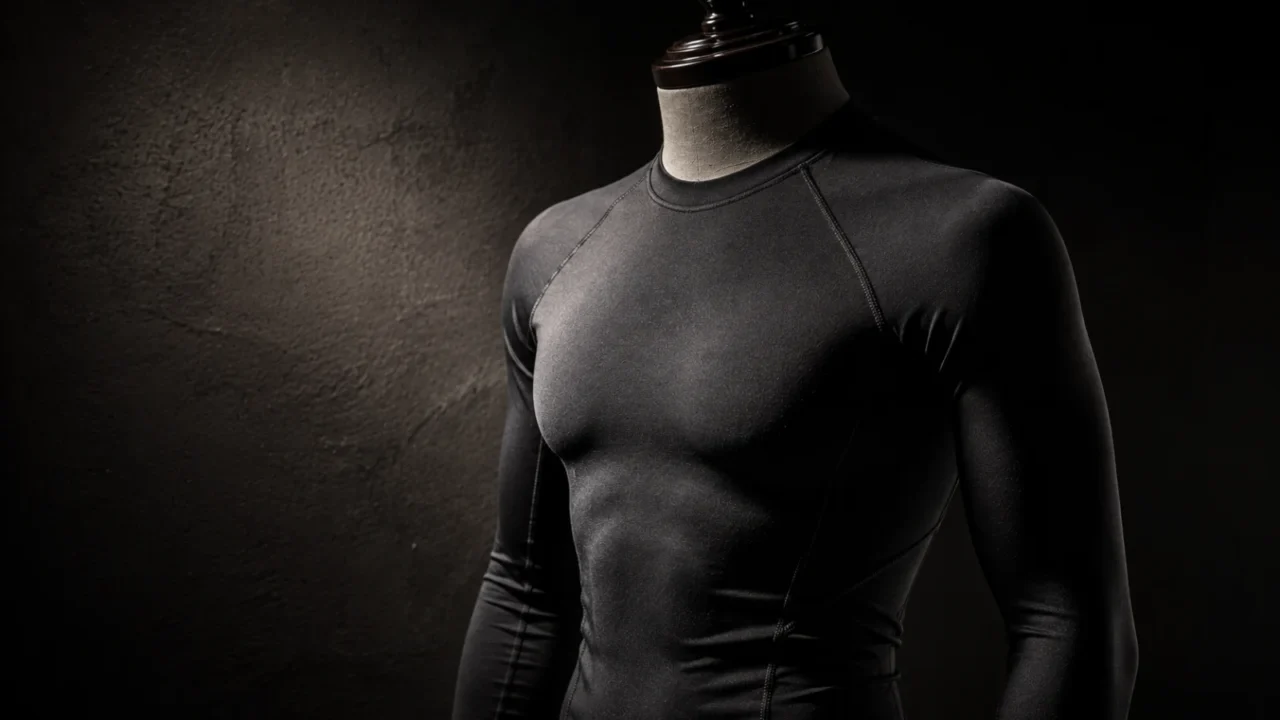
This is the distinction most buying guides skip. A regular fitted shirt one size down is tight. A compression shirt is engineered: denser knit, higher elastane content, heavier fabric, and a pattern cut with deliberate negative ease so pressure is even rather than concentrated.
The difference shows up in use. A sized-down regular shirt restricts at the shoulders and stresses the seams; a compression shirt distributes pressure across the torso and stays put through overhead movement. Same tightness, completely different experience.
| Sized-down regular shirt | True compression shirt | |
|---|---|---|
| How the tightness is achieved | Smaller size | Pattern + fabric engineering |
| Pressure distribution | Concentrated at widest points | Even across the panel |
| Fabric | Standard weight, standard stretch | Denser knit, higher elastane |
| Behaviour in movement | Rides up, restricts, stresses seams | Stays in place |
| Seams | Whatever the base style used | Flat seams positioned away from friction |
The four things to check
1. Fit intent — stated in words, not guessed. Ask (or read) which of these the product is: compression, athletic/fitted, or relaxed-fit. A seller who can’t answer this in one word is selling a fitted shirt, not a compression shirt.
2. Fabric weight. Heavier fabric holds shape and delivers support; lighter fabric moves and breathes. Compression tops sit at the heavier end of their category — lighter than compression leggings, which run at the top of our 220–320 g/m² range, but noticeably heavier than a standard training tee. If you want to reason about weight for your own product, the GSM selector walks through the trade-offs.
3. Elastane content — and recovery, not just stretch. Compression needs meaningful elastane, but the number that predicts real-world performance is recovery: whether the fabric returns to shape, not just how far it stretches. A high-stretch fabric with poor recovery feels great for one hour and bags out by the end of the session. Recovery is measured on a bench, not judged by hand — see stretch and recovery testing.
4. Seam construction. Compression garments sit against skin under load, so seam choice is a comfort decision, not a cost decision. Flatlock seams lie flat with no ridge against the skin; standard overlock seams are bulkier and can chafe under a pack or a bar. The difference is explained in flatlock vs overlock, and the knit family behind the fabric in rib, jersey and interlock structures.
The claims to be sceptical of
mmHg numbers on gym compression wear. Millimetres of mercury is a medical compression scale used for graduated medical garments. There is no universal apparel standard for compression levels in sportswear, so an mmHg figure printed on a gym top without garment-level lab data behind it is marketing, not measurement. Honest brands describe engineered compression and can show what they tested; the wider discipline is in which performance claims you can actually print.
“Improves recovery/performance” as an absolute. Research on compression garments is mixed and effect sizes are modest; comfort, support and proprioception are the reliable benefits. A seller who promises measurable performance gains is over-claiming.
Primary sources on sizing, testing and claims
- AATCC — test methods for fabric stretch and recovery performance — https://www.aatcc.org/
- ASTM International — standard body-measurement tables and textile test methods used in apparel specification — https://www.astm.org/
- U.S. Federal Trade Commission — substantiation requirements for objective product claims in advertising — https://www.ftc.gov/
A two-minute in-store (or unboxing) test
- Pull the hem laterally, then release. Does it snap back fully, or return slowly and slightly loose? That’s recovery, felt roughly.
- Raise both arms overhead. Does the hem stay put or climb? A compression top that rides up wasn’t patterned as one.
- Run a finger along an inside shoulder seam. Flat or ridged? Ridged is what you’ll feel at rep 30 under a bar.
- Check the weight in hand against a standard tee. Noticeably more substantial is expected; identical means it’s a fitted shirt with a compression name.
If you’re specifying, not buying
For brands developing a compression line, the same four levers become your spec sheet: state fit intent in words, target fabric weight and elastane content deliberately, specify recovery as a measured value rather than a description, and choose the seam type consciously. Custom development runs 300–500 pieces per style per colour; stock styles with your logo start from 100 sets with colours and sizes mixed, which is enough to fit-test a real range before committing.
Want to see what the brands sell? See compression shirt brands (2026): tank, short-sleeve and long-sleeve tops from 5 brands.
FAQ
How do I choose a compression shirt for the gym? Check four things: stated fit intent (compression vs fitted), fabric weight (heavier than a standard tee), elastane content with measured recovery, and seam type (flat seams for skin contact). Everything else on the label follows from those.
Is a compression shirt just a tight shirt? No. Compression is engineered — denser knit, higher elastane, heavier fabric and a pattern cut for even pressure. A regular shirt sized down is tight in the wrong places and stresses its seams without delivering consistent support.
Do mmHg numbers mean anything on gym compression wear? Not reliably. mmHg comes from medical compression, and no universal apparel standard exists for sportswear compression levels. Without garment-level lab data, an mmHg figure on a gym top is a marketing number.
What fabric weight should a compression top be? Heavier than a standard training tee, and lighter than compression leggings, which sit at the top of the 220–320 g/m² range. Weight is what holds shape; the exact target depends on the knit and the intended use.
Why does my compression shirt feel loose after an hour? Poor recovery. The fabric stretches far but doesn’t return, so it relaxes during use. Recovery is measured on a bench test and is the property that separates a compression top that works from one that only starts out tight.
What is the difference between muscle fit and compression fit? Muscle fit is a cut; compression is a fabric-and-pattern system. A muscle-fit tee is tapered through the chest and sleeve so it reads close on the body, usually in standard jersey with little elastane. A compression top adds a denser, heavier knit with measured recovery and negative ease built into the pattern, so it holds the torso rather than simply hugging it.
Should I size down for a compression top? No — take your normal size from the brand’s body-measurement chart. The negative ease is already in the pattern, so sizing down concentrates pressure exactly where the garment was not engineered to carry it: shoulders, armhole and seams. If you fall between sizes, choose on chest measurement and check the activewear size chart guide rather than trusting the letter on the label.
Which compression top suits which training? Match the weight to the session. Heavier, denser tops hold their shape under load and suit lifting and general gym work; lighter constructions move more freely and feel cooler for running or hot conditions. Whatever the weight, look for flat seams at the shoulder and underarm if you train under a bar or a pack, and check the hem stays put when you reach overhead.
How do I stop a compression top bagging out over time? Wash it cool and air dry it. Elastane loses recovery permanently with heat, so tumble drying and hot washes shorten a compression garment’s working life faster than training does; fabric softener is the other one to avoid. If a top bags out within a few weeks of gentle washing, the fabric’s recovery was never specified properly in the first place.
Developing a compression line and want the spec to match the promise? Send us the training use and target fit — we’ll spec the weight, elastane and recovery, and fit-test it across your size range. Reply within 24 hours on weekdays.