How to Start an Activewear Brand in 2026: A Step-by-Step Guide
Short answer: Starting an activewear brand comes down to seven steps — pick a niche, lock your designs, find a real manufacturer, choose fabric, sample, produce, and launch. The biggest blocker for first-time founders is the factory: high MOQs and slow samples. With a low-MOQ manufacturer you can start from 100 sets (stock styles with your logo) and get a first sample in ~7 days, then scale into full custom as you grow.
We’ve helped 1,000+ private-label projects launch since 2017 — this is the path that actually works, written from the factory floor.
1. Pick a focused niche
Don’t launch “activewear for everyone.” The brands that win start narrow: a specific audience (pilates studios, plus-size lifters, modest activewear, postpartum) and a hero product. A tight niche makes your marketing cheaper and your first order smaller and safer.
2. Lock your designs (you don’t need a perfect tech pack yet)
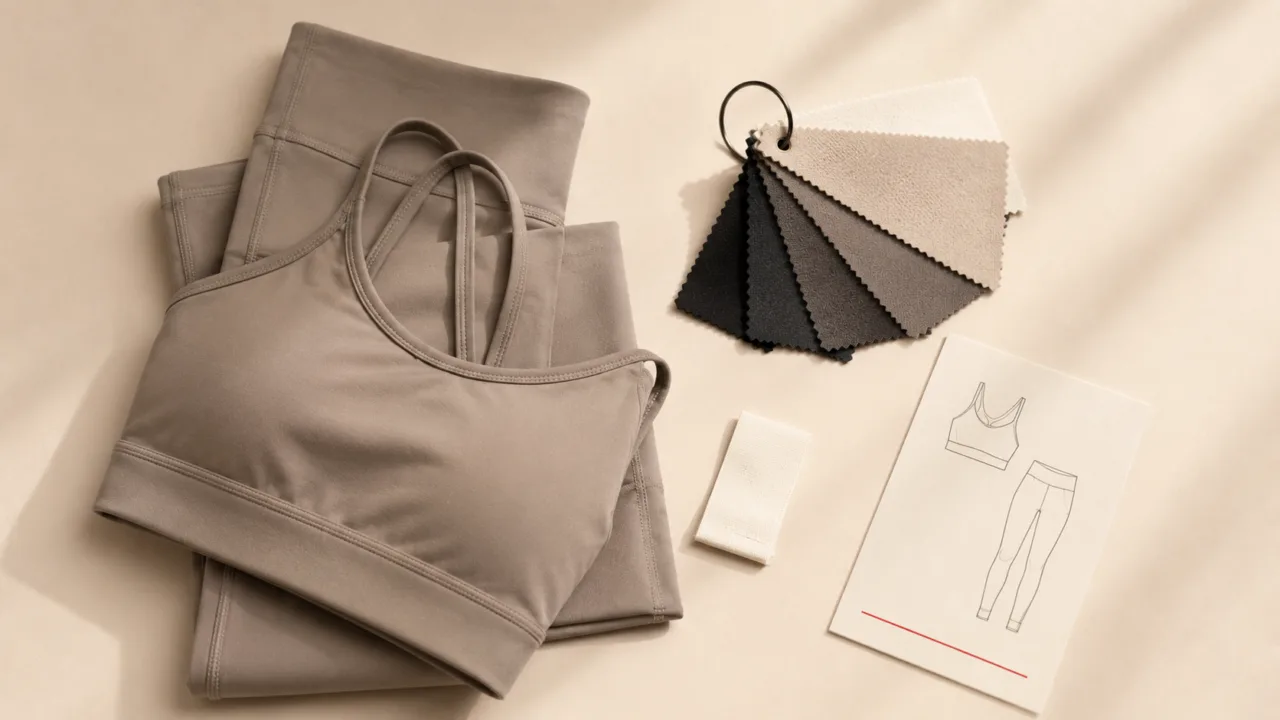
You can start with reference samples, sketches or clear photos plus your logo. A good manufacturer will help you turn those into a tech pack — the spec sheet that defines fabric, measurements, construction and logo placement. Nail the hero style first; expand the range later.
3. Find a real manufacturer — not a trading company
This is where most brands lose money. A factory vs a trading company is the difference between factory-direct pricing with line-side quality control, and a middleman marking up an unknown supplier. Ask any candidate for their factory address, export license and a production-line video — a real manufacturer can show all three.
4. Understand MOQ — start small, scale later
MOQ (minimum order quantity) decides how much you gamble up front. Two realistic routes:
- Stock styles + your logo: from 100 sets, mixed colors and sizes — the safest way to test what sells.
- Full custom (your own designs/colors): 300–500 pcs per style per color.
Start on the stock-plus-logo route to validate demand, then move to full custom once you have sales data. (More in our MOQ guide.)
5. Choose the right fabric
Fabric is what customers feel. For activewear that means four-way-stretch, moisture-wicking, squat-proof knits — typically polyamide-elastane, with recycled rPET / ECONYL options if sustainability is part of your brand. Ask for the GSM (weight) and a worn stretch test, not just a flat swatch.
6. Sample, then produce
Never skip the sampling stage — it’s the only point to fix fit, opacity and color cheaply. Expect ~7 days for a stock-plus-logo sample, ~10–15 days for full custom. Once you approve the sample, bulk runs against it under AQL 2.5 inspection with a first-production-line check so the order matches what you signed off.
Three free tools for this stage: the GSM Selector picks the fabric weight your product needs, the First Order Calculator builds a size curve and colour split, and the Brand Kit Visualizer shows your logo on real garments before you commit.
7. Branding, packaging & launch
Tagless heat-press interior labels, embroidered or printed logos, custom hangtags and branded mailers turn a blank garment into your brand. Get these specified before bulk so your first drop arrives retail-ready.
Regulatory documents to add before launch
A production-ready launch file needs more than product artwork. The FTC Care Labeling Rule requires covered manufacturers and importers to provide regular care instructions and hold a reasonable basis for them; the FTC apparel-labeling guidance covers fibre content, country of origin and responsible-business identity; and the CPSC wearing-apparel summary points buyers to the general clothing-textile flammability requirements in 16 CFR part 1610. Put the target market, label copy and supporting test evidence into the tech pack before bulk approval.
How long and how much?
At YOUMEGA, stock-plus-logo samples take 7 days and bulk takes 20–25 days; OEM development samples take 10–15 days, ODM samples about 7–10 days excluding design preparation, and fully custom bulk takes 30–35 days. Bulk runs from order confirmation to factory dispatch; shipping takes extra time. Starting on the 100-set route keeps your first investment low while you prove the concept.
FAQ
How much money do I need to start an activewear brand?
Less than most expect if you start on the stock-plus-logo route (from 100 sets) instead of full custom. Your main costs are samples (refundable against bulk), your first production run, and branding.
Do I need a tech pack to get started?
No. Start with reference samples or photos and your logo; a manufacturer can develop the tech pack with you.
What’s a realistic MOQ for a new brand?
From 100 sets for stock styles with your logo; 300–500 pcs per style per color for full custom development.
How long until I have product to sell?
Stock-plus-logo sampling takes 7 days and bulk takes 20–25 days from confirmed order to factory dispatch. OEM development samples take 10–15 days; ODM samples take about 7–10 days excluding design preparation. Fully custom bulk takes 30–35 days to factory dispatch. Shipping is additional.
Is starting an activewear brand actually a good business?
It can be, and the hard part is demand rather than manufacturing. From the factory side, the brands that come back for a second run launched with one or two focused styles, ordered a small first quantity to test them, and had a way to reach buyers before production. The ones that stall usually ordered a wide range before proving any of it. Our guide to activewear brand startup costs covers what a first run involves.
What is the difference between a clothing brand, a clothing line and a collection?
A brand is the name, positioning and customer promise you own; a fashion brand usually just signals a trend-led one. A line is the group of products sold under the brand — your activewear line. A collection is one release within that line, usually tied to a season or a drop. Label is used loosely for both the brand name and the woven or printed label inside the garment, which is where quotes get confusing.
How should I choose my activewear brand name?
Pick it for the niche you chose in step one, then check it survives production. Long names and fine serif letterforms lose definition when they are embroidered small or heat-pressed inside a waistband, and very wide marks force a smaller label. Check the name is free to register in your market before you commission artwork, because relabelling a produced order is expensive.
Should I dropship activewear instead of making my own?
They are different businesses. Dropshipping sells someone else’s product with their fit, fabric and labels, so you carry no stock but own nothing; producing means you specify the fabric and fit, and your own label goes in the garment. If cash is the reason you are considering dropshipping, the stock-style-with-your-logo route is the smaller commitment, from 100 sets with mixed colors and sizes.
Does this process also work for a sportswear or shapewear brand?
Yes — the seven steps are the same, and so are the MOQ and sampling routes. What changes is the fit work: shapewear and compression styles are graded tighter, so the size set and the stretch of the fabric matter more, and it is normal to need an extra fit round before the sample is approved. Say which category you are launching when you send the brief.
Ready to start?
Send your idea, references and logo to [email protected] (or +86 156 0697 2725) — we’ll reply within 24 hours with fabric options, MOQ, a quote and a sample timeline.