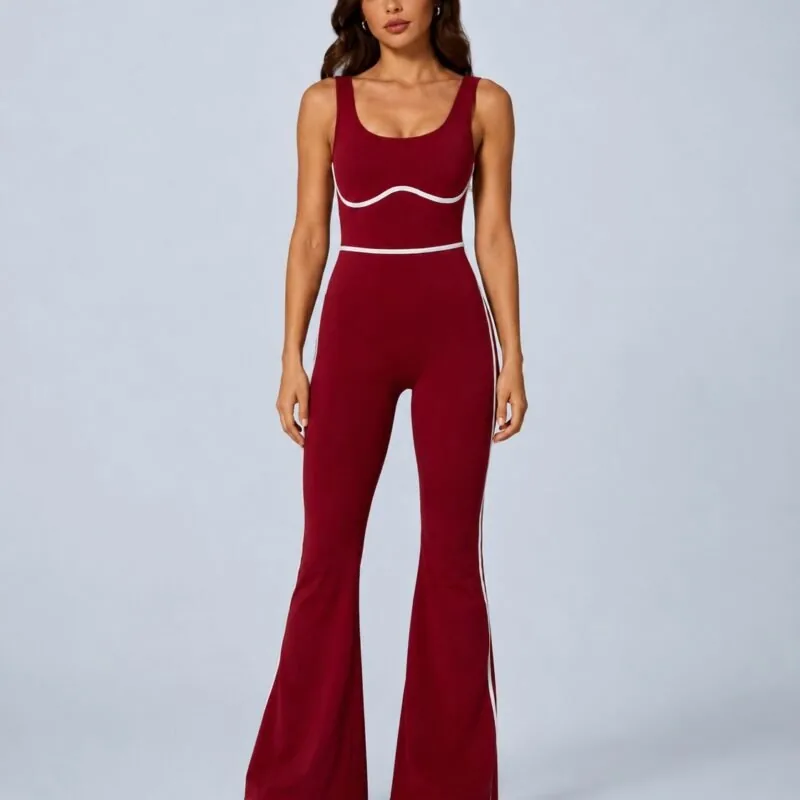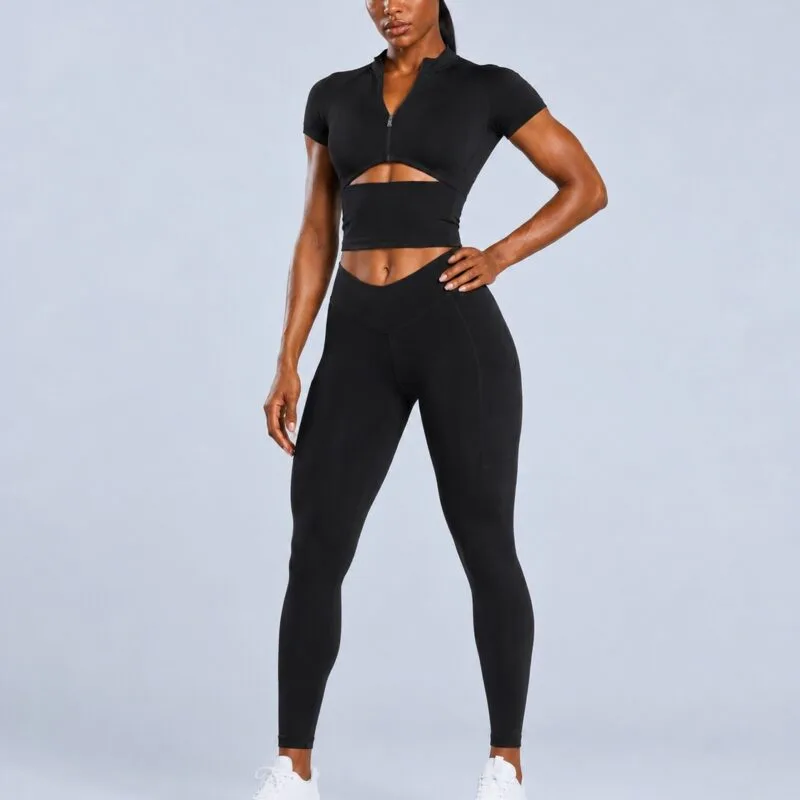
Short answer: Most activewear looks alike because most brands start from the same base fabrics, the same stock patterns and the same safe colours, and a small first order pushes them to change nothing but the logo. You don’t need a fully custom collection to stand out. Make two or three changes customers will notice, build them on a pattern that already fits, and repeat one signature detail on every piece. AI image tools can speed up the ideas, as long as you brief them with your own customer instead of asking for “a trendy yoga set”.
Scroll any marketplace and you’ll see the same V-waist leggings, the same racerback bra and the same handful of colours under dozens of different labels. That isn’t a lack of taste. It’s how small-batch activewear is supplied, and once you see how it works, you can design around it.
Five reasons so much activewear looks the same
1. Everyone buys from the same fabric racks. Mills sell their stock fabrics to many factories, and factories sell finished styles to many brands. That is what makes small orders possible, and it is why so many leggings share the same soft matte feel and the same sheen. Our note on stock fabric and custom-knitted fabric explains when it’s worth leaving the rack.
2. Stock styles are made to be sold more than once. A stock style in a factory catalogue, ours included, is offered to many brands. That keeps the minimum low and the sample fast. Order it as it is, add a logo, and the label is the only thing that separates you from the next brand that picked it.
3. Safe colours win the first order. Black and soft neutrals are the least risky colours to hold in stock, so first collections lean on them and end up hanging next to everyone else’s.
4. Everyone briefs from the same screenshots. Founders save the same best-sellers from the same feeds and send factories near-identical reference photos.
5. AI, used lazily, returns the average. Ask an image generator for “a trendy matching yoga set” and it gives you the most typical answer it can, which looks like what everyone else already sells.
The fix isn’t a bigger budget. It’s knowing which changes customers notice, and which of them move your minimum order.
What customers actually notice
Customers don’t read fabric specs before they fall for a style. In a photo, or on their body, they notice three things:
- Lines: the neckline, the strap layout, the back, the shape of the waistband and the hem.
- Surface: texture (a rib, a knitted pattern, brushed or smooth), sheen, and how colours are paired.
- A detail that works: a pocket that really holds a phone on a run, a strap that adjusts, coverage where they want it.
One change from each group is enough to make a style read as yours. Then pick a signature, such as a scalloped edge, a contrast binding, a seam line or a logo position, and repeat it on every piece. Repeating one detail is what makes a ten-piece collection look designed rather than assembled, and it gives customers something to recognise before they see your logo.
Seven ways to make a style yours, ranked by minimum order
Every change falls into one of two routes. Changing how a stock style is branded and combined keeps you in the low-minimum route. Changing the garment itself, its pattern, fabric or colour, makes it a development order.
| Change | Examples | Route at YOUMEGA | Minimum | Sample |
|---|---|---|---|---|
| 1. Logo method and position | Silicone 3D, embroidery, heat transfer, reflective; on the back waistband, thigh, strap or hem | Stock style + your logo | From 100 sets, mixed colours and sizes | 7 days |
| 2. Colour pairing | A bra in one stock colour with leggings in another; one contrast colour across the range | Stock style + your logo | From 100 sets, mixed colours and sizes | 7 days |
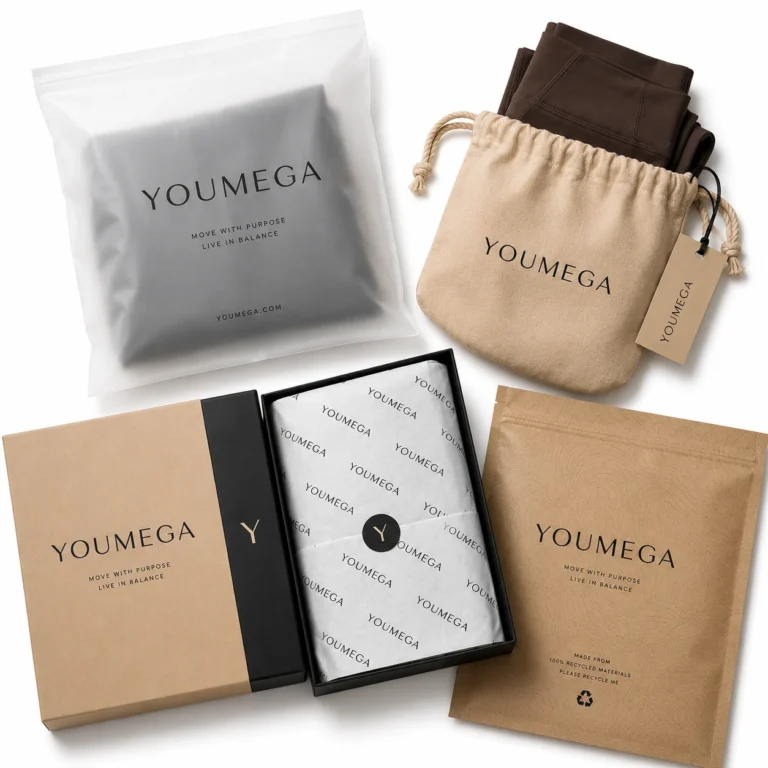
| 3. Labels, hangtags and packaging | Woven or printed labels, hangtags, bags and boxes | Added to your order | Options and minimums confirmed for the chosen style | — |
| 4. Pattern changes on our base design | Length, neckline, strap layout, back opening, pockets, waistband shape | Development on our base design (ODM) | 300–500 pcs per style per colour | About 7–10 days, not counting design preparation |
| 5. Your own colour | A Pantone TCX shade matched on the fabric | Custom colour | 300–500 pcs per style per colour, depending on the fabric | Lab dip approved before bulk dyeing |
| 6. Fabric and surface | Rib, brushed or smooth, a knitted seamless texture, or a fabric knitted to your spec | Custom development | 300–500 pcs per style per colour; a custom-knitted fabric adds its own knitting run, quoted per spec | Depends on the fabric route |
| 7. A new design from your tech pack | Everything, to your specification | Full custom (OEM) | 300–500 pcs per style per colour | 10–15 days |
Rows 1–3 change how a style is presented. Rows 4–7 change the garment, which is where real difference lives and where the minimum moves from 100 sets to 300–500 pieces per style per colour. Bulk production then takes 20–25 days for stock styles with your logo and 30–35 days for full custom, from order confirmation until the goods leave the factory; shipping is extra, and current figures are on our lead-times page. Adjustments to the original sample are free, but major changes are charged again, so settle your changes before sampling.
For the branding rows, see five logo methods side by side; for your own colour, see Pantone colour matching.
The shortcut: change a proven style instead of starting from a blank page
When you build on one of a factory’s base designs, the pattern has already been cut, graded and worn. The fit work is done, so the sample tests only what you changed. For a first development, use the three-change rule:
- One change customers see first: a neckline, a strap layout, a waistband shape or a colour pairing.
- One change they feel: a pocket that holds a phone, a higher back, a brushed surface, an adjustable strap.
- One signature you will repeat across the collection.
Some changes look small on a sketch and are not small in a factory:
- A different fabric. A fabric with different stretch fits differently, so the pattern has to be checked again.
- A seam moved onto a curve. Colour-block seams over the seat or the bust are a common fit problem and need a fit check, not just a drawing.
- A detail drawn on one size. It has to be graded across your size range, and a cut-out that sits right on a small can land somewhere else on an XL. See size grading from XXS to 4XL.
- A pocket on a high-stretch panel. Without stabilising, it sags and bounces; see pocket construction.
A sensible order for a new brand: launch on stock styles with your logo, from 100 sets, to learn which silhouettes and colours sell. Then develop the best seller into your own version for the next drop, when the 300–500-piece minimum is backed by real sales. Our note on how many styles to launch with covers the first range.
Using AI to design activewear that doesn’t look generic
AI image tools are good at volume: dozens of variations in an afternoon, before you pay for a single sample. They are bad at two things, knowing your customer and knowing how a garment is built. Give them the first, and check the second with your factory.
Start with your customer, not with the prompt. Write down who wears it, for what, and what annoys them in their current gear: straps that dig in, waistbands that roll, pockets that bounce, fabric that shows through. A chat assistant can sort your own reviews and customer messages into recurring complaints. Each recurring complaint is a design brief.
Prompt one base silhouette and one or two changes. Vague prompts return the average; specific prompts return options. For example:
Studio product photo of a women’s training set: a longline sports bra and 7/8 high-waist leggings, based on a classic racerback set. Change only two things: a scalloped edge on the bra neckline, the waistband and the leg hems, and a hidden phone pocket in the back waistband. Matte, smooth nylon-spandex knit. Colour: deep olive. Front and back views side by side, plain light-grey background, no logos, no text.
Asking for front and back views gives the factory both sides. “No logos” keeps invented or borrowed marks out of your brief, and “no text” avoids garbled lettering.
Go wide, then narrow. Generate many, shortlist three, then change one detail at a time. Borrow from outside activewear, such as vintage swimwear, dance costume or architecture, and ask for one element of it on a sports silhouette. It’s a dependable way to find details that aren’t already on every rack.
Check the image against how garments are made. Before you send it, expect a factory to ask these questions:
| What the image shows | What the factory needs to know | What it changes |
|---|---|---|
| Lines that start and stop nowhere | Is each line a seam, a print, a knitted pattern or a bonded tape? | Each is a different process, with its own cost and sampling |
| Thin straps and cut-outs | Strap width, how each strap attaches, the support you need | Decorative straps may not hold a bra in place on a run |
| A pocket drawn flat | What it should hold, where it opens, how deep it is | A pocket on a high-stretch panel sags and bounces unless it is stabilised |
| Fabric that looks opaque | Fabric weight and a squat test | Light fabrics can show through when stretched; at YOUMEGA, squat-proof and compression leggings use 280–320 g/m² fabric (fabric weight explained) |
| Colours on a screen | Pantone TCX references and a lab dip on the real fabric | Screens differ; colour is approved on fabric, not on a monitor |
| An all-over print | Repeat size, placement and the base fabric | Dye sublimation needs white or light-coloured, mostly polyester fabric, so a print can decide your fabric |
| One size on one body | Your size range and base size | Details are graded across sizes and can move or change proportion |
| Zips, rings and buckles | Where each trim comes from, its finish and how it survives washing | Every trim is another component to source and test |
Send the factory more than the picture. With the image, send:
- Front and back views.
- The closest base: a stock style number, or a garment you own or are authorised to reference, marked “same as this, except…”.
- Your two or three changes in words. An image exaggerates; words define.
- The fabric family and weight, or the feel you want.
- Colours: stock colours, or Pantone TCX references for a custom colour.
- Your logo file, method and position. You can preview the placement in our free Brand Kit Visualizer.
- Size range, quantity per style per colour, and target retail price.
Our tech-pack guide shows how to turn that list into a sample brief.
Keep it yours. Don’t put another brand’s name in a prompt, and don’t upload a competitor’s product photo and ask for “the same, but different”. The result can carry a protected logo or a distinctive design straight into your sample. Our note on making your own version legally draws the line.
Where YOUMEGA comes in
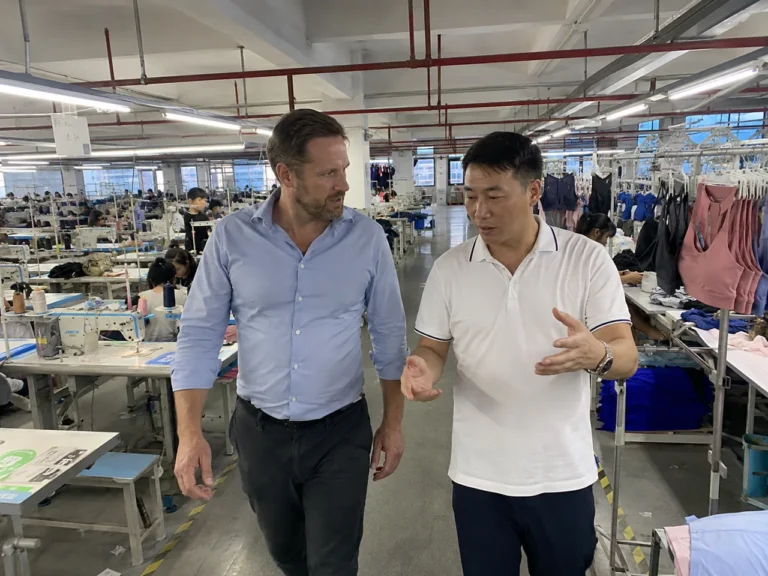
We’re a private-label activewear manufacturer with two of our own factories, cut-and-sew in Xiamen and seamless in Yiwu, and 1,000+ private-label projects since 2017 for brands across five continents. For a brand that wants to stand out, that means:
- 3,000+ styles to start from. Our catalogue goes well beyond the basic set: scalloped edges, one-shoulder cut-outs, asymmetric necklines, skirted flares. Use a style as it is with your logo from 100 sets, or as the base for your own version.
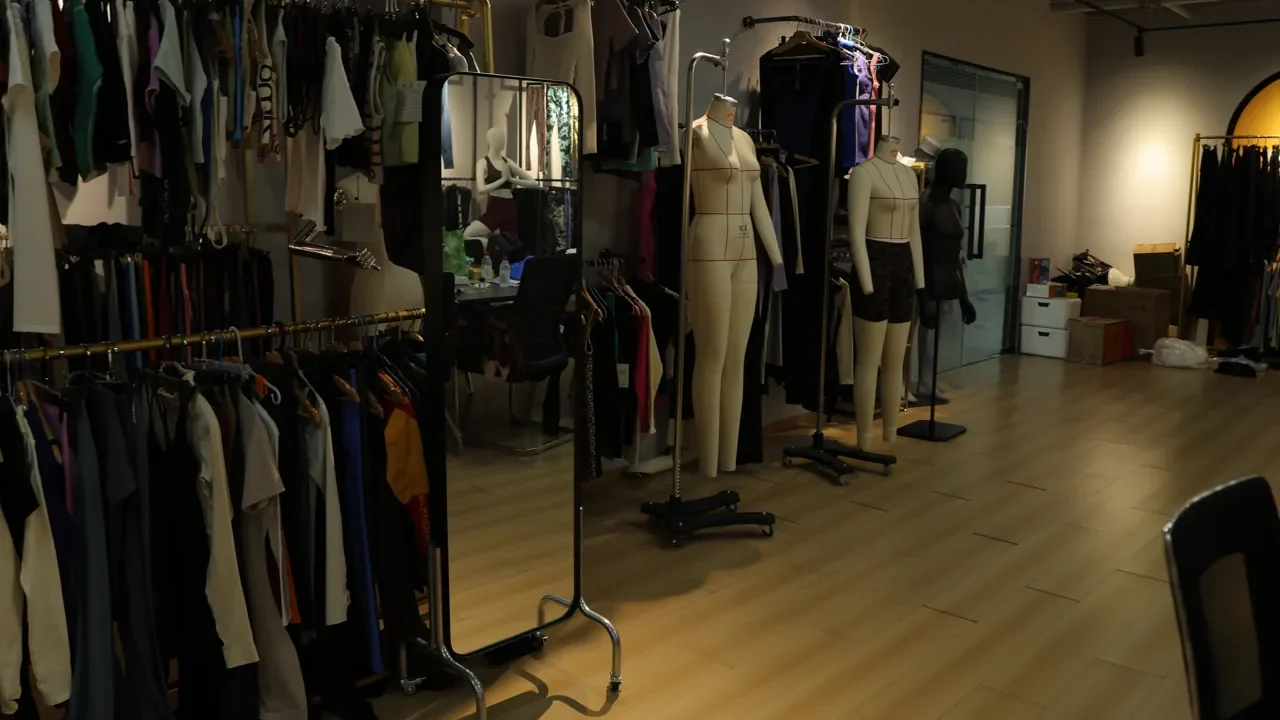
- A sample room that develops new styles. In our sample room, the pattern maker reviews the tech pack with the sample tailor before any fabric is cut. An ODM sample built on our base designs takes about 7–10 days, not counting design preparation; a sample from your own tech pack takes 10–15 days.
- Seamless up to 3XL. Our 17–21-inch Santoni machines in Yiwu knit seamless styles in 2XL and 3XL, where standard 13–15-inch cylinders usually stop around XL. A size range your competitors don’t carry is a difference customers feel straight away.
- Branding and colour in house. Heat transfer, silicone 3D, embroidery and sublimation are handled in our own factory, and we keep stock fabric in 30+ base colourways across nylon-spandex, polyester-spandex, seamless and recycled blends.
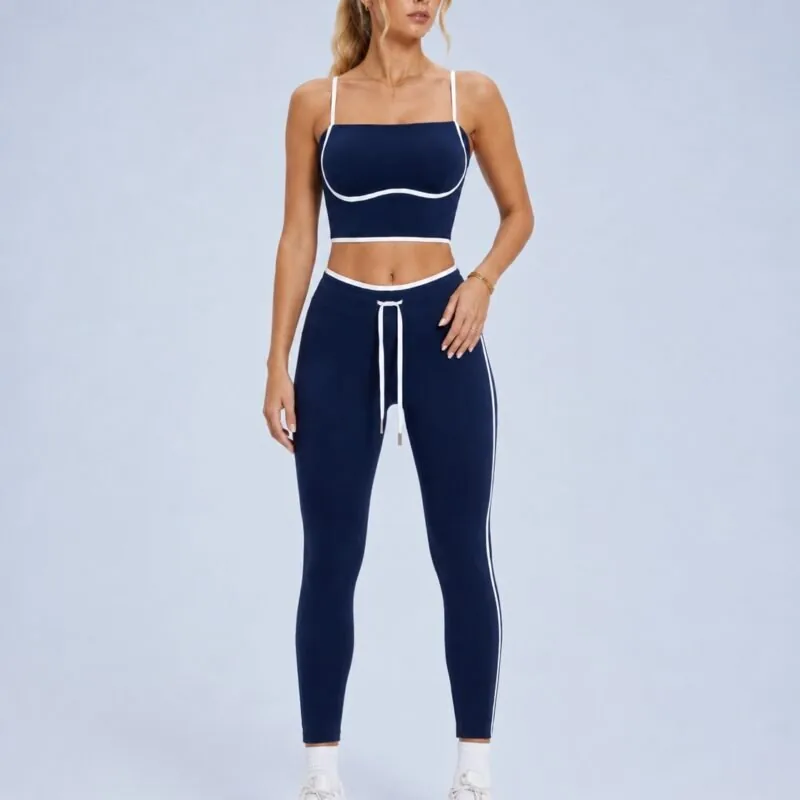
Four stock styles from our range that already step away from the basics:
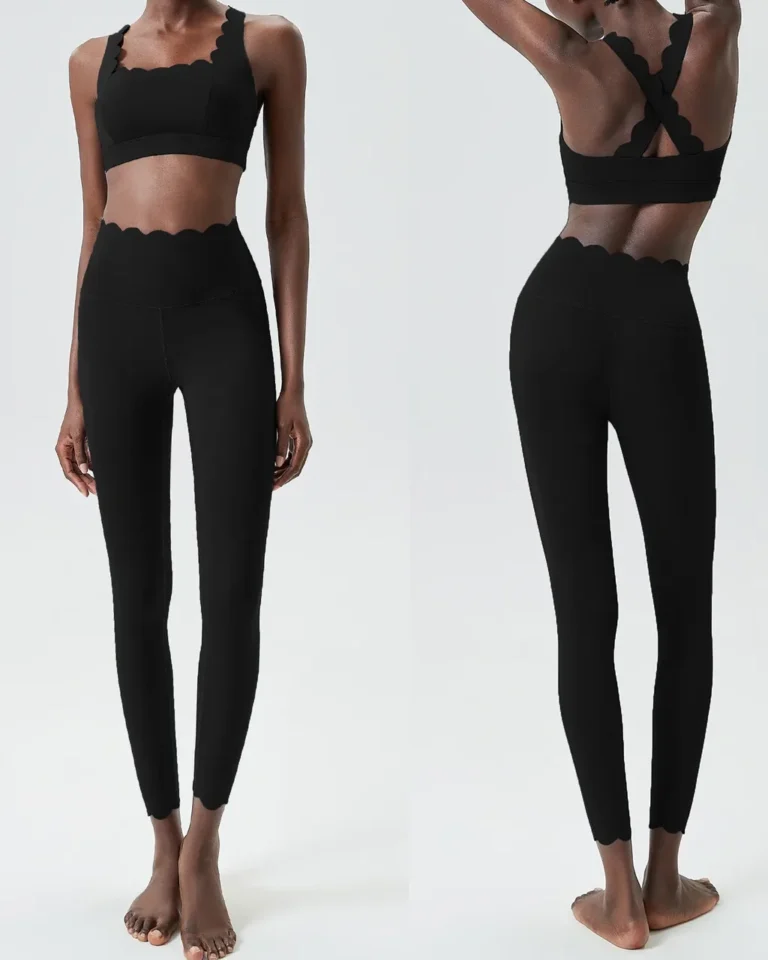
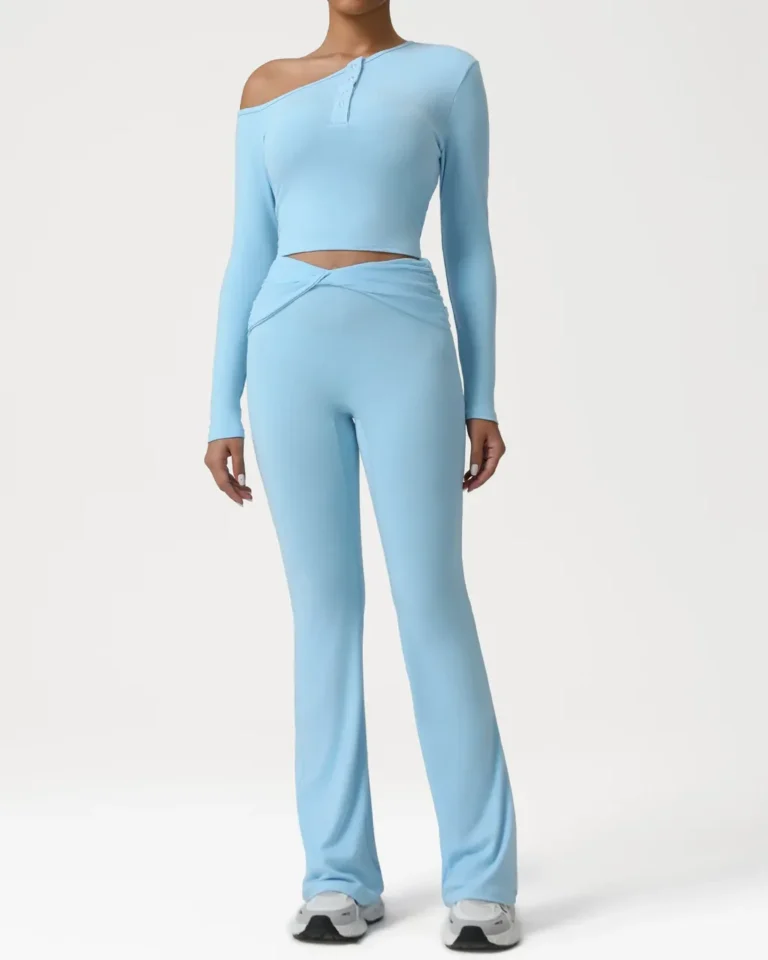
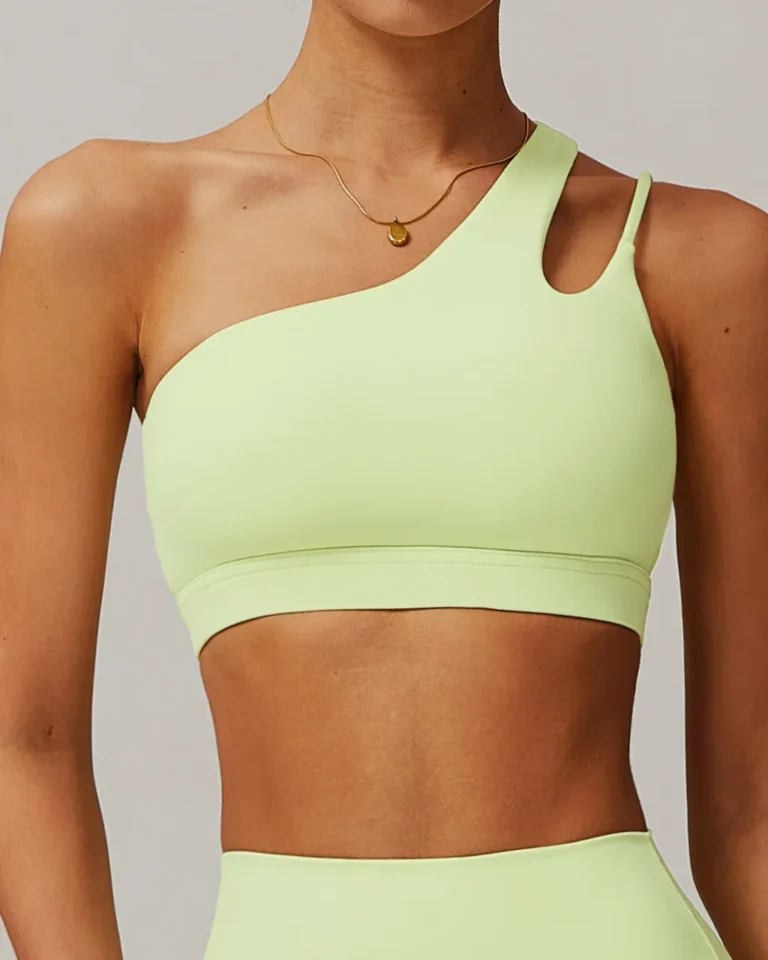
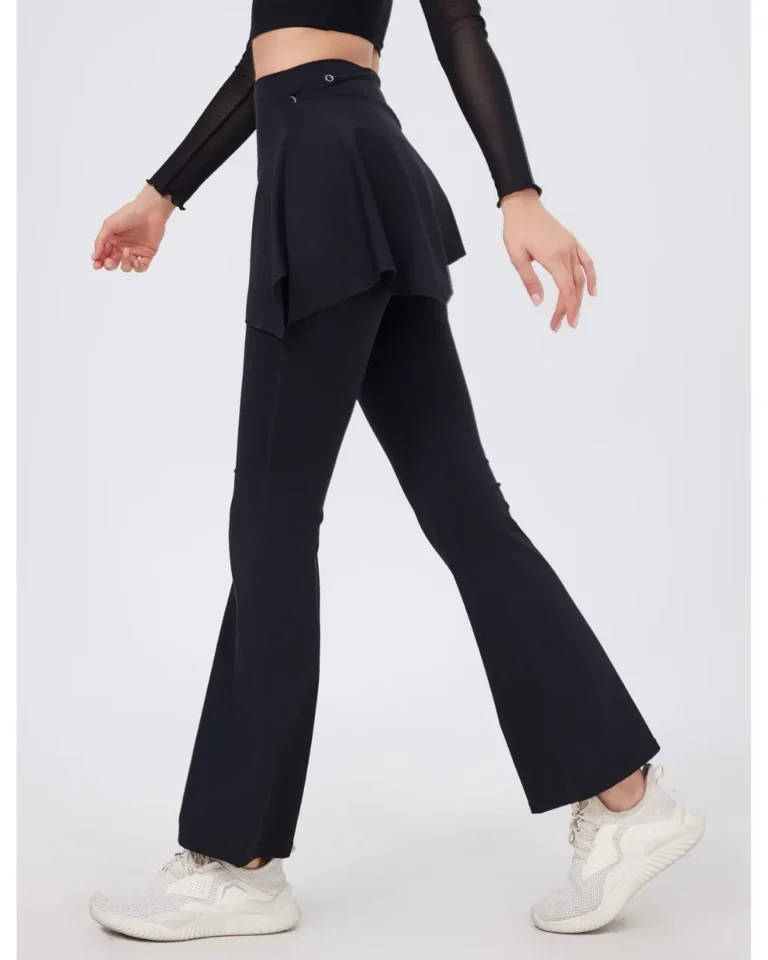
Each is a stock style in S–XL, available with your logo from 100 sets. Change its neckline, length, colour or fabric and it becomes your own development. You can browse more in our product range.
FAQ
Can a factory make clothes from an AI-generated image? Yes, as a design reference. The image shows the look; before sampling, the factory still needs the base pattern or measurements, the fabric, colour references, trims and your size range. Send front and back views, name the closest stock style, and write down the changes you want so nothing depends on how the image happened to render.
What is the lowest-minimum way to make a stock style look different? Change how it is branded and combined: the logo method and position, and colour pairings across the style’s stock colours. At YOUMEGA both stay in the stock-plus-logo route, from 100 sets with mixed colours and sizes and a 7-day sample.
When does a modified stock style become a custom order? As soon as the garment itself changes: its pattern, its fabric or a custom colour. At YOUMEGA that means 300–500 pieces per style per colour, and an ODM sample built on our base designs takes about 7–10 days, not counting design preparation.
Do I need a tech pack to change a stock style? Not to start. A stock style number, a marked-up photo and your changes in writing are enough to begin; measurements, fabric and construction are then confirmed in writing before cutting. For a design that starts from a blank page, a tech pack saves sampling rounds.
Can another brand buy the same style? A stock style, yes. That is what keeps it fast and low-minimum, and it is the reason to change at least one visible detail. If you need a design no one else can order, develop it as your own and agree exclusivity with your factory in writing before sampling.
Who owns a design made with AI? It depends on the country, and the rules are still changing. Keep your own sketches, notes and edits as a record of your design decisions, protect your brand name with a trademark, and ask an IP lawyer before you rely on a design for legal protection. This is general information, not legal advice.
Have an idea that doesn’t look like everyone else’s? Send us a sketch, a screenshot, an AI image or a style number from our catalogue, plus the two or three things you want to change. We reply within 24 hours on working days with the closest starting point, the route it fits and the sample timing. Send us your idea →
Sources
- Epson, A Digital-Printing Primer (dye-sublimation fabric selection): https://blog.epson.com/a-digital-printing-primer/